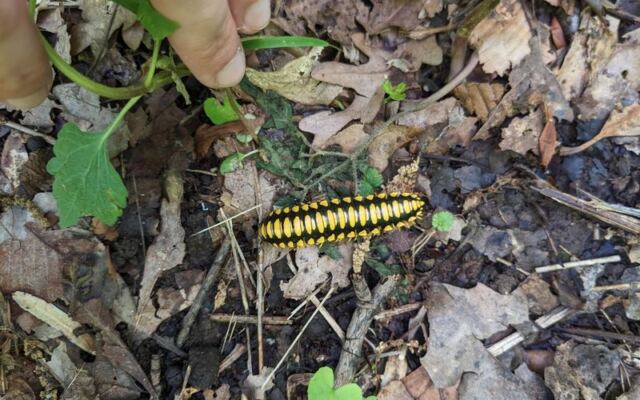
Some black-and-yellow millipedes really can give off a chemical that smells like almonds, and that chemical is related to hydrogen cyanide. Researchers have found this defense in some close relatives of the flat millipedes that crawl around Kentucky yards.
The story is more about caution than fear, because a sighting on your patio is not a poisoning emergency. Here is what the science says, what it cannot tell you, and how to keep kids, pets, and your garage out of trouble.
Which black-and-yellow millipede is in Kentucky?
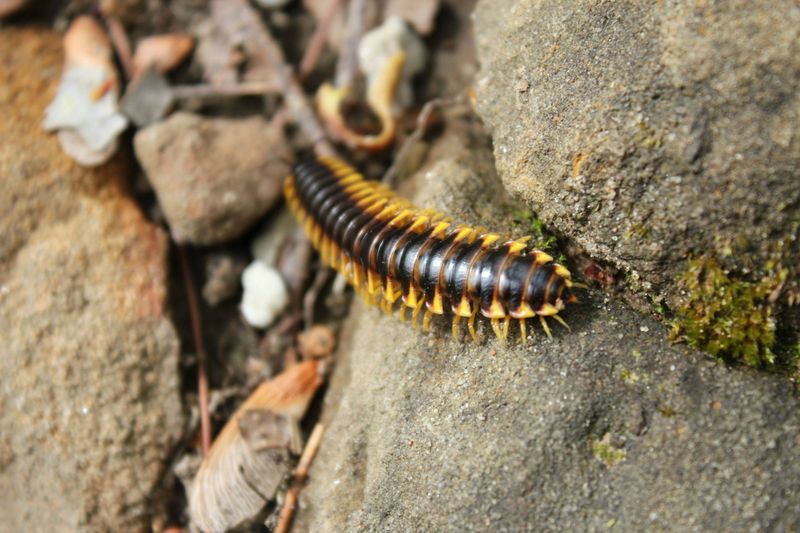
Kentucky does have a flat-backed millipede with bright markings. University of Kentucky Extension documents a Kentucky flat millipede, Apheloria virginiensis, as one of the millipedes people find around homes.
It is dark with yellow or orange marks along its sides, and it moves slowly across pavement and soil.
Color alone, though, cannot confirm which species is in front of you. Several flat-backed millipedes share similar dark bodies with bright trim, and a photo or a quick description is rarely enough for a firm identification.
Calling a specimen a Kentucky flat millipede makes sense only when someone has reliably identified it. Otherwise, a plain description such as a yellow-and-black flat millipede is the safer choice.
Name confusion adds to the problem. The common name yellow-spotted millipede belongs to Harpaphe haydeniana, a species reported from the Pacific coast, according to E-Fauna BC.
It is not the animal Kentucky sources describe.
Some eastern sources use similar names for a different animal. NC State Extension separates the western species from the eastern yellow-and-black flat millipede it discusses.
So when a neighbor says there is a yellow-spotted millipede on the patio, treat that as a nickname rather than a confirmed identification. If you want certainty, take a clear photo and send it to your county Extension office.
What research says about the almond-like odor
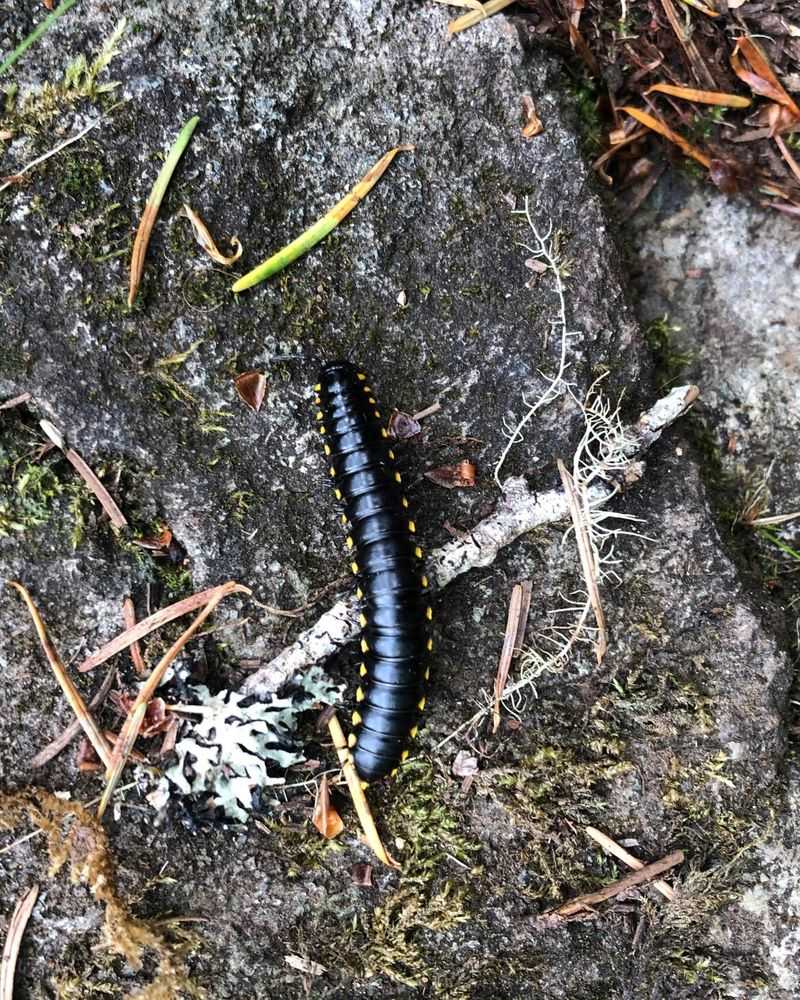
The almond story has real science behind it, with limits. Primary research on a related millipede, Apheloria corrugata, described a cyanogenic glandular apparatus, meaning a gland system that produces compounds tied to hydrogen cyanide.
That finding applies to that species and its close relatives. It does not mean every black-and-yellow millipede in Kentucky does the same.
Another study found benzoyl cyanide in the defensive secretion of polydesmoid millipedes, a group that includes these flat-backed types. Research on Apheloria also identifies benzaldehyde in the secretion.
Benzaldehyde is the compound that gives almond flavoring much of its scent.
Hydrogen cyanide itself can smell like almond extract at low concentrations, according to NC State Extension. But since benzaldehyde smells similar, an almond scent cannot tell you which chemical you are smelling.
It cannot tell you which animal made it either.
Noses also differ. CDC and NIOSH guidance notes that many people cannot detect hydrogen cyanide’s odor at all.
A person who smells nothing is not proven safe, and a person who smells almonds has not proven danger. Smell is a curious clue about millipede chemistry, but it is not a test.
A defensive secretion is not a reason to panic
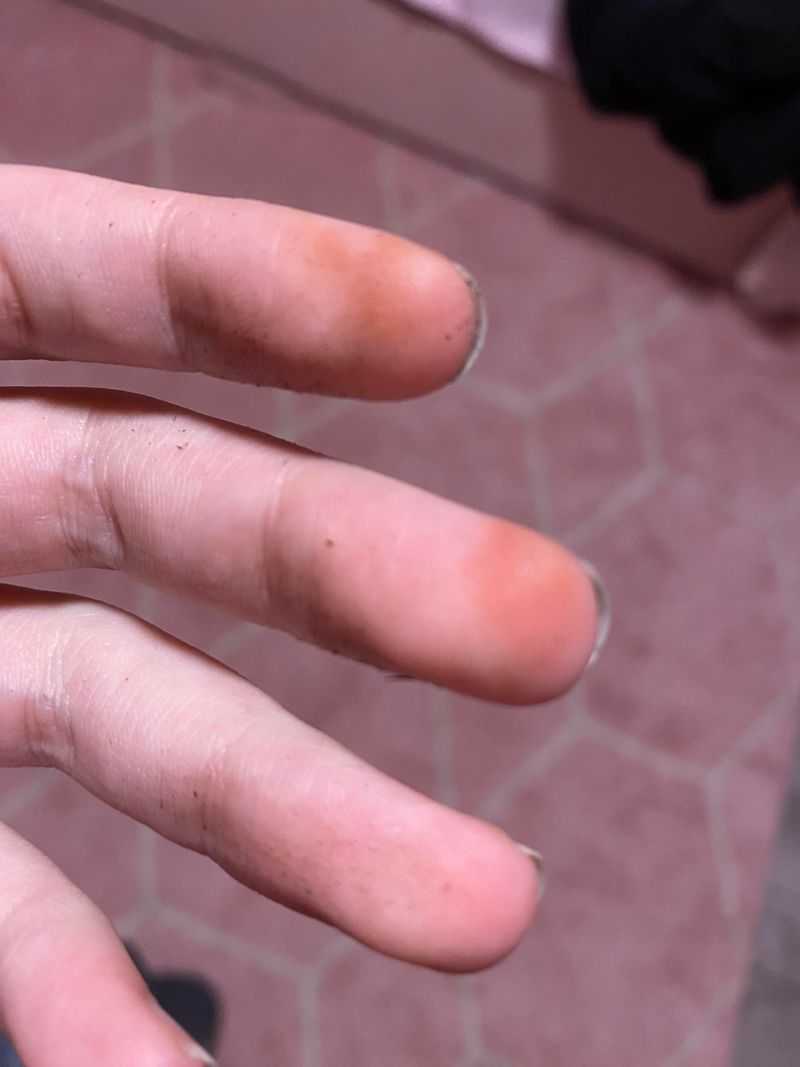
Millipedes do not bite or sting. Their defense is passive: when threatened, some species release a fluid from pores along the body.
Most of the time, a millipede that is left alone simply keeps crawling.
The fluid can matter if you handle the animal. Contact may irritate or burn skin, and eye exposure is the more serious concern, according to MedlinePlus.
Skin can also stain brownish after contact with some species.
Kentucky Extension adds helpful perspective. UK Entomology says the amount of cyanide some millipedes excrete is not high enough to harm humans, and that millipedes are not broadly dangerous to people.
That is reassuring, but it does not mean the secretion can never bother anyone.
So the right response sits in the middle. Seeing one, or catching a whiff of an odd smell outdoors, is not a poisoning emergency.
The sensible rule is simple: look, but do not pick up, and keep the fluid away from eyes and mouths.
Heavy rain may coincide with millipede sightings
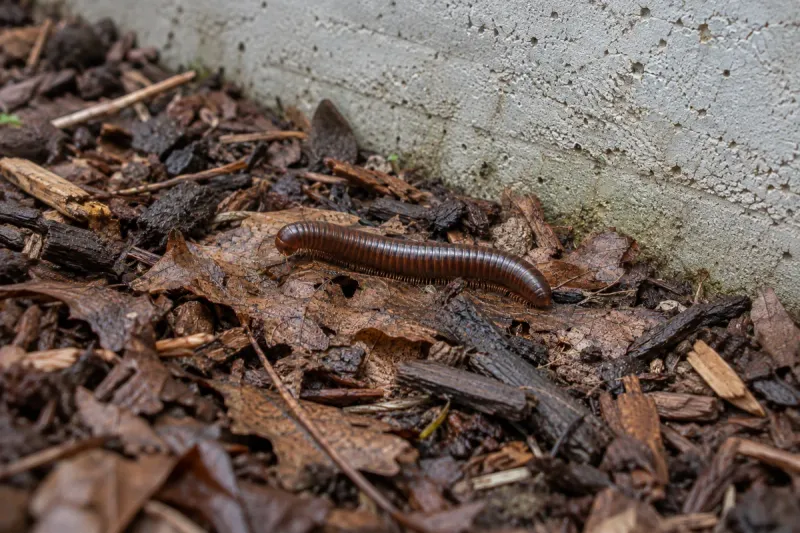
Millipedes like damp, shaded spots, so you may meet them in many places. Kentucky reports describe them on patios, sidewalks, and foundations, and sometimes in basements and garages.
They hide under leaves, mulch, and stones during the day.
Autumn is one documented time for movement. A Kentucky Extension fact sheet describes accidental autumn movement toward humid overwintering sites, which can carry millipedes into buildings.
The same fact sheet also reports building movement in spring and summer during very wet or very dry weather.
Rain shows up in the reports, but it is not a proven trigger. The newer UK Entomology page says sightings can coincide with heavy rain and groups of millipedes, yet the cause of those gatherings is unclear.
Kentucky sources have not established whether rain causes or adds to the movement.
For a homeowner, the useful takeaway is about places rather than weather forecasts. Check damp edges, door thresholds, and garage corners after a rainy stretch, especially in autumn.
Knowing where they gather helps you spot them before a curious child or pet does.
What to do if a child or pet finds one
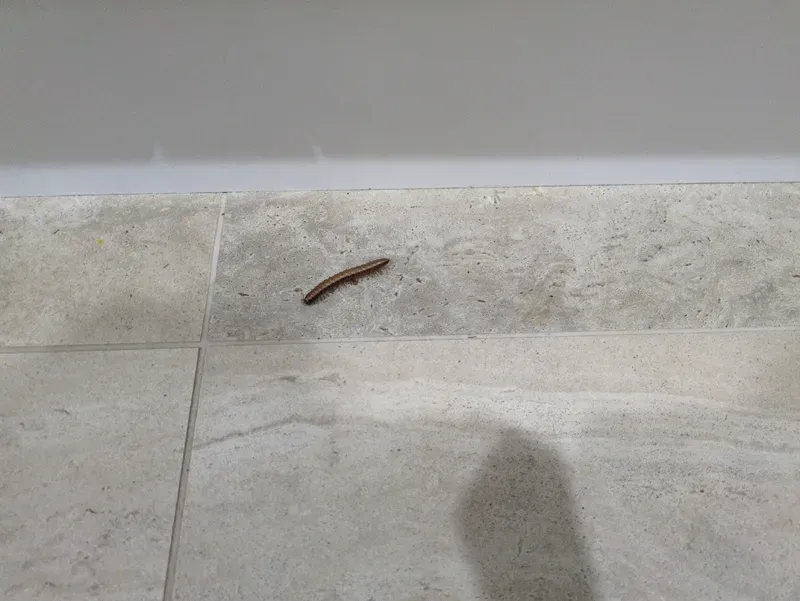
Start with distance. Do not handle millipedes, and keep children and pets from mouthing or playing with them.
A quick, calm lesson works well: we look with our eyes, not our hands.
If a child picks one up, move it away and rinse the hands. The Missouri Department of Conservation advises against handling these millipedes and notes that their secretions may irritate.
Wash well before anyone touches their face.
If secretion gets on skin, wash with plenty of soap and water. If it reaches the eyes, flush with water for at least 20 minutes and get medical attention, as outlined by MedlinePlus.
Eyes are the main worry, so act fast there.
In the United States, Poison Help is 1-800-222-1222 if you have questions after contact. That line is a general resource for people, not a set of pet treatment instructions.
If an animal seems upset after mouthing a millipede, a veterinarian is the right person to ask.
Reduce indoor visitors by drying and sealing entry points
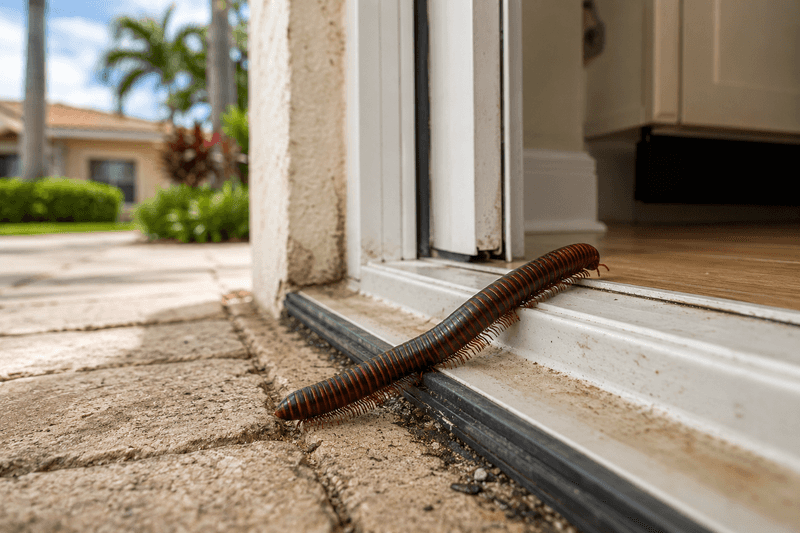
A millipede indoors is a nuisance, not a siege. The easiest fix is a broom and dustpan: sweep it up and put it outside.
Wear gloves if you would rather not touch it.
Next, make the outside less inviting. Kentucky Extension recommends reducing moisture and debris near foundations and directing water away from the house.
Clear leaf piles and thick mulch from against the walls, and check that gutters and downspouts carry water well away.
Then close the doors they use. Seal cracks, thresholds, and joints, and add weatherstripping or a door sweep to garage and basement entries.
A dehumidifier in a damp basement can also help.
Pesticides do not need to be the first move. The same Extension guidance says indoor pesticide applications are rarely necessary, since millipedes inside usually wander in and dry out.
If one does release fluid on someone, follow the washing steps from MedlinePlus promptly.
A dry foundation and a tight door beat any spray, and neither one needs a sniff test.
Share this story