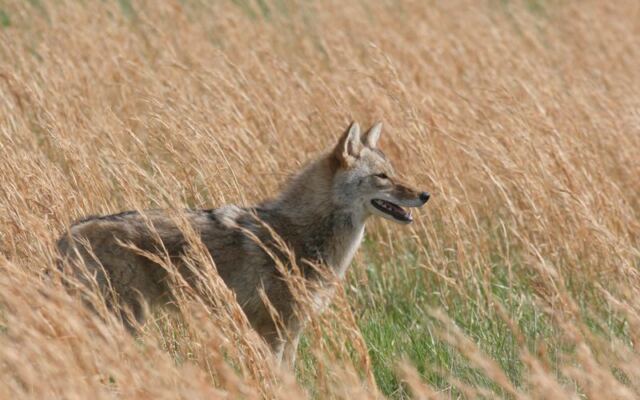
Those howls, yips, and barks floating through your neighborhood after dark are coyotes talking to one another. They use their voices to stay in touch, mark out their space, and find each other across the dark.
You cannot translate a single call word for word, but you can learn what the sounds are for and what to do about them. Knowing that makes a night chorus a lot less spooky.
How coyote calls help them communicate
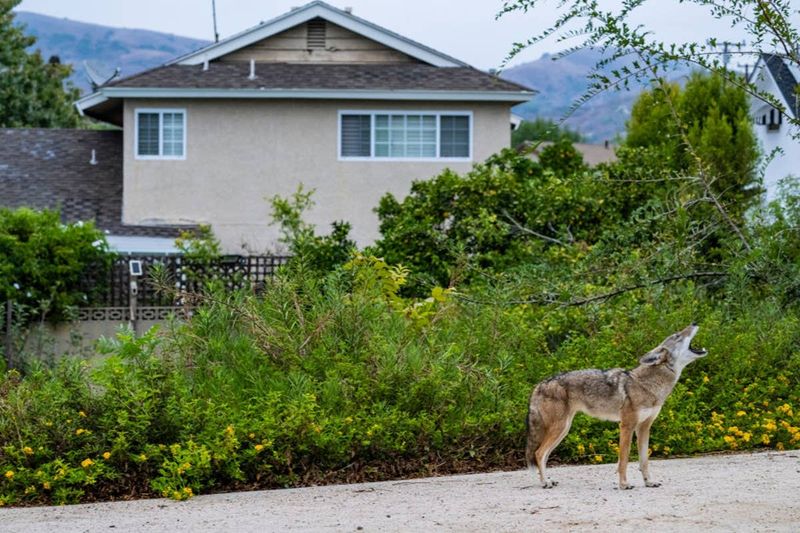
Howls, yips, and barks are all ways coyotes communicate. Think of them as a toolkit of sounds rather than a spoken language with words you can look up.
Researchers have studied these sounds for decades. A 1978 study of coyote vocalizations sorted the animals’ calls into a lexicon and discussed what each type might be used for.
That work is a good starting point, but it describes suspected functions, not a dictionary.
Here are the main possible jobs for calls. Calls may help coyotes maintain a territory, so neighbors know the area is occupied.
They may help keep family-group bonds strong, a bit like a check-in when animals are spread out. And they may help coyotes locate one another when they are apart, since sound travels farther than sight in the dark.
Notice the words may and can. A particular yip does not always mean one thing.
The same sound could serve different purposes depending on who is calling, where they are, and who is listening.
So if you hear a burst of noise from the woods behind your house, you can be fairly sure coyotes are communicating. What exactly they are saying to each other is something no listener can decode from the back porch.
Even the number of animals behind the noise is harder to judge than it sounds, which is the next puzzle.
Why a chorus can sound bigger than it is
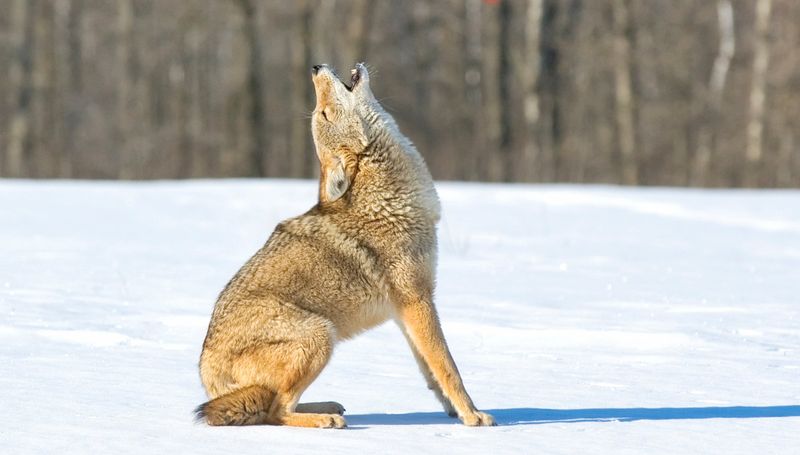
A wild chorus can make a handful of coyotes sound like a crowd. Yips overlap, voices rise and fall, and the sound bounces off hills, barns, and tree lines.
Your ears fill in the rest and the group seems huge.
A Texas team put this to the test. In a playback study of human listeners, 427 people heard recordings of one to four coyotes howling and guessed how many animals they heard.
On average, they overestimated the number by nearly twofold.
That result belongs to those recordings and those participants. It is not a formula.
You cannot halve what you hear and get the number of coyotes in a Kentucky neighborhood, because every location, wind, and group is different.
The practical lesson is simple. Loud and busy does not automatically mean a large pack is gathered near your house.
A few animals can easily sound like many, so try not to let the volume drive your worry.
If you want to know what is really around, a trail camera or a report to your local wildlife officials will tell you far more than your ears can on a dark night.
What the seasons can tell you
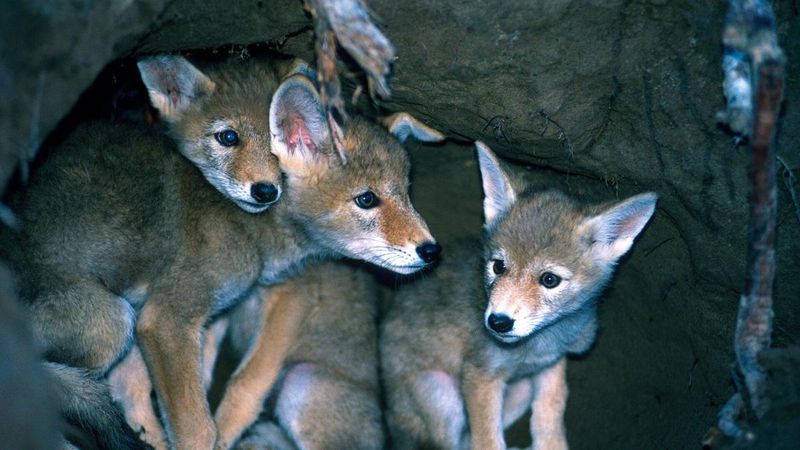
The calendar gives some helpful background. Kentucky Fish and Wildlife says coyote sightings may rise during the winter breeding season and again during pup rearing in spring and early summer.
In its February 2025 guidance, the agency notes that breeding typically lasts into March.
Those seasons help explain why you might see or hear more coyotes at certain times of year. Animals move around more when they are looking for mates, and parents with pups need to hunt more often.
You can read more about the species on the agency’s coyote page.
Still, a season is not a decoder ring. A chorus in February does not prove the coyotes are courting, and a yip in May does not prove there is a den of pups nearby.
The pattern describes sightings and activity across Kentucky, not the reason behind any one call.
There is one more piece of context from outside the state. A North Carolina Wildlife Resources Commission biology appendix says pups can become vocal in late summer as they practice howling.
That is regional information, not a Kentucky finding, so treat it as a hint rather than a local calling schedule.
Season can make a noisy night feel less mysterious. It just cannot tell you exactly what is going on out there.
What calls do and do not tell you about risk
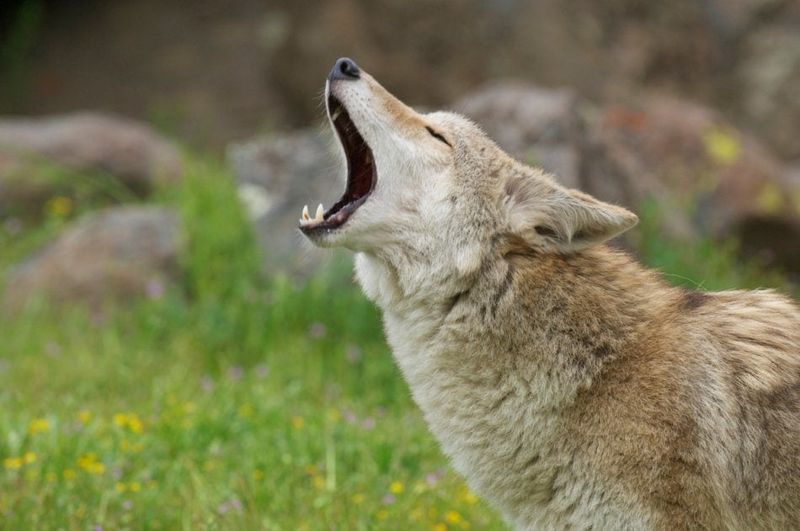
Hearing coyotes close to home can set your heart racing, so it helps to sort fact from worry. A chorus by itself does not show that a coyote is heading your way, and it does not show that anyone is in danger.
Kentucky Fish and Wildlife describes coyotes as typically avoiding people. In the same coyote guidance, the agency advises precautions around pets and known dens.
Both statements are true at once, and neither one calls for panic or a shrug.
Why can’t the noise settle it? Calls carry over long distances, and as the Texas playback research showed, listeners often misjudge how many animals are calling.
So a loud night may come from animals well away from your property.
What the sound can do is act as a prompt. It is a good moment to check that pets are inside or supervised, that food is put away, and that your yard is not offering a free meal.
Think of the calls as background information rather than an alarm bell. They tell you coyotes live in your area, which is already true across Kentucky, from Bluegrass suburbs to quiet hollows.
What matters most is how you manage your yard and your pets.
Make your yard less inviting
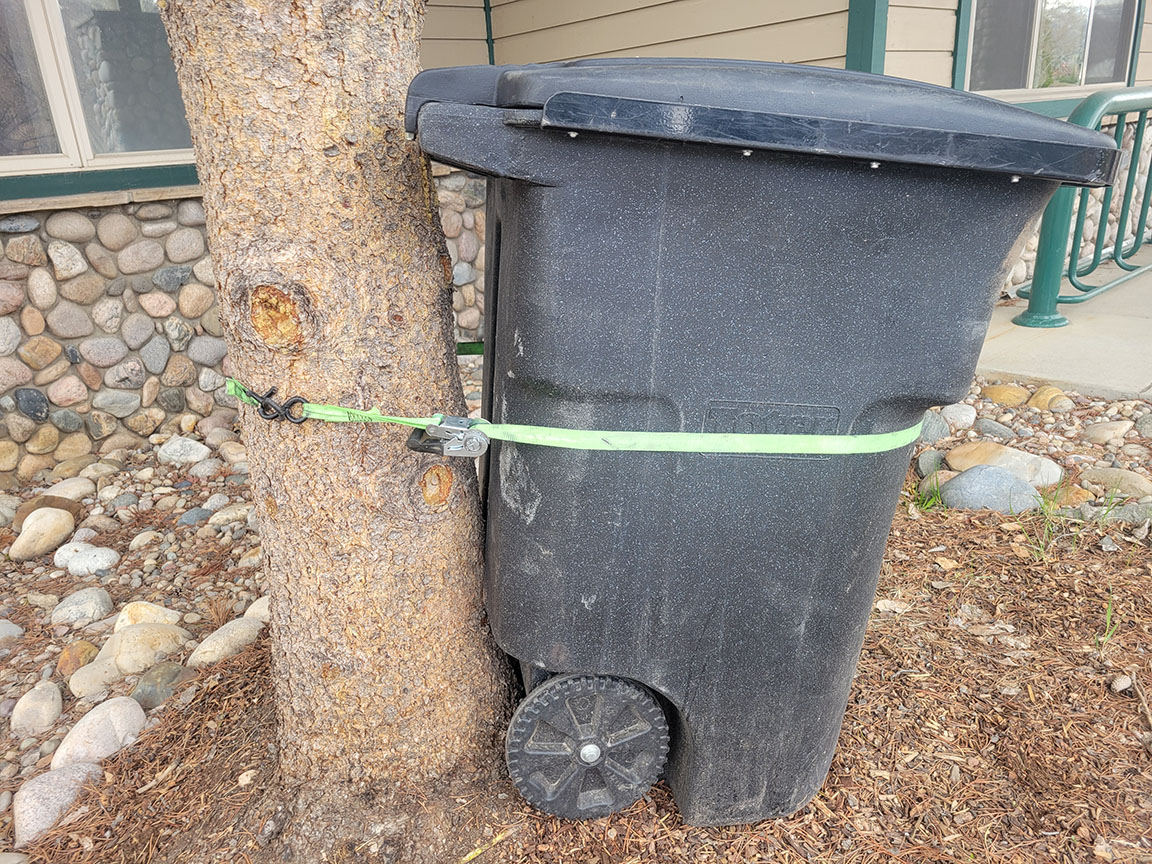
The best defense is a yard that gives coyotes no reason to visit. Kentucky Fish and Wildlife says the first rule is simple: never feed coyotes, on purpose or by accident.
Food teaches them that people mean meals.
Start with the garbage. Keep trash in sturdy, closed containers and set them out as close to pickup time as you can.
Bring pet food indoors rather than leaving a bowl on the porch.
Birdseed deserves a second look. Spilled seed can attract rodents and other animals, and those animals in turn can attract coyotes.
Clean up beneath feeders or think about pausing them if you notice extra visitors.
Pets need a little planning too. Supervise them when they are outside, especially around dawn, dusk, and night.
Keep dogs on a leash on walks, and keep cats indoors or closely supervised.
Resist the urge to go looking. Do not walk toward the woods to find out who is calling, and do not try to find a den.
Staying put and keeping your property boring is safer for you and for the coyotes.
These small habits add up. A neighborhood where food is hard to find is a neighborhood where coyotes tend to keep moving.
How to respond if a coyote approaches
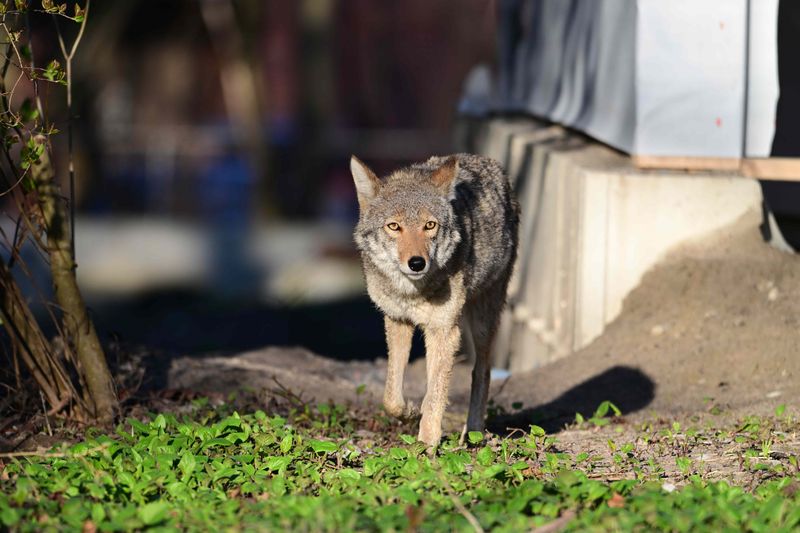
Most coyotes will leave when they notice you, but if one comes closer, stay calm and act. Kentucky Fish and Wildlife recommends making noise, appearing larger, and continuing to haze the animal until it retreats.
That can mean shouting, clapping, waving your arms, or standing tall.
Do not run, and do not walk toward the coyote to get a picture. Close photos put you and the animal in a bad spot, and fleeing may encourage it to follow.
There are exceptions, and they matter. If a coyote is cornered, if it has pups with it, or if it appears sick or injured, do not haze it.
Back away slowly and give it room to leave on its own.
Some coyotes lose their natural caution around people, usually because they have found food near homes. If a coyote seems habituated and appears threatening, contact a licensed wildlife control operator.
Do not try to handle it or approach it yourself.
The state’s coyote page lays out this guidance in one place, and it is worth a bookmark.
A night chorus is the sound of wild neighbors going about their business. With a tidy yard and a calm plan, you can let them do it from a respectful distance.
Share this story