Spotted lanternflies really do love tree-of-heaven, an invasive tree that shows up along Pennsylvania roads, fences, and vacant lots. Lanternflies live longer and lay far more eggs when they can feed on it.
That makes many neighbors want to rip it out right now. The tricky part is that pulling it fast can backfire, and the payoff for lanternfly numbers is less certain than most people hope.
Tree-of-heaven is a preferred host, not a requirement
Ask any Pennsylvania resident which tree the bugs crowd onto, and tree-of-heaven often comes up. Researchers wanted to know why, so they compared how spotted lanternflies did on several common woody plants.
A peer-reviewed enclosure study found that survival was higher and development was faster when tree-of-heaven was available.
The biggest gap showed up in reproduction. Females with access to tree-of-heaven produced nearly seven times as many egg masses as those without it.
That is a striking number, and it helps explain why the tree gets so much attention.
Still, the same study showed that lanternflies survived and reproduced without tree-of-heaven. They did it more slowly and in smaller numbers, but they did it.
So the tree is best described as a preferred host, one the insects favor when given the choice, rather than a required one.
Think of it like a favorite restaurant. People will go there first, and they may eat better there, but they will not starve if it closes.
For homeowners, that means a yard with no tree-of-heaven can still see lanternflies on maples, grapevines, and other plants. Keeping that in mind sets realistic expectations before anyone picks up a saw or a shovel.
Would removing it shrink a neighborhood infestation?
Here is where hopes and facts part ways. Taking out a tree-of-heaven on your lot might reduce lanternflies in that spot, since fewer of their favorite food plants are around.
Whether it shrinks the infestation across a whole neighborhood is a different question.
The experiment described earlier measured how lanternflies performed inside enclosures. It did not remove trees from real neighborhoods and then count insects afterward.
Its results show what the insects do when confined with certain plants, not what wild populations will do on your street.
Penn State Extension says in its management guide supplement that the effect of removing tree-of-heaven on lanternfly numbers has not been specifically established. The area-wide impact remains unknown.
The same guidance notes that managing one property does not stop lanternflies from arriving from somewhere else.
That last point matters if you feel stuck. You can do careful work in your yard and still see insects drift in from a neighbor’s tree, a railroad edge, or a parking lot.
It is a frustrating reality, but knowing it up front keeps you from judging your effort by how many bugs you see next week.
Why a quick cut can create more tree-of-heaven
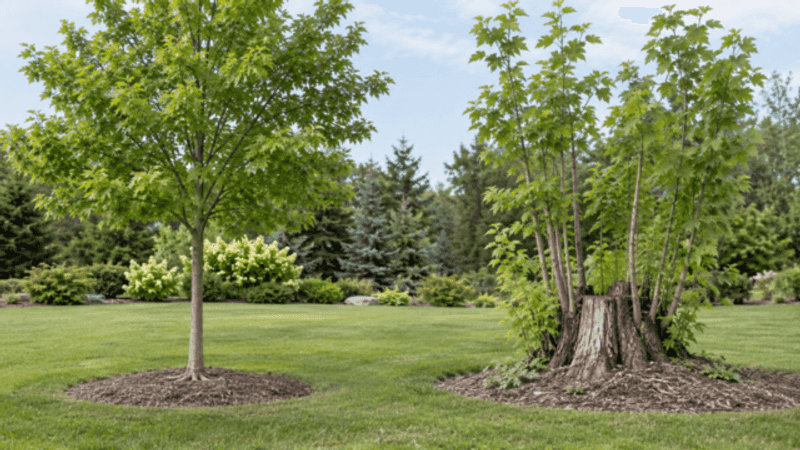
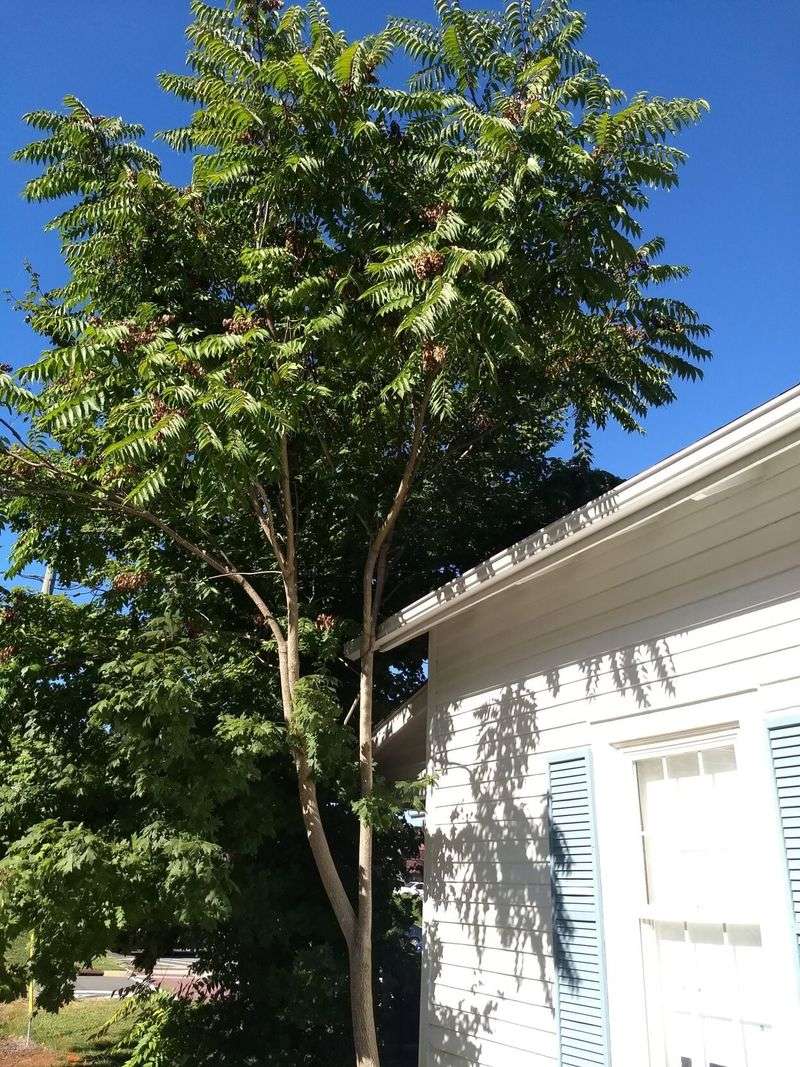
Grabbing a chainsaw feels like action, but an established tree-of-heaven often answers with more growth. According to Penn State Extension’s tree-of-heaven guidance, the tree can send up stump sprouts after cutting and root suckers from its roots.
Mowing or cutting alone can leave you with a thicket where there used to be one trunk.
Root suckers are especially stubborn. They are hard to pull, and leftover root fragments can regrow.
A yard that once had a single tree can end up with a dozen shoots spreading outward.
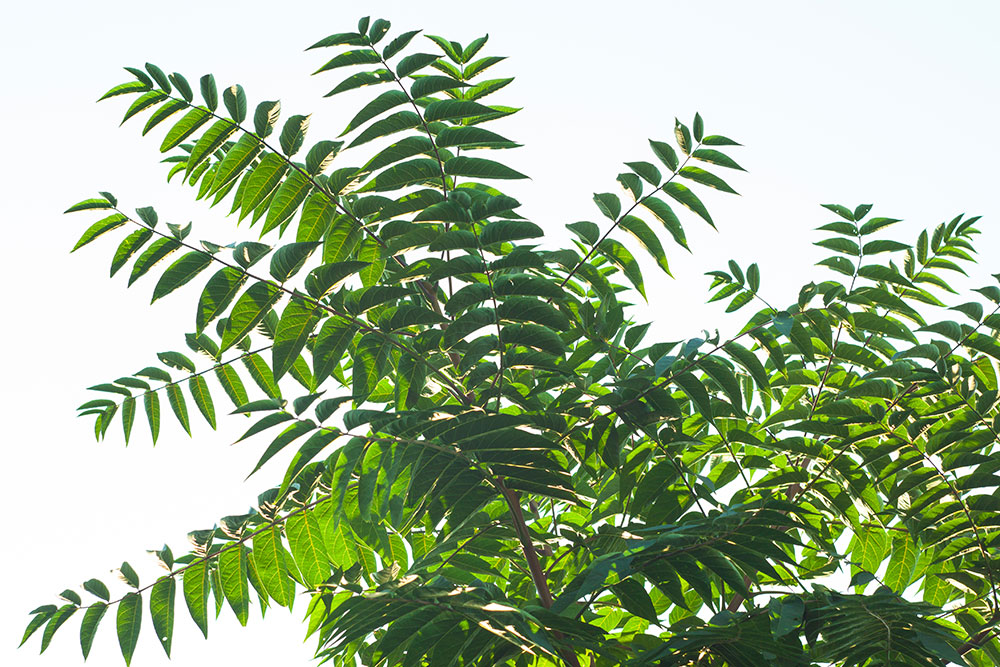
Before doing anything, make sure you actually have the right plant. Tree-of-heaven resembles several native trees, and Penn State’s look-alike page helps tell them apart.
Black walnut, hickory, and sumac are among the plants people commonly mix up with it.
A practical clue is to look closely at the leaves, bark, and how the leaflets are shaped and arranged. If you are unsure, take clear photos and ask your county Extension office.
Cutting down a healthy native tree by mistake is a harder problem to fix than waiting a few days for a confirmation.
Start removal with identification and a plan
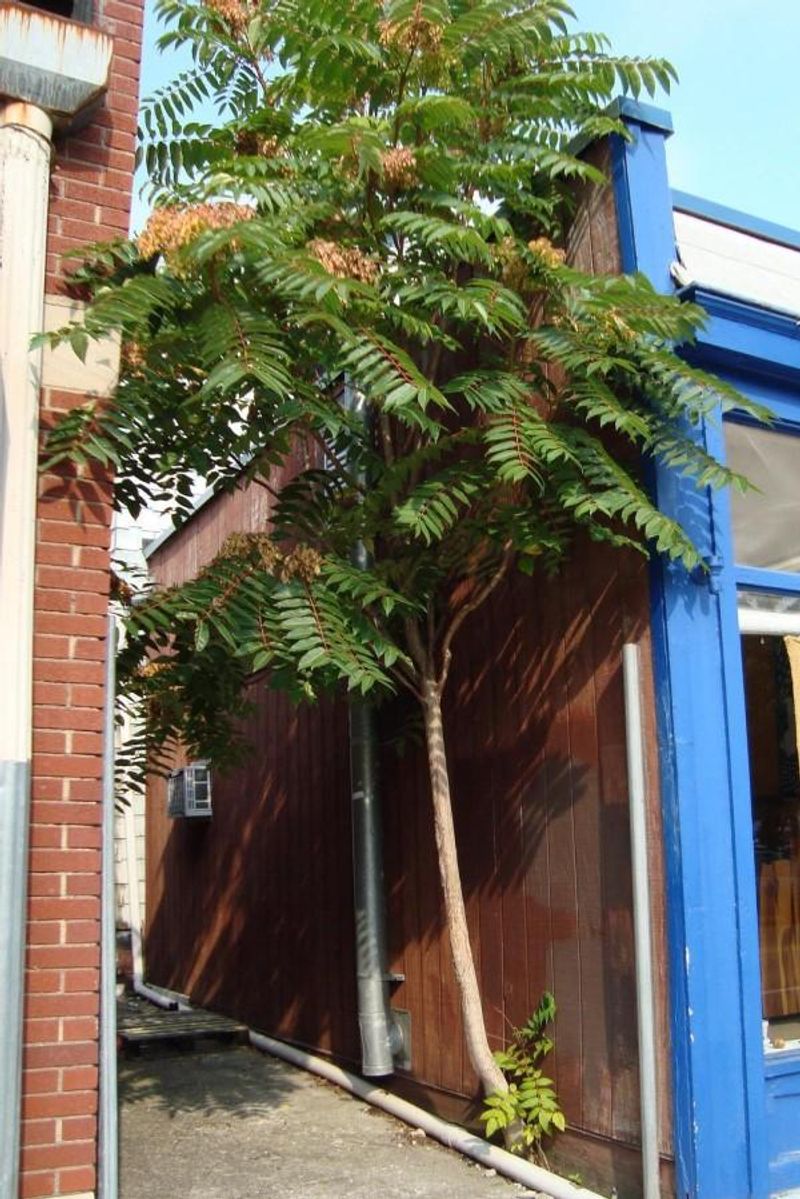
If you decide to remove tree-of-heaven, treat it as invasive plant management, not as a guaranteed lanternfly treatment. Good results start with confirming the species, then matching the method to the size of the plant.
Hand-pulling fits only young seedlings, and only when you can get the entire root system out. If any root breaks off, it may resprout, so loose, damp soil and a slow, steady pull help.
Larger plants and suckers are a poor match for pulling.
For established trees, Penn State guidance points to targeting the root system with a systemic herbicide, timed for mid- to late summer. Always follow the product label, since it spells out the legal and safe way to use the product.
Because mistakes can harm nearby plants, a county Extension office or a qualified professional can help with product choice, timing, and application, especially near water, a shared fence line, or valuable trees.
Double-check the tree first using the native look-alikes guide. A wrong ID wastes effort and can hurt a tree you wanted to keep.
One more step if you live in a quarantine area: check current rules before moving cut material. The Pennsylvania Department of Agriculture restricts movement of regulated articles such as logs, stumps, tree parts, and firewood.
Confirm the latest requirements before loading a truck or hauling brush to a new location.
Egg removal and trapping have limits—and safety rules
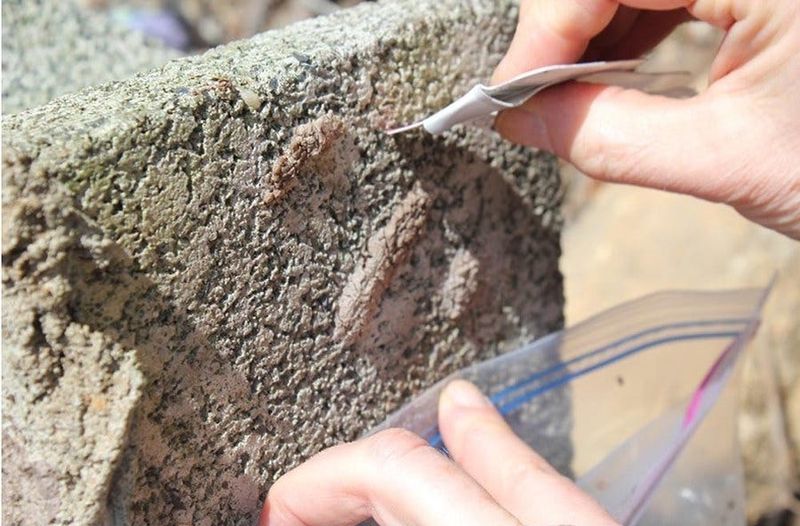
Egg masses look like smears of gray mud on bark, stones, fences, and outdoor furniture. If you can reach them safely from the ground, you can scrape them into a sealed container with rubbing alcohol or hand sanitizer.
Penn State Extension notes this can reduce later numbers but is unlikely to eliminate lanternflies in a neighborhood.
Where the eggs land matters. Eggs scraped onto the ground may still hatch, so the container is not optional.
Skip the ladder and skip climbing trees, because a fall is a much bigger problem than a few egg masses left up high.
Sticky bands are another option people try, and they come with real responsibilities. Penn State’s management guide warns that unprotected sticky material can catch birds, small mammals, and beneficial insects.
If you use bands, install a wildlife barrier over them and check them every day.
Circle traps are an alternative that avoids leaving exposed glue on the trunk. Whichever tool you choose, treat it as a modest, limited step.
It can lower the number of insects on your own trees, but it should not be expected to clear a street.
Lanternfly damage depends on the plant and its condition
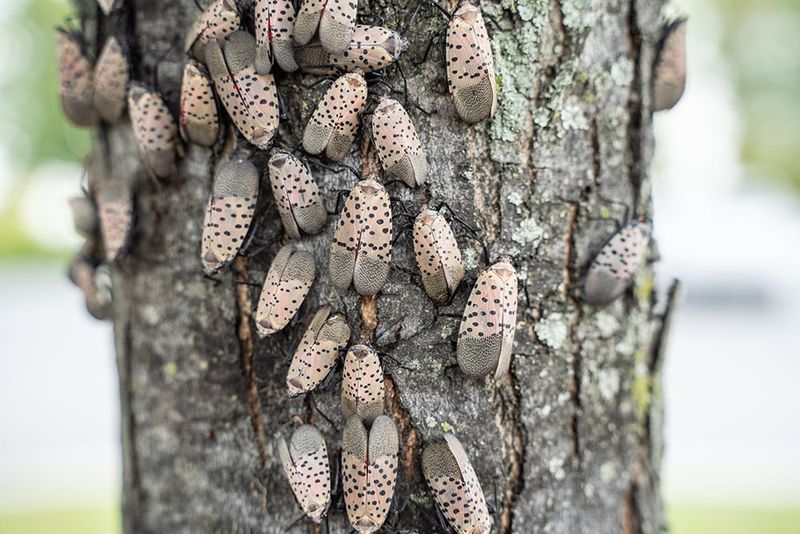
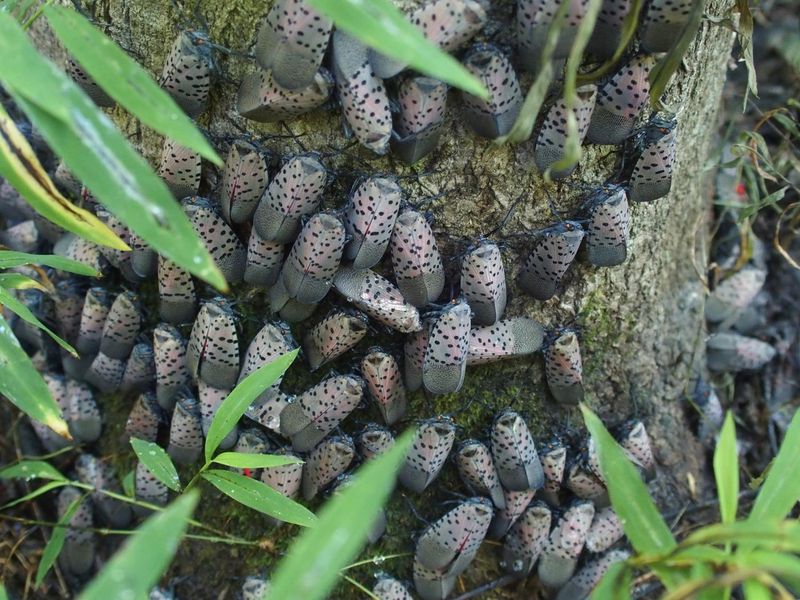
Seeing hundreds of insects on a trunk is unsettling, but the harm varies a lot by plant. Penn State’s frequently asked questions separate serious impacts to grapevines and some saplings from the much more limited effects on many healthy, established ornamental trees.
In residential landscapes, the insect is mostly a nuisance and a plant stressor.
A few lanternflies on a large, healthy tree are unlikely to cause permanent damage. The idea that every infested tree is about to die is not supported.
Young trees and vines deserve closer attention, along with any plant that is already stressed by drought or disease.
The sticky honeydew they leave behind can coat decks and cars and attract sooty mold, which is annoying even when the tree itself is fine. Watering during dry spells and general plant care are sensible ways to help trees cope.
When frustration builds, it is tempting to mix a spray from the kitchen cabinet. Don’t.
Penn State cautions against home remedies because they may harm people, pets, or plants and may be unlawful. Read the guidance in its pesticide safety article and follow the label on any product you use.
What residents can do on their own properties
Manage tree-of-heaven because it is an invasive plant worth controlling, not because removal is a proven cure for lanternflies. Start by confirming the tree, using Penn State’s tree-of-heaven page, and ask Extension or a professional about established trees.
From there, pick safe, targeted steps: scrape reachable egg masses into a sealed container, protect sticky bands or use circle traps, and follow every pesticide label. These actions have limited or uncertain effects on lanternfly numbers, and Penn State notes insects can still move in from elsewhere.
If you are in a quarantine area, check current rules before moving cut wood.
A tidy, well-chosen yard plan beats a rushed one.
Share this story