Get the latest garden guides in your inbox →
Gardening Latest
  • General Gardening
  • Lawn Care
  • Plant Care
  • Composting
  • Soil Health
  • Backyard
  • Garden Muse Magazine
  • General Gardening
  • Lawn Care
  • Plant Care
  • Composting
  • Soil Health
  • Backyard
  • Garden Muse Magazine
  • News
  • Gardening Calendar
  • Garden Structures
  • Vegetable Garden
  • Vertical Garden
  • Raised Beds
  • Hydroponics
  • General Equipment
  • Community Gardens
Garden Themes
  • Spiritual Garden
  • Hydroseeding
  • Seeding and Laying Sod
  • Artificial Grass
  • Lawn Care Equipment
  • Plants
  • Trees
  • Planting Tools
  • Composting Basics
  • Fertilizer
  • Alternative Growing Mediums
  • Front Yard
  • Backyard Activities
  • Landscaping
Gardening Latest

Explore by state

Which state is your garden in?

Currently viewing North Carolina

All states

Northeast

  • Connecticut —
  • Delaware 20
  • Maine —
  • Maryland 6
  • Massachusetts 23
  • New Hampshire —
  • New Jersey 7
  • New York 16
  • Pennsylvania 16
  • Rhode Island —
  • Vermont —

Southeast

  • Alabama 6
  • Arkansas —
  • Florida 6
  • Georgia 7
  • Kentucky 20
  • Louisiana 5
  • Mississippi —
  • North Carolina 5
  • South Carolina 19
  • Tennessee 3
  • Virginia 5
  • West Virginia —

Midwest

  • Illinois 5
  • Indiana 8
  • Iowa 19
  • Kansas —
  • Michigan 7
  • Minnesota 5
  • Missouri 5
  • Nebraska —
  • North Dakota —
  • Ohio 7
  • South Dakota —
  • Wisconsin 21

Southwest

  • Arizona 6
  • Colorado —
  • Nevada —
  • New Mexico —
  • Oklahoma —
  • Texas 5
  • Utah —

West

  • Alaska —
  • California 6
  • Hawaii —
  • Idaho —
  • Montana —
  • Oregon —
  • Washington —
  • Wyoming —

No state matches that search.

Site menu

Gardening Latest
  • General Gardening
    • News
    • Gardening Calendar
    • Garden Structures
    • Vegetable Garden
    • Vertical Garden
    • Raised Beds
    • Hydroponics
    • General Equipment
    • Community Gardens
    Garden Themes
    • Spiritual Garden
  • Lawn Care
    • Hydroseeding
    • Seeding and Laying Sod
    • Artificial Grass
    • Lawn Care Equipment
  • Plant Care
    • Plants
    • Trees
    • Planting Tools
  • Composting
    • Composting Basics
  • Soil Health
    • Fertilizer
    • Alternative Growing Mediums
  • Backyard
    • Front Yard
    • Backyard Activities
    • Landscaping
  • Garden Muse Magazine

Explore

  • About GardeningLatest.com
  • Contact Us

Get the latest from the garden

New guides on lawn care, plants and backyard projects, sent when they go up.

Subscribe →

Follow

  • Facebook
  • X
  • Pinterest
  • YouTube
North Carolina Gardening

Got Hit by Fire Ants in North Carolina? Here’s What to Do, and Why You Leave Those Blisters Alone

After a fire ant sting, get away from the ants, wash the spot with soap and water, and leave any white bump…

WD

By Wyatt Daniels

November 23, 2026 · 6 min read

Got Hit by Fire Ants in North Carolina? Here’s What to Do, and Why You Leave Those Blisters Alone
Got Hit by Fire Ants in North Carolina? Here's What to Do, and Why You Leave Those Blisters Alone

After a fire ant sting, get away from the ants, wash the spot with soap and water, and leave any white bump alone. That little bump is usually a harmless reaction to venom, not a sign of trouble.

Opening it is what can cause problems, because broken skin lets germs in. Here is how to care for stings at home and how to tell when you need help.

At a glance

Where
North Carolina Gardening
Hardiness zone
8 10 to 20°F
Read
6 minutes
Published
November 23, 2026

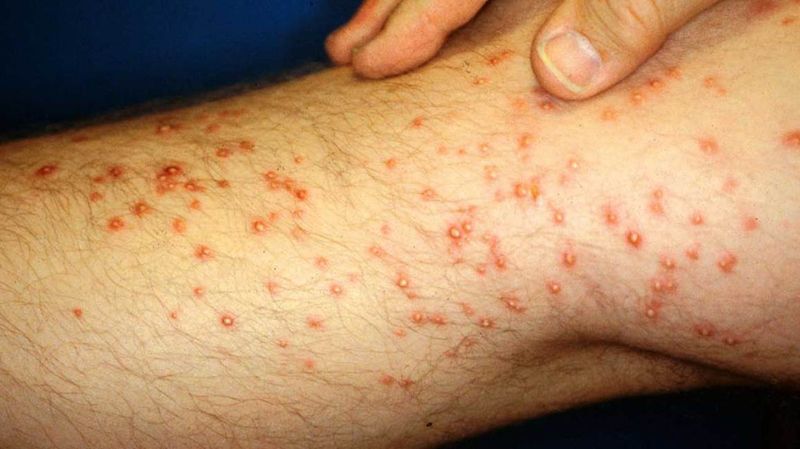
Get away from the ants and wash the sting
Get away from the ants and wash the sting
© Healthline

Speed matters first. Step away from the mound right away, because fire ants can sting more than once and they keep biting while they cling to skin.

Brush or flick off any ants still on you, and check shoes, socks, and pant legs, since they climb fast. Kids may need a helper to do this quickly.

Once the ants are gone, wash the area with soap and water. Poison Control advice lists these same steps for ant stings, and North Carolina Poison Control offers similar guidance for stinging insects.

Plain soap and water is enough. There is no need for harsh chemicals or home mixtures.

A cluster of red, itchy, burning spots fits a fire ant sting, but the marks alone cannot prove which insect did it. NC State Extension describes the red imported fire ants found in North Carolina, yet a sting mark is not an identification test.

If you saw a dirt mound and swarming ants, that is a stronger clue. Either way, the first steps are the same: move away, remove the ants, and wash the skin.

Ease discomfort and itching
Ease discomfort and itching
© zestyhabit_blog

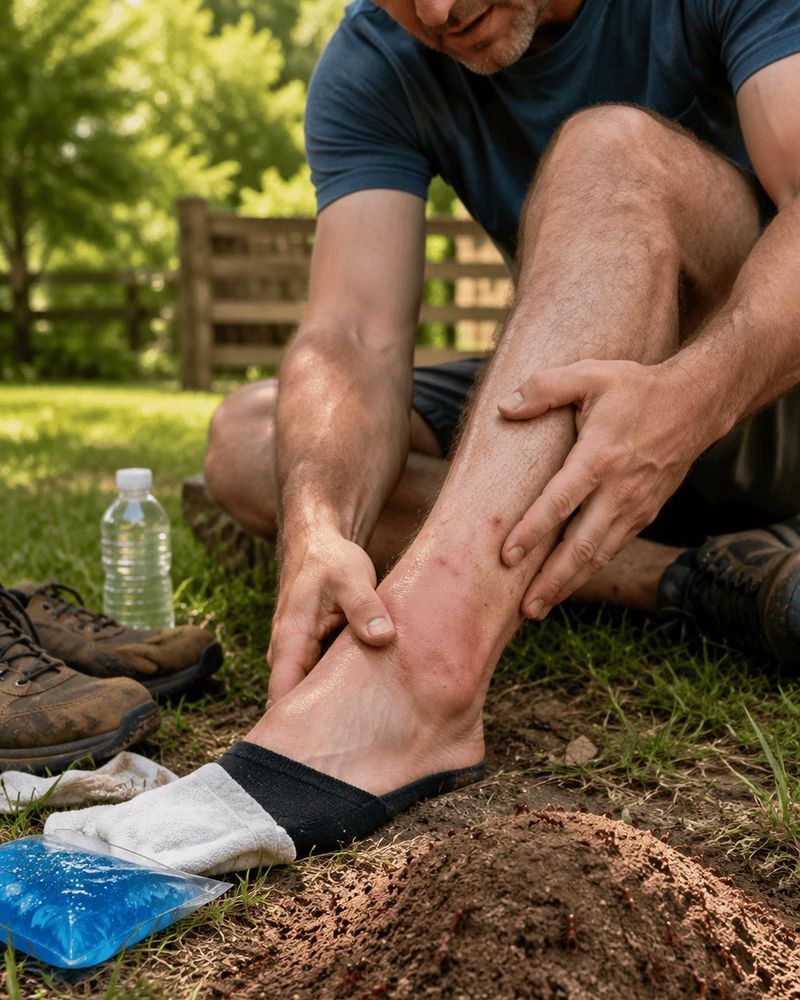
Stings burn and itch, and a cold compress is a simple way to take the edge off. Wrap ice or a cold pack in a cloth first so it never touches bare skin.

The cold can calm swelling and discomfort around the sting.

For mild stings, MedlinePlus guidance suggests applying the wrapped ice for 10 minutes, then taking it off for 10 minutes. People with circulation problems should use shorter applications.

Popping or scratching it breaks that barrier and can give germs an entry point for a secondary infection.

MedlinePlus also says not to wash the area with alcohol, so stick with soap and water.

Itching can be the hardest part. The ACAAI says topical corticosteroid ointments or oral antihistamines may help with itch.

Think of them as options, not requirements, and follow the directions on the product label.

Ask a clinician or pharmacist before using them if the person is a child, is pregnant, has a medical condition, or takes other medicines. That quick question can prevent a bad mix.

Skip folk remedies and household chemicals, since they are not established first aid.

A white bump can be a normal reaction to the sting
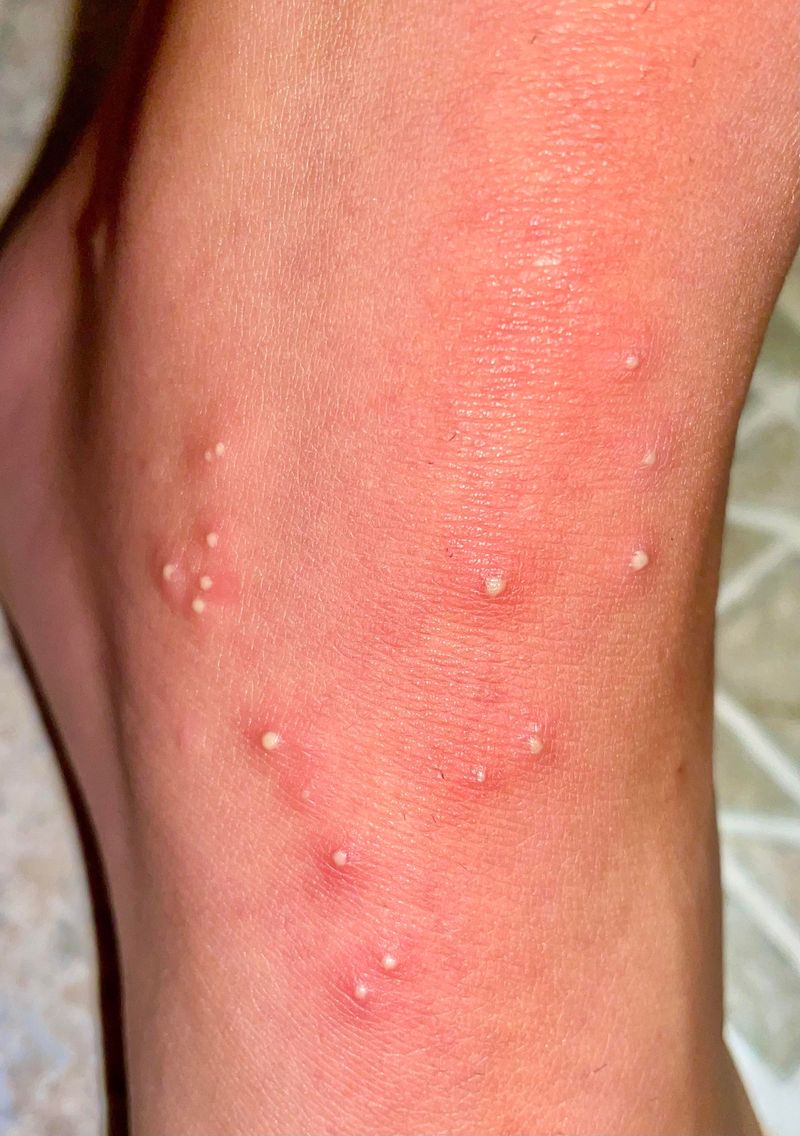
A white bump can be a normal reaction to the sting
© Reddit

Here is the usual story. Right after the sting you get an itchy, raised red spot.

Within about a day, a small white bump that looks like pus often forms on top, and that surprises many people.

ACAAI information describes this pustule as a typical result of fire ant stings, and Mississippi State University Extension explains the same pattern. The word pustule describes how the bump looks.

It does not mean bacteria are growing inside.

The typical bump is usually a sterile reaction to the venom, not infected pus. That is why it can look alarming and still be perfectly normal.

A white head by itself is not a reason to rush for antibiotics.

Also keep in mind that the bump is only consistent with a fire ant sting. NC State Extension notes that red imported fire ants live in North Carolina, but marks on skin do not confirm the culprit.

What matters most is how you treat the spot over the next few days.

Keep the pustule clean and intact
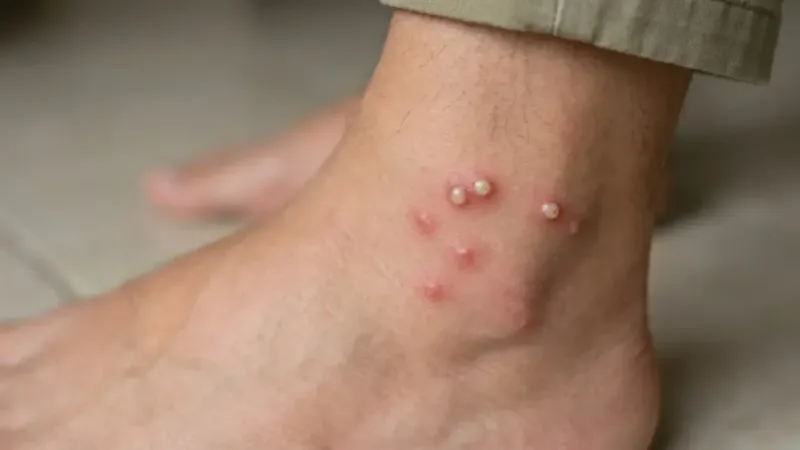
Keep the pustule clean and intact
© Spade Pest Control

Picture the bump as a tiny natural bandage. As long as it stays closed, your skin is still doing its job as a barrier.

Popping or scratching it breaks that barrier and can give germs an entry point for a secondary infection.

That does not mean infection will always follow. It simply means opening the bump adds risk you do not need.

ACAAI guidance and NC State Extension both point toward leaving the pustules alone. Opening them may also contribute to scarring.

Keep the spot clean and try not to scratch. Short nails, a loose cover over the area, or a cold compress when the itch spikes can all help, especially for kids.

If a bump opens by accident, wash it with soap and water and keep it clean. ACAAI says this is generally enough to help prevent infection.

A PubMed study on local skin response to imported fire ant stings is another reason not to treat a normal intact pustule as an infection. Routine antibiotics are not part of the advice for a normal-looking, closed bump.

Know when skin changes need medical advice
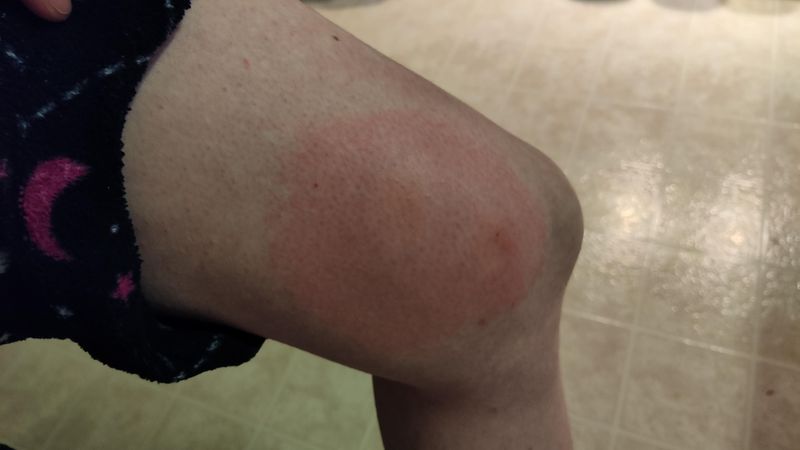
Know when skin changes need medical advice
© Reddit

Most stings follow a predictable path: redness, itch, maybe a white bump, then slow healing. Early redness and itching around the sting are common and should not automatically be called infection.

The skin simply reacts to venom.

Watch for changes that go beyond that pattern. Seek medical advice if redness is spreading or getting worse, if the area becomes more painful or more swollen, if drainage appears, or if a fever develops.

Also get help if the person simply seems unwell.

NC State Extension and HealthyChildren.org describe these as signs to take seriously. A trick that helps: lightly mark the edge of the redness with a pen and check it in a few hours.

If it keeps creeping past the line, call a clinician.

The white bump alone does not tell you the spot is infected, so judge by the whole picture, not just how it looks.

Have questions about a sting? In North Carolina, you can call NC Poison Control at 1-800-222-1222.

Details on stinging insects are also on the NC Poison Control website.

Get emergency help for a serious reaction or many stings

Get emergency help for a serious reaction or many stings
© Uptown Allergy & Asthma

A sore skin spot and a body-wide emergency are two different problems. Local skin trouble stays near the sting.

A serious allergic reaction affects the whole body, and it can happen after only a few stings.

Call 911 for trouble breathing, throat or chest tightness, fainting, or significant swelling of the face or neck. Do not wait to see if it passes.

NC Poison Control and the ACAAI both list these warning signs.

If you have a known severe sting allergy, use your prescribed epinephrine as directed and get emergency medical care, even if symptoms improve. Relief can be temporary, and symptoms can return.

Numbers matter too. Mississippi State University Extension and MedlinePlus note that a large number of stings can be dangerous even without an allergy.

A child, an older adult, or anyone who fell into a mound needs prompt medical attention.

A bump is a nuisance, but trouble breathing is a 911 call.

Share this story
WD

Written by

Wyatt Daniels

More from Wyatt Daniels →

About Gardening Latest

Gardening Latest provides in-depth guides to maintaining and enhancing your garden and backyard. Learn how to make the most of the space you have and create a beautiful garden.

More about us →

Latest stories

  • New Jersey GardeningThe Tiniest Owl In New Jersey Weighs About As Much As A Stick Of Butter, And It’s Roosting In Backyard Evergreens

    The Tiniest Owl In New Jersey Weighs About As Much As A Stick Of Butter, And It’s Roosting In Backyard Evergreens

    1 min ago
  • Michigan GardeningWhy Some Michigan Towns Are Overrun With Black Squirrels While Others Never See One

    Why Some Michigan Towns Are Overrun With Black Squirrels While Others Never See One

    12 min ago
  • Massachusetts GardeningFall Is When Massachusetts’ Venomous Yard Critters Show Up, And They’re Closer Than You Think

    Fall Is When Massachusetts’ Venomous Yard Critters Show Up, And They’re Closer Than You Think

    17 min ago
  • California GardeningThis Is the California Shrub Rattlesnakes Love to Hide Under Near Your Path

    This Is the California Shrub Rattlesnakes Love to Hide Under Near Your Path

    22 min ago
  • New York GardeningStink Bugs Sneaking Into Your New York House? This Cheap Trap Catches Them Overnight

    Stink Bugs Sneaking Into Your New York House? This Cheap Trap Catches Them Overnight

    27 min ago

Gardening by state

Stories for your state, and the hardiness zone most of it gardens in.

Keep exploring

Read next

All North Carolina Gardening →
North Carolina GardeningThe Venomous Snakes, Spiders, and Stingers Hiding Around North Carolina Homes and Yards
North Carolina Gardening

The Venomous Snakes, Spiders, and Stingers Hiding Around North Carolina Homes and Yards

2 hr ago
North Carolina GardeningA Coyote Just Wandered Into Your North Carolina Yard: 7 Smart Moves and 3 Big Mistakes
North Carolina Gardening

A Coyote Just Wandered Into Your North Carolina Yard: 7 Smart Moves and 3 Big Mistakes

6 hr ago
North Carolina GardeningIs That Leafy Ball in Your North Carolina Oak a Squirrel Drey? What to Look For
North Carolina Gardening

Is That Leafy Ball in Your North Carolina Oak a Squirrel Drey? What to Look For

9 hr ago

More from North Carolina Gardening

  • This Is the California Shrub Rattlesnakes Love to Hide Under Near Your Path

    22 min ago
  • Stink Bugs Sneaking Into Your New York House? This Cheap Trap Catches Them Overnight

    27 min ago
Back to top

Leave a response Cancel

Your email address stays private. Required fields are marked with an asterisk.

Gardening Latest

In-depth guides to maintaining and enhancing your garden and backyard: how to make the most of the space you have, and how to make it beautiful.

  • Facebook
  • X
  • Pinterest
  • YouTube

We may earn a portion of sales from products or services that are purchased through our site as part of our affiliate partnerships with retailers.

Explore

  • About GardeningLatest.com
  • Contact Us
  • Terms and Conditions
  • Privacy
  • Editorial Note:
  • FTC Disclosure

Newsletter

New garden guides and seasonal tips, straight to your inbox.

We’ll email you a link to confirm. Unsubscribe any time.

Almost there! Check your inbox and tap the link to confirm.

© 2026 Gardening Latest. All rights reserved.

Back to top