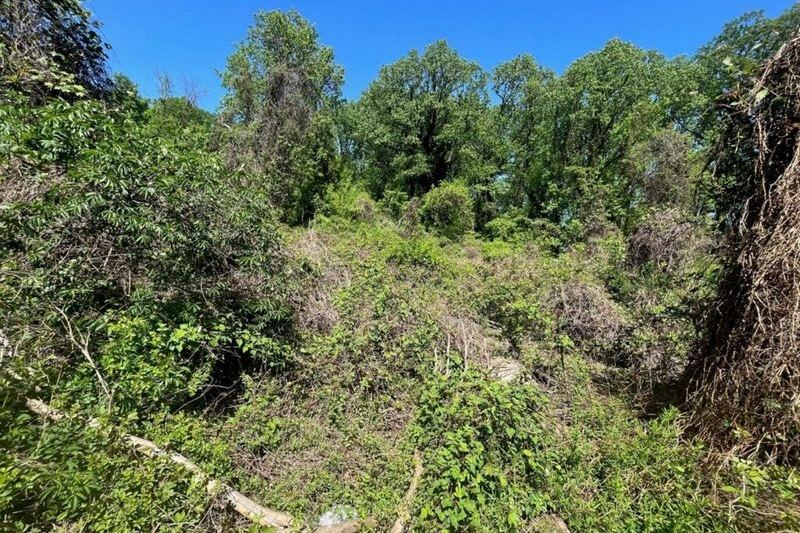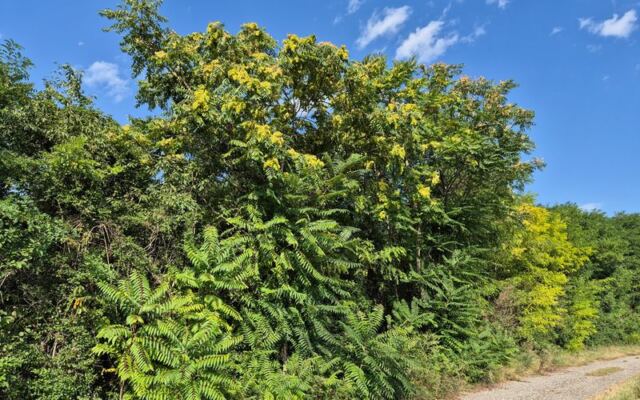
A fast-growing tree called tree-of-heaven is showing up in Maryland yards, along fences, and at the edges of woods. Pulling a sprout by hand feels like the obvious fix, but it often fails when the sprout is tied to an older root system.
Knowing what the plant is and how it grows can save you a lot of wasted effort. Here is how to spot it, when pulling can work, and what a lasting plan looks like.
Tree-of-heaven is widespread across Maryland
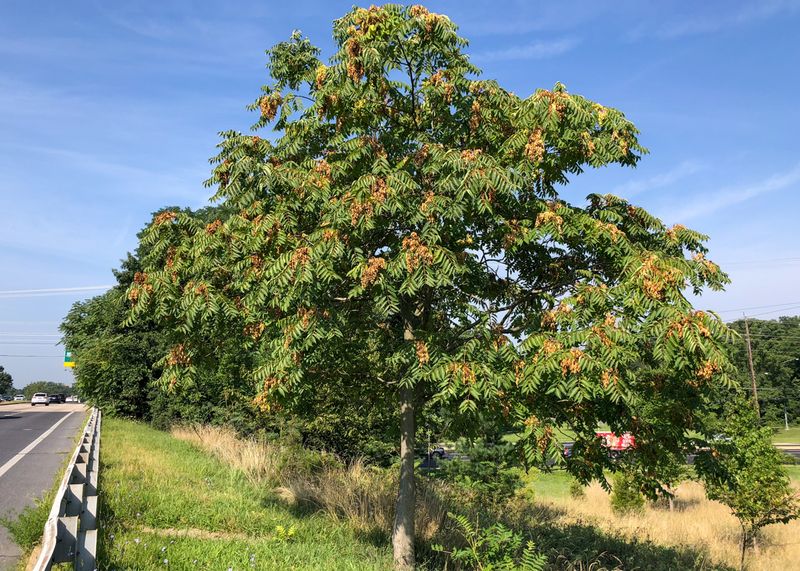
The tree behind those unfamiliar sprouts is tree-of-heaven, known to scientists as Ailanthus altissima. It was once planted widely as a street and shade tree because it handles poor soil and rough conditions.
Today it is an invasive species that turns up in cities, suburbs, and along woodland edges.
According to University of Maryland Extension, county-level records exist in every Maryland county except Somerset as of 2025. That is a strong sign the tree is established across the state.
The map it cites comes from the Maryland Biodiversity Project.
It helps to read those records carefully. They show where the species has been documented, not how common it is in any one county or neighborhood.
They also do not show that it is spreading faster now than before, so there is no proof of a sudden surge.
What the records do tell you is that finding one on your street would not be surprising. Disturbed ground, vacant lots, fence lines, and the edges of woods are all places to look.
A tree you spot may be a single plant or part of a larger patch, and the rest of this article helps you tell which.
Before you act on any sprout, the first job is making sure you have the right plant. The next sections cover how the tree spreads, how to identify it, and what control actually takes.
How tree-of-heaven spreads
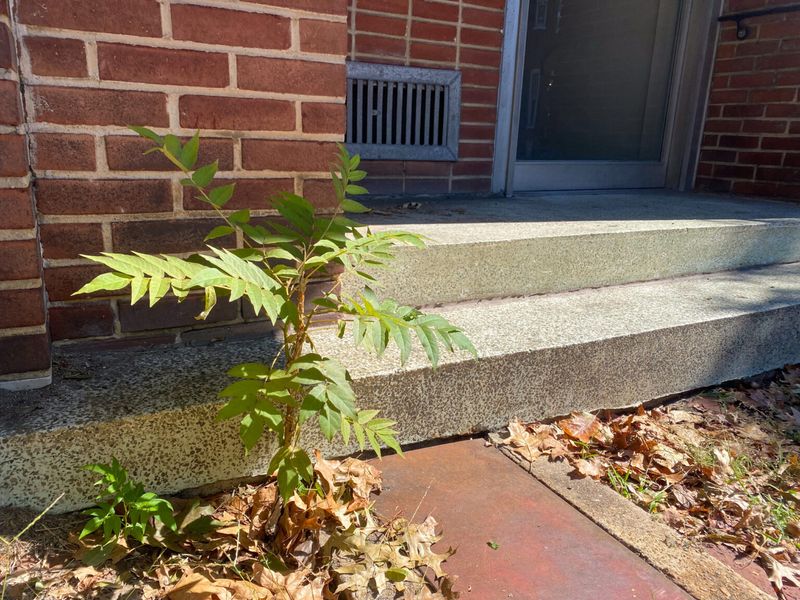
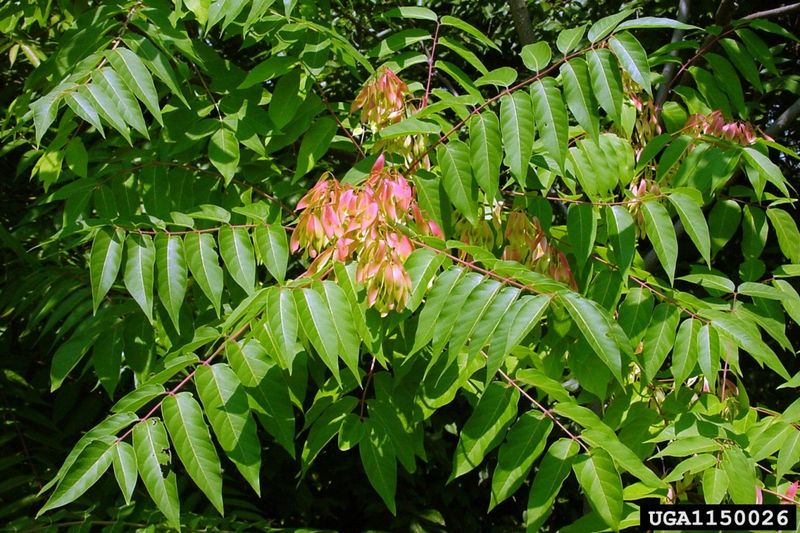
Wind does a lot of the work. A female tree can drop clusters of papery, winged seeds that drift away from the parent and sprout wherever they land.
That is how new plants can appear in a yard with no mature tree in sight.
The second route is underground. University of Maryland Extension reports that established roots can send up suckers as far as 50 feet from the tree.
Those shoots are not new seedlings. They are branches of an existing root system that happen to surface.
This explains why a patch of shoots can pop up along a fence or in a lawn well away from the trunk. Some shoots may be seed-grown and others may be suckers, and you cannot tell by looking at a single plant from above.
It also means you cannot assume how a particular property became infested. A neighbor’s tree, a seed on the wind, or an old root could each be the cause.
One practical clue is the pattern. Shoots in a line or ring around a tree often point to roots.
Scattered single plants in open soil more often come from seed.
Either way, the way the plant arrived shapes what works for removing it, which is why digging a little to see where a shoot connects can be useful.
Check the tree’s features before removing it
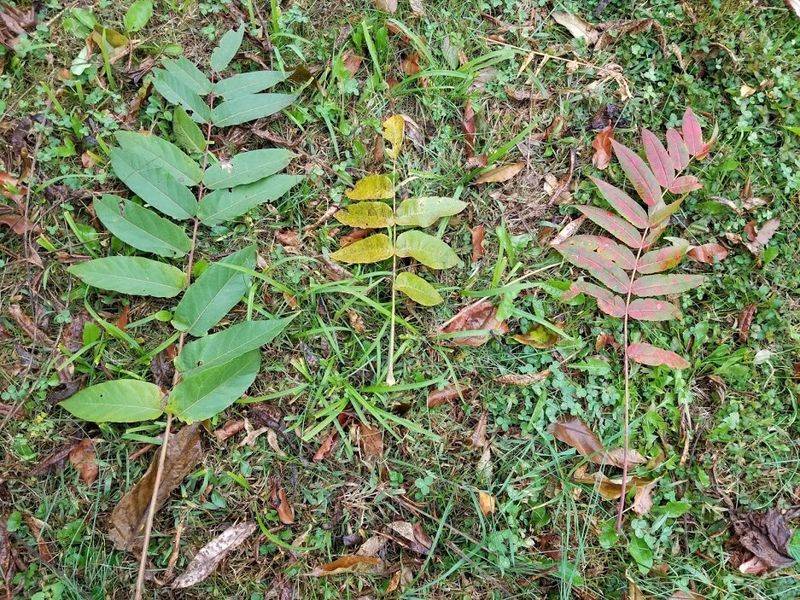
Several native plants look a lot like tree-of-heaven, so a quick glance is not enough. Sumacs and black walnut both have long leaves made of many leaflets.
Cutting down the wrong one would remove a useful native tree.
One helpful clue comes from University of Maryland Extension. Look near the base of each leaflet for a few small teeth that each end in a gland.
Most of the leaflet edge is smooth, so those teeth stand out once you know to check.
Do not rely on that single feature. Compare several at once, including the overall leaf, the twigs, the bark, and the way the plant grows.
Tree-of-heaven leaves are often quite long, and crushed leaves or stems can give off a strong, unpleasant smell that some people compare to rancid peanut butter.
Sumac leaflets usually have teeth along most of the edge, and black walnut has a distinctive nut and a different smell. Photos from several angles help when you compare against a good reference.
If you still feel unsure, ask for help before cutting or pulling anything. Your local Extension office can look at photos or samples.
A short wait costs very little compared with removing a healthy native tree by mistake.
When pulling works—and when it does not
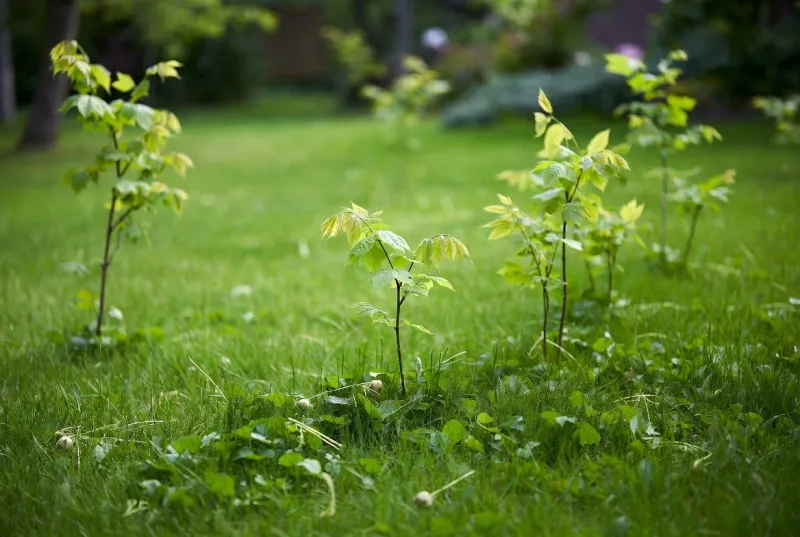
Pulling has a real place in control. A young seedling can come out cleanly when the soil is moist and you can lift the whole root.
Pull slowly and check that no broken root is left behind.
The trouble is that seedlings and root suckers can look alike above ground, as the USDA Forest Service notes. A sucker may be connected to an established lateral root, and University of Maryland Extension says older sprouts can link to extensive roots.
Pulling those often snaps the shoot and leaves the root in place.
Root fragments left in the soil can regrow. The Forest Service also describes digging out established colonies as impractical in most cases.
Here is a simple test. If a stem lifts easily with a short, thin root, it is probably a seedling.
If it resists, or you find a thick horizontal root running to another plant, you are dealing with a sucker.
So think of pulling as a limited tool. It works well on small seedlings caught early, and repeated removal of sprouts can contribute to control.
But one pull on a sucker will not reliably kill the root system, and it is not a complete answer for established patches.
Established trees need a lasting control plan
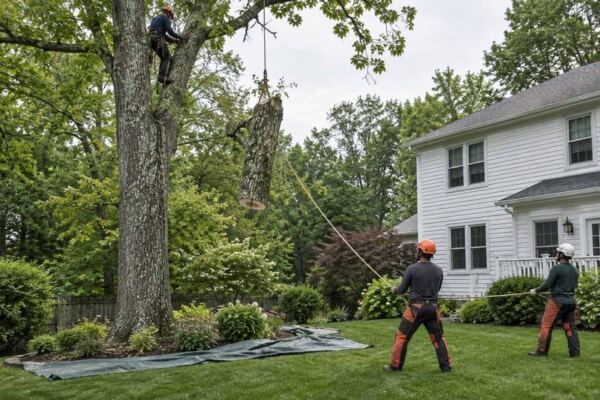
Cutting down an established tree and walking away usually backfires. The living roots respond by sending up new suckers, sometimes many of them.
A stump with a ring of fresh shoots is a common sight after a tree is felled.
There are two broad paths. The first is chemical-free: remove new sprouts again and again.
University of Maryland Extension describes this as workable but more time-consuming, and the USDA Forest Service says mechanical control may need at least five years of follow-up.
The second path is a systemic herbicide, which moves into the roots. Extension guidance points to late summer or early fall as generally the most effective time in Maryland.
Follow-up may still be needed, and cutting too soon after treatment risks regrowth.
This is a planned option with site-specific risks, not an automatic fix. Always follow the product label exactly, since it governs how the product can be used.
For a large tree, a difficult site, or a spot near plants you want to keep, get qualified local advice rather than improvising. A certified arborist or your county Extension office can help you choose a method that fits your yard and your schedule.
Plan on checking the site each season, because steady follow-up is what separates control from a short pause.
Protect your skin and nearby plants
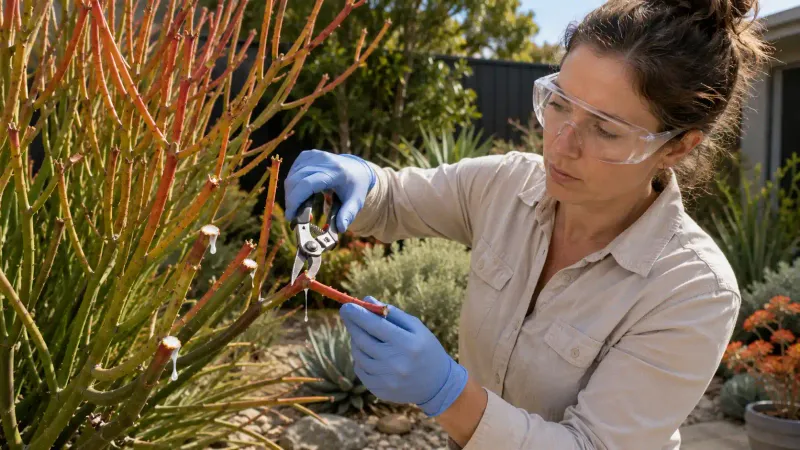
Dress for the job before you touch the plant. Long sleeves, long pants, sturdy gloves, and eye protection keep sap and plant material off your skin.
Wash tools and clothes afterward.
The USDA Forest Service reports dermatitis in some people and describes a serious case after sap contacted broken skin. Most people will not react that strongly, so there is no need for alarm.
Simple precautions are enough.
If sap or leaves touch bare skin, wash the area soon. Poison Control advises covering skin outdoors and washing plant material or sap off promptly.
Cover any cuts before you start work.
Your other plants need protection too. The Forest Service warns in its species review that herbicides used on tree-of-heaven can harm non-target trees, including in mixed stands.
A product is not automatically selective just because you aim at one plant.
Roots can also reach under neighboring trees, so a treatment that seems contained may not be. Near shrubs, trees, or gardens you value, do not improvise.
Read the label closely and ask a qualified local professional to help plan the treatment.
Removing the tree does not guarantee lanternfly relief
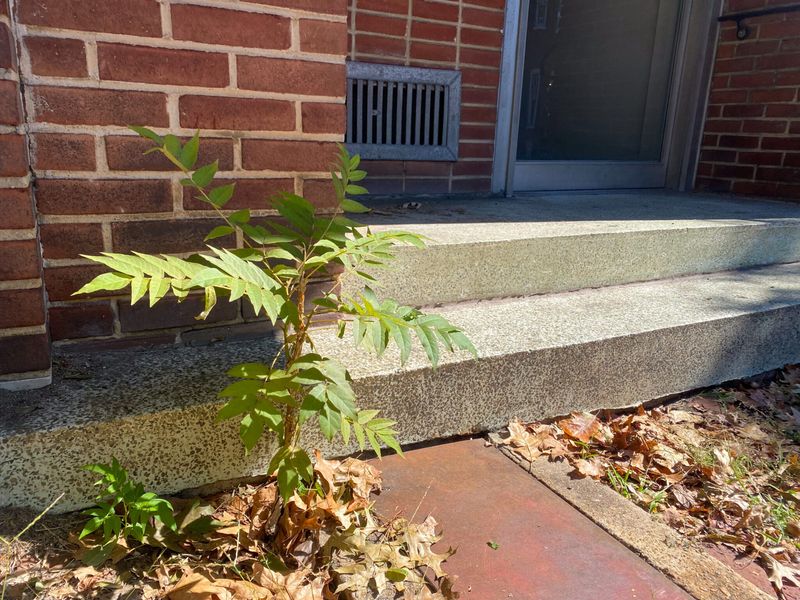
Tree-of-heaven often comes up in conversations about spotted lanternfly, an invasive insect that feeds on many plants. It is easy to assume that cutting the tree will clear the pests away.
The Maryland Department of Agriculture says otherwise.
In its spotted lanternfly guidance, the agency states that removing tree-of-heaven does not guarantee lanternflies will leave. It also says eradication is not currently feasible, and it does not recommend removing other host plants.
So keep the two goals separate. You may have good reasons to control tree-of-heaven, such as its fast spread and suckering.
Just do not expect that work alone to solve a lanternfly problem.
The same goes for your other trees and shrubs. A maple, grapevine, or fruit tree is not a problem to be removed because an insect visits it.
Follow the department’s current management advice for the insect, and treat the tree decision on its own merits.
Choose the next step based on the roots
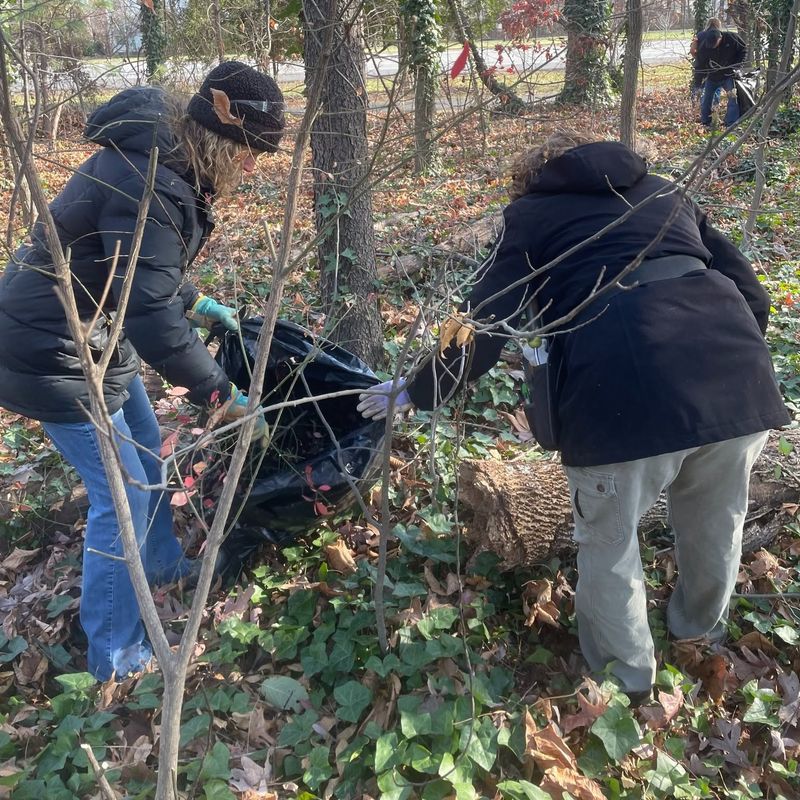
Start by confirming the plant’s identity, using several features rather than one. Then check the roots.
A young seedling can be pulled when the whole root comes out, but a shoot tied to an established root needs a longer plan.
One cut or pull may not control an established root system, as USDA Forest Service information and University of Maryland Extension both indicate. Ask your local Extension office for a plan that fits your site.
The roots decide the job, so look underground before you reach for the saw.
Share this story