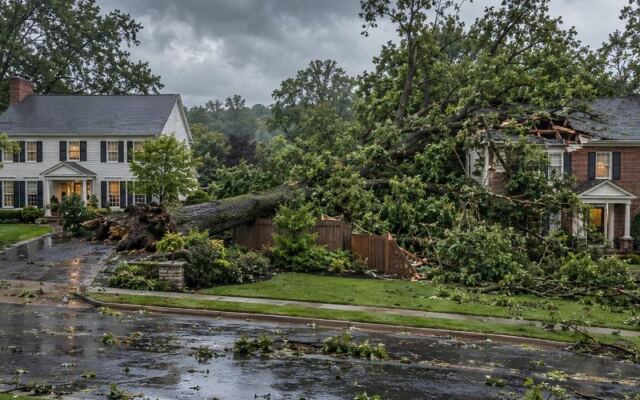
When your neighbor’s tree crashes onto your house, your own homeowners insurance will generally pay for the damage first, not your neighbor. That surprises many people, because the tree grew on someone else’s land.
Your policy has terms, limits, and a deductible, and your insurer may later ask the neighbor to repay it if the facts point to their responsibility. Here is how the pieces fit together so you know what to do next.
Make the site safe and document the damage
Safety comes before everything else. If the tree is touching or tangled in power lines, stay away from it and call the utility company or emergency services.
CDC guidance says not to enter a home with obvious tree or power-line damage until a professional has checked that it is safe.
Once it is safe to do so, take plenty of photos and video of the damage before anything is moved. Wide shots show the whole scene, and close-ups show the broken roof, fence, or siding.
Try to contact your insurer before cleanup begins, because Maryland’s Insurance Administration describes taking photos before debris is removed as part of documenting a loss.
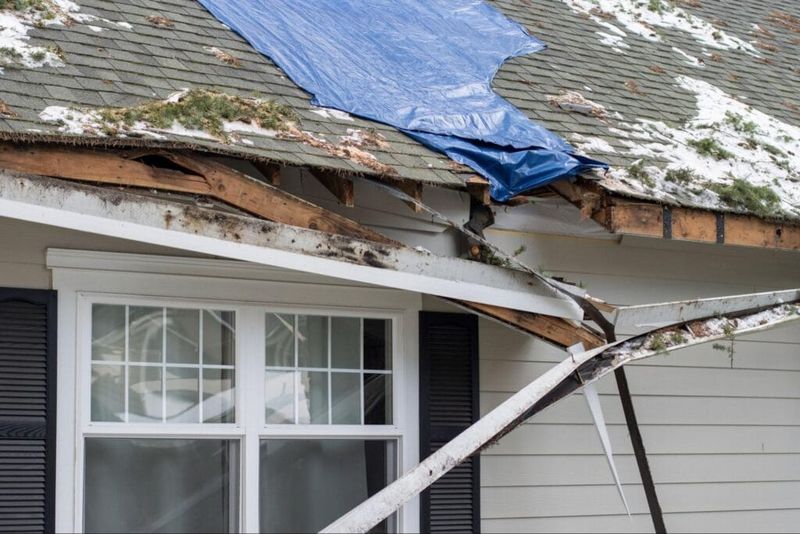
You are also expected to take reasonable steps to stop more damage while you wait for an adjuster. Covering a hole in the roof with a tarp is a common example, and the state explains this in its weather loss guidance.
Keep receipts for any materials you buy.
If you need to hire someone to cut up or haul away the tree, look for a licensed pro. The Maryland Department of Natural Resources offers a licensed tree expert lookup and says these experts must carry required liability and property-damage insurance.
Hiring one is a safety and quality choice. It does not decide who owes money for the loss, and you should not try risky removal work yourself.
Start with your homeowners insurer
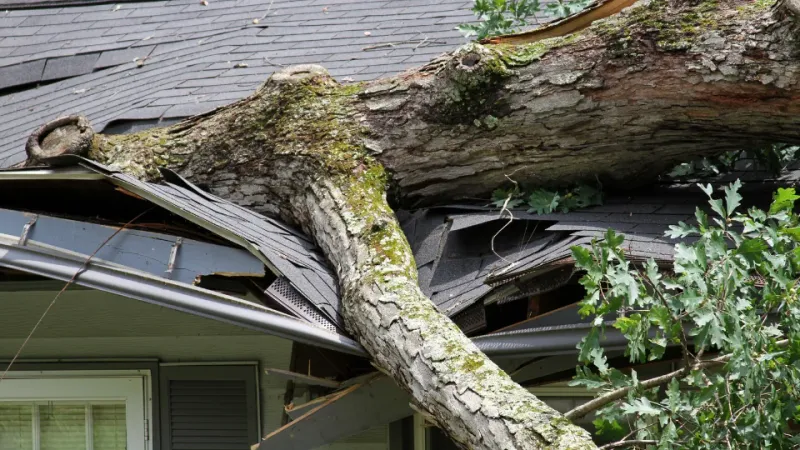
Your first phone call usually goes to your own insurance company. Maryland’s Insurance Administration says that when a neighbor’s tree damages your home or another insured structure, your homeowners policy will generally cover the damage.
That coverage is subject to the policy’s terms, limits, and deductible. Other insured structures can include a detached garage, shed, or fence, depending on your policy.
Report the claim promptly. The state’s page on reporting an insurance claim encourages you to ask what your policy covers and to keep details of the claim.
A simple notebook or phone note works well for this.
Write down the date and time of each call, the name of each person you speak with, and your claim number. Save emails, estimates, and receipts in one folder.
If an adjuster visits, show them your photos and point out every area of damage.
Keep one idea clear as you go. Your insurer deciding to cover the damage is a separate matter from deciding whether your neighbor is legally responsible.
The first question is about your contract with the insurance company. The second depends on facts about the tree and the neighbor, which later sections explain.
Ask your insurer plainly how the deductible applies and what happens if they later recover money from someone else. Getting those answers early avoids surprises.
Tree removal, yard debris, and car damage may be treated differently
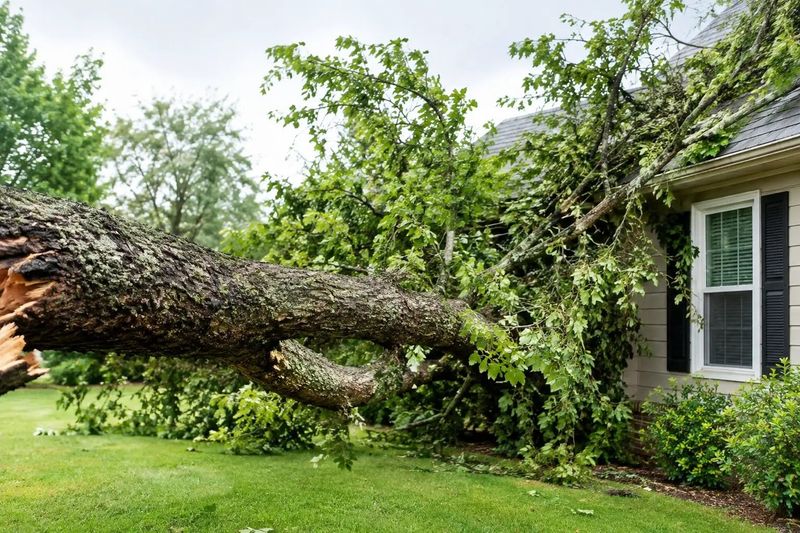
Not every loss from a fallen tree falls under the same part of your policy. Damage to your house or another insured structure is one thing.
Hauling the tree away is another, and a damaged car is another still.
Tree removal coverage is usually limited. Maryland’s guidance points to differing typical amounts, with one page mentioning around $500 and another saying many policies pay $500 to $1,000.
Your own policy controls, so read the removal section or ask your agent. The limit may apply per loss rather than per tree.
Picture a tree that lands only in the yard and touches no building. Coverage for removing it may be limited or may not exist at all.
The state advises checking with your insurer when no insured dwelling or other structure was damaged.
A car crushed by a branch raises a different question. Homeowners insurance generally does not cover vehicle damage.
Comprehensive coverage under your auto policy may, so call that insurer too.
A good habit is to list each loss separately: the structure, the tree removal, the yard, and the vehicle. Then ask which policy, if any, responds to each item and what deductible applies.
Tree condition and the owner’s knowledge may matter
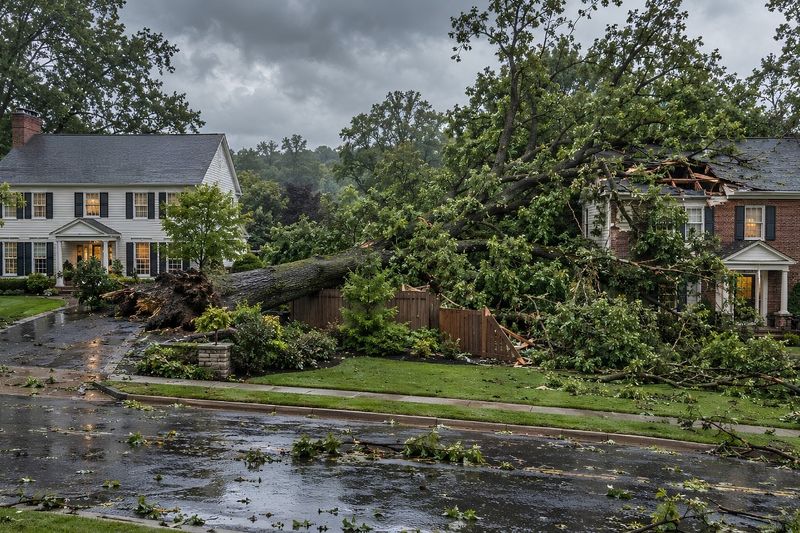
Owning a tree does not by itself make a neighbor responsible when it falls. A storm does not automatically clear them either.
The details of what happened carry real weight.
Was the tree dead, diseased, leaning, or rotting at the base? Could the owner have noticed the problem, or did they actually know about it?
How did the tree fall, and how severe was the weather? Answers to these questions may matter if anyone examines who should bear the cost.
A University of Maryland Extension article by a legal specialist discusses a possible duty for urban landowners to inspect and address diseased or dangerous trees. It treats rural properties and suburban forests differently, so location and setting count.
It is guidance drawing on legal principles, not a promise of how any case will turn out.
Think of two examples. A healthy tree snapped by a fierce storm tells a different story than a long-dead tree with fungus on the trunk and no leaves for years.
In the second case, the neighbor’s knowledge or chance to spot the danger may become a bigger issue.
While the scene is fresh, photograph the stump, the break point, and any signs of decay, with a safe distance and proper care.
Your insurer may seek reimbursement from the neighbor
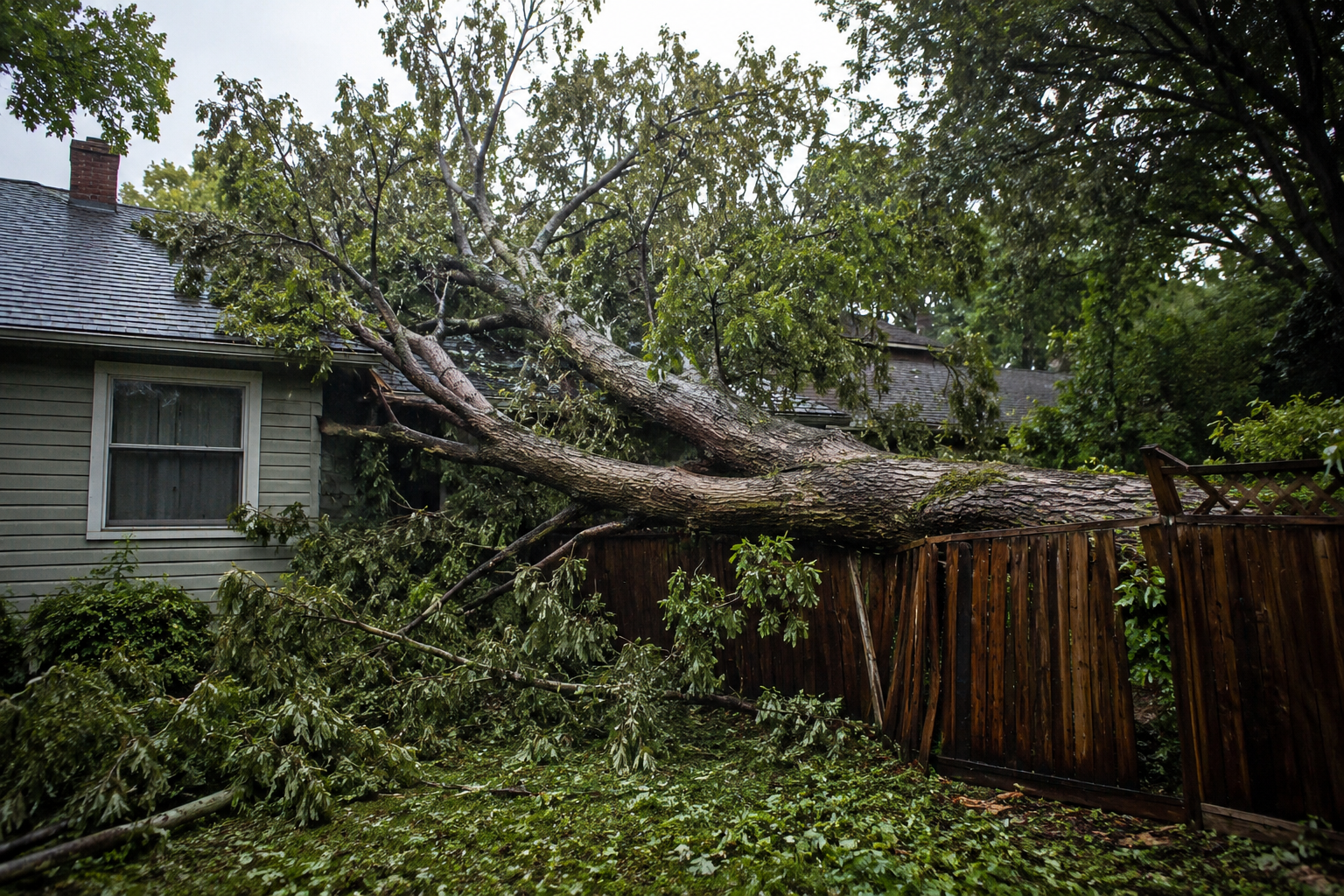
Subrogation is a plain idea with a fancy name. After your insurer pays a covered claim, it may try to get that money back from another party if the facts support that party’s responsibility.
Maryland’s Insurance Administration notes that your insurer may seek reimbursement from the neighbor when evidence shows the neighbor knew a dead tree posed a danger.
This effort is separate from your own claim. You file with your insurer and get paid under your policy.
Any pursuit of the neighbor comes afterward, it is not automatic, and it does not guarantee that the neighbor will pay anything.
So what kind of evidence might help? Photos showing a dead or decayed tree are one example.
Records of earlier warnings, such as messages or letters asking the neighbor to deal with the tree, may also be relevant, along with how the owner responded. The Extension discussion of a possible duty to inspect and address dangerous trees makes what the owner knew an important question.
No single way of giving notice is a legal threshold. A text, an email, or a letter is simply information that may help show what the owner knew.
Keep copies of anything you sent or received about the tree before it fell.
Maryland’s tree cases address different situations
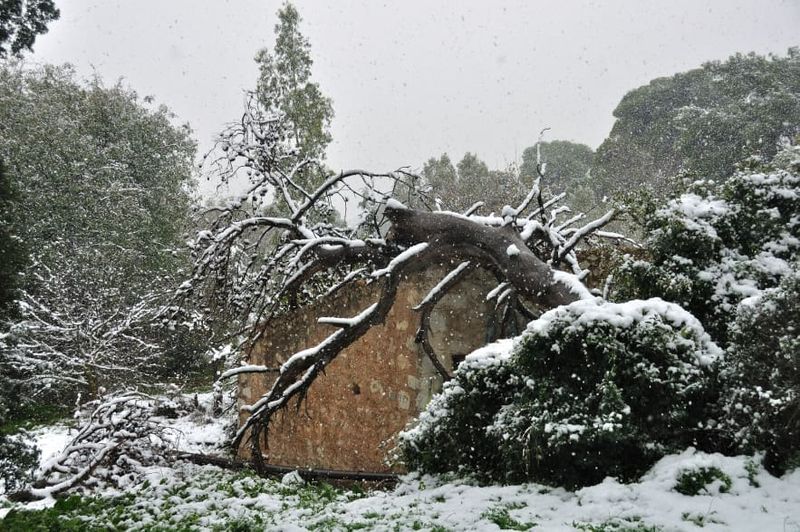
Legal sources about trees can sound more decisive than they are. The University of Maryland Extension article says Maryland courts had not directly decided the specific case of a diseased tree falling onto a neighbor’s property.
It applies principles from other tree cases instead.
Two cases often come up. Hensley v.
Montgomery County involved a tree limb and a public road. The court discussed how location and the burden of inspecting trees can affect duties, but that is a different setting from a tree landing on a house next door.
Corp. concerned encroaching roots and branches, including when they cause or threaten harm to a neighbor’s property. That is a boundary dispute about growth, not a rule that assigns storm-fall costs.
Neither case is a direct ruling on who pays when a neighbor’s tree falls on your home. They show how courts think about trees and property, nothing more.
If you need to know where you stand, a Maryland attorney can look at your actual facts.
Use your policy and the evidence to guide next steps
Two questions guide everything here. First, what does your policy cover right now?
Second, might the evidence later support recovery from the neighbor? Follow your insurer’s instructions on the first, and keep your photos, notes, and any earlier tree warnings for the second, as Maryland’s Insurance Administration explains.
This article cannot decide who is responsible for your particular tree fall. Your policy, the tree’s condition, and the circumstances all shape the answer.
A fallen tree is a sudden problem, but the paper trail you build in the first days can quietly do the most work.
Share this story