Chinese tallow is spreading across the South, and Georgia homeowners, especially near the coast, have good reason to pay attention. Kudzu is the plant most people picture when they hear about a runaway invader, and tallow and Bradford pear now get compared to it.
The real picture is more specific than the headline, and it points to clear steps you can take in your own yard. Knowing which tree you have changes how you deal with it.
What the spread numbers actually measure
A 2024 Forest Service study estimates that Chinese tallow has been expanding north and inland across the southern United States at 5 to 20 km per year over the prior decade. That is a regional range measure.
It tracks where the species is showing up across the South, not how many new yards in Georgia have picked up a tree.
Kudzu is measured in other ways. Forest Service kudzu research reports vine growth of up to about one foot per day.
That describes how fast a single vine lengthens, not how quickly the plant takes over new ground, so it cannot be lined up against a tallow range estimate.
Kudzu acreage numbers are tricky too. The Forest Service review repeats an estimate of 7 million acres in the Southeast.
A separate Southern Forest Futures report found 226,889 acres on forested plots. The second figure covers only forestland that was sampled, so it is not a full count of kudzu in the South, and the two numbers should not be set side by side as equals.
The study also named Louisiana, Texas, and Mississippi as the most invaded states in its analysis. So the research shows a real, growing tallow problem across the region.
It does not show that Georgia is spreading fastest, and it does not prove tallow is beating kudzu.
Chinese tallow spreads through seeds and root sprouts
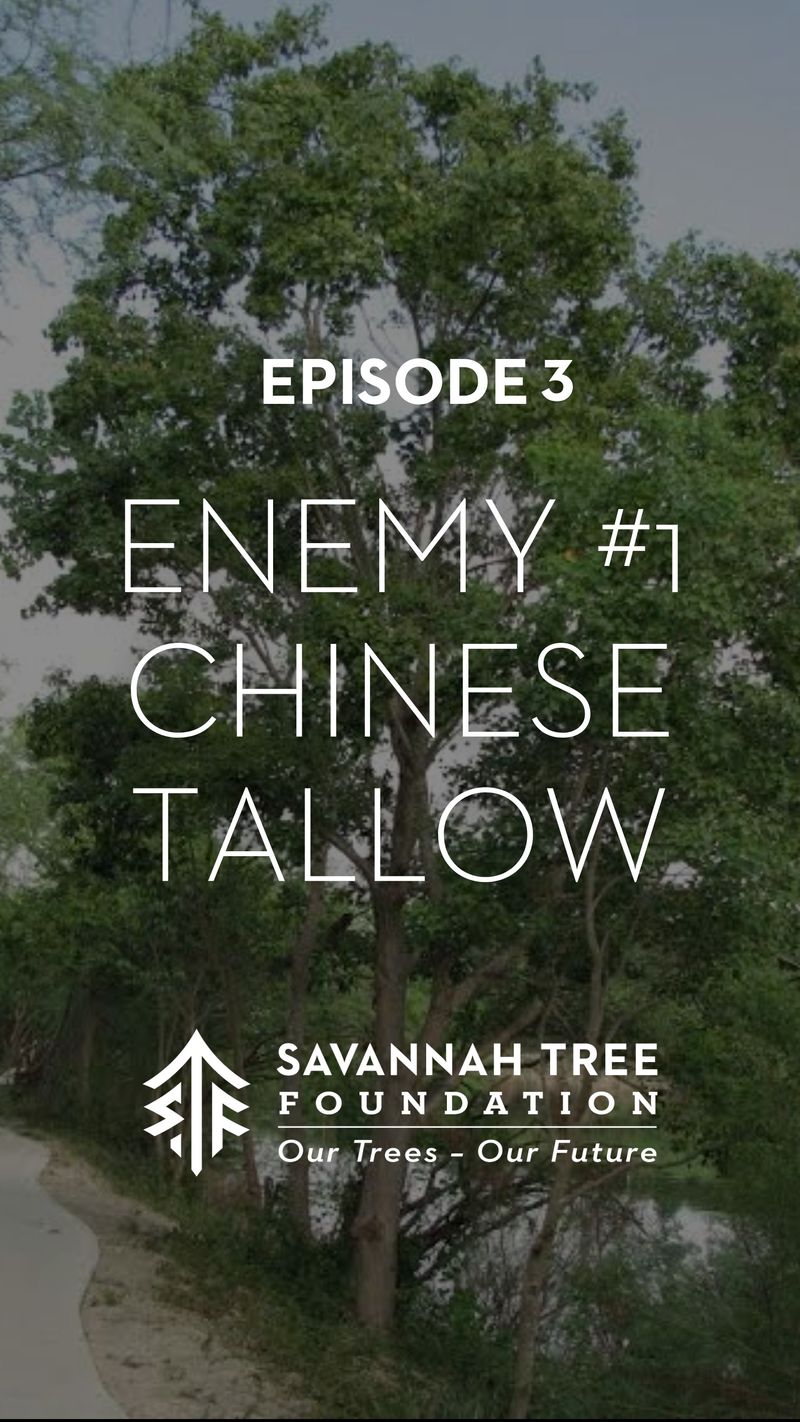
Picture a landscaping favorite that quietly slipped its leash. Chinese tallow, also called popcorn tree, is a nonnative tree that has become invasive across the Southeast.
It was planted in yards for years before people saw how far it could roam.
According to UGA Extension in Glynn and McIntosh Counties, the tree spreads through abundant seed and through root sprouts. That means a single tree can start new growth in two ways: seeds that land elsewhere, and shoots that rise from roots near the parent.
In coastal Georgia, local Extension offices treat it as a real concern. A Camden County update from UGA Extension calls it a significant local invasive.
Those reports describe a coastal problem. They do not give a statewide rate of spread, so inland readers should not assume the same pressure in their neighborhood.
If you think a tree on your property or nearby is Chinese tallow, report it to EDDMapS, the mapping tool UGA Extension recommends for suspected sightings. Reports help researchers and land managers see where the tree is turning up.
If you are unsure of the species, your county Extension office can help you sort it out before you do anything to the tree.
Bradford pear is part of a wider Callery pear problem
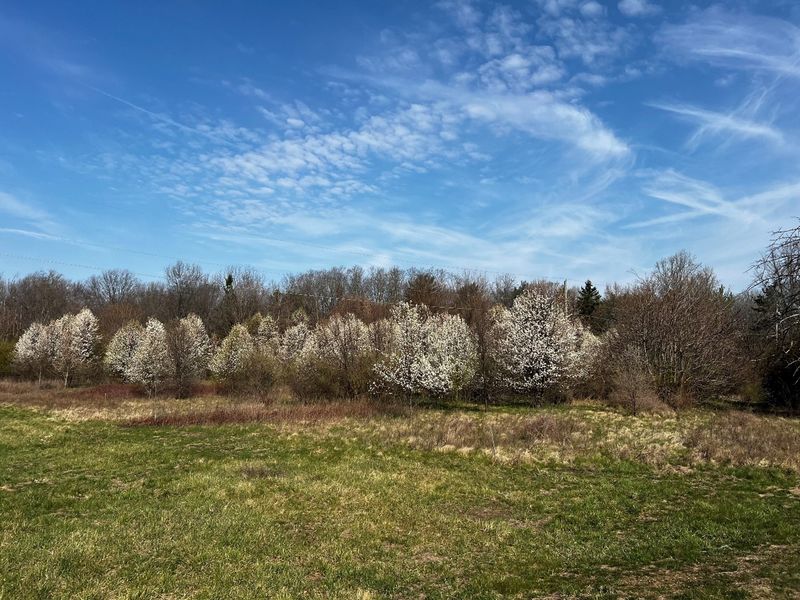
Bradford pear gets the blame, but it is only one piece of the story. Bradford is a cultivated form of Callery pear, and the wider Callery pear population is the invasive concern.
It is a different tree from Chinese tallow, with its own way of spreading.
The original Bradford cultivar produced sterile fruit, which is why it was so widely sold. Even so, UGA Extension in Forsyth County explains that other cultivars can cross-pollinate and produce viable seed.
Birds eat the fruit and carry the seed to new places.
The result is that Callery pears have spread from landscaping into natural and forest lands. Calling every Bradford pear sterile is an overstatement, because the offspring of cross-pollinated trees behave differently from the original cultivar.
Writers and neighbors often use “Bradford pear” as a catch-all name. NC State Extension separates the ornamental cultivars from their invasive offspring, and that distinction helps when you decide what to do about a tree.
Seed carried by birds and rootstock growth drive Callery pear. Seed and root sprouts drive Chinese tallow.
Mixing the two up leads to the wrong plan.
Cutting Chinese tallow may leave it ready to resprout
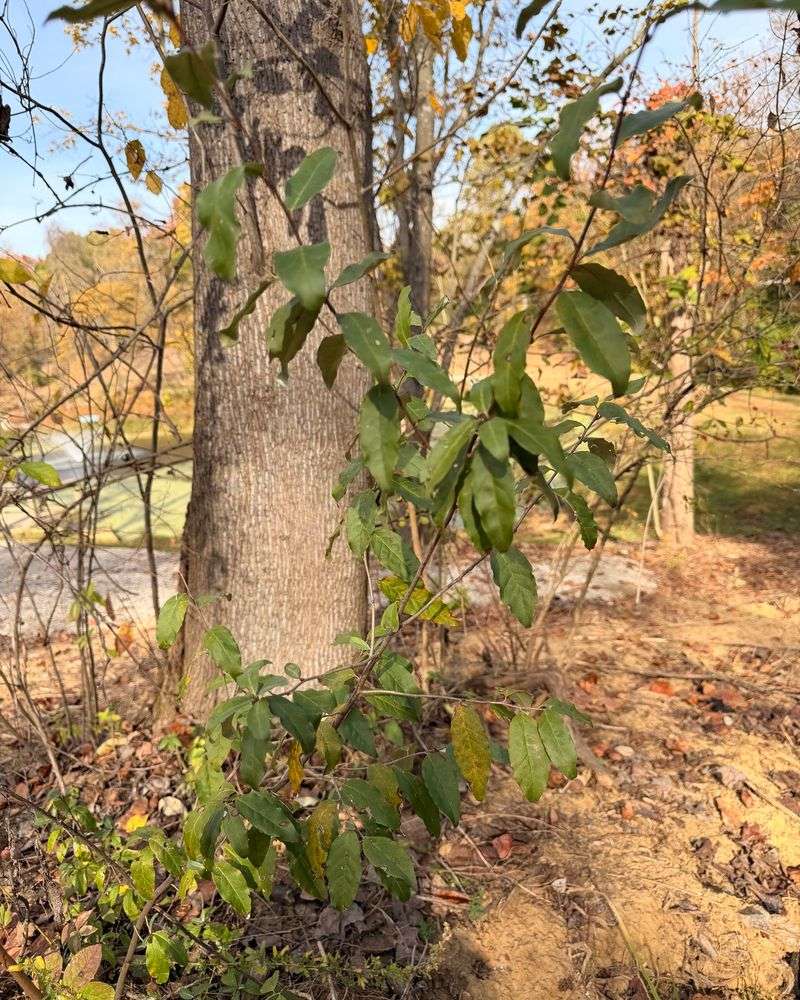
A clean stump can fool you. Cutting Chinese tallow alone may not kill it, because the stump and roots can resprout.
Many people cut a tree down, see it vanish, and then watch shoots come back a few weeks later.
Alabama Extension describes several herbicide options and notes that control can take multiple applications. Some treatments can also injure nearby vegetation, and some are not suited to sites close to water.
That is why no single recipe fits every yard.
Protect your skin as well. Clemson Extension notes that the sap may irritate skin, so gloves and long sleeves make sense for any hands-on work.
Removing a large landscape tree is also not a simple weekend project, and a qualified professional may be the safer choice.
If you decide to use an herbicide, the product label is your guide. The EPA explains that pesticide labels are legally enforceable, so the site, method, rate, and precautions printed there must be followed.
Look at what grows nearby, and take extra care close to ponds, ditches, or marsh, where you need a product labeled for that use.
Plan on return visits. Check the stump and the surrounding soil for new shoots and treat regrowth as part of the job, not a sign that something went wrong.
Plan for Callery pear regrowth
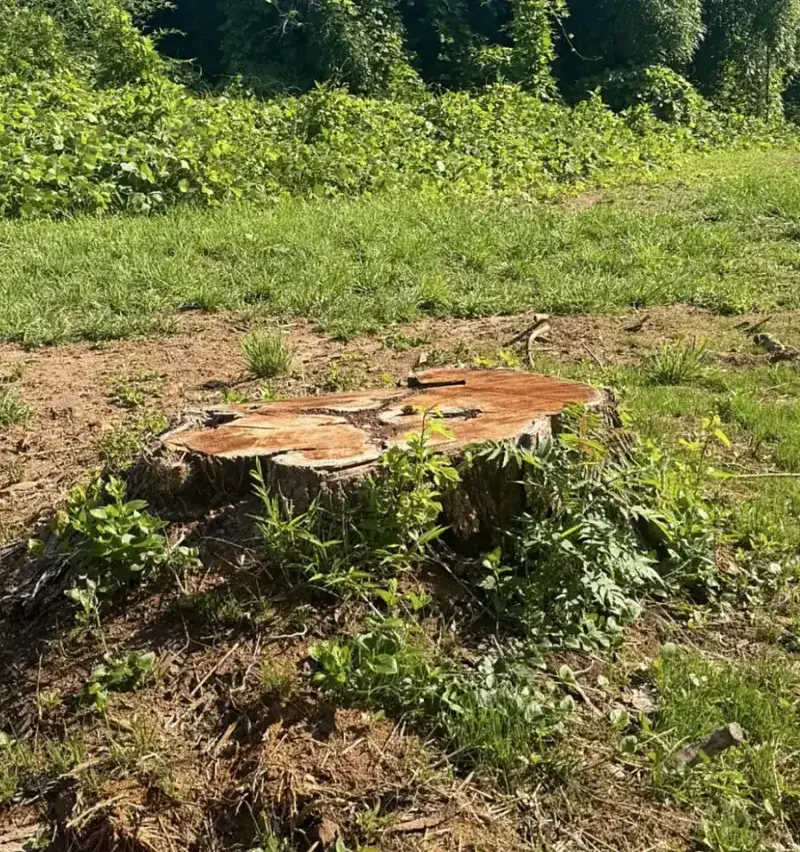
Size decides the plan for Callery pear. Small seedlings can often be pulled by hand, as long as you get the roots out.
NC State Extension covers this kind of removal and the problem of invasive offspring. Damp soil after rain makes pulling easier, and any root left behind gives the plant a chance to try again.
Bigger trees are a different story. Larger Callery pears can resprout after cutting, so the job does not end when the trunk hits the ground.
Alabama Extension guidance calls for follow-up, often stump treatment or thorough root removal.
No single method suits every site. A tree beside a house, a fence line, or a drainage ditch may call for a different approach than one in an open corner of a lot.
If you use herbicide, follow the label for that product and watch for nearby plants.
Then keep watching. Walk the spot every few weeks through the growing season and look for new shoots, since regrowth is the usual sign that roots survived.
For a large landscape tree, a qualified arborist can judge the risks to buildings, power lines, and neighboring plants, and can handle the cutting safely.
Match the response to the tree
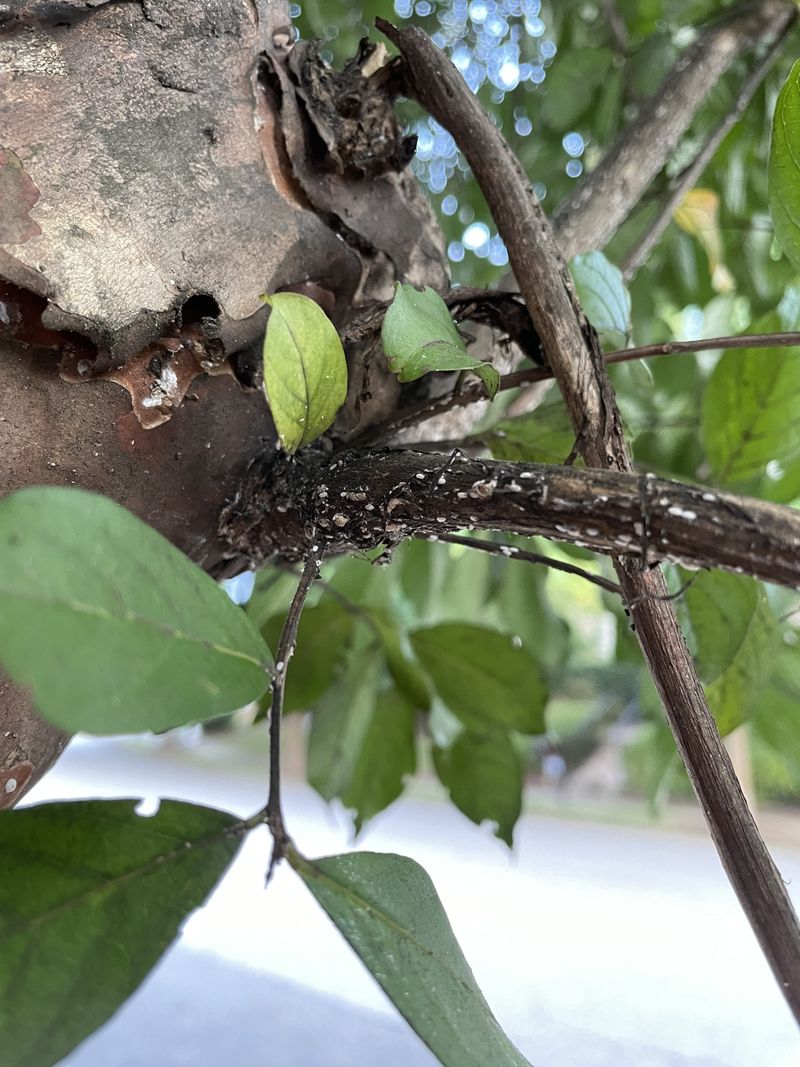
Range expansion, vine growth, and acreage all measure different things, so none of them can crown a winner against kudzu. What they do show is that Chinese tallow and Callery pear each deserve attention on their own terms.
Start by identifying the tree, and ask your county Extension office if you are unsure.
If you suspect Chinese tallow, report it to EDDMapS. For pears, remember that Callery pear and its offspring need their own plan.
After any removal, check back for regrowth.
The right tool for the wrong tree is just wasted effort.
Share this story