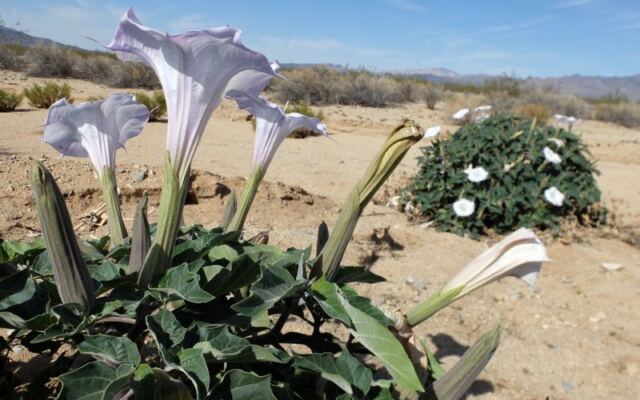
The big white trumpet flowers of sacred thornapple are lovely, but this California native is a plant to handle with gloves on. Every part of it is poisonous if eaten, and its sap can bother bare skin.
Knowing which plant you have and how to treat it makes garden work calmer and safer for everyone, including kids and pets.
Which Plant Do People Mean by “Devil’s Trumpet”?
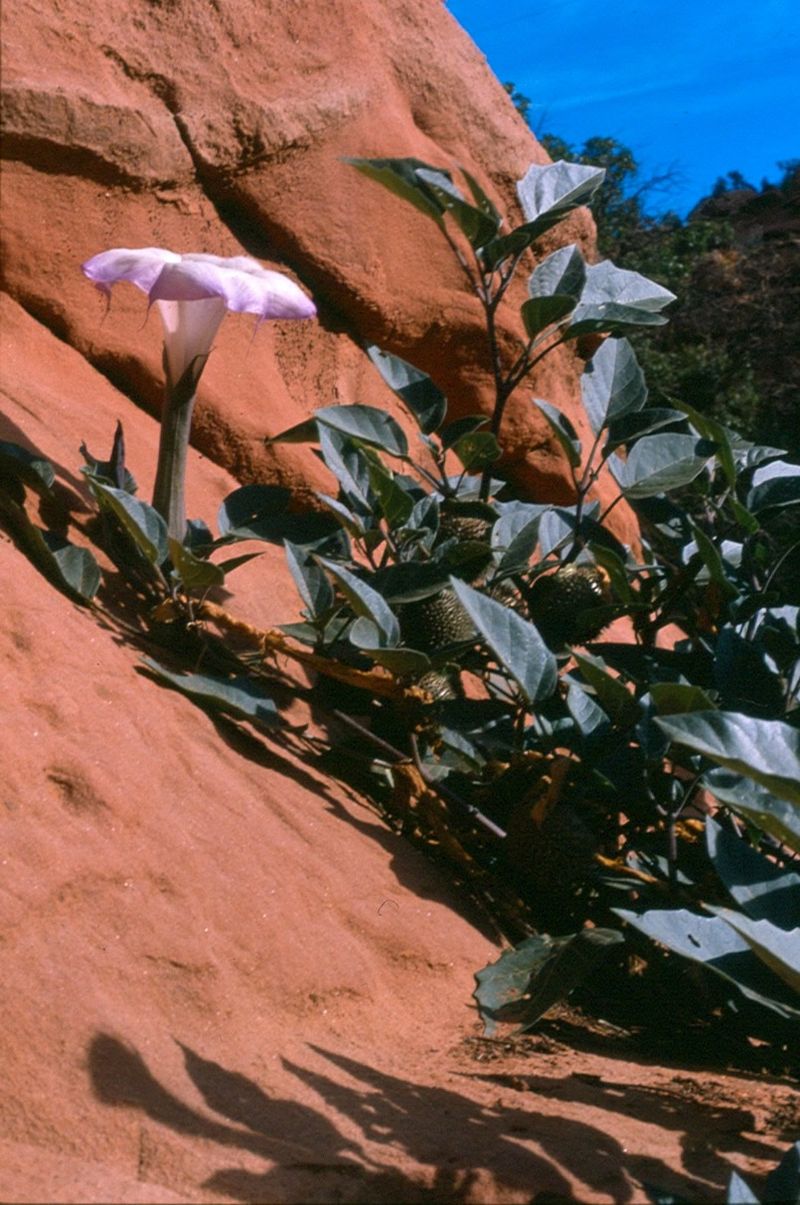
Plant nicknames get tangled fast. “Devil’s trumpet” is a casual label, and it does not point to one single species, so it is a poor guide when safety is involved.
In California, the plant most people mean is Datura wrightii, also called sacred thornapple. UC Statewide IPM Program lists it as a native species found in several parts of the state.
The naming mix-up goes further. Wisconsin Master Gardener materials note that “devil’s trumpets” can refer to Datura, while “angel’s trumpet” is a name often used for Brugmansia, a different group of plants.
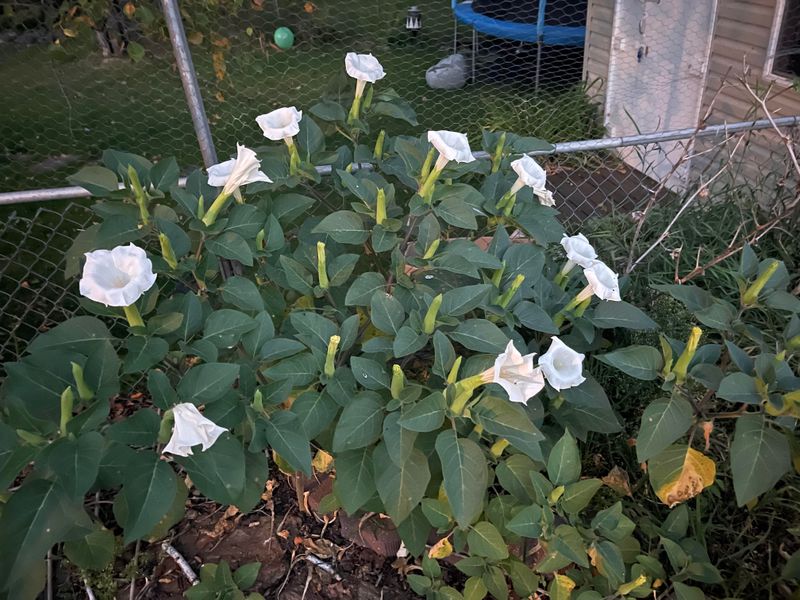
Brugmansia usually has flowers that hang downward, while Datura flowers tend to point up or outward.
California Poison Control uses “Angel’s Trumpet” for Brugmansia and warns that all parts can cause serious poisoning if chewed or eaten. So both plants deserve respect, but they are not the same plant.
Before you follow any safety advice, work out what is actually growing in your yard. Check the scientific name on a plant tag, compare photos from a trusted source, or ask a local nursery or your county extension office.
Identify the species first, and the rest of the advice in this article will fit much better.
A Striking Plant Native to California
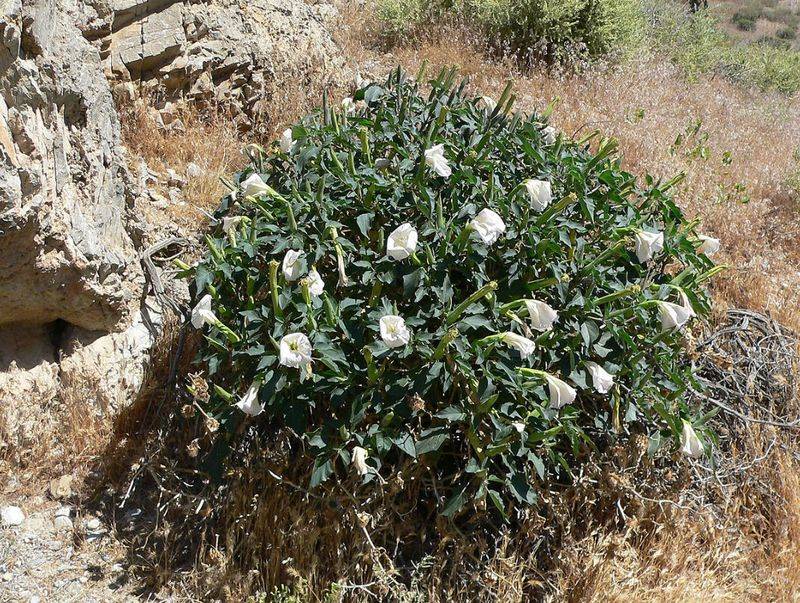
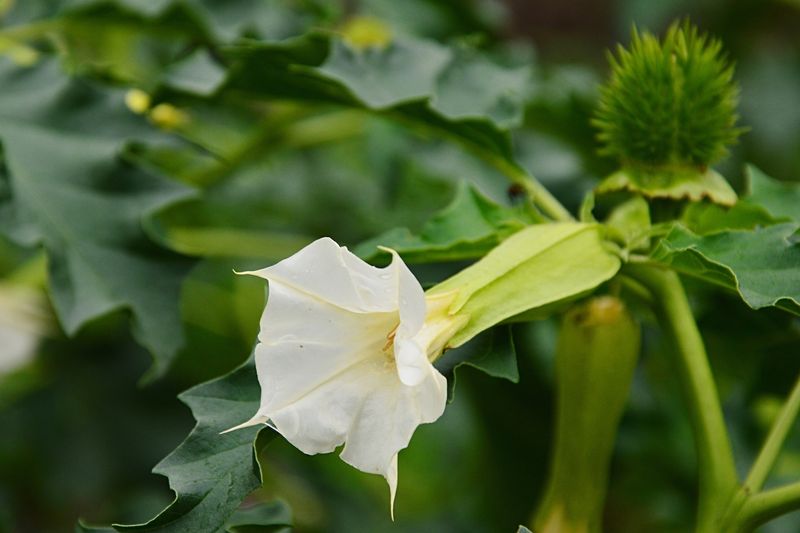
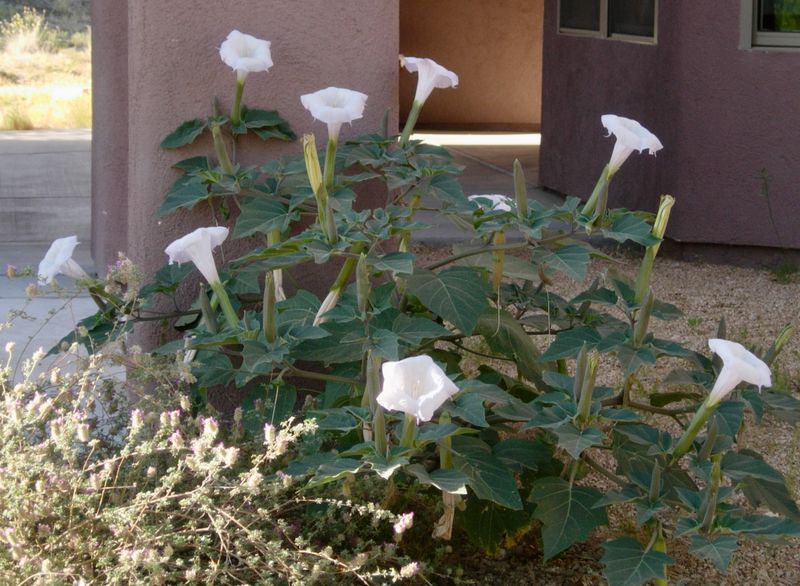
Few wildflowers make an entrance like this one. Sacred thornapple opens large, pale, trumpet-shaped flowers that glow in evening light and often seem to shine against the plant’s soft gray-green leaves.
After the blooms fade, round seed capsules form. They are covered in spines, which is why the plant carries the name thornapple.
Spotting these spiky green balls is one of the easiest ways to confirm you are looking at Datura.
UC IPM describes Datura wrightii as native in California, and Calflora lists it as native too. It can pop up along roadsides, in dry washes, and in disturbed ground, and sometimes it shows up in home gardens on its own.
Being native is a statement about where the plant belongs in the landscape. It says nothing about whether the plant is safe to eat.
Calflora explicitly says not to eat it.
Enjoy the flowers from a comfortable distance, take photos, and let pollinators like night-flying moths do their thing. If the plant is growing where children or pets play, or where you need to prune or remove it, plan ahead with sensible precautions rather than treating it like any other garden shrub.
Eating the Plant Can Cause Serious Poisoning
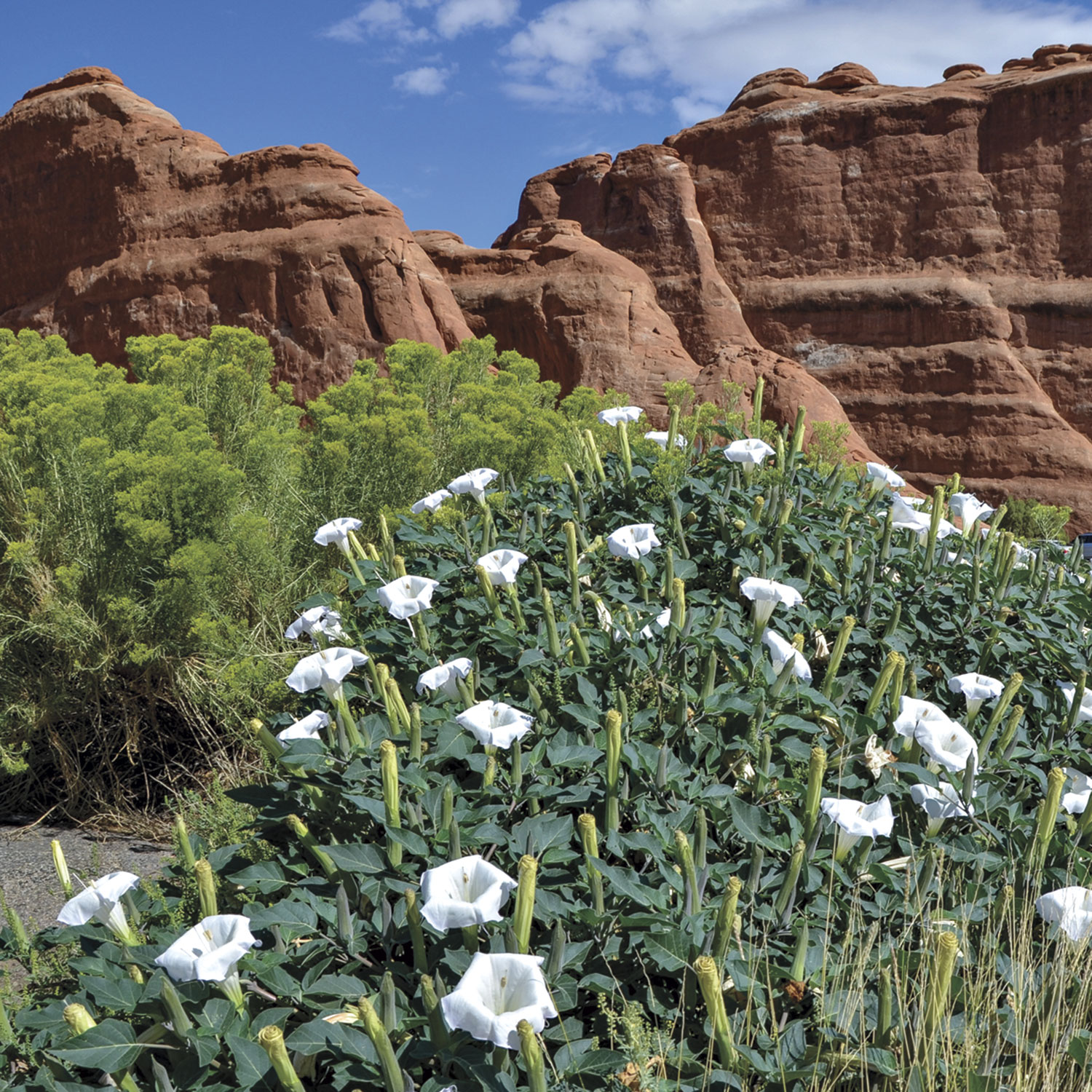
The established danger with sacred thornapple is eating it. North Carolina State Extension lists Datura wrightii as toxic when ingested, and UC IPM and Calflora say the same in their own words.
Medical reports back this up. A peer-reviewed case review describes Datura poisonings that followed consumption and points to anticholinergic effects.
Those effects can include confusion, agitation, dilated pupils, and a rapid heartbeat. They are possible symptoms after ingestion, not guaranteed results.
How sick a person gets can depend on which plant part was eaten and on how the plant grew, and nobody can point to a reliable safe or dangerous amount. That is exactly why the rule is simple: do not eat any part of it.
It also means never tasting, brewing, or experimenting with the plant for medicine or recreation. Case reports document poisoning from Datura preparations, and a home recipe cannot control what is in the cup.
Eating is a very different event from touching. The clinical literature describes poisoning after consumption, so walking past a plant or brushing a leaf is not the same situation.
Keep the focus on mouths, not on fear of the garden.
What Sap on Skin Can Do
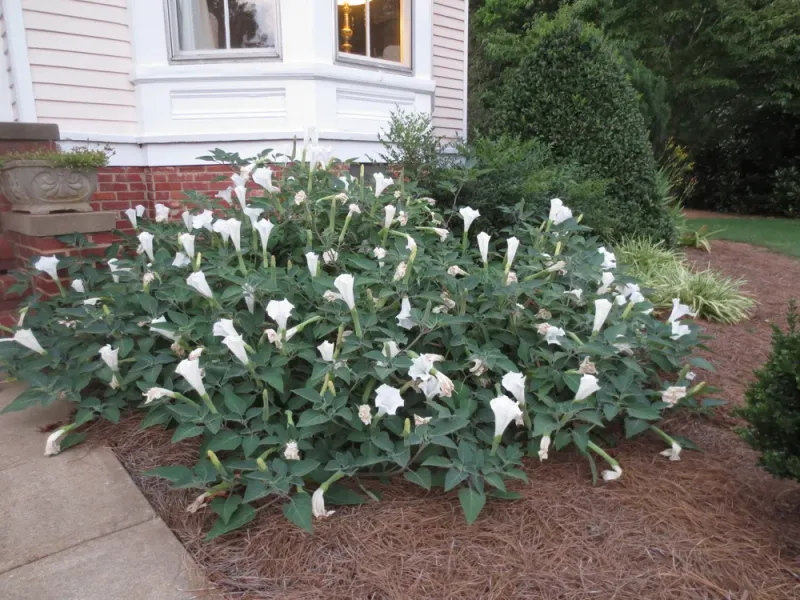
Cut a stem or crush a leaf, and you may get sap on your fingers. According to North Carolina State Extension, the sap of Datura wrightii can irritate skin, which is why that source recommends gloves and protective clothing when handling it.
Irritation usually means the kind of annoyance you might get from other garden plants, such as redness or itching on sensitive skin. Reactions vary from person to person, and some people will notice nothing at all.
The important point is the difference between this and poisoning. The clinical review in this case series describes poisoning after eating Datura.
It does not show that an ordinary brief touch works like swallowing the plant or is likely to poison the whole body.
Sap does become a bigger concern when it travels. Fingers can carry it to the eyes or mouth, and that is a good reason to keep hands away from your face while you work and to wash up afterward.
So the practical lesson is to respect the sap without panicking over it. A casual brush on a hiking trail is not a crisis.
Hands-on jobs like trimming, pulling, and bagging plant parts are the moments when preparation matters.
Use Gloves for Pruning or Removal
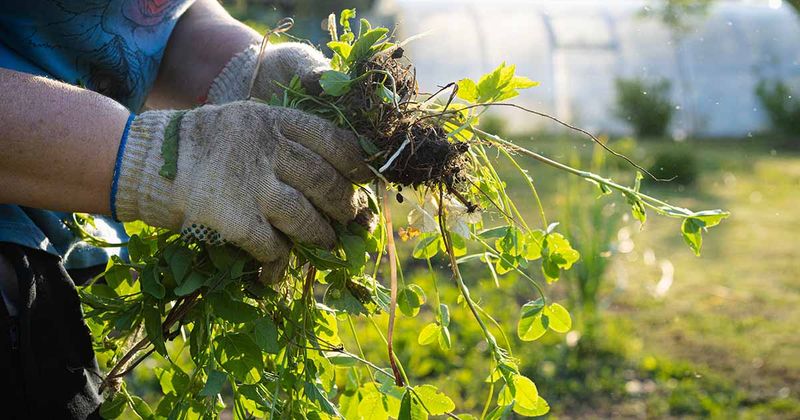
Planning to cut back or pull out a sacred thornapple? Dress for the job first.
Sturdy gloves and long sleeves keep sap and plant debris off your skin, and closed shoes and long pants help when you are working near spiny seed pods.
The species-specific advice is consistent. North Carolina State Extension recommends gloves and protective clothing because the sap may irritate skin.
Keep sap away from your eyes and mouth. Avoid rubbing your face, skip snacks and drinks until you are done, and consider safety glasses if you will be snapping stems or tugging roots overhead.
Cleanup counts as much as the work. The University of Arizona Cooperative Extension advises washing hands after handling plant parts or seeds.
Use soap and water, and wash your tools and gloves too.
Seed pods deserve extra care. Collect them before they split, bag them, and keep the bag where kids and pets cannot reach it.
These steps are about irritation and contact with plant material. They do not mean ordinary yard work automatically poisons anyone, just that a little preparation makes the job tidier and safer.
Keep Children and Pets From Chewing It
Curious mouths are the main reason to think about where sacred thornapple grows. Toddlers explore by tasting, and dogs often chew leaves, stems, and seed pods without warning.
Start by deciding whether the plant should stay at all. If it grows near a play area, a dog run, or a path where small children wander, removing it with gloves is often the simplest fix.
If you keep it, place a sturdy barrier or fence around it so no one can reach the leaves or pods.
Teach older children a clear rule: look at the flowers, but never pick them, chew them, or put plant parts in their mouths. Pull seedlings promptly, since they sprout readily, and clear fallen pods.
For animals, Pet Poison Helpline says that jimsonweed, a close relative, can cause stomach upset, changes in the pupils, a faster heart rate, and nervous system effects in pets that eat it. These are possible results of ingestion, not a sign that being nearby is harmful.
The ASPCA advises contacting a veterinarian or its poison hotline if an animal may have eaten a poisonous plant. Keep those numbers handy before you ever need them.
Respond According to the Type of Exposure
Different exposures call for different actions. If sap lands on your skin, wash the area promptly with soap and water.
Poison Control gives this general advice for plant sap, and it works well after a pruning session.
Skin irritation that lingers or looks worse can be checked by a health professional. If sap gets in an eye, rinse with clean water and seek medical advice.
Suspected eating is another matter. If a person may have swallowed any part of the plant, call California Poison Control at 1-800-222-1222 right away.
California Poison Control advises contacting its hotline after suspected ingestion. If someone is unresponsive, having trouble breathing, or having a seizure, call emergency services.
For a pet, call your veterinarian or an animal poison service without delay. The ASPCA points owners toward a veterinarian or its poison hotline for this situation.
Skip home remedies, and do not wait to see what happens. Have the plant name, the part eaten if you know it, and the time handy when you call, and a photo of the plant can help the experts.
Take Sensible Precautions Around Sacred Thornapple
Get the name right, keep the plant out of mouths, and put gloves on for any hands-on work. That covers most of what a gardener needs, and North Carolina State Extension and the University of Arizona Cooperative Extension back these habits.
Sap can irritate skin, while poisoning comes from eating the plant. Keeping those two ideas apart lets you enjoy the moonlit blooms without worry.
A beautiful flower can still deserve a respectful distance, and gloves are an easy way to keep it.
Share this story