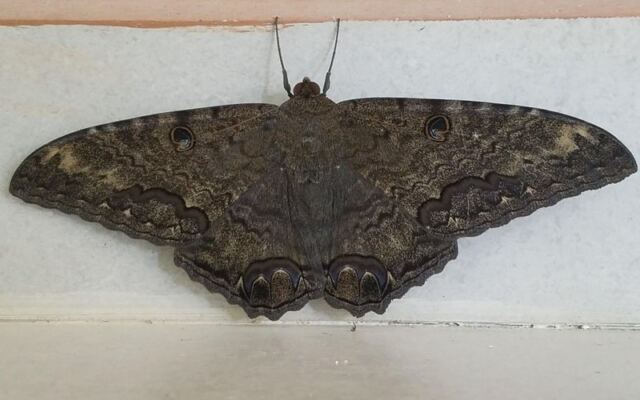
That giant, dark moth near your front door is most likely a black witch moth, a huge migrant that sometimes passes through Texas. In flight it can look so much like a bat that it makes people do a double take.
It is harmless, and knowing a few simple clues can help you identify it with confidence. Here is how to tell what you are seeing, why it showed up, and what to do next.
A black witch moth is one likely match
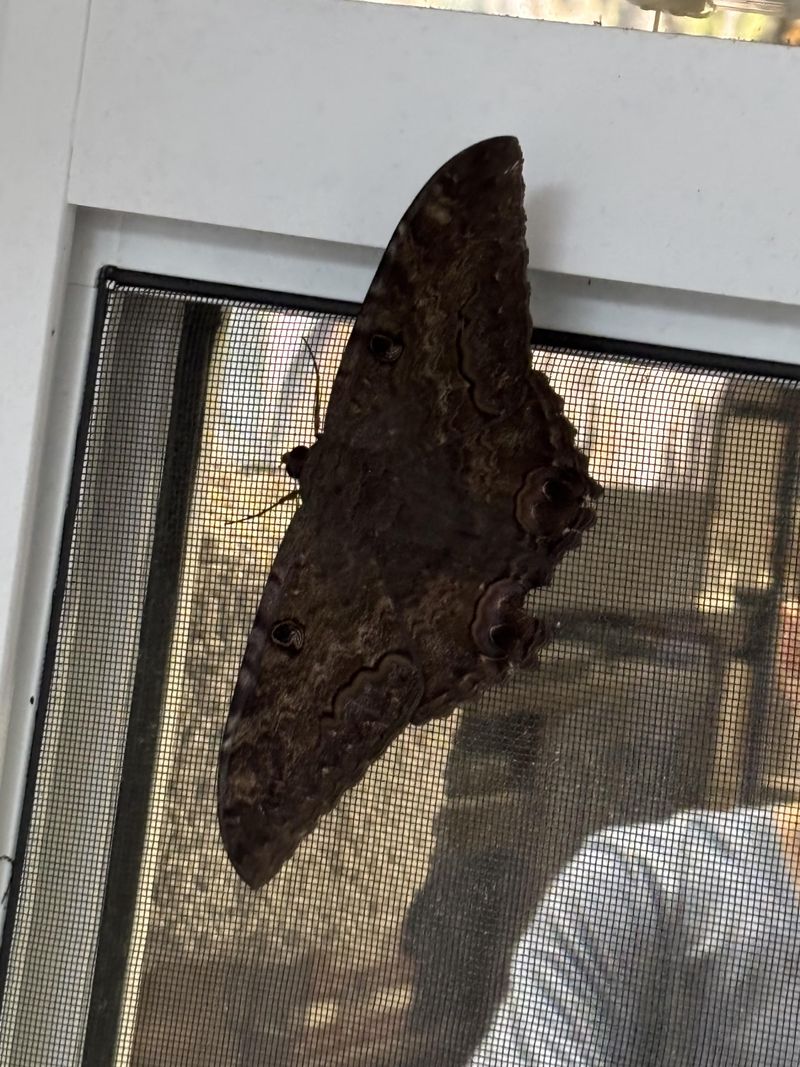
Picture a flutter near your porch light that looks too big to be a moth. For many Texans, the best match is the black witch moth, Ascalapha odorata.
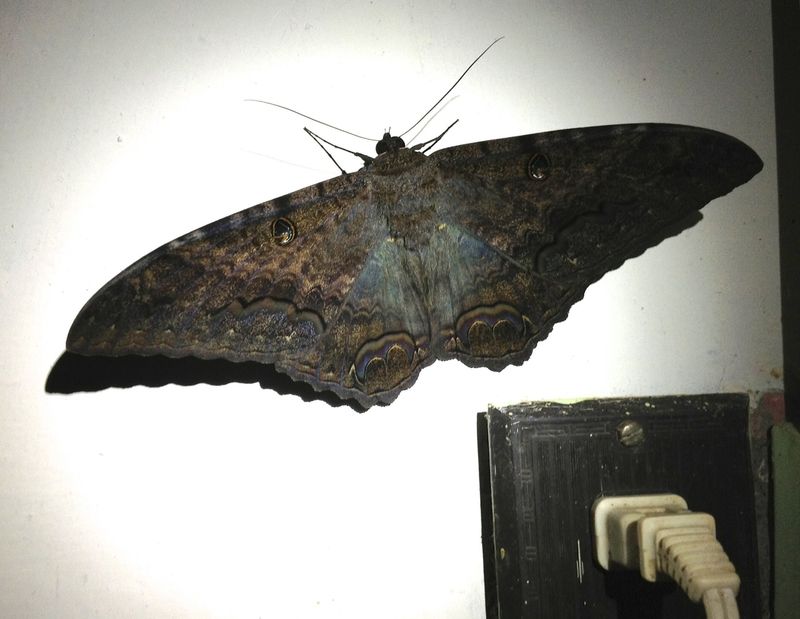
Its wingspan can reach roughly 6 to 7 inches, which is wider than many people’s hands, so it can look startling when it swoops past your head.
In flight, the moth can resemble a bat. That comparison is about how it looks as it flaps and glides in dim light.
It does not mean the moth has a bat’s body or is dangerous in any way. Its body is that of an ordinary moth, and it is soft, quiet, and harmless.
Size and color alone cannot confirm the species, though. Plenty of big, dark insects can look alike at a quick glance, especially at night.
Treat the black witch moth as a likely match, not a sure thing, until you get a better look at its markings.
The name can also mislead you. Descriptions from the University of Colorado Museum of Natural History call the moth dusty or dark brown.
Lighting and photos can make it look nearly black, so do not rule it out just because yours seems a bit brown.
This moth also travels. Texas Parks and Wildlife has described black witch moths moving north from Mexico through Texas, which helps explain why a visitor like this can seem to appear out of nowhere.
The next section shows what to look for on its wings.
Check the wings for identifying clues
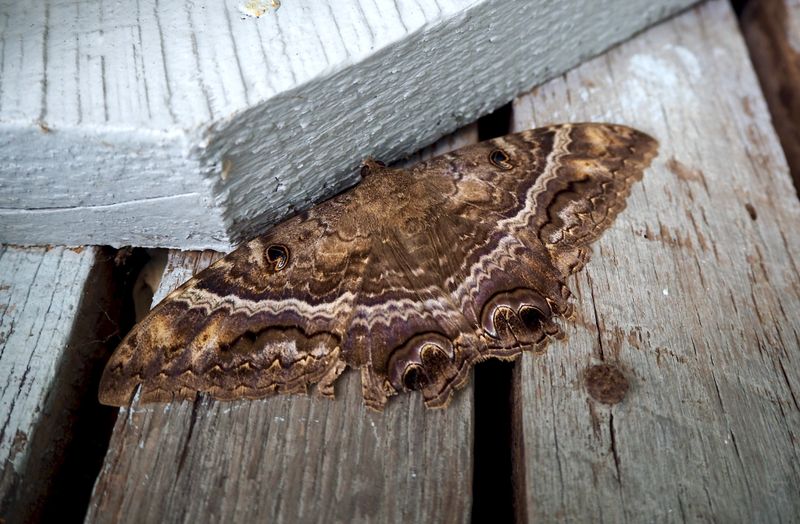
If the moth sits still, grab your phone and take a clear photo of its wings. The pattern tells you far more than its size does.
A good picture from above, with the wings open, is the most helpful.
Start with the shape. Black witch moths have long, pointed forewings, giving them a sweeping, swept-back look.
The color runs from brown to blackish, usually with a scattering of wavy lines and spots across the surface.
Then look for the markings. The University of Colorado Museum describes comma-shaped spots on the forewings, a detail worth searching for in your photo.
Some moths also show a small eyespot-like mark near the wing tip, so compare your picture with reference images.
Males and females differ a bit. Females typically have pale or tan bands across the wings that males lack.
A moth with a clear band may well be a female, while one without it could be a male, though wear and lighting can change how the pattern shows.
Treat each of these as a clue, not proof. No single feature confirms the species by itself, so the best approach is to check several together.
You can compare your photo with the species page at Butterflies and Moths of North America and see how many details match.
If your moth is worn, tucked in shadow, or folded up, the match may stay uncertain. That is fine.
A calm “probably a black witch moth” is a perfectly good answer.
Migration and shelter can bring it close to a home
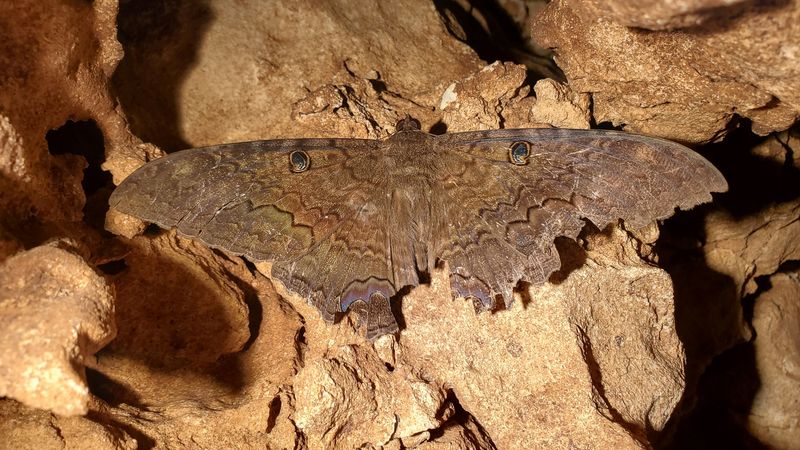
Why would a moth like this show up at your door? Part of the answer is that it is a traveler.
Black witch moths migrate north from Mexico, and Texas Parks and Wildlife has reported that this northward movement through Texas is especially noticeable in June.
June is not the only time you might meet one, though. Sightings and timing vary from year to year and place to place.
A moth in another month is not a mystery, just a reminder that nature does not follow a strict calendar.
During the day, these moths look for a quiet, shaded spot to rest. According to the University of Colorado Museum, they commonly sit under eaves or in open garages.
A porch ceiling, a covered doorway, or a shady corner can fit that description well.
Seeing one near your home means it found a good place to rest. It does not mean a nest is hidden nearby, and it is not setting up a household.
Most likely it is just passing through and will move on after a night or two.
At night, adults may be drawn to lights, and they also visit tree sap and rotting fruit. A bright bulb by the front door can make your porch more tempting for a tired traveler.
Knowing that can make the visit feel less spooky and more like a pit stop.
Its size does not make it a household pest
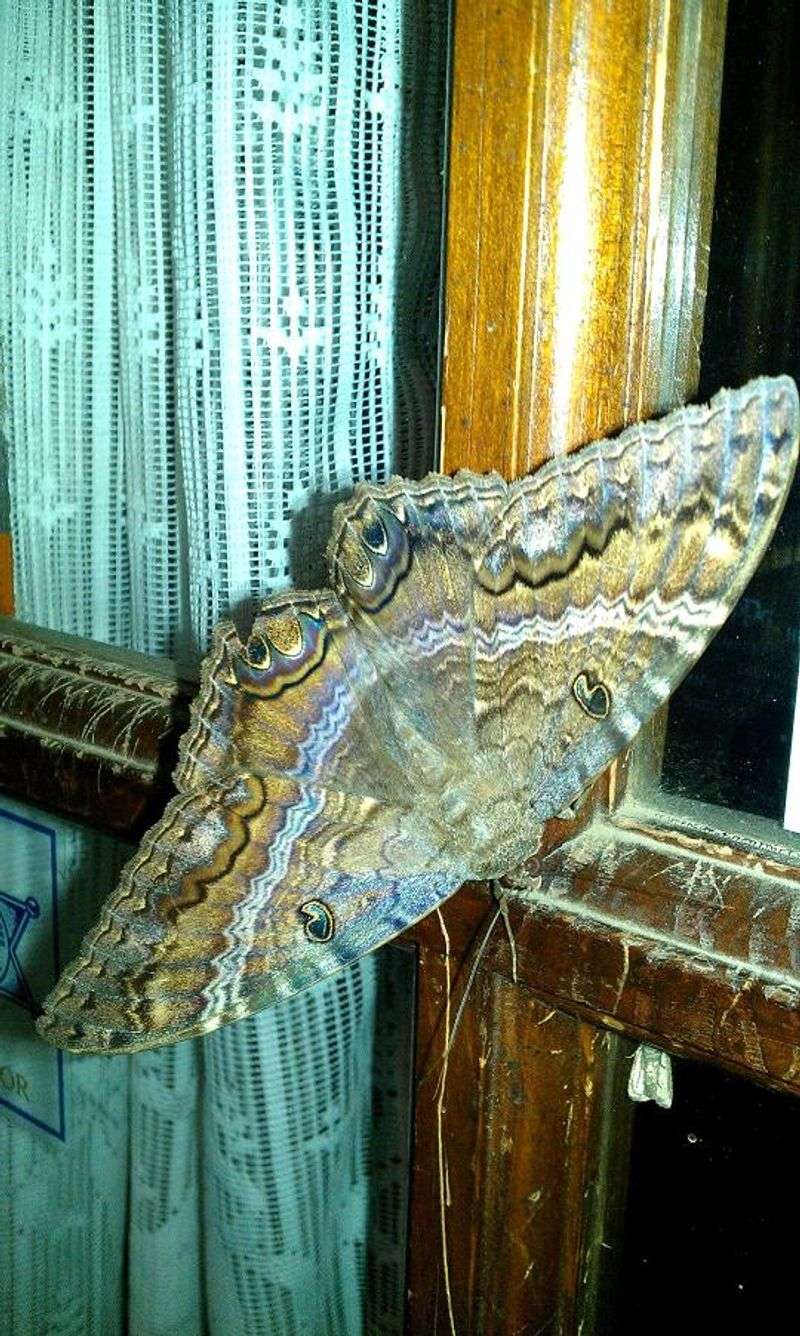
A moth this big can feel like a problem waiting to happen. In reality, black witch moths are harmless to people.
They do not bite or sting, and they are not considered pests.
Texas Parks and Wildlife notes that the adults visit lights, tree sap, and rotting fruit, and that the caterpillars feed on woody legumes. Their report lists plants such as mesquite, ebony, acacia, and cassia.
Those are outdoor trees and shrubs, not things in your pantry or closet.
That difference matters. Moths that damage stored food or fabric are small species with caterpillars that live indoors.
A black witch moth does not fit that pattern, since the adult is simply a large visitor and the caterpillars grow up on plants outside.
One moth near your door also does not add up to an infestation. Extension guidance from Colorado State University explains that moths found indoors do not necessarily mean an infestation.
A single moth is usually a wanderer that drifted in through an open door.
Size is the part that fools people. A wingspan of 6 to 7 inches looks alarming, but a large wing is not a sign of danger.
If you spot one resting quietly, you can just admire it and let it be.
The stories about the moth vary by place
Few insects collect as many stories as this one. These tales are folklore, and they differ from region to region.
None of them is a prediction, and none has a biological effect.
Accounts from parts of Mexico describe the moth as an omen of death. Even so, the University of Colorado Museum shows that beliefs differ, so this is not a view shared by everyone in Mexico or across Texas.
In the Lower Rio Grande Valley, one version says the moth must visit all four corners of a house. The details of the story change depending on who tells it.
It is a local custom, not a rule that all Texans follow.
Other traditions point in a gentler direction. A scholarly discussion of Maya beliefs in Maya Gods of War notes that ominous readings are not universal, and that some communities link large dark moths with rain.
Texas has a cheerful twist too. Texas Parks and Wildlife recorded a superstition that a moth above a door means lottery winnings.
Death, rain, and jackpots cannot all be right, which shows these are stories people tell, not facts about the moth.
You can enjoy the tales as part of local culture. Just keep them separate from what the moth actually is: a big, quiet insect passing by.
Leave a porch visitor alone or guide it outside
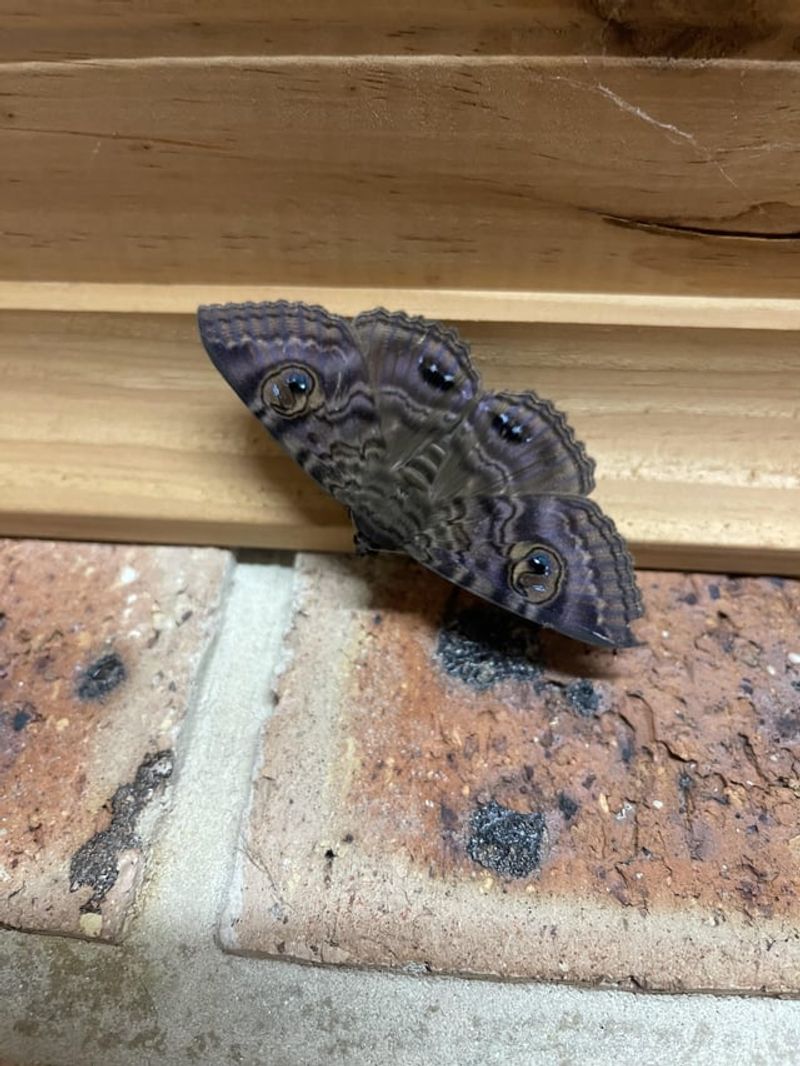
The easiest plan is to do nothing at all. A moth resting on your porch wall will usually leave by the next evening.
Giving it space is a kind and simple response.
If one wanders inside, stay calm and guide it out. Turn off nearby lights, open a door, and coax it toward the opening with a piece of paper or a soft container.
Avoid grabbing the wings, which are delicate, and skip the bug spray.
Before it goes, you can take a photo. Moth-watching guidance from UF/IFAS Extension recommends releasing moths after documenting them, and sharing a picture on iNaturalist can help others track sightings.
If moths visit your porch again and again, look at your lighting. Moths and other flying insects are drawn to lights, as Oregon State University Extension explains.
Switching off unnecessary outdoor lights may help, though it cannot promise the visits will stop.
One more reminder: Colorado State University Extension notes that an indoor moth does not necessarily signal an infestation, and Texas Parks and Wildlife says black witch moths are not considered pests. A single visit needs no pesticide.
Think of it as a rare guest with a very long commute. Wish it well and let it fly on.
Share this story