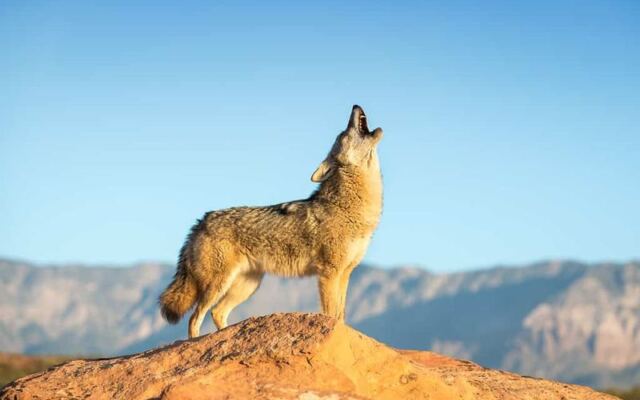
Yes, those eerie howls and yips after dark carry real messages, such as keeping rivals out, finding family, and calling for mates. Coyotes in Massachusetts use their voices for several clear jobs, even if a human listener cannot tell which job a single chorus is doing.
Late November is a particular moment in the coyote calendar, and it is not the one most people guess. Here is what the sounds can mean, what they cannot, and what to do if a coyote shows up near your home.
What does a coyote chorus actually tell you?
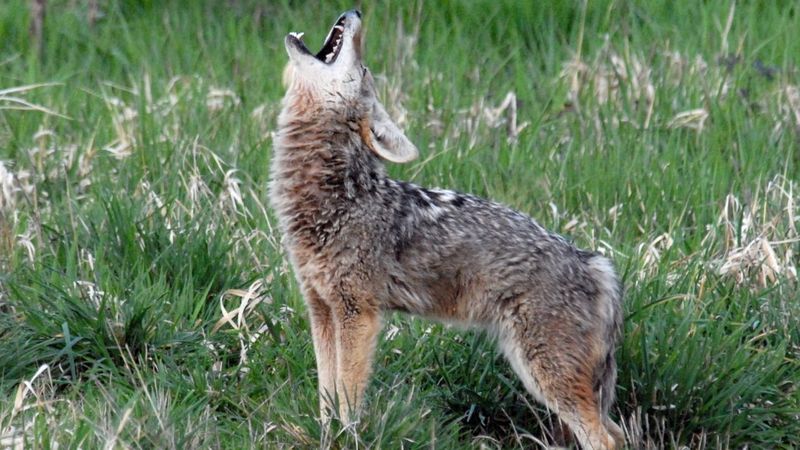
Coyotes use their voices to communicate, and the messages are real. According to MassWildlife’s coyote guide, howling can help keep non-family coyotes out of a territory, help coyotes locate family members, and advertise for mates during breeding season.
In some circumstances it can also draw attention away from pups.
Think of the locating job as a kind of family check-in. It is only an analogy, though.
Not every chorus is a reunion, and coyotes are not running a routine roll call out there in the dark.
Pups add another layer. They practice howling as they grow, so some of the wobbly, squeaky voices you hear may simply be young coyotes learning the craft.
Here is the catch that matters most. A listener on a back porch cannot reliably translate one particular chorus into one precise message.
A peer-reviewed study of canid howls describes them generally as long-range signals used for things like territorial defense and group cohesion. It does not decode what a specific Massachusetts coyote is saying on a specific night.
So the howls do mean something, but the meaning comes in broad categories rather than sentences. Keeping that distinction in mind makes the rest of the picture easier to read: the sound, the season, the place, and what you should actually do about it.
A small family can sound like a crowd
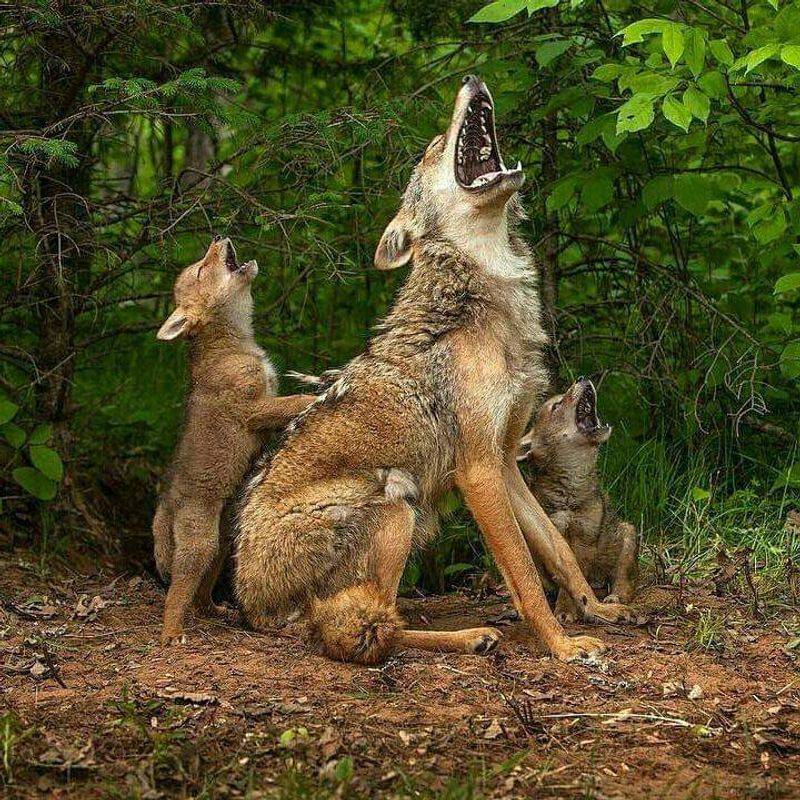
One of the spookiest things about a coyote chorus is how many animals it seems to include. Your mind pictures a whole pack circling the neighborhood.
In reality, a handful of voices can fill the whole night.
A coyote family group usually centers on an adult pair and their pups, and sometimes includes older offspring. MassWildlife says a few coyotes calling together can sound like many more.
That means the sound is not a reliable head count. Two coyotes might sound like six, and six might sound like twenty.
Trying to count by ear will almost always lead you astray.
Skip the guesswork about how big the group is, how close it is, or what it is up to. The chorus tells you that coyotes are communicating somewhere within earshot, and that is about all you can safely say.
If the noise leaves you uneasy, that reaction is natural. High, overlapping yips can sound wild and urgent even when the animals involved are just a family keeping in touch across a few hundred feet of woods.
Late November is dispersal season, not mating season
Many people assume fall and winter howling means romance is in the air. In Massachusetts, late November does not fit that story.
The calendar points somewhere else.
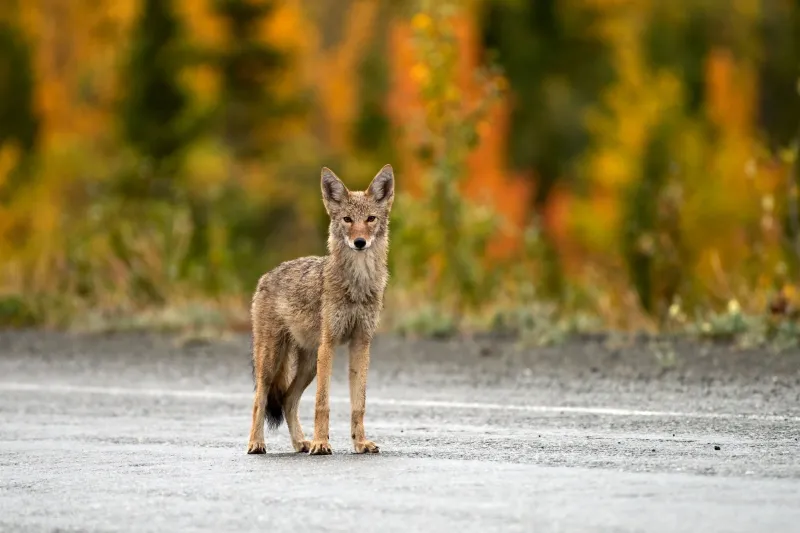
According to MassWildlife’s life-cycle guide, September through November is the usual pup-dispersal period. Young coyotes leave their family groups to find territory of their own, and they may be more active and more visible while they do it.
Compare that with the rest of the year. Families are heard howling and yipping in June through August as adults teach pups to communicate.
Mating comes later, from late January through March, per MassWildlife, and pups are generally born in April and May.
So howls you hear in late November should not be read as the start of mating season. That season is still weeks away.
Treat these dates as background, not a decoder ring. Knowing the season helps you picture what the coyote year looks like, but it cannot tell you who is calling or what a particular howl means.
Coyotes across the Massachusetts mainland
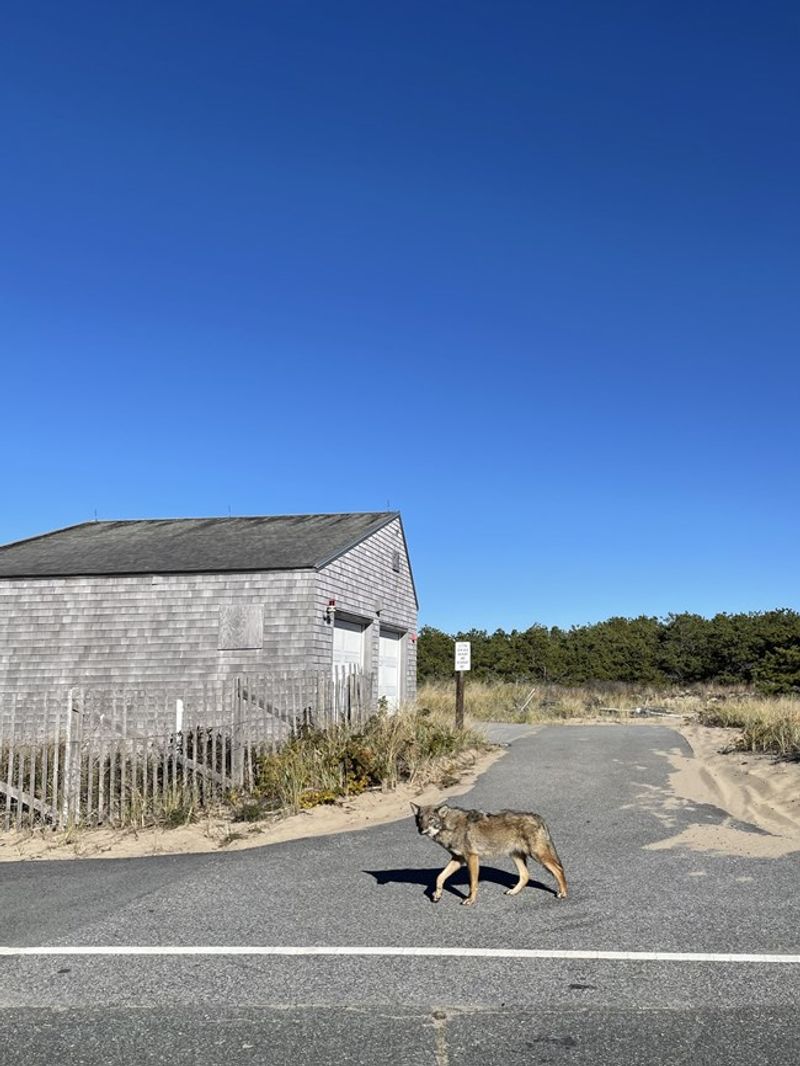
Whether you live in a Boston suburb, a Berkshires hill town, or a Cape Cod neighborhood, hearing coyotes is entirely plausible. MassWildlife reports that eastern coyotes are established throughout mainland Massachusetts.
They are absent from Nantucket and Martha’s Vineyard.
That does not mean numbers are the same everywhere, and there is no sign that each region has its own style of chorus. The calls are broadly alike wherever coyotes live.
Coyotes stay active all year. MassWildlife’s life-cycle guide notes that howling and yipping can happen at night, and also in response to loud daytime sounds such as sirens.
A call carries a long way, so it is a poor tool for pinpointing an animal. A howl that seems to come from the end of your street could be far off in a patch of woods or a wetland.
Hearing one means coyotes live in your general area, which is not news for most of the state. It does not tell you where one is standing right now.
A howl is not an announcement of a kill
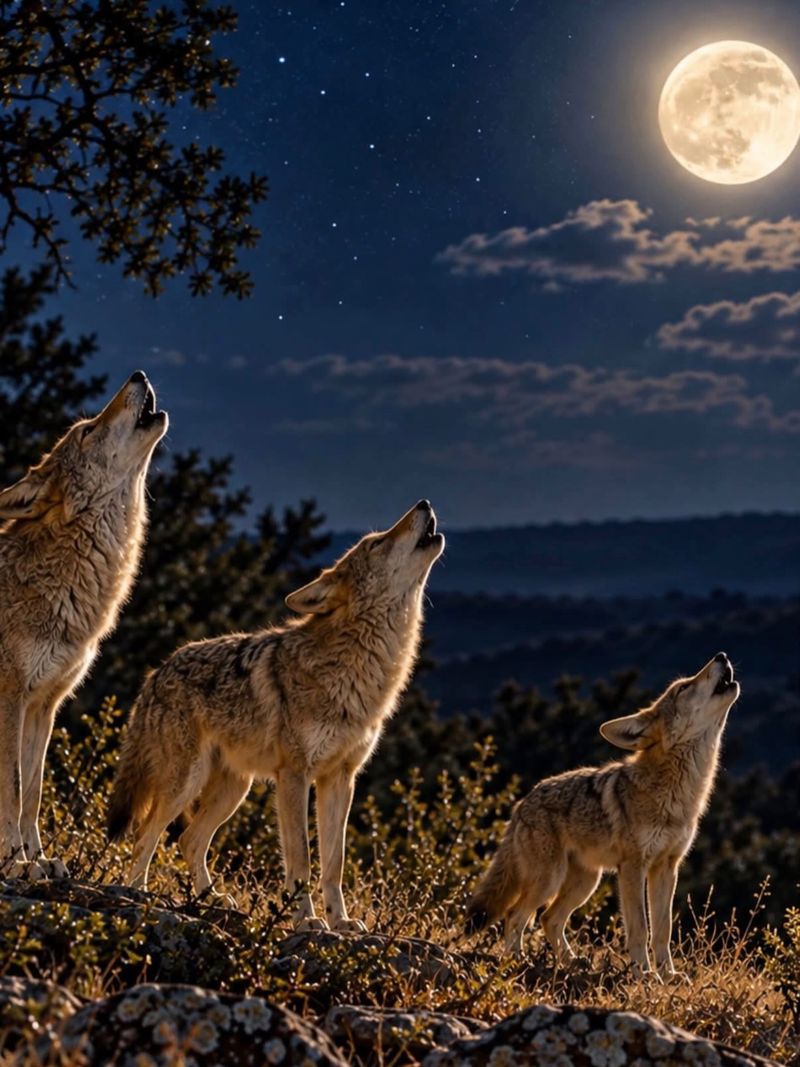
Some folks swear a loud burst of yipping means the coyotes just brought down a deer or a rabbit. It makes a dramatic story, and it is wrong.
MassWildlife states that coyotes do not howl to announce a kill.
Howling serves communication jobs, but a call cannot reveal what an animal has just done. It cannot tell you what the coyote will do next either.
A chorus at midnight might follow a successful meal, a passing siren, or nothing you could ever work out. From your porch, there is no way to know.
That is worth holding onto when the sound raises your pulse. Hearing the howl is not a sign that something violent just happened nearby.
What you can watch is behavior you actually see, which matters far more than a soundtrack in the dark.
When a coyote is in the yard
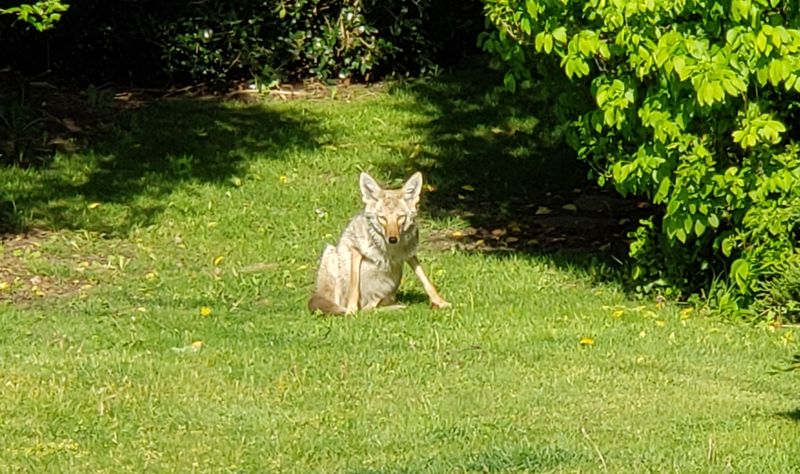
Hearing a howl is one thing, and seeing a coyote is another. A howl alone does not mean a coyote is in your yard, poses an immediate threat, or is doing anything in particular.
It is not a reason to go looking, to hunt for pups or a den, or to start hazing.
A coyote simply being present in a residential area is not, by itself, considered an immediate threat to people, according to MassWildlife’s FAQ. Concerning bold behavior means approaching or closely following people, or not leaving after effective hazing.
MassWildlife advises contacting local animal control or police about that kind of behavior.
Attacks on people are rare, and MassWildlife calls them exceptionally rare. Pets are a different story.
Small animals can be at risk, especially when left outside unattended or near dens.
If a coyote is in your yard or neighborhood and seems comfortable around people, MassWildlife recommends hazing. Use noise and confident movement, such as shouting, clapping, and waving your arms, to frighten the animal, not injure it.
Keep going until it leaves.
Some limits apply, as MassWildlife’s hazing guidance explains. Do not haze an animal that appears sick or injured.
Do not corner a coyote, and do not drive it toward a road.
Finally, give coyotes and suspected dens plenty of space. Mass Audubon advises not approaching coyotes or their pups.
Listen for patterns, not subtitles

A chorus tells you coyotes are communicating, but sound alone cannot hand you one certain message. Respond to what a coyote actually does, not to what a howl seems to mean.
A few habits do the heavy lifting, per MassWildlife’s conflict prevention advice. Keep pets supervised and on leash outdoors, secure garbage and other food sources, and never feed coyotes on purpose.
The next time yips drift through your window, you can simply listen. The night has a wild neighbor, and it is mostly minding its own business.
Share this story