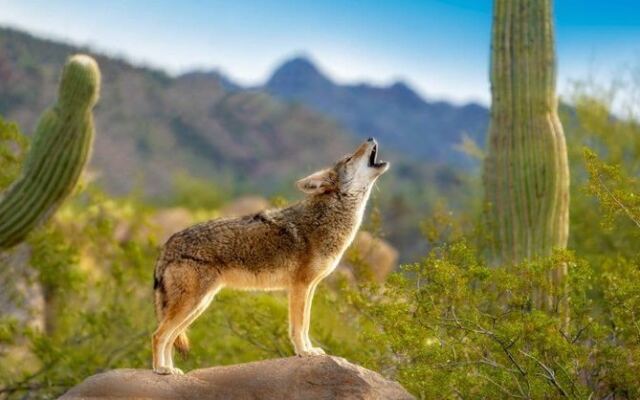
Late-fall howls after dark may come from young coyotes leaving their family groups to find new territory. That season of change can make the night sound busier, even in neighborhoods from the bayou parishes to Baton Rouge and Shreveport.
Coyotes also call for other reasons and in other months, so one howl cannot tell you the whole story. Here is what the sounds can and cannot tell you, plus simple steps to keep your pets and yard safe.
Fall can change a family group’s routine
A howl at night can make your stomach flip, especially when it comes from just beyond the fence line. One possible reason for more noise this time of year has to do with family life.
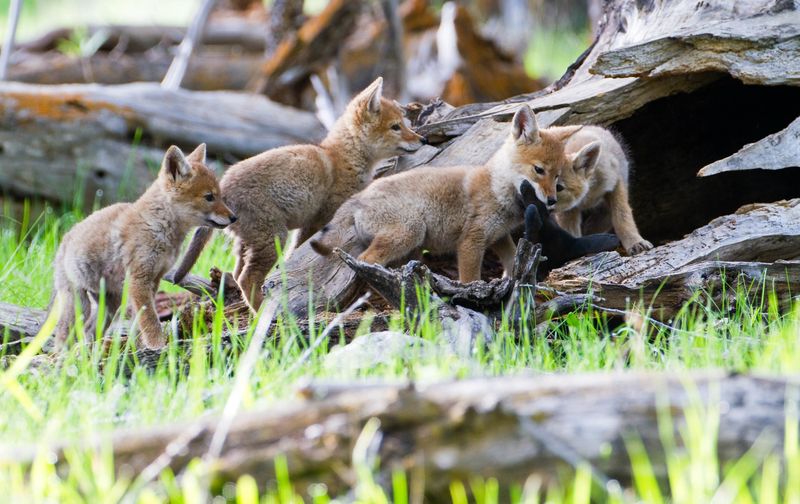
USDA wildlife researchers note that coyote family groups may stay together until late summer or fall, when some of the young animals disperse.
Dispersal means a young coyote leaves the area where it was raised and goes looking for a place of its own. A young coyote on the move may cross unfamiliar ground, meet other coyotes, and use its voice more than usual.
That could change how much movement or calling people notice around their homes.
Still, a sound alone cannot tell you that dispersal is behind it. Nobody can listen to one howl in a Louisiana yard and say that it came from a young coyote leaving home.
Dispersal is a possible seasonal factor, not a proven cause of any particular howl.
Coyotes are certainly part of the Louisiana landscape. The state wildlife agency’s Living with Coyotes publication confirms that they occur in the state and says conflicts vary by location, season, and individual animal.
It does not say that late-fall howling is common across the whole state.
So the useful takeaway is modest but real. Fall may be a time when family groups shift, and that is a fair reason to be curious about the sounds.
It is not a reason to assume anything specific about the animals outside your window.
Coyotes use calls for several reasons
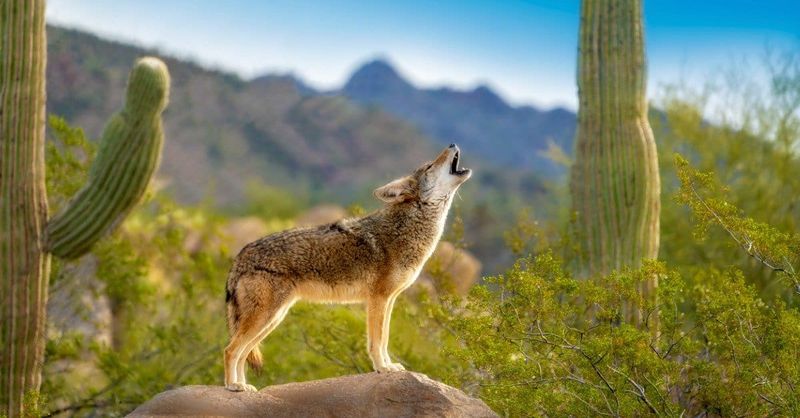
Coyotes are talkative animals. They howl, yip, and bark, and each sound can serve a different purpose.
University of California pest management guidance describes these calls as communication, including keeping track of group members and maintaining territories.
A biology review from the North Carolina Wildlife Resources Commission also describes howling as a way to communicate, and coyotes may howl back when they hear other coyotes. One animal calls, a neighbor answers, and soon the night sounds crowded.
Think of it like people calling across a big park. One shout might mean where are you, another might mean this spot is taken, and another might just be an answer to someone else.
You can hear the shout, but you cannot know the message from the sound alone.
The same goes for coyote calls in your neighborhood. These possible jobs do not let a listener decode the exact meaning behind a single howl.
A howl does not carry one fixed meaning.
What you can say is that the coyotes are using their voices to stay in touch. That is ordinary animal behavior, and it is a good reason to stay curious instead of jumping to conclusions about what is happening just past your porch light.
Late fall is not the usual breeding season
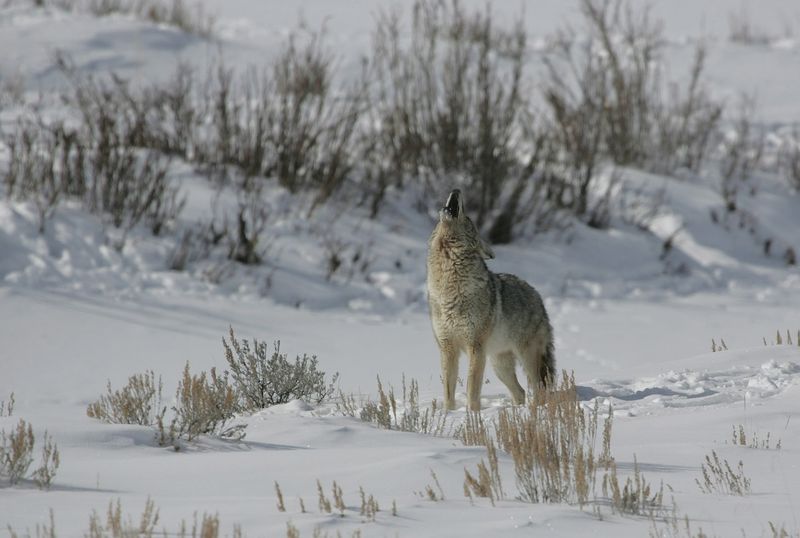
Plenty of people assume that a howl in late November must be a mating call. The timing does not match.
USDA places typical coyote breeding in February and March.
That means late-fall howling is better linked, as a possibility, to the family changes of fall than to courtship. Coyotes can call in other seasons too, so the date on the calendar is only one clue.
Patterns in calling also differ from place to place and by how researchers measure them. New York’s wildlife agency says coyotes there howl year-round, with more vocal activity in late summer and early fall and again during the winter breeding season.
A Michigan study on vocal responses found greater responses to broadcast calls in August.
Those findings come from New York and Michigan, and they show that seasons can matter. They do not give us a Louisiana calendar, and nobody should treat them as one.
Louisiana’s mild climate and its mix of marsh, forest, farmland, and city could shape things differently.
So if you hear howling in late November, skip the mating story. Treat it as ordinary coyote talk that may or may not be tied to fall movement.
A chorus cannot tell you how many coyotes are nearby
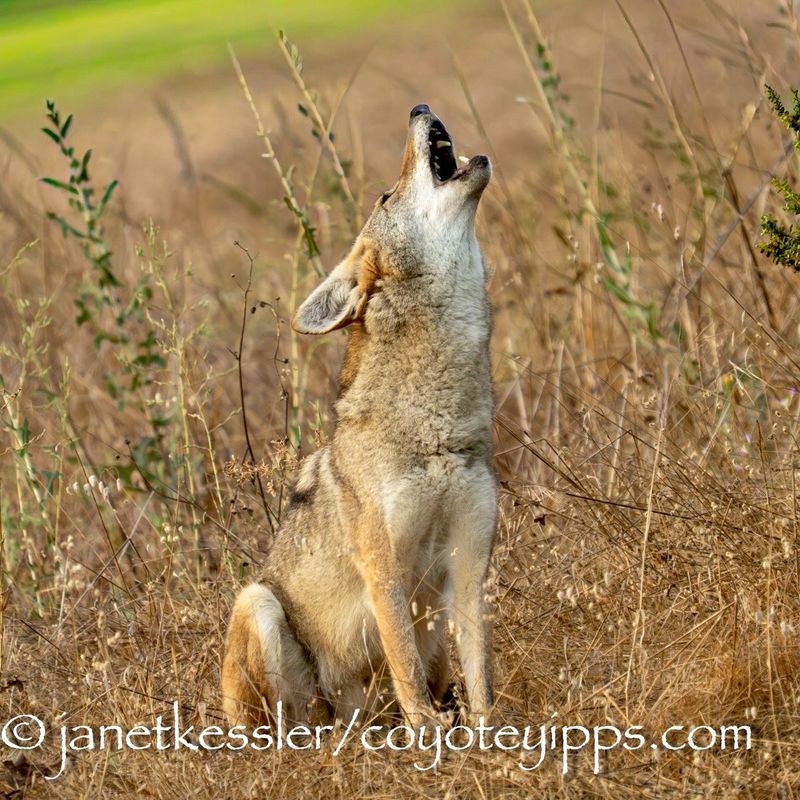
Few things sound as dramatic as a full chorus of yips and howls. It is easy to picture a big pack circling the neighborhood.
Coyotes can make a small group sound surprisingly large, and your ears may be fooled.
Researchers tested this in southern Texas. In this study of coyote group size, 427 listeners heard recordings and generally overestimated how many coyotes were calling, by nearly twofold on average.
Keep the setting in mind. This was a Texas study, and people were listening to recordings, not standing in a Louisiana yard.
It is not a Louisiana estimate. It does show how easily human ears can be tricked.
The practical lesson is simple. Do not use a chorus to count coyotes.
Sound alone also cannot tell you exactly how close the animals are, since howls can carry a long way across a neighborhood.
If you want to know more, daylight is your friend. A clear sighting, a trail camera photo, or a report from a neighbor will tell you far more than the noise after dark.
A howl alone does not signal an attack
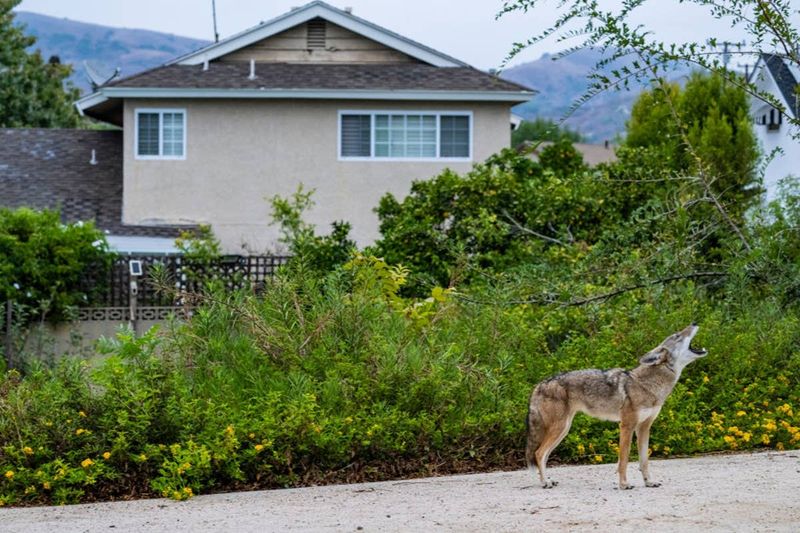
Hearing howls close to home can feel threatening, and that reaction is natural. Even so, a howl by itself does not show that coyotes are hunting, approaching, or about to attack.
Wildlife sources describe howling as communication with several purposes.
The North Carolina biology review treats howling as a way coyotes keep in touch. It also does not link howling frequency to moonlight intensity, so a full moon is not a reliable explanation either.
A howl tells you that coyotes are somewhere within earshot. It does not tell you what they plan to do.
Intent is something you would judge from behavior you can see, not from a sound in the dark.
That does not mean coyotes never cause trouble. University of California guidance covers conflicts with pets and livestock, which is why sensible precautions matter.
Small pets and poultry are the animals most worth protecting.
So let the howl be a gentle reminder instead of an alarm. Check that pets are inside, that the coop is latched, and that nothing tempting is left outside.
Then you can go back to bed.
Make your yard less inviting
The best response to a howl is to make your property boring to wildlife. Lafayette Consolidated Government offers local guidance on living with coyotes that fits Louisiana neighborhoods well.
These steps reduce attractants and protect animals. They are not a sign that a howl means a coyote is in your yard.
Start with food. Never feed coyotes on purpose, and think about the food they might find by accident.
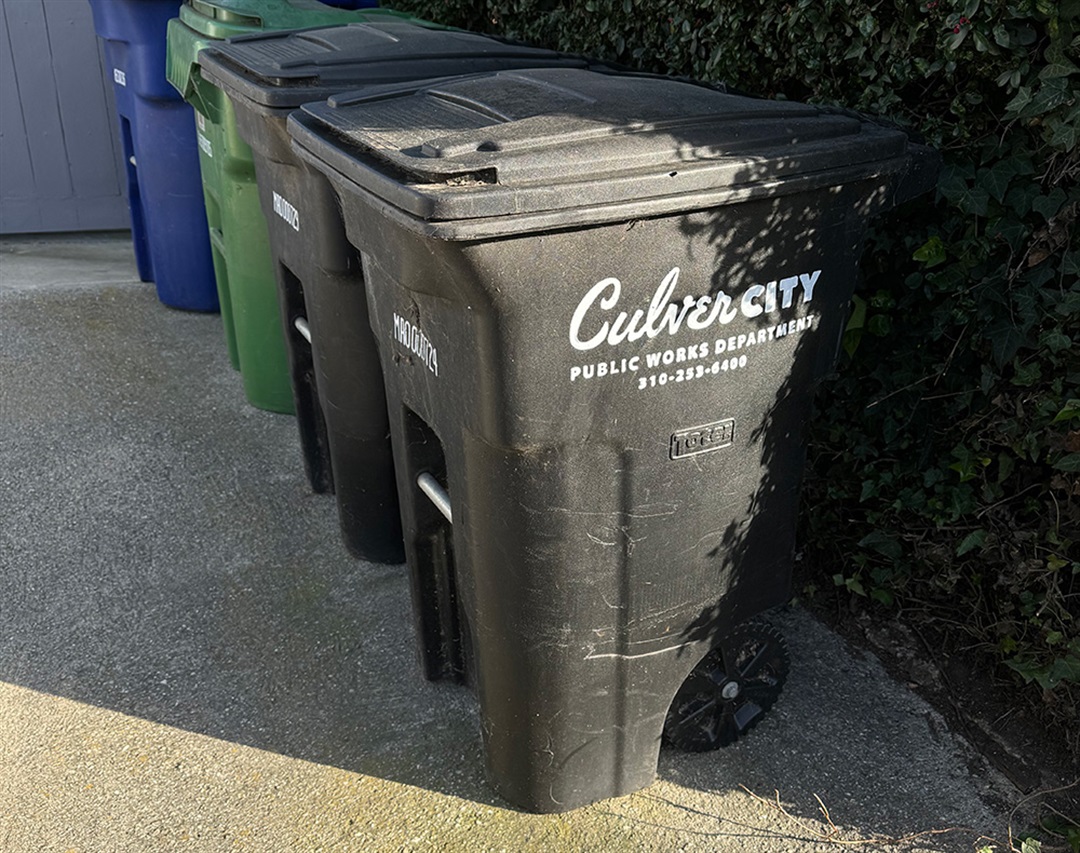
Secure garbage cans with tight lids, and pick up fallen fruit from pecan, fig, persimmon, or other trees.
Next, look after your animals. Keep cats indoors, especially after dark.
Supervise small dogs whenever they are outside, even in a fenced yard, and stay close by on evening bathroom breaks.
If you keep chickens or ducks, shelter them in a sturdy enclosure. Strong wire, secure latches, and a covered top make a real difference.
Flimsy pens can fail quickly.
Also check for pet food or birdseed left outdoors overnight. A few small habits can lower the chance that a coyote lingers near your home.
Those habits also help raccoons, opossums, and other visitors move along.
If a coyote approaches, make it wary of people
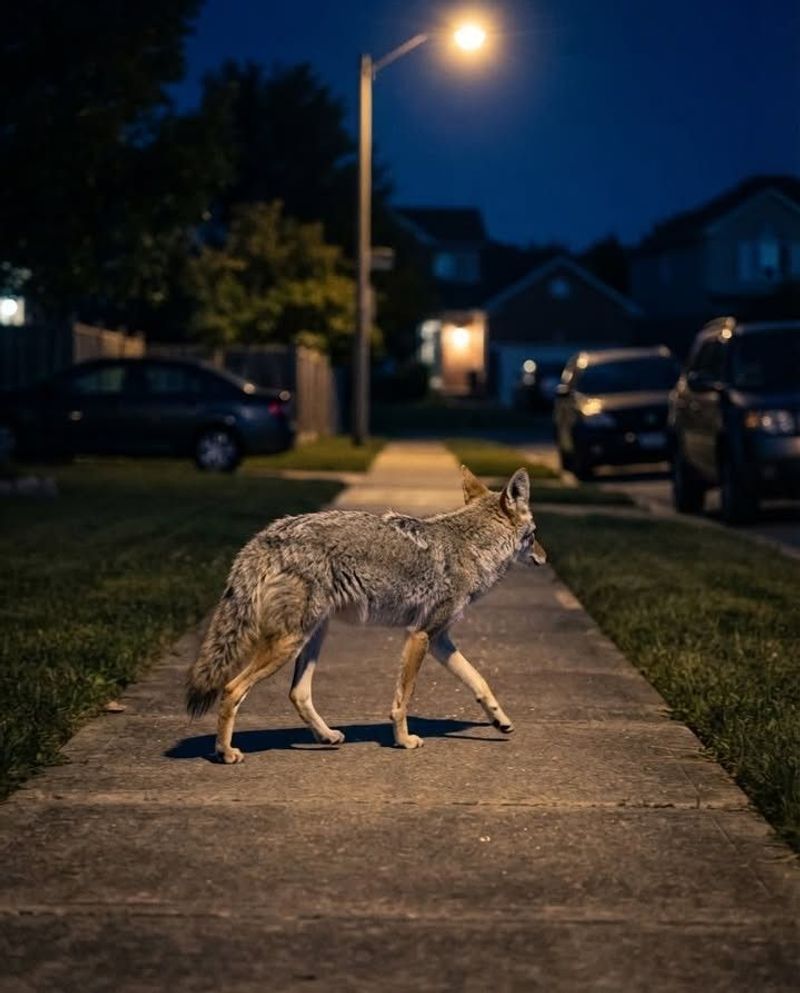
Most coyote encounters are brief, but it helps to know what to do. First, do not approach the animal, and do not feed it or try to lure it closer for a better look.
A coyote that links people with food or curiosity can lose its natural caution.
Lafayette’s guidance supports making the animal wary of people, a practice often called hazing. Its wildlife page says hazing may include shouting, making noise, shining lights, or spraying water.
Stand tall, stay calm, and keep your pets close or bring them inside.
No response can promise safety, so use judgment and keep a safe distance. If the animal does not leave, move yourself and your pets indoors.
Reporting matters too. Tell your local animal-service agency about sightings.
Florida’s wildlife agency suggests in its coyote FAQ that you contact local authorities if a coyote repeatedly approaches people or behaves unusually.
Night sounds will keep drifting across Louisiana yards. With a latched gate and a clear plan, you can listen to them with more curiosity than worry.
Share this story