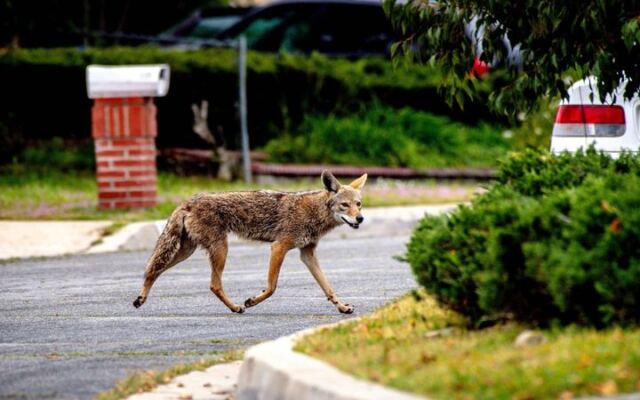
A gray-tan animal trots across your lawn, and your heart skips. Coyotes live all over Pennsylvania, so many families will spot one sooner or later.
Knowing a few calm steps can protect your kids and pets and keep a small surprise from turning into a big problem. Here is what to do, and what to skip.
A yard sighting is not a diagnosis
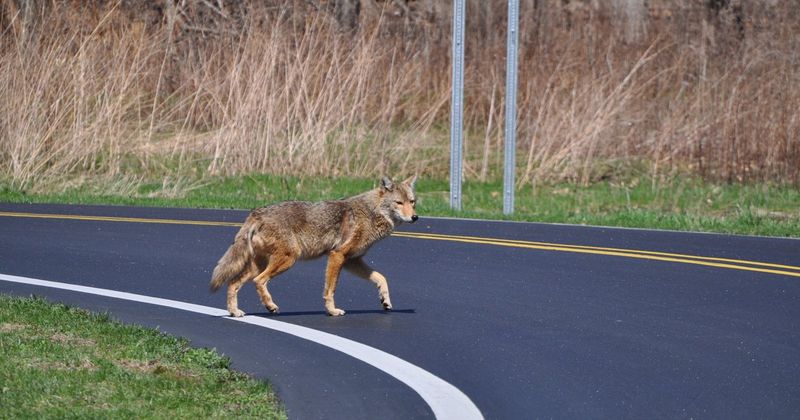
Seeing a coyote in your yard does not, by itself, mean you are facing an emergency. It also does not tell you the animal is sick or dangerous.
A sighting is simply a sighting, and what matters is how the animal acts and whether anyone has had contact with it.
Many people assume a coyote out in the daylight must be ill. That idea does not hold up.
Pennsylvania Game Commission information describes coyotes as mostly active at night, but says they also hunt during the day, especially in the morning. A coyote crossing your lawn at 9 a.m. may just be looking for mice or rabbits.
The opposite mistake is just as unhelpful. A coyote in the yard is not automatically harmless either, so a few calm precautions make sense every time.
Think of the clock as a weak clue and the animal’s behavior as the strong one.
Watch for what the coyote is doing. Is it moving along and keeping its distance, or is it coming toward people and pets?
Has it touched anyone? Those answers guide your next move far better than the time of day.
Get children and pets to safety
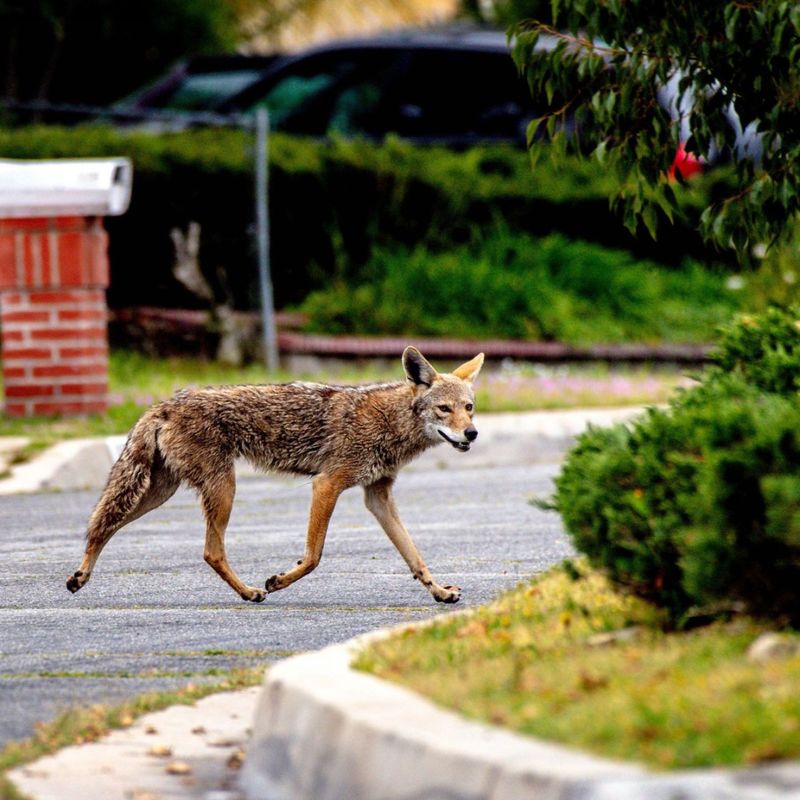
Your first job is to secure your household. If you can, bring children and pets indoors right away.
If you cannot get inside, keep everyone together and close beside an adult.
Call kids in with a steady voice instead of a panicked shout. A calm tone helps them move quickly and keeps them from running toward the animal out of curiosity.
Pick up a small child if that makes it easier to walk away.
Dogs need special attention. The National Park Service advises keeping children and pets close and not letting dogs approach coyotes.
Hold the leash short, and never let your dog chase the coyote, even if it barks and pulls hard.
Small pets are the most at risk when left alone outside. Cats, rabbits, and small dogs should not wait unattended in the yard while a coyote is nearby.
Carry them in if you can do it safely.
Only after your family and pets are secure should you think about anything else. Handling the situation from inside a doorway or window is a perfectly good plan.
You can watch from behind the glass while the coyote moves on.
Give the coyote room to leave
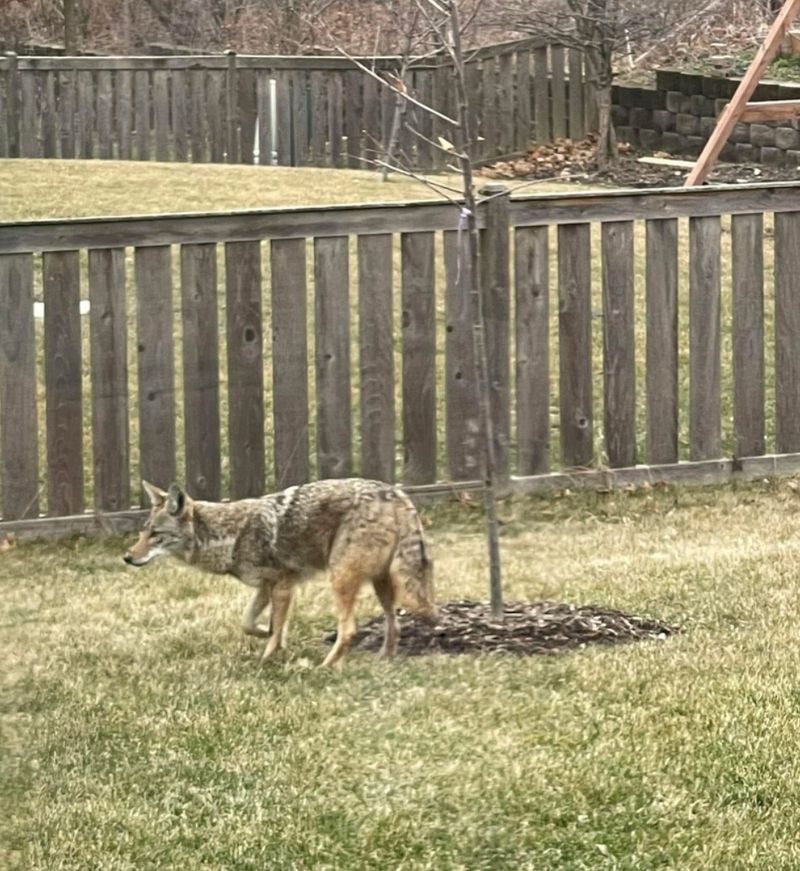
Once everyone is safe, the best thing you can do for the coyote is nothing dramatic. Stay back and let it go.
Never walk toward it, chase it, toss food, or try to corner it against a fence or shed.
An animal with no exit may act in ways it normally would not. Check which direction the coyote has to travel and make sure you are not standing in the way.
Giving space means leaving a clear path, not steering the animal where you want it to go.
If you are already outside, back away slowly and calmly instead of running. Moving toward your door or another shelter is ideal.
The California Department of Fish and Wildlife advises keeping a safe distance, backing away slowly, and letting the coyote leave the area. That is general wildlife-safety advice, but it fits yard encounters well.
Keep children and pets with you the whole time. A kid who wanders off to get a better look can end up closer than you want.
Ask everyone to stay put or walk inside together.
Watch from a window if you like. Most coyotes sniff around, then drift off within minutes.
Your patience gives them the room they need to do that.
If the coyote approaches, respond from a safe distance
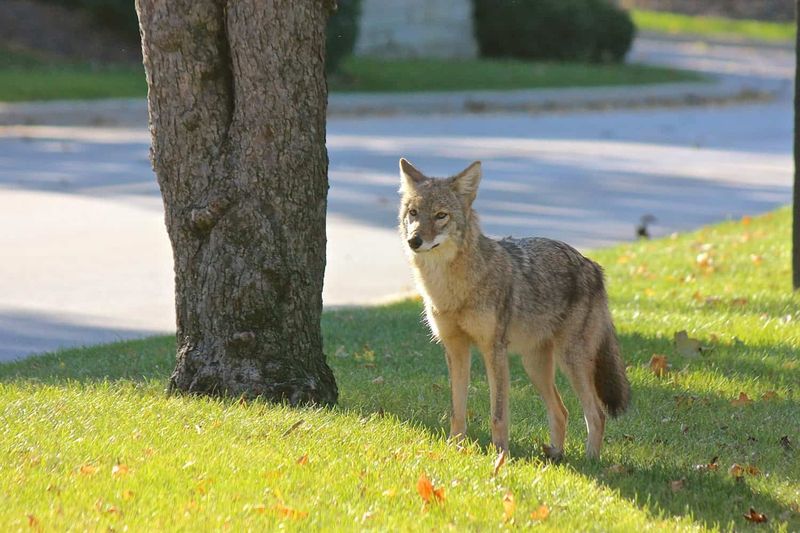
Sometimes a coyote does not leave and instead moves closer. In that case, you can make yourself look larger by standing tall and raising your arms.
Use a firm voice or loud noise, such as yelling or clapping, while you keep moving toward safety.
The key phrase is moving toward safety. Do not step toward the coyote to scare it.
Keep your distance, keep children and pets with you, and retreat into your house or car if you can.
Wildlife agencies call this kind of response hazing. The California wildlife agency recommends noise and bigger posture when a coyote comes close.
Treat it as a possible response in the moment, not a guarantee.
Results vary. A USDA study with captive coyotes found that responses to hazing depended partly on whether the animals had past experience with people.
A 2025 community study found coyotes often retreated when volunteers approached assertively, but it found no consistent effect on later coyote behavior or public reports.
In plain terms, noise may help right now, but it will not promise the coyote stays away tomorrow. If the animal keeps coming, ignores your noise, or seems unusually bold, keep retreating and treat it as a situation to report.
Remove food attractants from the yard
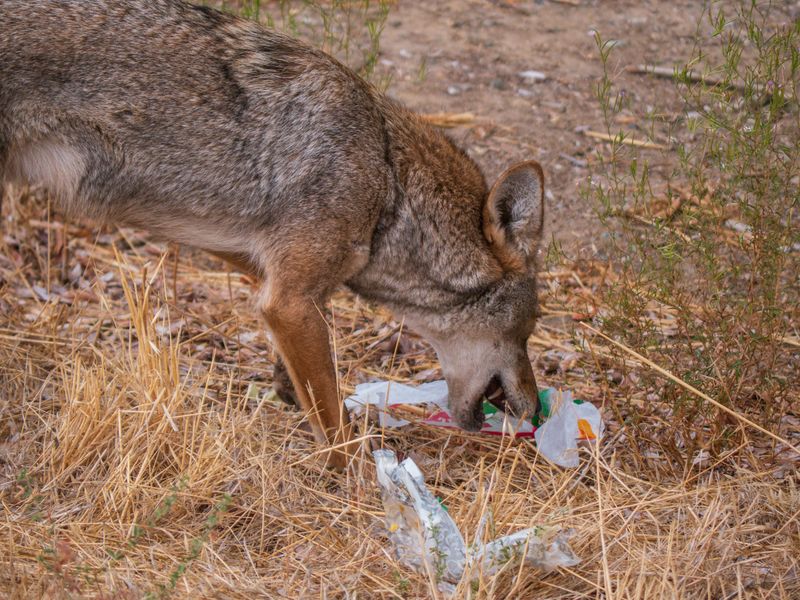
After the encounter, look at what might have drawn the coyote to your yard. Food is the big one, and it is often easy to fix.
Coyotes also follow smaller animals, such as mice, that come for spilled food.
Start with garbage. Use cans with tight lids and keep them in a garage or shed until pickup day when you can.
Bring pet food bowls inside after meals, and store bags of kibble where animals cannot reach them.
Birdseed is easy to forget. Sweep up seed that falls under feeders, because it can attract rodents and other small animals that coyotes hunt.
California wildlife officials list secured garbage, pet food, and cleaned-up birdseed among their basic tips.
Never feed a coyote or try to tame it. The USDA article on hazing coyotes reports that coyotes previously fed by people were more likely to approach people, even when hazed.
Pet habits matter too. Keep dogs on a leash during walks and stay with small pets when they go outside.
These steps lower the appeal of your yard, but they cannot promise you will never see a coyote again.
Know when to report the coyote or seek care
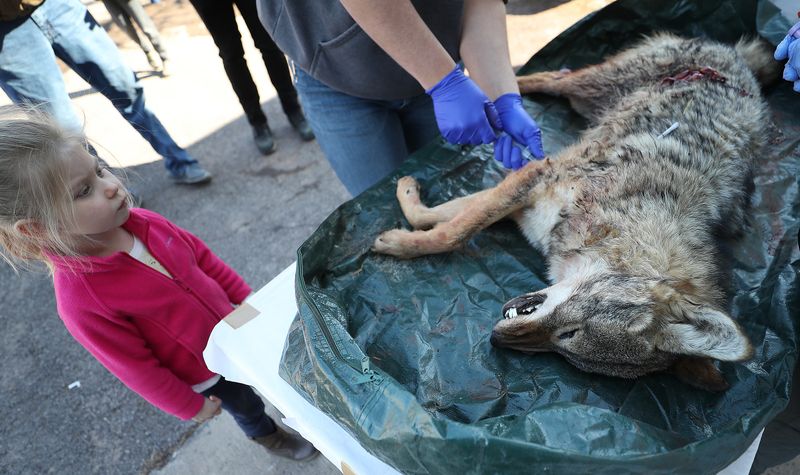
Most coyote sightings do not need a phone call. Some situations do, though.
Watch for unusual boldness or aggression, an animal that looks sick or injured, or any contact with a person or pet.
In Pennsylvania, the Game Commission runs a dispatch center that is open around the clock. You can reach it at 1-833-PGC-WILD (1-833-742-9453) or 1-833-PGC-HUNT (1-833-742-4868).
The agency handles sick or injured wildlife and wildlife emergencies.
For more on what counts as strange behavior, see Pennsylvania coyote guidance for aggressive or unusual animals. Remember that a daytime visit alone is not the sign.
Focus on how the coyote acts.
If a coyote bites or scratches a person, act right away. Wash the wound with soap and water for 15 minutes, then contact a healthcare or public-health professional promptly about rabies risk.
CDC guidance recommends this for any possible rabies exposure.
For a pet that is hurt or may have touched a coyote, call your veterinarian and the relevant local authorities. Do this even if the injury looks small.
Keep your own hands away from the wound area until you know the animal is safe to handle, and keep other pets apart from the injured one.
Keep your distance and act on what you observe
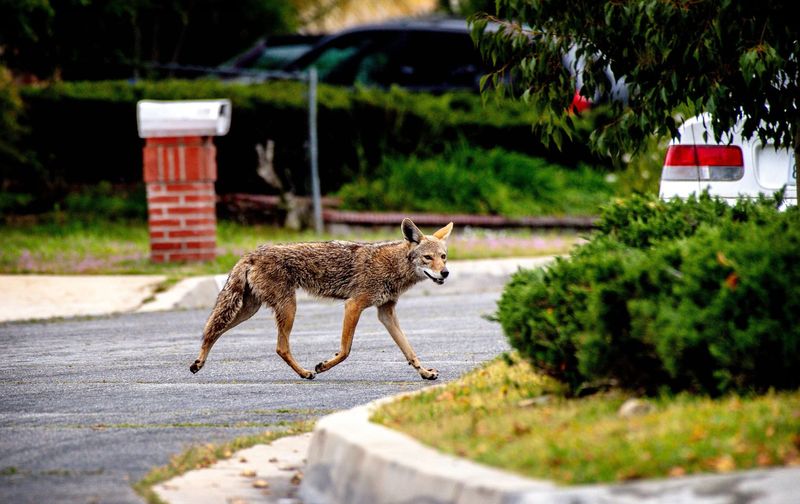
Handle a coyote visit by securing your family first, leaving the animal an exit, and using noise only if it comes closer. Reach out for help when its behavior or any contact calls for it.
A Game Commission profile and wildlife agency tips back this approach.
A sighting on its own is not an emergency. A coyote is a neighbor you watch from a respectful distance, and your best tool is calm attention.
Share this story