Celery shows up in lunchboxes, soups, and big claims on social media. Some people say a daily crunch can cleanse the body or fix health problems, but the real story is more modest.
Knowing what this crisp vegetable offers, and where the claims fall short, helps you decide how it fits on your plate. Here is a clear look at what celery can and can’t do.
Raw celery provides water and modest amounts of nutrients
Open a bag of celery and you are mostly holding water. USDA reference data for raw celery list about 16 calories, 95 grams of water, and 1.6 grams of fiber per 100 grams.
The same amount has roughly 80 milligrams of sodium, 260 milligrams of potassium, and 29.3 micrograms of vitamin K.
Those numbers are estimates for raw celery, not exact values for every stalk or serving. A stalk grown in one field, stored for a week, or trimmed differently can come out a little higher or lower.
Think of the figures as a general picture rather than a guarantee.
Scale matters too. A 100 gram portion is about one large stalk or a bit more, so a single serving adds a small amount of fiber and a small amount of potassium.
That is a useful bonus for very few calories, but it is not a big share of what most adults need in a day.
The high water content makes celery crunchy and light. It would be a stretch to say that water alone produces a particular hydration or health result, because your overall fluid intake and diet matter far more.
Celery is best seen as a low-calorie vegetable that adds texture, a little flavor, and a few nutrients to meals and snacks.
If you like the taste, a few stalks with hummus, peanut butter, or in a pot of soup are an easy way to bring some extra produce into your day. Just keep expectations realistic, since the contribution is helpful but modest.
Whole celery keeps more of its fiber than strained juice

Chewing a stalk and sipping a glass of juice are two different experiences. Whole celery keeps its fiber, which is the part of the plant that gives it that stringy crunch.
Straining juice removes much of that fiber, as Oregon State University Extension explains.
That does not make juice harmful or whole stalks magical. It simply means the form changes what you get.
If fiber is part of why you eat vegetables, the whole stalk is the version that keeps it, and the Dietary Guidelines for Americans emphasize whole vegetables as part of everyday eating.
Whole celery is also easy to portion. You can slice it into salads, stir it into soups, or pack it as a snack.
Juice takes many stalks to fill one glass, and most of the fiber is left behind in the pulp.
One habit applies either way. Rinse celery under running water before eating it raw, rubbing the stalks and cleaning between the ribs where soil can hide.
Washing is a simple food safety step that takes less than a minute.
Nothing here suggests that either form cleanses or treats anything. The choice is about what you enjoy and what fits your routine.
Celery can be one choice in a varied vegetable pattern
Picture a plate with celery, carrots, spinach, and peppers. That mix is closer to what nutrition guidance has in mind.
The Dietary Guidelines for Americans, 2025 to 2030 suggest about three vegetable servings per day for a 2,000-calorie pattern, adjusted for individual needs.
According to the daily serving guide, one serving is 1 cup of vegetables, raw or cooked. Chopped celery counts toward that total, so a cup of diced stalks in a chicken salad or soup does its part.
The guidance asks for variety, though. It does not tell anyone to eat celery every day or to lean on it in place of other vegetables.
Different vegetables bring different mixes of fiber, vitamins, and minerals, so rotating them covers more ground.
A practical approach is to treat celery as one of several go-to options. Use it on a busy week when you want something crunchy and cheap, then swap in other vegetables when they are fresh or on sale.
Corn, green beans, and leafy greens are all familiar choices in many Iowa kitchens.
Your own needs may differ from the 2,000-calorie example, so adjust portions to your age, activity, and health. A dietitian can help if you have specific goals.
Research on celery preparations does not establish effects from daily stalks
Headlines about celery and blood pressure often trace back to studies of extracts, not snacks. A 2025 meta-analysis pooled 10 randomized studies with 511 participants.
It reported improvements in some measures, including blood pressure, fasting glucose, and triglycerides.
The same review found no overall effect on total, LDL, or HDL cholesterol. So celery cannot be said to lower cholesterol overall.
The details matter. The interventions varied and included capsules and celery decoctions, which are concentrated liquids made by simmering the plant.
Those are not the same as eating a few raw stalks with lunch.
The studies were also small, and results differed a lot from one trial to the next. That makes it hard to apply the findings to everyone, and it limits how much confidence anyone should place in them.
In plain terms, the research hints that certain celery preparations may be worth studying further. It does not show that ordinary servings of celery stalks change blood pressure or blood sugar.
It also does not support using celery in place of prescribed treatment. If you take medicine for blood pressure, diabetes, or cholesterol, keep taking it as directed and talk with your clinician before changing your plan.
Detox and negative-calorie claims go beyond the evidence
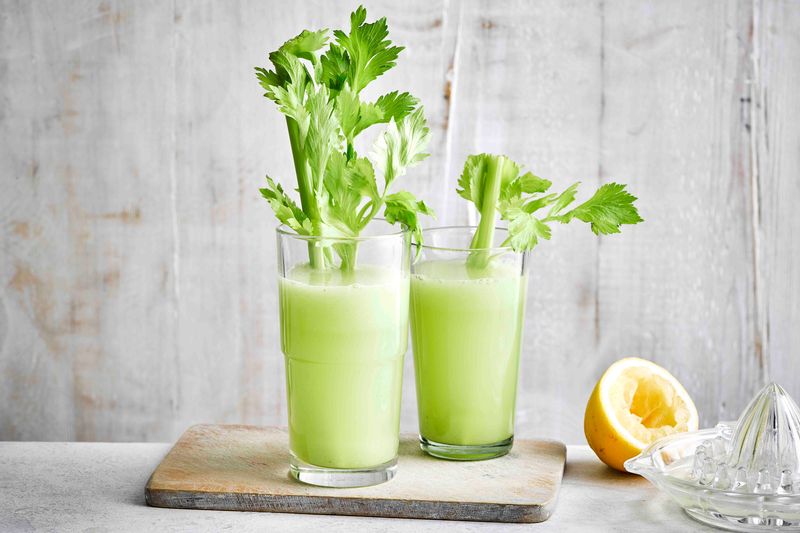
Few food claims spread faster than the idea that celery juice flushes toxins. The American Cancer Society says there is no scientific evidence that juice cleanses remove toxins or improve health.
Your liver and kidneys already handle waste without a special drink.
Claims aimed at celery juice in particular fare no better. Oregon State University Extension notes that specific claims for celery juice are not supported by studies.
That includes promises about clearer skin or better digestion, and the popular advice to drink it on an empty stomach.
Then there is the idea of a negative-calorie food, one that burns more energy to digest than it contains. Tufts nutrition experts say no such food exists.
Celery does have calories, about 16 per 100 grams in the USDA data. That is low, which makes it a handy swap for higher-calorie snacks.
But it will not cause weight loss on its own, and eating it by the bundle will not melt fat.
If a product or influencer promises dramatic results from celery, treat that as a cue to be skeptical. Enjoy it for crunch and flavor, and look elsewhere for treatment.
Warfarin users and people with celery reactions should take care

For most people, celery is a simple food. A couple of groups need a bit more thought.
Celery contains vitamin K, and the NIH Office of Dietary Supplements advises people taking warfarin to keep vitamin K intake consistent.
That does not mean celery must be avoided. It means a sudden jump or drop in how much you eat could matter, so talk with your clinician before making a substantial dietary change.
Steady habits make dosing easier to manage.
Allergy is the other concern. Celery allergy is rare, but DermNet notes it can cause serious reactions, including anaphylaxis.
Symptoms such as swelling, trouble breathing, or hives after eating celery call for urgent medical care.
A separate problem involves the skin. Celery sap can trigger a sun-triggered skin reaction after contact, and reported cases are especially linked to people who handle it for work.
This is different from an allergy because it comes from sap on the skin plus sunlight, not from an immune reaction to eating the food.
If you notice odd symptoms after eating or handling celery, stop and ask a healthcare professional what is going on.
Treat celery as a food choice, not a health promise
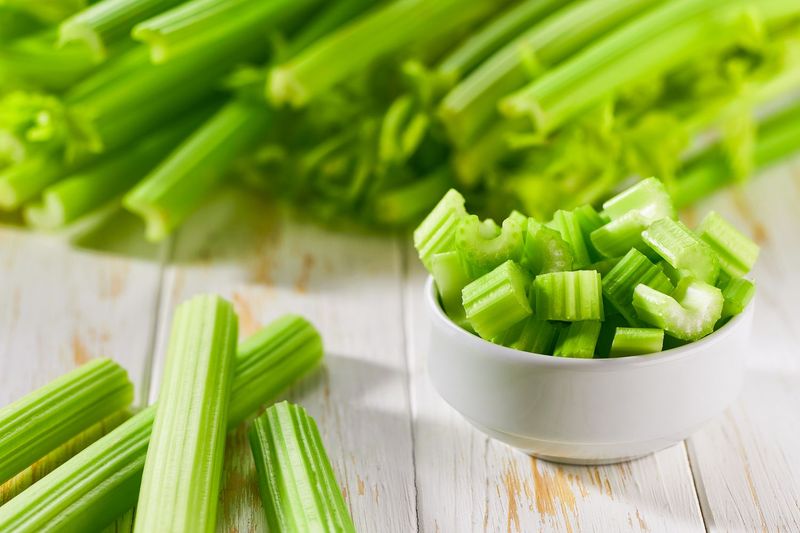
Celery earns its spot as a low-calorie, water-rich vegetable, with the USDA data showing a modest set of nutrients. Pair it with other produce, as the dietary guidelines encourage, and no special effect is needed to justify it.
Iowa or anywhere else, the facts stay the same. Celery is a crunchy side, not a cure.
Share this story