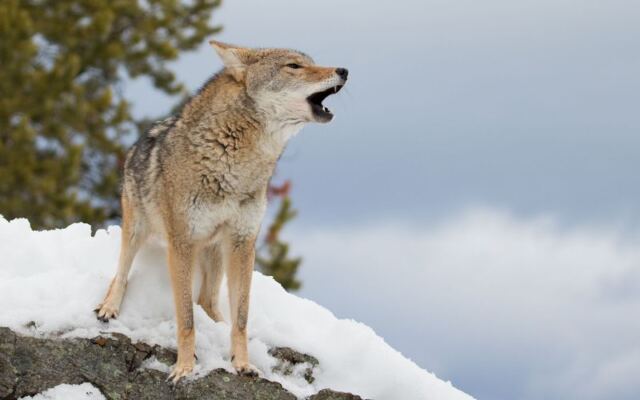
You are lying in bed when a wild burst of yips and howls drifts through the window. It is easy to wonder how many animals are out there and whether they are close.
The truth is that the sound tells you less than you might think. Knowing what it can and cannot reveal helps you stay calm and focus on what actually matters.
A chorus signals communication, not an alarm

Coyotes talk to each other, and the chorus you hear at night is part of that conversation. According to the Iowa DNR, coyotes use yips, barks, and howls to announce their presence to other family groups and to strengthen bonds within their own group.
Many people hear this music around dusk or during the first hour of darkness. That is simply when the calling is often noticeable to human ears.
It does not mean something unusual is happening.
Researchers who study howls describe them as a long-distance communication channel. A study comparing howls across several canid species links this kind of calling with things like spacing between territories and keeping groups connected.
So the most reliable reading of a chorus is modest. Coyotes are communicating somewhere within hearing range of your home.
It is not an emergency signal, and it is not a message aimed at you.
Think of it like hearing neighbors chat across a field. You know they are out there and talking, but you cannot say what the talk is about.
Later sections cover what else the sound can and cannot tell you, and what to do if you ever see real trouble.
Why can a few coyotes sound like many?
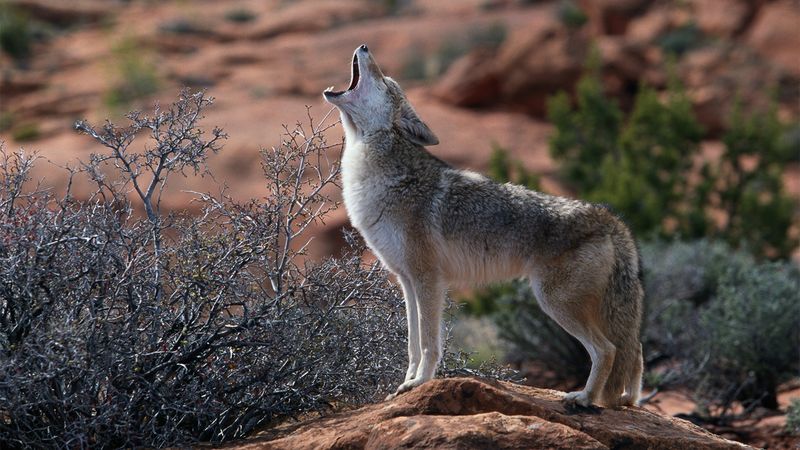
A single coyote can produce a stream of yips and barks that seems to come from a whole crowd. Add a second or third animal, and the sound can seem to multiply.
Your ears are being fooled by quick, overlapping, high-pitched notes.
Researchers tested this idea. In a listening study, 427 participants heard recordings of one to four coyotes.
Listeners consistently overestimated the number by nearly twofold.
The Iowa DNR makes the same point, noting that coyote vocalizations can lead people to think more animals are present than really are.
It helps to be clear about what this finding means. It shows that people tend to guess too high.
It does not give you a formula, such as cutting your guess in half, to work out how many coyotes are outside your house.
If you want a number, the honest answer is that sound alone cannot give you one. Treat any guess as a rough impression, not a fact.
A loud, busy chorus may come from a small group, but you cannot say how small.
What the sound cannot tell you
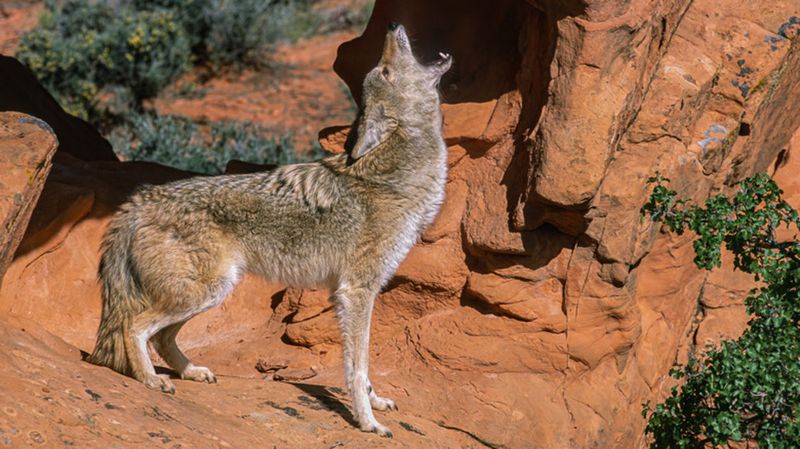
Hearing a coyote does not mean one is in your yard. Coyote calls are built to travel.
Depending on weather, terrain, and other conditions, research on coyote vocalizations notes they can be heard at considerable distances.
That means a chorus that seems to be right behind the garage might be coming from a field far beyond it. Sound bounces, bends, and fades in odd ways at night, so direction and distance are easy to misjudge.
The sound also cannot reveal what the animals are doing. Scientists link howls with communication, including territorial spacing and group cohesion.
A particular bout of howling does not tell a listener whether coyotes are hunting, traveling, or just keeping in touch.
You may have heard stories that howls mean a hunt, a kill, or an attack about to happen. A howl alone does not show any of those things.
What you can say is simple. Coyotes are somewhere within earshot and are calling.
For anything beyond that, you need to see something, such as an animal acting boldly near people or pets.
Season and moonlight add context, not a code
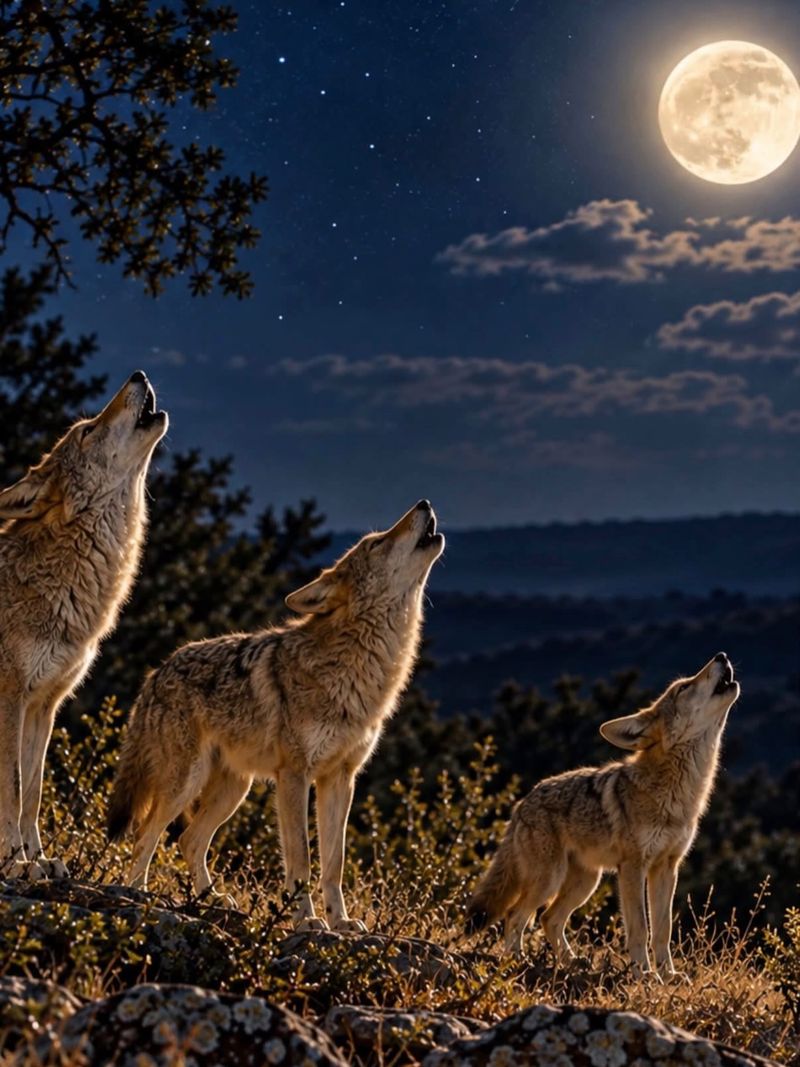
The calendar can add some background to what you hear. The Iowa DNR lists January through March as breeding season, April through August as pup-rearing season, and September through December as dispersal season.
Those periods can help with pet planning. Iowa State Extension says coyotes may be more defensive toward pets near den sites in spring and early summer.
But a howl does not tell you a den or pups are close by, so use the season as a reminder, not a clue.
Then there is the full moon. Plenty of people believe coyotes howl more when it is bright, but that idea is shaky.
A Saskatchewan field study found no positive link between brighter moonlight and lone howling, and group howling was actually lower with more moonlight.
That work was done in Saskatchewan during summer observation periods, so its results should not be stretched to fit Iowa without care. The practical lesson is that neither the moon nor the month turns a howl into a warning.
Hearing a coyote is different from seeing a conflict
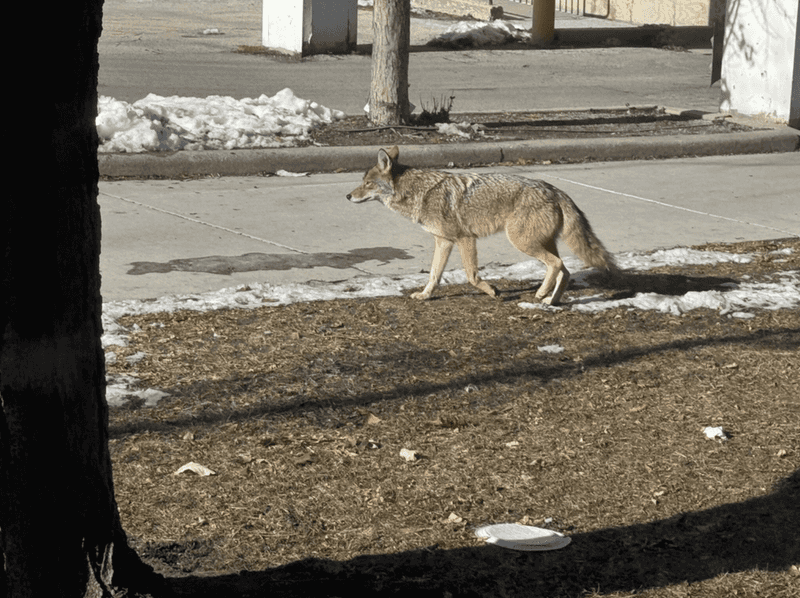
Noise is one thing. Behavior is another.
According to Iowa State Extension, simply seeing a coyote does not necessarily call for action, and most Iowa coyotes live without conflict with people, pets, or livestock.
The guidance gets more serious when certain signs show up. These include frequent sightings, threats to pets or livestock, repeated attacks, and aggressive approaches toward people.
Those are things you observe, not things you hear through a window. A chorus at midnight does not belong on that list.
Seeing a coyote in daylight can also surprise people. The Animal Rescue League of Iowa explains that daytime activity can be normal and is not proof of rabies or danger by itself.
If an animal shows illness-like signs or acts in an abnormal way, contact your local animal services. If anyone is bitten, contact animal control promptly.
Ask yourself what the animal is doing, not just how it sounds. A coyote trotting along a field edge is very different from one that keeps approaching people or going after a pet.
Make the yard less inviting to conflict
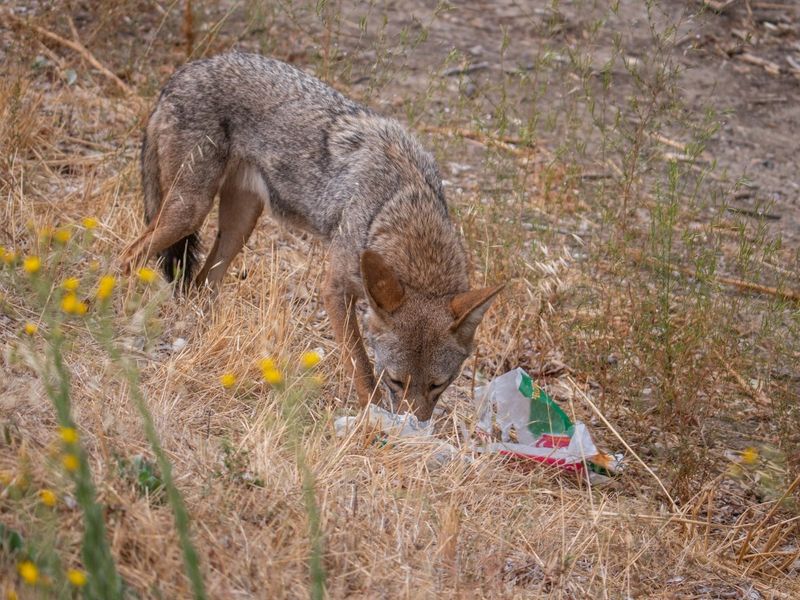
Sensible habits matter more than any decoding of howls. The Iowa DNR advises supervising pets while they are outside and keeping them leashed when coyotes are known to be nearby.
Pet food is another easy fix. Bring bowls indoors rather than leaving food out overnight.
Next, look around the yard for other things that can draw wildlife. The DNR points to fallen fruit, spilled birdseed, garbage, and accessible compost.
A few quick chores can cover most of it. Pick up windfall apples, sweep up seed beneath feeders, use a lid that latches on the trash can, and keep compost in a closed bin.
None of this means a coyote visit is bound to happen. These are simple precautions that make sense in any season, and nobody needs to start them just because a chorus floated across the field one night.
If you have small dogs or cats, a quick flashlight check and a short leash on the evening walk is an easy habit. It costs little and keeps your pets close.
If a coyote comes too close, respond without chasing
Close encounters are rare, but it helps to know the plan. The Iowa DNR advises making yourself look large and making loud noises if a coyote comes too close.
Do not run, and do not chase the animal.
Standing tall, raising your arms, and shouting in a firm voice are all reasonable ways to do this. The goal is to encourage the coyote to move along, not to start a pursuit.
There are times to hold back. Do not haze a coyote that appears sick or injured, is cornered, or is with pups.
A cornered animal needs an exit, so step back and give it room.
If behavior seems concerning, the DNR advises reporting it to the city. For serious conflicts, local authorities and DNR personnel are resources, and Iowa State Extension likewise points to escalating when aggression or repeated attacks on pets or livestock occur.
You do not have to diagnose the animal yourself. Describe what you saw, where, and when, and let the right people take it from there.
Let the sound prompt awareness, not assumptions

A coyote chorus tells you that coyotes are communicating within hearing range. It does not give you a headcount, a precise location, or a warning.
Base your concern on what animals actually do, keep pets supervised, and clear away food that might attract wildlife, as the Iowa DNR suggests.
Most nights, a howl is just the countryside talking, and you can let it be.
Share this story