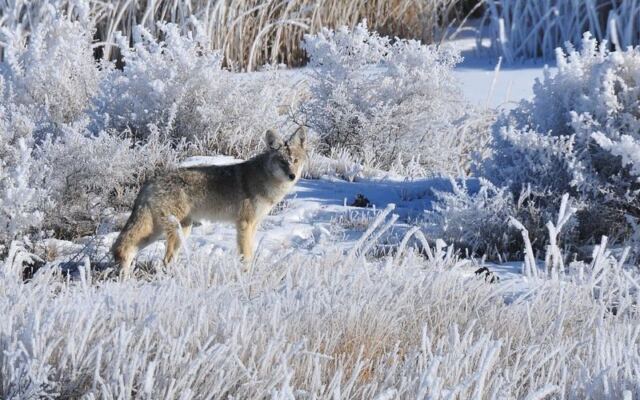
Delaware does have coyotes, and the yips and howls drifting through the dark may be their way of talking to each other. State wildlife officials have confirmed these animals in every county, even though there are not many of them.
A strange sound at night can feel unsettling, but it helps to know what calls can and cannot tell you. Here is what a howl may mean, what it does not mean, and what to do around your home.
Coyotes Have Been Documented Across Delaware

Many people are surprised to learn it, but DNREC says coyotes have been documented in all three Delaware counties. That covers New Castle, Kent, and Sussex.
The agency also describes the state’s coyote population as relatively low, so this is not a story about animals crowding every street.
How do officials know they are here? DNREC points to several kinds of confirmation.
These include trail-camera photos, public sightings, animals killed on roads, and harvests reported by hunters and trappers. Together, those records show coyotes live in the state, even if any one neighborhood may rarely see them.
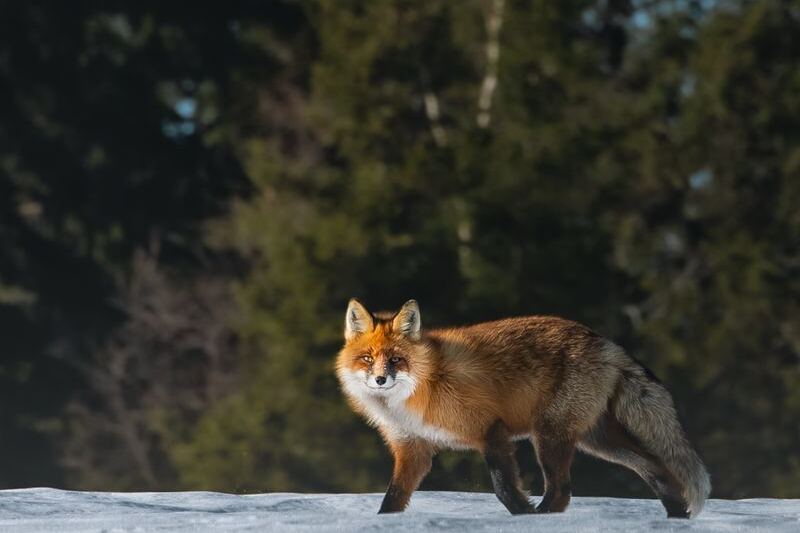
Reports come with a catch. DNREC cautions that some sightings turn out to be dogs or red foxes.
A quick glimpse at dusk, especially from a car or window, can fool almost anyone.
The same goes for sound. A howl or yip in the night does not prove a coyote is near your particular house.
Dogs, foxes, and even other noises can be mistaken for coyote calls, so a sound by itself is a clue, not a confirmation.
Think of it this way: coyotes are part of Delaware’s wildlife, and they may be out there somewhere beyond your fence. But hearing something odd after dark is only the start of figuring out what is going on, not the answer.
What Coyote Calls Can Tell You

Coyotes are chatty animals. Their howls and yips are a form of broad communication between coyotes, and researchers link them to territory spacing and territory maintenance.
In plain terms, the calls help animals keep track of one another and signal that an area is occupied. That idea comes from a peer-reviewed study on how people hear coyote group size.
That is quite different from a message you could translate word for word. A howl is not a sentence, and no one can reliably say that one call means one specific thing.
Anyone claiming to know exactly what a particular howl said is guessing.
You may hear that a howl is a warning to people, a signal that the pack is hunting, or a sign something bad is about to happen. The research does not back up any of those readings.
The calls seem to be aimed at other coyotes, not at you.
So what can you take from a night of yipping? If the sounds really are coyotes, they suggest at least one animal is somewhere in the area and is staying in touch with others or marking out its space.
That is about as far as the sound can take you.
It is fine to find the noise eerie. Wild voices after dark can raise the hair on your neck.
Still, a call from a distance is ordinary animal communication, not a message aimed at your family.
Fall Dispersal Can Bring Movement
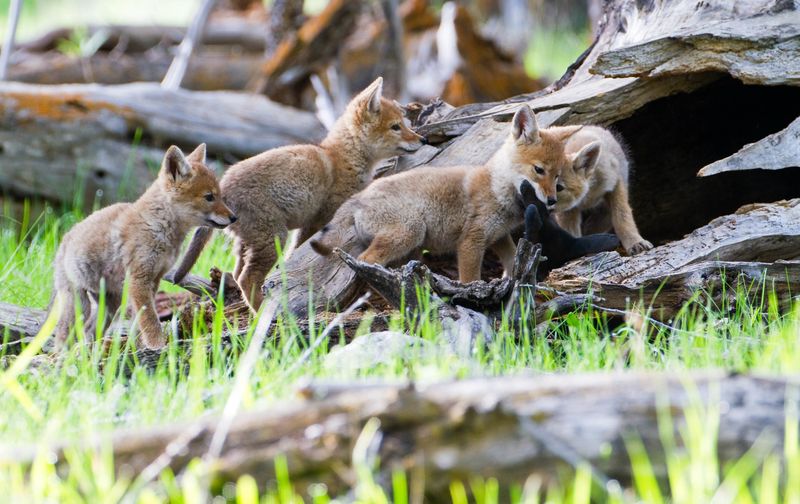
Late autumn can be a busy time for young coyotes. DNREC says most young coyotes usually disperse in October and November to look for breeding territories of their own.
Some stay with their parents instead, so not every youngster leaves.
That makes fall movement a fair possibility when you hear something in November. It is only a possibility, though.
Nobody can say that dispersal caused the particular howl outside your window.
Do not mix this up with mating. DNREC places coyote breeding in February and March, so a November chorus does not mean the breeding season has started.
Dispersal and breeding are separate events on the calendar.
It is also wrong to think coyotes only call in autumn. They howl all year.
New York’s wildlife agency says they can be especially vocal from late summer into early fall and again in winter breeding season, and a peer-reviewed study names dispersal and breeding as common howling periods.
Patterns can differ from place to place and from one source to another. If you hear calls in July or in January, that is not odd.
Season adds context, but it cannot explain any single night’s noise.
A Chorus Can Sound Larger Than It Is
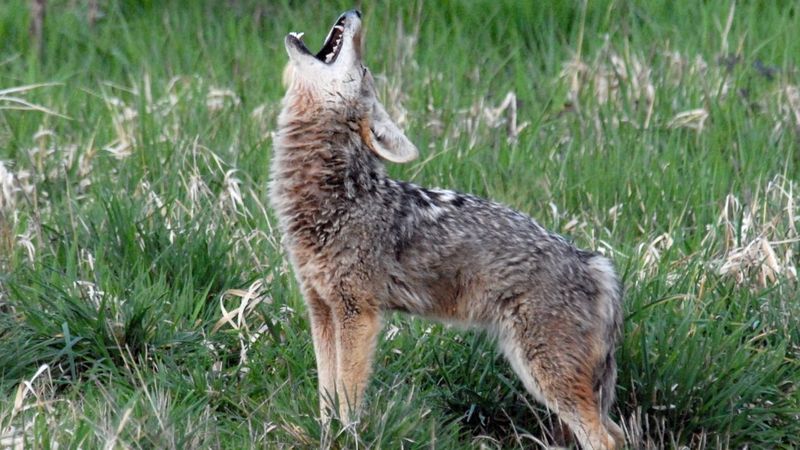
Ever heard what sounded like a dozen coyotes screaming in the dark? Your ears may have exaggerated.
Overlapping yips and howls bounce around and blend, and a few animals can sound like a crowd.
A listening experiment put this to the test. In it, 427 people heard recordings of one to four coyotes, and on average they guessed nearly twice as many animals as were really calling.
There are limits to what that tells us. Researchers used recordings from southern Texas, and the study was an experiment with listeners.
It was not a count of Delaware coyotes, so it cannot tell us how many live here.
The result still gives a useful lesson about human ears. New York’s wildlife agency makes a similar point, saying a family group can make people think an area is teeming with coyotes.
So if the noise outside seems huge, try not to picture a big pack. DNREC notes that coyotes often travel or hunt alone or in pairs, though groups can form.
A chorus, by itself, cannot tell you how many animals are nearby.
Reduce Food and Pet Attractants
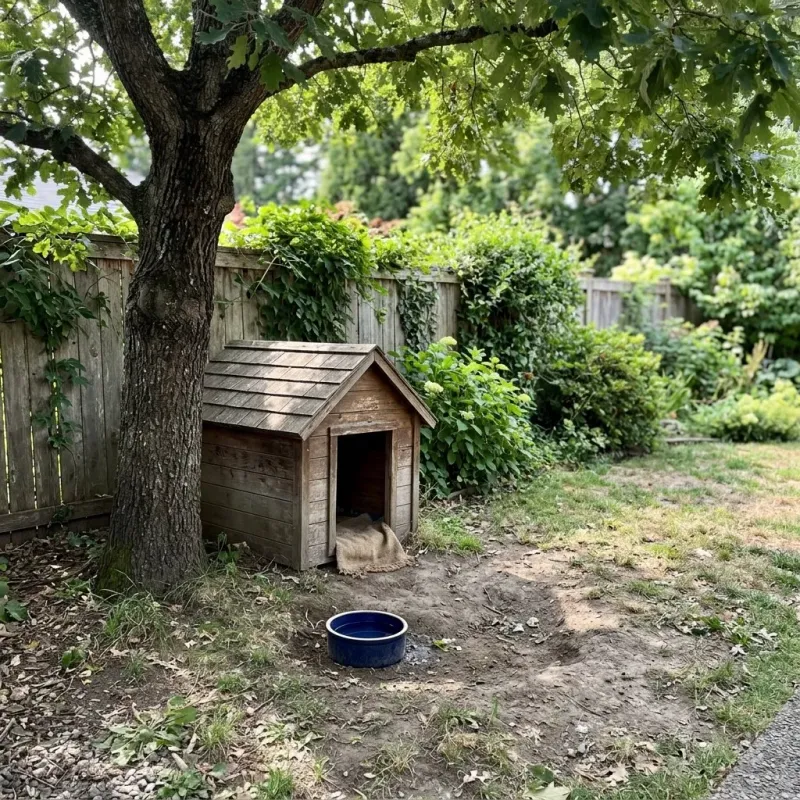
Now for what you can control. Coyotes are drawn to easy meals, so the best step is to take away the free ones.
DNREC’s advice starts with a simple rule: do not feed coyotes, on purpose or by accident.
Secure your garbage with tight lids, and keep cans in a garage or shed if you can. Remove other food that animals can reach, such as spilled birdseed, pet bowls left outdoors, and fallen fruit.
DNREC lists accessible food sources as something to clear away.
Pets need attention too. DNREC recommends keeping pets from roaming and giving them secure housing at night.
A leashed walk or a supervised trip to the yard is safer than letting a small dog or cat wander after dark.
A practical routine helps. Before bed, bring in bowls, check that bins are latched, and call pets inside.
It takes a few minutes and makes your yard less interesting to any wildlife.
None of this means a howl has singled out your home or your pet. These are everyday habits that lower the chance of an unwanted meeting, whether the visitor is a coyote, a fox, or a raccoon.
Know When to Give a Coyote Space
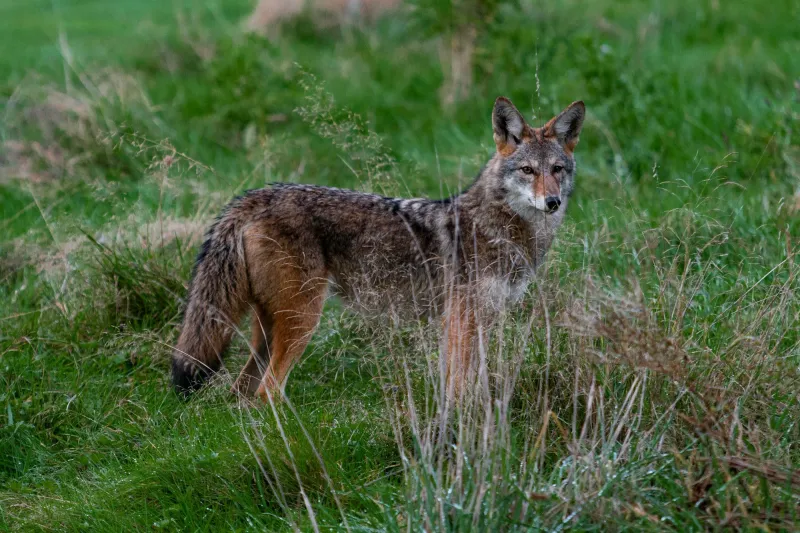
A coyote you spot at a distance, acting naturally, is different from one that seems bold or aggressive. If one is hanging around your yard, DNREC recommends discouraging it with shouting or other loud noises.
The goal is to remind it that homes are not a comfortable place to linger.
Hazing is no guarantee. USDA research with captive coyotes found it can reduce approaches, but results depended on how much experience the animals had with people.
Keep pets away from any coyote and never feed one.
An aggressive animal calls for a different response. Do not approach it, and do not throw objects.
As Delaware public-health guidance advises, back away slowly and contact DNREC.
Current DNREC contact information lists the Wildlife Section at 302-739-9912 and nuisance wildlife at 302-735-3600. For after-hours wildlife emergencies, DNREC lists 800-523-3336.
A faraway howl on its own is not an emergency, and it does not call for a phone call. Save that for an animal that acts aggressively or behaves unusually close.
Most nights, the howl is just the wild side of Delaware talking among itself.
Share this story