Crabgrass shows up in summer, and by autumn many homeowners feel pressure to do something before winter arrives. Some ads make it sound like a fall deadline you cannot miss.
The real story is calmer and more useful. Knowing how crabgrass lives, and what your product label says, can save you money and keep you from a badly timed treatment.
Fall is not the standard crabgrass-prevention deadline
Crabgrass is a real nuisance, so the worry behind the headline makes sense. Still, skipping a fall treatment does not mean your lawn is headed for a weedy spring.
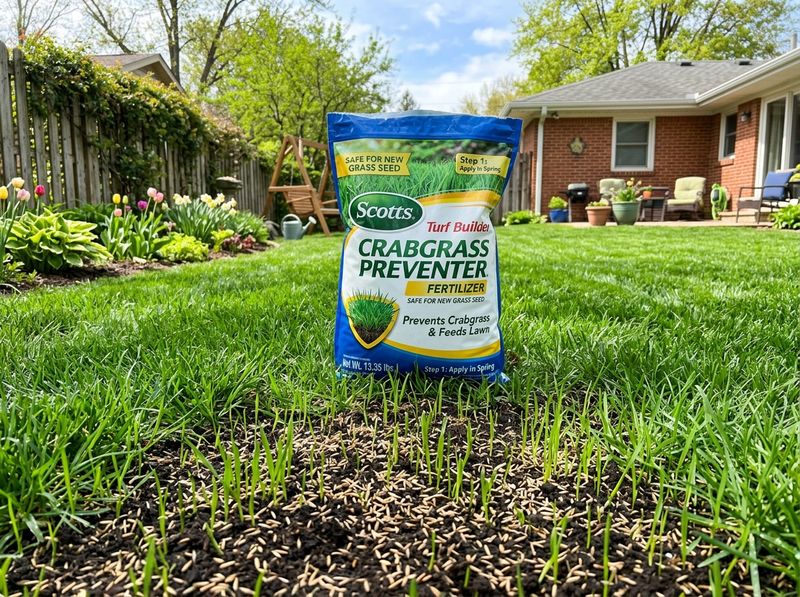
The usual plan is a preemergent herbicide put down in spring, before crabgrass seeds sprout, as described in University of Maryland Extension guidance on crabgrass.
Fall use is a different matter. It is a conditional option, and it depends on the exact product, the rate, and the weather.
Cornell’s turf research review notes that how well fall applications work varies with those factors, as laid out in Cornell’s commercial turfgrass pest management guidelines.
So if the calendar is turning toward winter and you have not put anything down, you have not missed the normal opportunity. That chance usually comes next spring.
Think of fall as a side door that only some products and some lawns can use, not the front entrance everyone must walk through.
To see why, it helps to know how crabgrass lives and dies. Once you understand its yearly cycle, the spring timing makes sense, and so does the caution about acting now.
Crabgrass returns from seed after the summer plants die
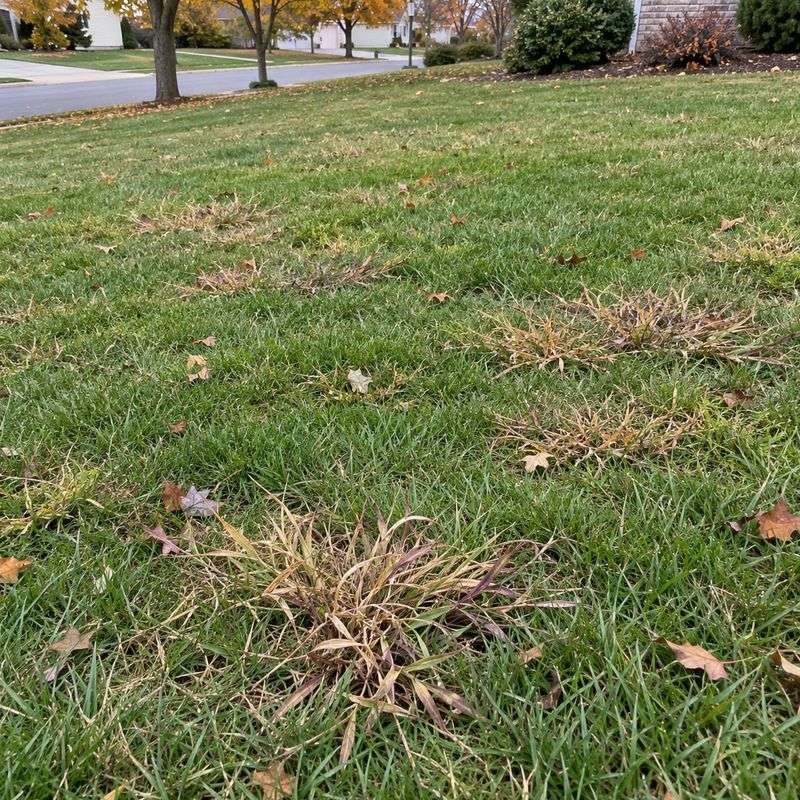
Picture a crabgrass plant in late September. It has spread low and wide, and it is dropping seed.
Then the first hard frost arrives and the whole plant turns brown and dies.
That is what “summer annual” means. The plant lives for one season, and only its seeds carry on.
According to University of Maryland Extension, those seeds sprout in spring and later, once conditions warm up.
The dead plants you see in autumn are not coming back. The next generation will grow from seed left in the soil, and it waits for warmth.
This matters for a simple reason. A lawn full of crabgrass in August does not automatically need a treatment in October.
The weeds you can see are on their way out, and the seed bank is what drives next year’s problem.
A handy clue is color. Tan or straw-colored sprawling patches after frost are usually the finished crabgrass plants, not a living weed that fall products could stop.
Meanwhile your turf grass keeps growing in cool weather, which is a good time to focus on keeping it thick and healthy.
Crabgrass also leaves gaps when it dies. Those open spots are where new seeds can find light next year, so noting where the thin areas are now gives you a head start on repair.
When should New York lawns get spring protection?
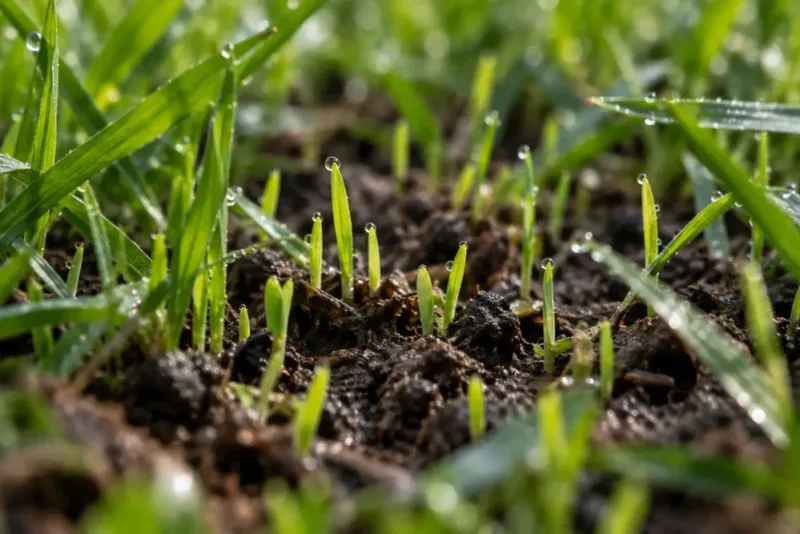
Spring protection works best when it goes down before crabgrass seeds germinate. Penn State Extension describes germination as starting when the upper inch of soil stays around 55 to 58°F at daybreak for several days, in its guide to smooth and large crabgrass.
Treat that as a regional indicator, not a fixed rule for all of New York.
Local conditions change the picture. A sunny south-facing slope warms sooner than a shady yard, and Long Island runs warmer than the Adirondacks.
A cold, late spring can push everything back by weeks.
For a real-world example, Cornell Cooperative Extension in Suffolk County reports crabgrass typically appearing from late April through May, according to its Weed Watchers page. That is a Long Island observation.
It is not a statewide application schedule, and upstate lawns may see crabgrass later.
You may have heard that you should apply when forsythia blooms. That can be a rough cue, but plant development is not always reliable, especially in odd weather.
Soil temperature and the directions on your product label are better guides.
A cheap soil thermometer and a few morning readings will tell you more than a calendar date. Then read the label for the timing window your specific product needs.
A fall application is a narrow, label-specific exception

Fall use does exist, and it helps to be precise about where. One current EPA label for a prodiamine product permits a fall application for next-spring crabgrass control in cool-season grasses where the ground freezes.
The label says this happens after soil temperatures fall below 50°F and before the ground freezes, as shown in the EPA Prodiamine 4L label.
Those conditions belong to that product. They are not a universal rule for every crabgrass preventer, formulation, turf type, or site.
A different product may have no fall directions at all.
Results can also vary. Cornell’s commercial turf guidance says that fall effectiveness depends strongly on the product, the rate, and the environmental conditions, according to Cornell’s turfgrass pest management guidelines.
So the exception is real, but it is narrow. A homeowner who picks up any bag labeled crabgrass preventer and spreads it in October is guessing.
The label has to say fall use is allowed, and your lawn has to match the stated conditions.
If your product label is silent about fall, or you cannot confirm the conditions, the standard spring approach remains the safer plan.
The overseeding tradeoff

Here is a catch many people miss. Preemergents are built to stop seeds from establishing, and that includes the grass seed you want.
If you plan to repair thin spots, the weed control and the reseeding can work against each other.
The EPA label for the prodiamine product lists reseeding intervals, meaning waiting periods before you can seed after an application. You can see those directions in the label itself.
Other products may have different rules, so never assume the same wait applies.
Cornell’s research review describes this same trade-off. It notes a tension between crabgrass control from fall treatment and successful spring overseeding, and it treats this as a major drawback, as discussed in its turfgrass guidelines.
Say you have a worn patch by the driveway. If you put down a preemergent in fall and then seed in spring, the new grass may struggle.
Seeding first and treating later, or choosing a different plan, may suit that patch better.
That is why seeding plans should come first. Decide whether you will overseed this fall or next spring, then pick a treatment whose label fits the schedule, not the other way around.
Before winter, check the lawn and the label
Instead of one blanket instruction, work through a few questions. Do you plan to seed or overseed?
Is crabgrass already established, or are you thinking about prevention? Does your lawn have cool-season grass in a spot where the ground freezes?
Next, read the label. Check that the product is approved for your lawn site and intended use, then look at the turf types, temperature conditions, rate, watering instructions, maximum annual amount, and reseeding directions.
The EPA label for Prodiamine 4L shows how detailed these directions can be, and each product’s will differ.
Keep prevention and cleanup separate. A preemergent does not remove crabgrass that has already grown.
Options for emerged weeds depend on weed size, turf type, and the product label.
Lawn care adds a lot of protection too. University of Maryland Extension recommends healthy, dense turf, seeding bare spots, and mowing at 3 to 4 inches during the growing season.
That is regional guidance, and the right height varies with grass type and lawn.
Corn gluten meal is sometimes suggested as a natural option. Maryland Extension reports mixed university results and poor performance under heavy weed pressure, so it is not a proven match for conventional preemergents.
The useful deadline is local, not an autumn ultimatum
Missing a fall application is not a sentence to a weedy spring. For many lawns, the real prevention window is still ahead.
Watch your local conditions, such as the soil temperature trends described by Penn State Extension, and use Maryland Extension’s crabgrass advice as a regional reference.
Keep your seeding plans in mind and follow your product’s exact label. Your deadline comes from your own yard, not from an ad.
Share this story