Get the latest garden guides in your inbox →
Gardening Latest
  • General Gardening
  • Lawn Care
  • Plant Care
  • Composting
  • Soil Health
  • Backyard
  • Garden Muse Magazine
  • General Gardening
  • Lawn Care
  • Plant Care
  • Composting
  • Soil Health
  • Backyard
  • Garden Muse Magazine
  • News
  • Gardening Calendar
  • Garden Structures
  • Vegetable Garden
  • Vertical Garden
  • Raised Beds
  • Hydroponics
  • General Equipment
  • Community Gardens
Garden Themes
  • Spiritual Garden
  • Hydroseeding
  • Seeding and Laying Sod
  • Artificial Grass
  • Lawn Care Equipment
  • Plants
  • Trees
  • Planting Tools
  • Composting Basics
  • Fertilizer
  • Alternative Growing Mediums
  • Front Yard
  • Backyard Activities
  • Landscaping
Gardening Latest

Explore by state

Which state is your garden in?

Currently viewing New York

All states

Northeast

  • Connecticut —
  • Delaware 16
  • Maine —
  • Maryland 3
  • Massachusetts 18
  • New Hampshire —
  • New Jersey 3
  • New York 12
  • Pennsylvania 12
  • Rhode Island —
  • Vermont —

Southeast

  • Alabama 3
  • Arkansas —
  • Florida 3
  • Georgia 3
  • Kentucky 16
  • Louisiana 2
  • Mississippi —
  • North Carolina 1
  • South Carolina 15
  • Tennessee —
  • Virginia 2
  • West Virginia —

Midwest

  • Illinois 2
  • Indiana 4
  • Iowa 15
  • Kansas —
  • Michigan 3
  • Minnesota 2
  • Missouri 2
  • Nebraska —
  • North Dakota —
  • Ohio 3
  • South Dakota —
  • Wisconsin 17

Southwest

  • Arizona 3
  • Colorado —
  • Nevada —
  • New Mexico —
  • Oklahoma —
  • Texas 2
  • Utah —

West

  • Alaska —
  • California 3
  • Hawaii —
  • Idaho —
  • Montana —
  • Oregon —
  • Washington —
  • Wyoming —

No state matches that search.

Site menu

Gardening Latest
  • General Gardening
    • News
    • Gardening Calendar
    • Garden Structures
    • Vegetable Garden
    • Vertical Garden
    • Raised Beds
    • Hydroponics
    • General Equipment
    • Community Gardens
    Garden Themes
    • Spiritual Garden
  • Lawn Care
    • Hydroseeding
    • Seeding and Laying Sod
    • Artificial Grass
    • Lawn Care Equipment
  • Plant Care
    • Plants
    • Trees
    • Planting Tools
  • Composting
    • Composting Basics
  • Soil Health
    • Fertilizer
    • Alternative Growing Mediums
  • Backyard
    • Front Yard
    • Backyard Activities
    • Landscaping
  • Garden Muse Magazine

Explore

  • About GardeningLatest.com
  • Contact Us

Get the latest from the garden

New guides on lawn care, plants and backyard projects, sent when they go up.

Subscribe →

Follow

  • Facebook
  • X
  • Pinterest
  • YouTube
New York Gardening

Where and When New York Homeowners Should Hang an Owl Box

A small wooden box on a tree can give an owl a place to nest, but only if it fits the right…

E

By Elyanna

November 18, 2026 · 6 min read

Where and When New York Homeowners Should Hang an Owl Box

A small wooden box on a tree can give an owl a place to nest, but only if it fits the right owl and the right yard. In New York, many homeowners picture a big Barn Owl, yet a smaller bird is a far better match for most wooded or suburban lots.

Timing matters too, because nesting can start earlier than you might expect. Here is how to choose, place, and time a box without expecting guaranteed results.

At a glance

Where
New York Gardening
Hardiness zone
7 0 to 10°F
Read
6 minutes
Published
November 18, 2026

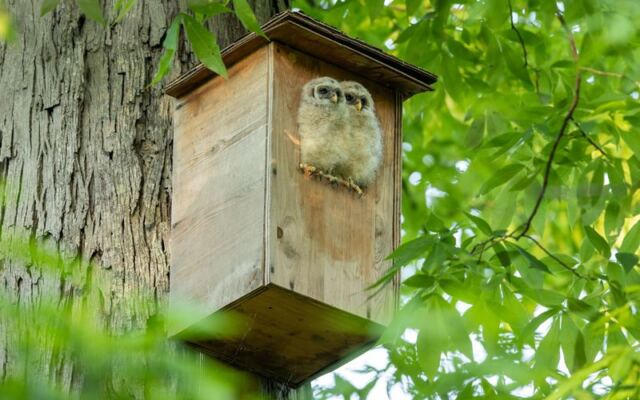
Choose a box for the owl your yard can support
Choose a box for the owl your yard can support
© Nest Watch

Before you buy or build anything, pick the owl you are building for. An owl box is not one universal product, and the size, habitat, and mounting details change with the species.

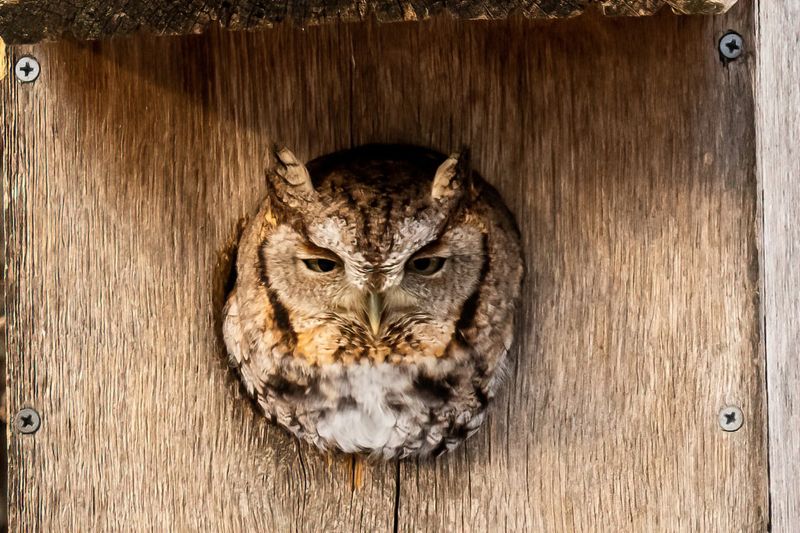
For many wooded or suburban New York properties, the Eastern Screech-Owl is the more plausible target. According to Cornell NestWatch guidance for Eastern Screech-Owls, these small owls use wooded and edge habitats, which describes a lot of backyards with mature trees, a neighbor’s woodlot, or a nearby field.

Barn Owls are a different project. Cornell’s Barn Owl page points to open habitat such as fields, and New York DEC’s Barn Owl assessment describes the species as rare in the state, with most known nesting areas on Long Island and Staten Island.

That makes a Barn Owl box a poor general-purpose choice for a typical wooded yard. If you live near large open grassland or coastal lowlands, the picture may change, but a screech-owl box is the safer starting point for most properties.

Think of the box as a nesting cavity you are offering, not a trap that pulls an owl in. Some boxes sit empty for a long time, and that is normal.

Install the box well before nesting season
Install the box well before nesting season
© Northern Woodlands magazine

Late fall and winter are the sensible time to get a box up. For the 2027 season, November 2026 through winter gives you room to work, and it is a planning window rather than a deadline.

The reason is simple. A New York breeding-season table shows that Eastern Screech-Owls may begin nesting in March, which arrives sooner than most people expect.

A screech-owl box is built around a few measurements, and getting them right matters more than fancy extras.

Cornell also advises putting boxes up well ahead of breeding, as explained in its nest box placement guidance. That gives local birds time to notice the box, and it lets you finish the ladder work before any owl is nearby.

Winter installation has a practical bonus. Bare branches make it easier to judge the flight path to the entrance and to spot limbs that might block it.

Do not read a specific date as a promise. Birds can take time to discover a box, and Cornell encourages people not to feel discouraged if nothing moves in right away.

A box put up in January is not doomed, and a box put up in November is not guaranteed.

If you miss the window, hang it anyway. A ready cavity is still more useful than an unbuilt one, even if the first season passes quietly.

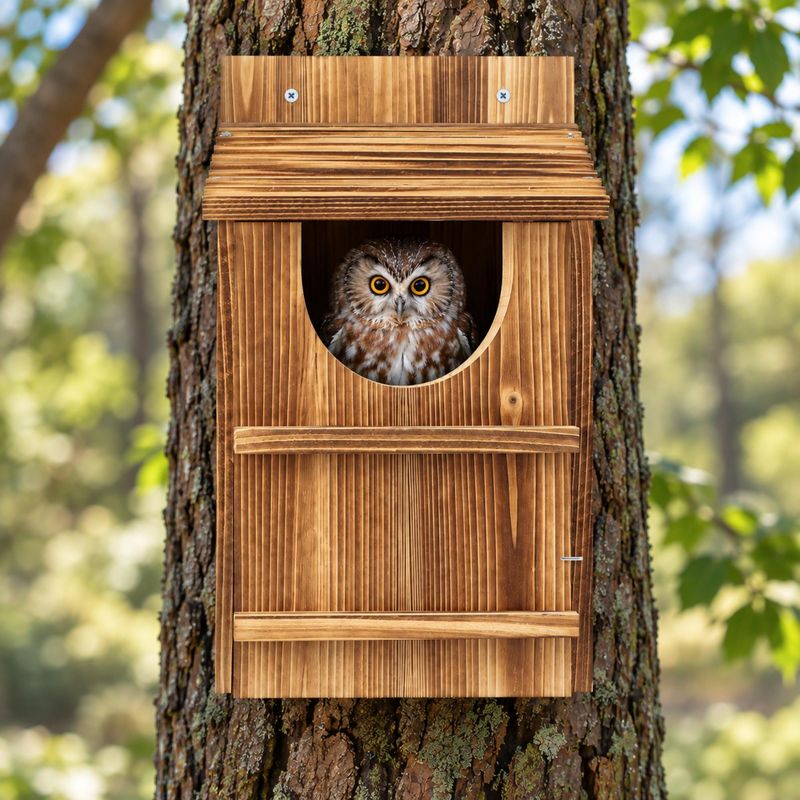
Place the box at a woodland edge, 10–30 feet high
Place the box at a woodland edge, 10–30 feet high
© Etsy

Location does most of the work once the box is built. Aim for a woodland edge, where trees meet a yard, field, or wetland, since Cornell’s Eastern Screech-Owl guidance recommends that kind of setting with open areas or wetlands nearby.

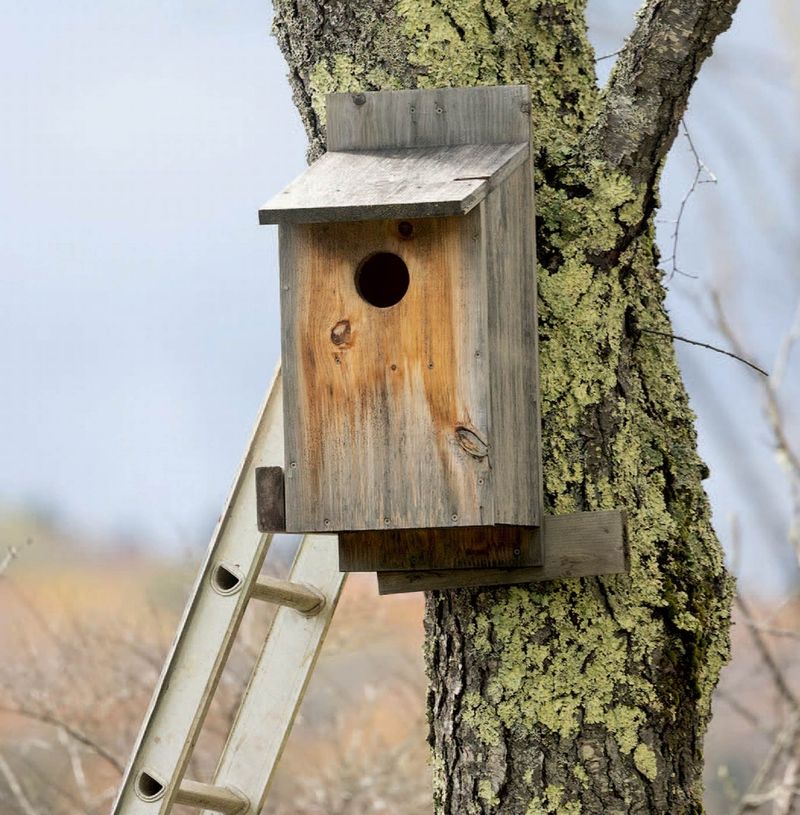
Mount the box 10 to 30 feet high and tuck it under a limb. The limb gives some cover from above, and a nearby branch can help young owls climb out when they are ready to leave.

Walk the site before you climb. Stand where an owl would arrive and check that no twigs, vines, or leaves crowd the opening.

The entrance needs a clear approach.

The hole may face any direction. You may see advice online to point boxes north or east, but Cornell’s owl-specific guidance does not set a single compass rule.

Pick the direction that gives the best open approach and sits safely on your tree.

Keep the box away from busy human spaces when you can, such as a deck or a bright porch. A quieter corner of the yard is less likely to be disturbed.

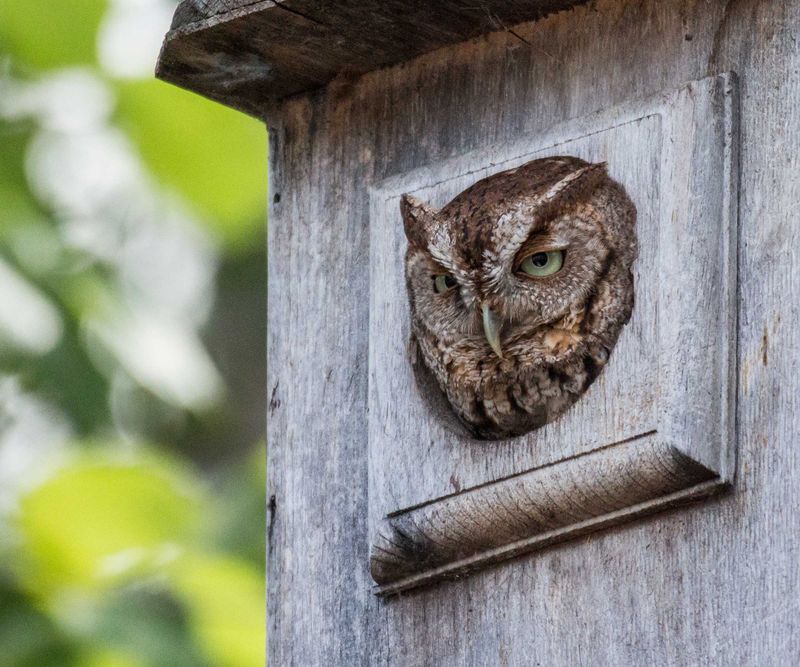
Use dimensions made for Eastern Screech-Owls
Use dimensions made for Eastern Screech-Owls
© Homes and Gardens

A screech-owl box is built around a few measurements, and getting them right matters more than fancy extras. The entrance should be 3 inches across, a size suited to a small owl.

Inside, add 2 to 3 inches of wood shavings. Owls do not build much of a nest, so the shavings give eggs a soft base to rest on.

Cornell recommends mounting height of 10 to 30 feet, and you can find the full box plan on its Eastern Screech-Owl page. The earlier section covers where to put it, so use that height as a quick check once you have a site.

Squirrels can be a nuisance around boxes. A pole-mounted box with a predator guard can reduce their access, which helps if your yard has plenty of them.

Do not borrow these numbers for a Barn Owl box. Barn Owls are larger and use their own design, so a screech-owl entrance and height range does not carry over.

If you buy a ready-made box, measure the hole and look at the interior before hanging it. Many general bird boxes miss the mark.

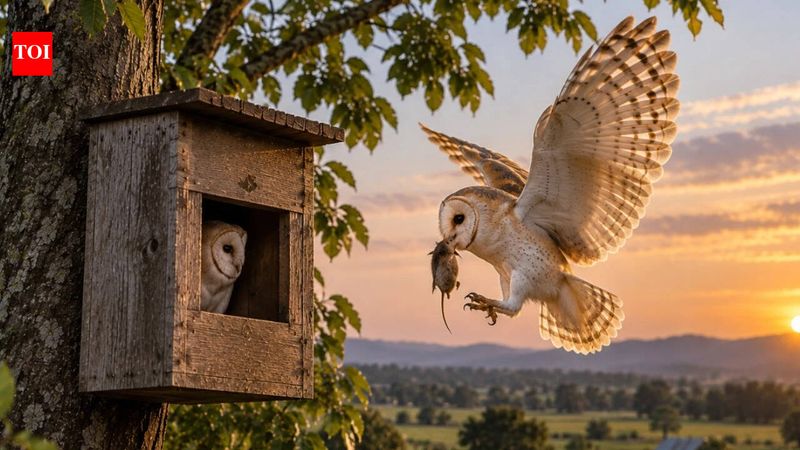
Treat rodent control as a possibility, not a promise
Treat rodent control as a possibility, not a promise
© The Times of India

Owls eat rodents, so it is natural to hope a box will quiet a mouse problem. The research is more mixed than that hope suggests.

A 2026 vineyard study in California reported lower rodent abundance and activity around Barn Owl nest boxes. The researchers also noted that owls hunt across large areas and recommended integrated pest management instead of relying on owls alone.

An earlier systematic review of avian predators as rodent control found limited research, along with weaknesses in how studies were designed and how long they ran.

Both studies come from agricultural settings and involve different owls and landscapes. Neither tells you what a screech-owl box will do at one New York house, and neither supports promising fewer mice or rats.

So keep the box in its proper place. It may become one piece of a wider plan that also includes sealing gaps in the foundation, storing food and birdseed in sealed containers, and cleaning up clutter where rodents hide.

If you already have a rodent problem indoors, handle that first. An owl, if one ever arrives, is a long-term bonus rather than a fix.

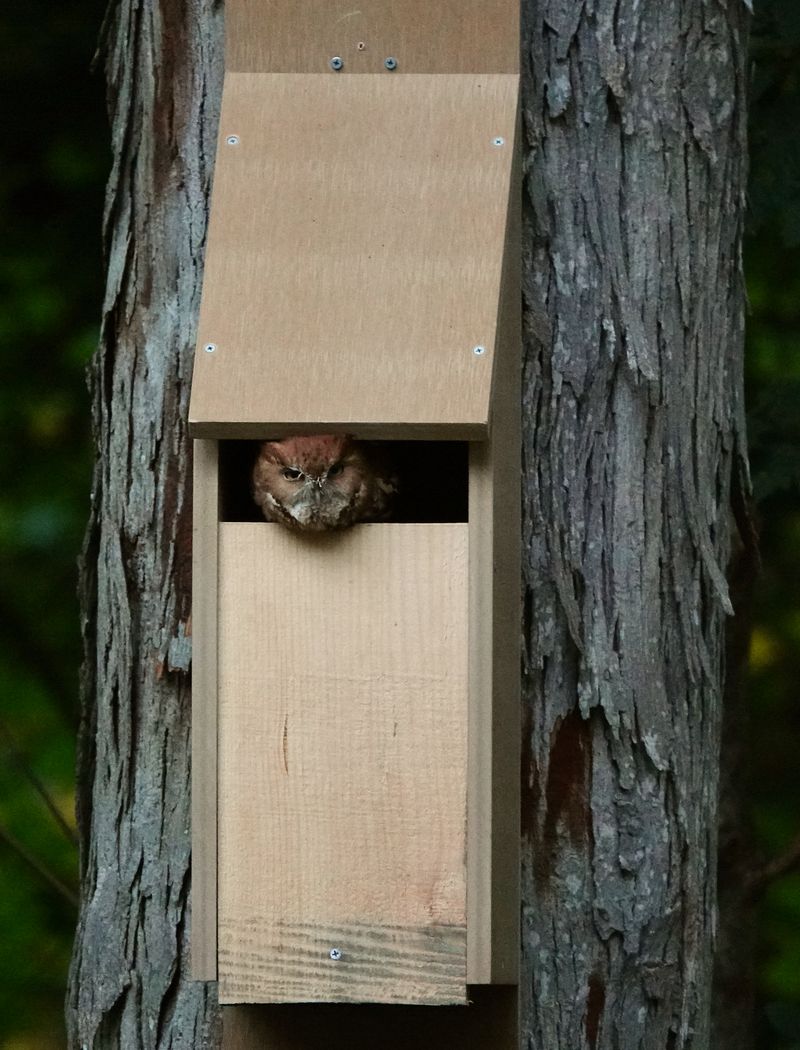
Protect nesting owls and avoid rodenticide risks
Protect nesting owls and avoid rodenticide risks
© Owl Oasis Trail – WordPress.com

Once an owl moves in, your best job is to leave it alone. Cornell notes that a female Eastern Screech-Owl may abandon a nest if she is disturbed early in nesting, as described on its Eastern Screech-Owl page.

If you discover a nest, wait at least one to two weeks before checking the contents. Watching from a distance is a fine alternative, and Cornell’s placement advice also reminds people that occupancy takes patience.

Rodenticides deserve special caution. New York DEC’s hunting and trapping guide describes risks to wildlife from direct exposure and from eating poisoned rodents.

An owl that catches a poisoned mouse can be harmed too.

If you want owls nearby, skip poison and use traps indoors, sealed entry points, and tidy storage instead.

A well-placed box is an invitation, and nothing more. Some years a small owl will take it, and some years the box will simply hold winter shadows.

Share this story
E

Written by

Elyanna

More from Elyanna →

A passion for lavender! From a young age, Elyanna has had a passion for lavender. It began at the age of two when her mother walked her through fields of lavender in Norfolk England. This ignited her interest; she has grown harvested and learned about this beautiful herb.

About Gardening Latest

Gardening Latest provides in-depth guides to maintaining and enhancing your garden and backyard. Learn how to make the most of the space you have and create a beautiful garden.

More about us →

Latest stories

  • Wisconsin GardeningWhy Is a Red Fox Crossing Your Wisconsin Yard This Winter? Some Possible Explanations

    Why Is a Red Fox Crossing Your Wisconsin Yard This Winter? Some Possible Explanations

    48 min ago
  • Iowa GardeningWhy Pulling Creeping Charlie Once Rarely Brings Lasting Control in Iowa Lawns

    Why Pulling Creeping Charlie Once Rarely Brings Lasting Control in Iowa Lawns

    49 min ago
  • Massachusetts GardeningMassachusetts Law Says This About Cutting Your Neighbor’s Overhanging Tree Branches Before Winter Storms Hit

    Massachusetts Law Says This About Cutting Your Neighbor’s Overhanging Tree Branches Before Winter Storms Hit

    1 hr ago
  • Delaware GardeningCan Your Delaware Neighbor’s Tree Branches Legally Hang Over Your Yard? Here’s What the Law Actually Says

    Can Your Delaware Neighbor’s Tree Branches Legally Hang Over Your Yard? Here’s What the Law Actually Says

    1 hr ago
  • Kentucky GardeningCan You Legally Cut Your Neighbor’s Tree Branches Hanging Over Your Kentucky Fence? Here’s the Answer

    Can You Legally Cut Your Neighbor’s Tree Branches Hanging Over Your Kentucky Fence? Here’s the Answer

    1 hr ago

Gardening by state

Stories for your state, and the hardiness zone most of it gardens in.

Keep exploring

Read next

All New York Gardening →
New York GardeningCrabgrass Prevention for New York Lawns: Why Spring Timing Usually Matters Most and Fall Is a Narrow Option
New York Gardening

Crabgrass Prevention for New York Lawns: Why Spring Timing Usually Matters Most and Fall Is a Narrow Option

7 hr ago
New York GardeningBitten By A Black Widow While Gardening In New York? Do This Right Away
New York Gardening

Bitten By A Black Widow While Gardening In New York? Do This Right Away

21 hr ago
New York Gardening12 Smells Deer Hate In New York Gardens, And 4 That Pull Them Right In
New York Gardening

12 Smells Deer Hate In New York Gardens, And 4 That Pull Them Right In

Yesterday

More from New York Gardening

  • Found A Yellow Jacket Nest Near Your New York Home? Here’s What To Do Next

    Nov 18
  • That Big Clump Of Leaves High In Your New York Tree Might Be A Squirrel Nest

    Nov 18
Back to top

Leave a response Cancel

Your email address stays private. Required fields are marked with an asterisk.

Gardening Latest

In-depth guides to maintaining and enhancing your garden and backyard: how to make the most of the space you have, and how to make it beautiful.

  • Facebook
  • X
  • Pinterest
  • YouTube

We may earn a portion of sales from products or services that are purchased through our site as part of our affiliate partnerships with retailers.

Explore

  • About GardeningLatest.com
  • Contact Us
  • Terms and Conditions
  • Privacy
  • Editorial Note:
  • FTC Disclosure

Newsletter

New garden guides and seasonal tips, straight to your inbox.

We’ll email you a link to confirm. Unsubscribe any time.

Almost there! Check your inbox and tap the link to confirm.

© 2026 Gardening Latest. All rights reserved.

Back to top