Imagine hearing a soft, trilling call from your backyard trees on a late winter night. A well-placed owl box might give a small owl a place to nest, but where you hang it matters a lot.
The right spot depends on the kind of owl and the kind of land around your home. Here is how to match a box to your yard, and what to expect once it is up.
The right owl-box spot depends on the species
Owls do not all want the same real estate, so there is no single best spot that works for every yard. The better question is which owl your land can actually support.
Your answer comes down to habitat.
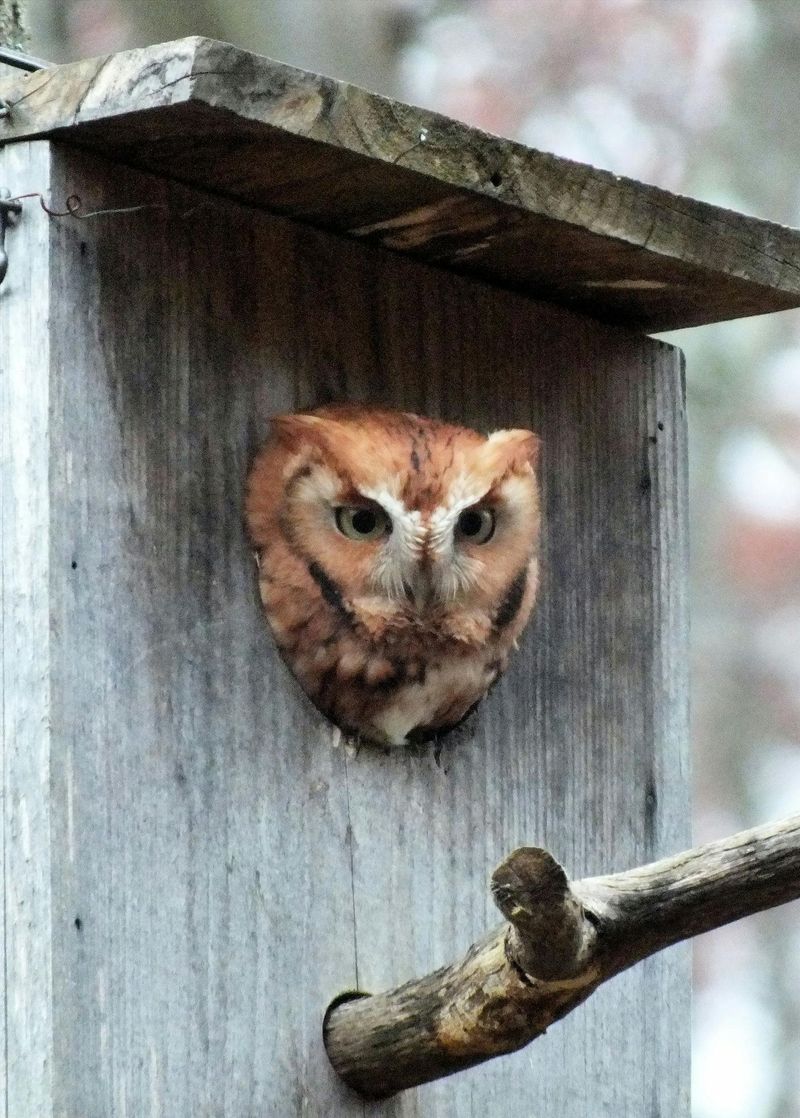
For many wooded residential yards, the more realistic candidate is the Eastern Screech-Owl. Pennsylvania Game Commission information on owls notes that screech-owls live in wooded residential areas and will use large birdhouses.
A shaded tree near a woodland edge, with open ground or wetlands close by, fits what they like.
Barn Owls are a different story. The Game Commission’s Barn Owl program points these boxes toward properties with substantial open grassland or farmland, where the birds can hunt.
A typical suburban lot with trees and neighboring houses is not a dependable match.
One more thing to settle early: a box is an invitation, not a promise. Even a perfect design in a good location may sit empty for seasons, because owls also depend on nearby prey and on other nest sites being scarce.
Think of it as offering a nesting opportunity and nothing more.
Place a screech-owl box at a shaded woodland edge
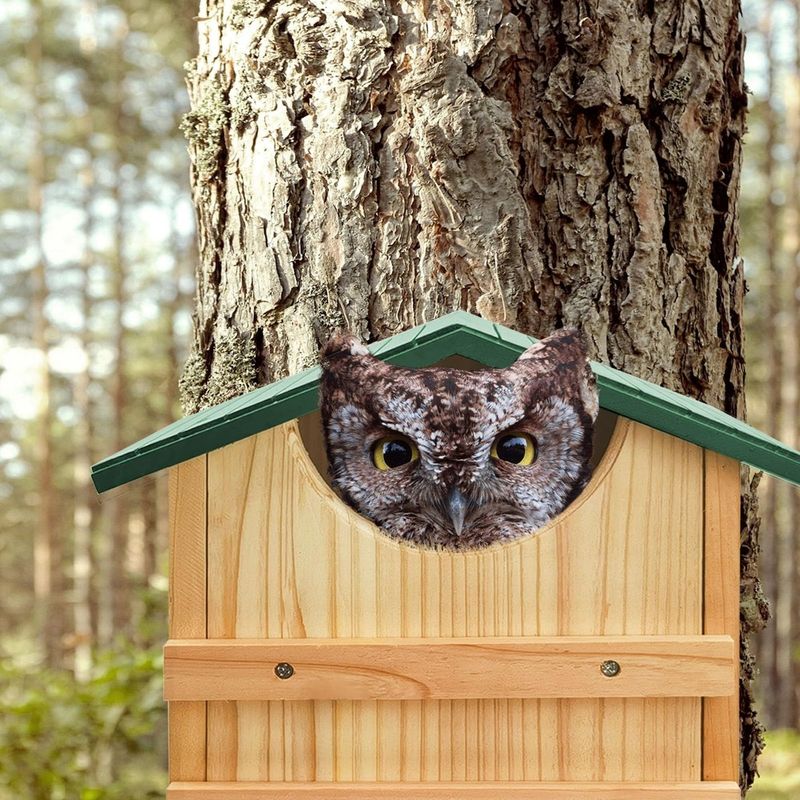
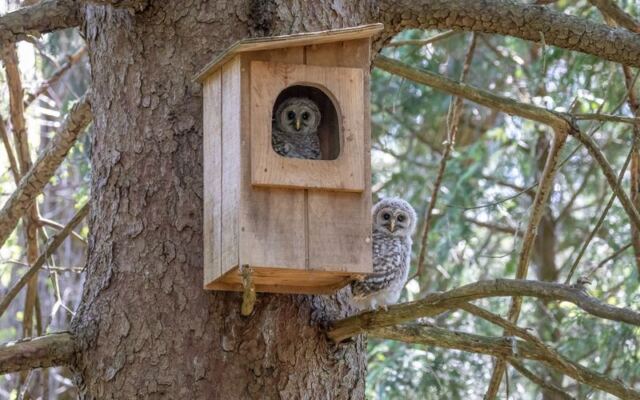
Walk your property and look for where trees meet open ground. A shaded tree at a woodland edge, ideally with a field, lawn, or wetland nearby, is the sort of setting Cornell suggests for its Eastern Screech-Owl box.
A spot under a tree limb works well because it adds some cover overhead.
The numbers matter here. Cornell’s NestWatch plan for Eastern Screech-Owls calls for a 3-inch entrance hole, a box about 17⅜ inches deep, and mounting 10 to 30 feet above the ground.
A box that is too shallow or has the wrong hole size is a poor match for this small owl.
What about which way the hole faces? Cornell says any direction is suitable for its box.
Audubon’s guide prefers avoiding a north-facing entrance, but that is one guide’s preference rather than a rule everyone follows.
Keep a nearby branch handy so young owls have somewhere to perch, but make sure it does not block the entrance. These measurements and placement tips are written for Screech-Owls.
They do not automatically carry over to Barn Owls, which need a larger box and a very different setting.
Install early and leave an active nest undisturbed
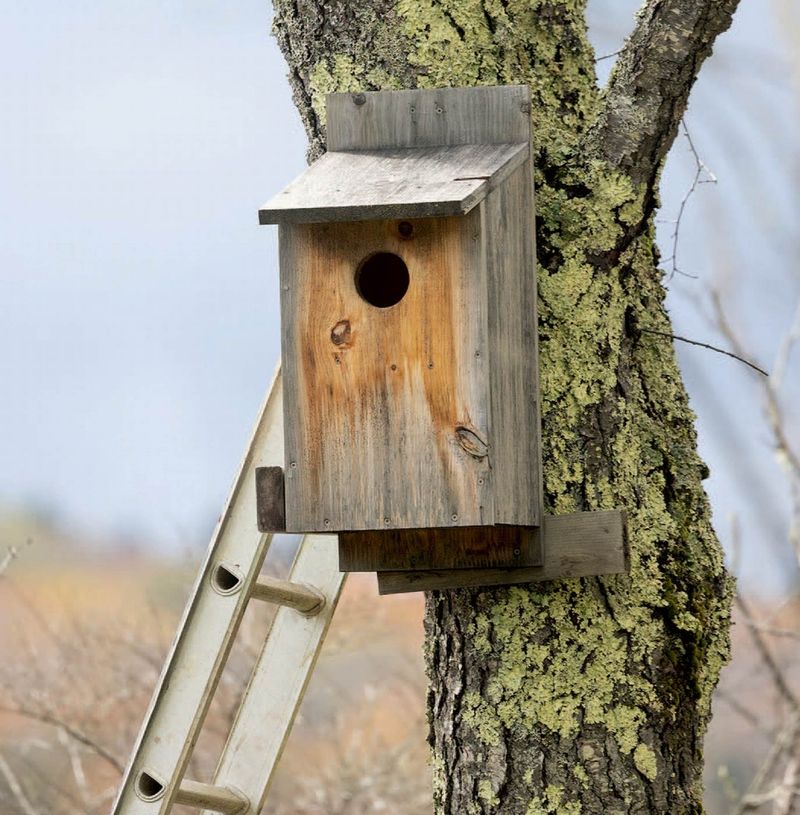
Timing is simple in principle: put the box up well before nesting begins. No source gives one guaranteed installation date, so earlier is safer than later.
The Pennsylvania Game Commission reports that screech-owls lay eggs in March or April, and some owl species nest as early as late winter.
Build it to last and mount it securely. Cornell recommends 2 to 3 inches of wood shavings inside.
If you mount on a pole, add a predator guard, and keep the box beyond the jumping reach of squirrels from nearby trees.
Once an owl moves in, your job changes to staying away. Cornell advises waiting at least one or two weeks after you discover a screech-owl nest before checking its contents.
Better still, watch from a distance with binoculars at dusk.
Barn Owls call for even more care. Cornell notes they are especially sensitive during early nesting, April through May, and may abandon a nest if disturbed.
Do your cleaning and repairs in the off-season, when the box is clearly empty.
Reserve Barn Owl boxes for open country
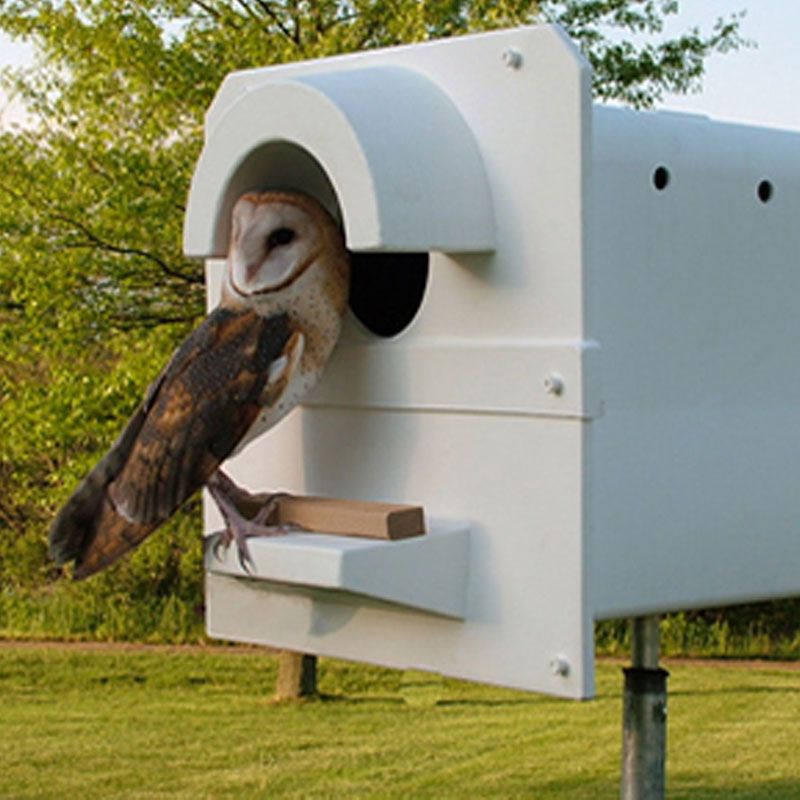
Picture a hayfield at dusk, with a pale owl drifting low over the grass. That is Barn Owl country.
These birds hunt over open ground, so the box belongs where there is plenty of it.
Pennsylvania’s Game Commission recommends Barn Owl boxes for properties with substantial open grassland or farmland. It describes the species using hayfields, pastures, meadows, and other open habitats, and generally avoiding forested landscapes.
Barn Owls have also declined as farmland, grassland, and secure nest sites have been lost.
For mounting height, Cornell lists 8 to 25 feet. Notice how that differs from the Screech-Owl range, and the box itself is built differently too.
Here is a quick diagnostic. If your view from the yard is mostly trees, neighbors, and small lawns, skip the Barn Owl box and consider a Screech-Owl box instead.
If you own or manage acres of pasture or hay, a Barn Owl box starts to make sense. An ordinary wooded or suburban yard is not a reliable setting for this species.
Treat rodent control as uncertain, not guaranteed
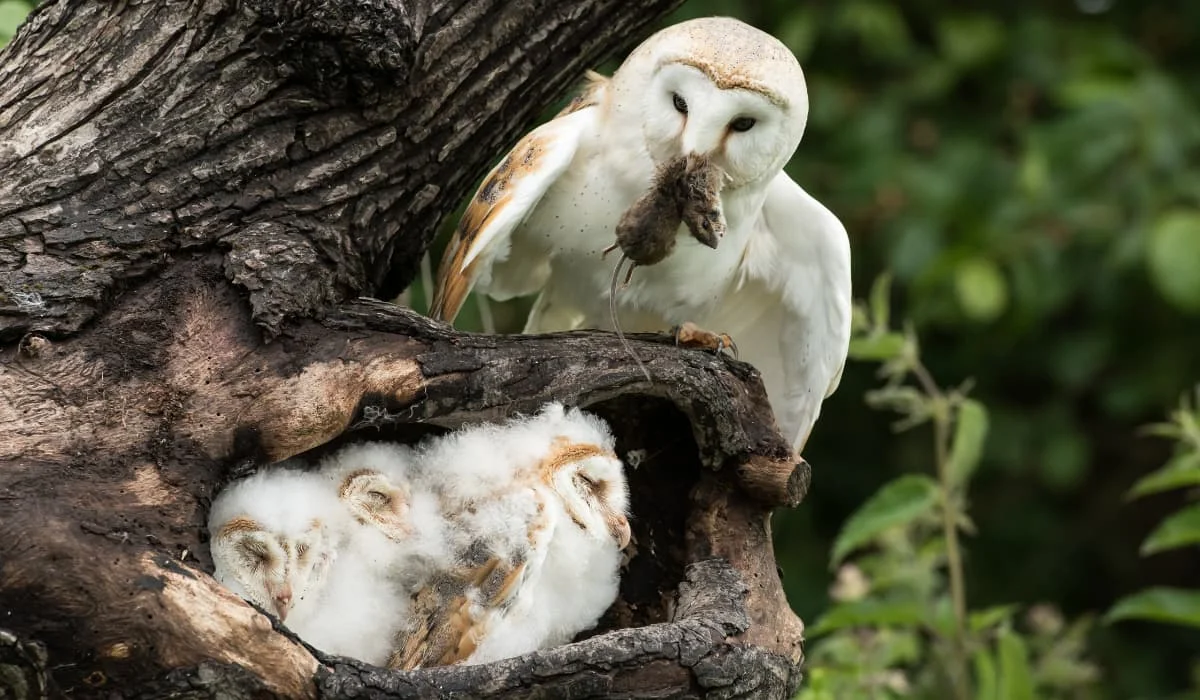
Many people put up an owl box hoping for a free pest crew. The reality is less tidy.
Screech-owls eat a varied menu, and the Game Commission describes a diet that includes insects, rodents, birds, and other small animals. They are not rodent specialists.
Barn Owls eat far more rodents. Pennsylvania estimates that an average Barn Owl family may eat up to 3,000 rodents, mostly meadow voles, in one breeding season.
That figure describes what a family might eat, not what will happen in your backyard.
A USDA guide is blunt on this point. The USDA Natural Resources Conservation Service guide cautions that there is no evidence Barn Owls will control or eradicate rodents at a box site.
There is some encouraging research, with limits. A study in six Napa Valley vineyards found 38% to 52% lower aboveground rodent numbers across the range of Barn Owl hunting pressure observed.
That was an agricultural setting in California, so it should not be read as a forecast for a Pennsylvania backyard.
Protect owls and manage rodents without rodenticides
After the box goes up, the best thing you can do is leave it alone. Skip peeking inside an occupied box, and wait the recommended time before any check.
For Screech-Owls, Cornell advises holding off at least one or two weeks after discovering a nest, while Barn Owls may abandon a nest if disturbed in early nesting.
There is also a legal side. Pennsylvania says owls are protected under state game law and federal regulations, so harassing or handling them can bring trouble.
Poison is the biggest risk to avoid. The National Pesticide Information Center identifies secondary poisoning of hawks and owls from some rodenticides, including brodifacoum and difethialone.
An owl that eats a poisoned mouse can be harmed too.
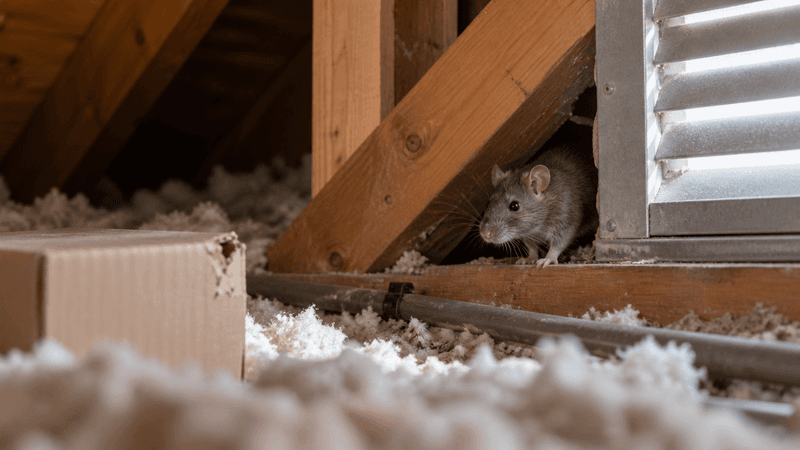
Instead, use integrated pest management. Block entry points around the foundation, garage, and sheds, and remove food and water sources such as spilled birdseed, pet food, and leaky hoses.
Store trash and compost in sealed containers. These steps cut down what draws rodents in, but they will not promise to wipe them out.
Match the box to the habitat and keep expectations modest
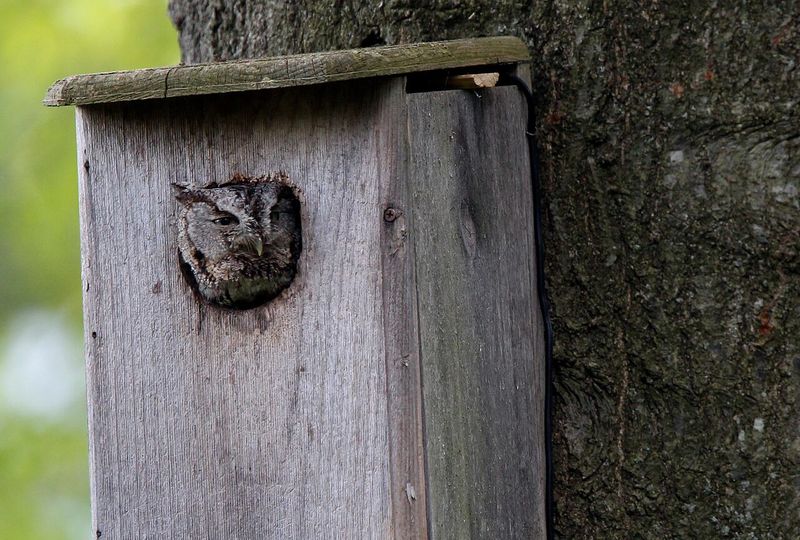
Here is the rule of thumb: pick a Screech-Owl box if your yard is wooded and near open ground or wetlands, and a Barn Owl box only if you have wide-open fields. Cornell’s Screech-Owl guidance and the Game Commission’s Barn Owl advice both point that way.
Hang it early, then wait. An empty box this year is not a failure; it is just nature keeping its own schedule.
Share this story