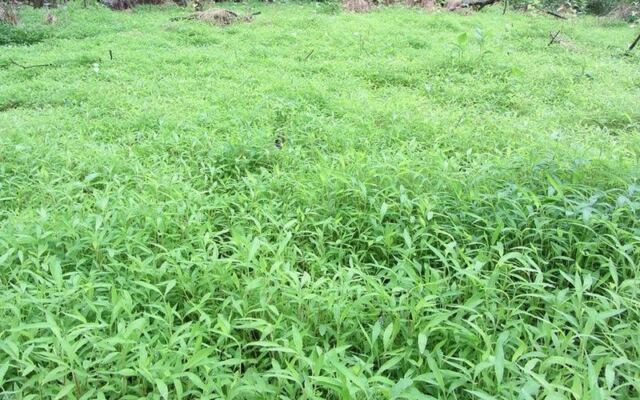
A bright-green grass with a silvery stripe down each leaf is turning up at the edges of some Pennsylvania lawns. It is probably Japanese stiltgrass, an invasive plant that can crowd out other plants.
The headline-style claim that it is quietly taking over every yard goes further than the facts. Here is what is actually known, how to spot it, and what to do if you find it.
The evidence points to a local concern, not a statewide lawn trend
Quick question for anyone who has spotted an unfamiliar grass creeping along a wooded lawn edge: could it be Japanese stiltgrass (Microstegium vimineum)? Of all the grasses the headline could mean, this is the best match.
It is an invasive plant that has settled into parts of Pennsylvania.
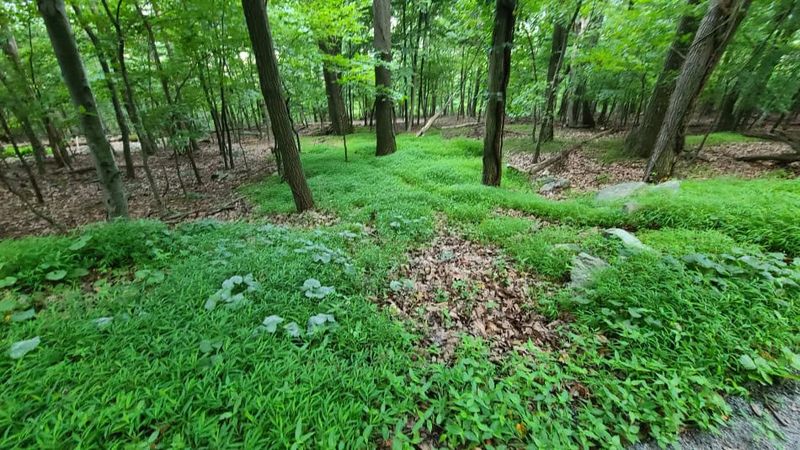
The state’s DCNR invasive plant fact sheets describe it spreading through moist areas, open woods, and clearings across southeastern Pennsylvania, and possibly elsewhere. That is a regional picture, not a statewide one.
Penn State Extension adds a detail that matters for homeowners. In its guidance on stiltgrass in pastures, it says the grass is taking over forest understories and spreading into adjacent lawns and pastures.
In other words, lawns next to infested woods and disturbed ground are the ones most likely to see it show up.
What the sources do not show is just as useful. Nobody has counted how many Pennsylvania lawns are affected, so there is no basis for saying it is spreading through lawns across the whole state.
The sources also say nothing about how many homeowners notice or overlook it, so that part of the headline is only a hook.
The better way to read the headline is as a question worth checking in your own yard. If your lawn sits near woods, a stream, or recently disturbed soil, a closer look is reasonable.
If it does not, you may never meet this plant at all.
How stiltgrass reaches lawn edges
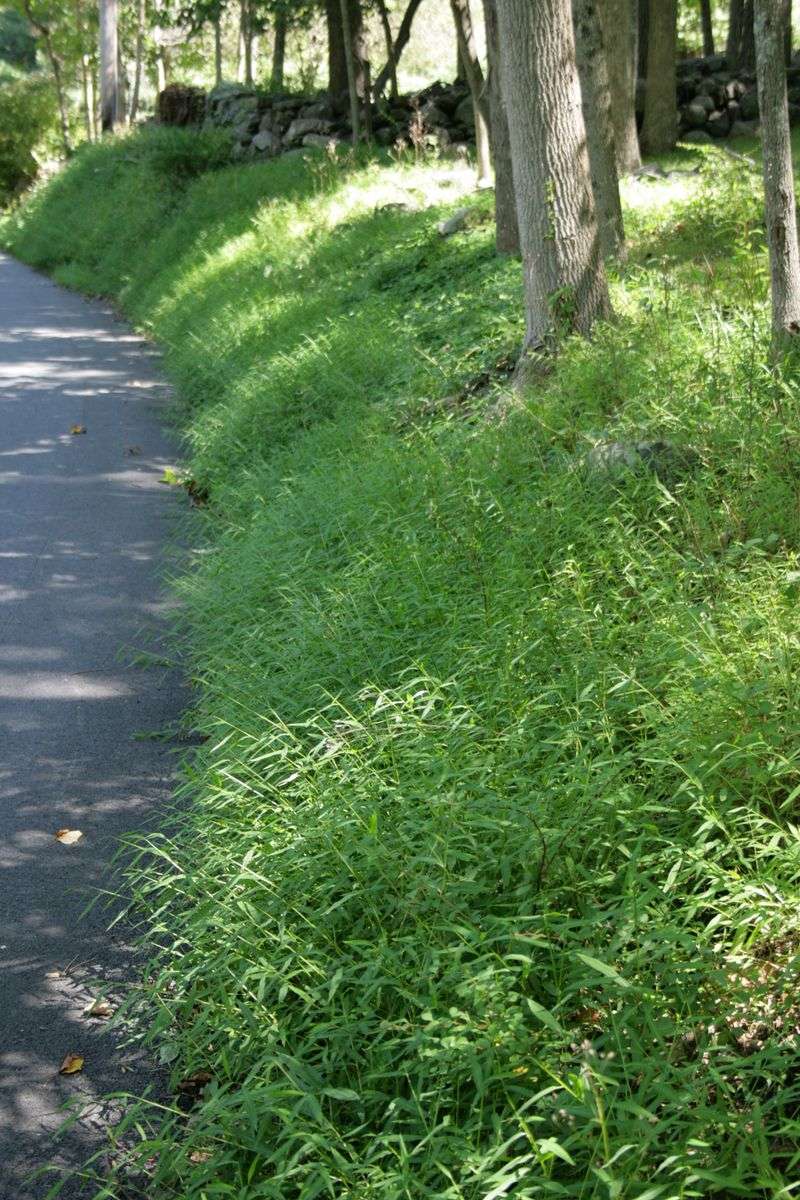
Walk a damp, shady trail in southeastern Pennsylvania and you may see stiltgrass blanketing the ground. According to UConn’s invasive plant factsheet, it is especially common in moist, disturbed, or shaded sites such as stream banks, trail edges, and woodland clearings.
Shade is not a requirement, though. The same factsheet notes that stiltgrass can grow in full sun and tolerate low mowing, so a sunny, closely cut lawn is not automatically safe.
Seeds are the way it travels. They can be carried by water, shoes, clothing, animals, and equipment.
A rainstorm washing seed downhill, a hiker brushing against mature plants, or a mower rolling from an infested area to a clean one are all documented ways seed can move.
That pattern fits what Penn State describes in its pasture guidance, where stiltgrass spreads from infested forest into neighboring open land. A lawn that borders a patch of woods is simply close to the source.
It is tempting to blame one route, such as the neighbor’s mower or last week’s flooding. The sources do not allow that kind of certainty.
Any of these routes can explain a new patch, and often more than one is at work. A practical next step is to look at the places where soil is bare, water flows, or people and tools regularly pass through.
Look for the silvery stripe
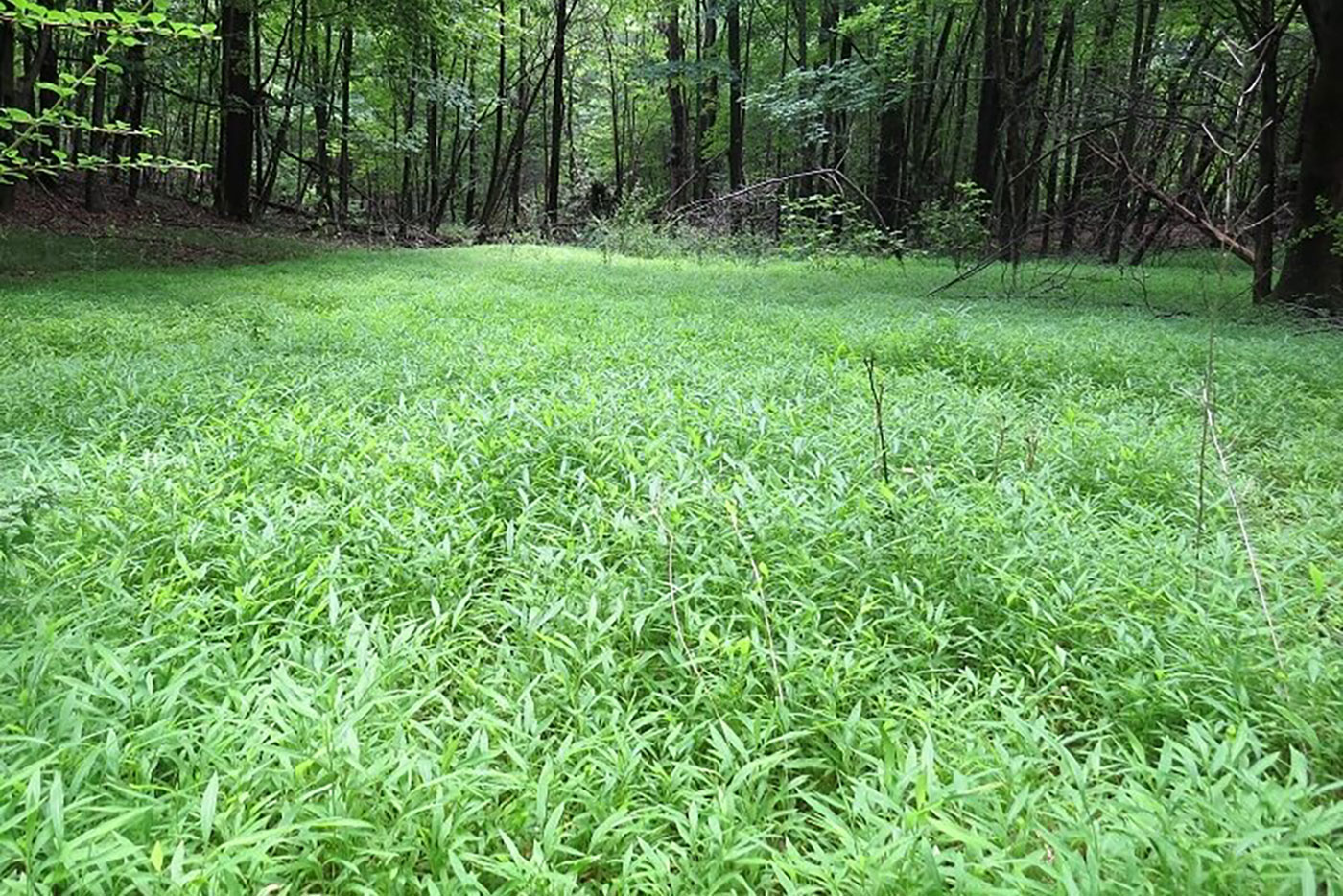
Kneel down and look closely at the leaves. Rutgers Extension, in its stiltgrass management fact sheet, describes bright-green, bamboo-like leaves with a distinctive silvery stripe along the upper surface.
That stripe is the clue most people remember.
The leaves are short and pointed, and they sit along slender, sprawling stems. The plant often looks like a small, delicate bamboo seedling spreading across the ground, sometimes forming a dense mat.
The seasons change its look. By late summer, thin flower spikes appear.
In fall, the plant often turns reddish or purplish. After frost, the dead stems turn tan and can remain standing into winter, which means a patch can still be spotted when everything else looks dull.
A field check works well in stages. Start with the leaf upper surface and look for the stripe running down the middle.
Then check the stems and the overall growth habit. Come back in late summer to look for flower spikes, and in fall for the color change.
These traits are clues for inspection. They are not a reason to grab a sprayer or a spade on the spot.
Several other plants in Pennsylvania lawns can resemble stiltgrass at a glance, so a stripe alone is not proof. Take a photo, note where the plant is growing, and compare it with the look-alikes in the next section before choosing any response.
Check for nimblewill and other look-alikes
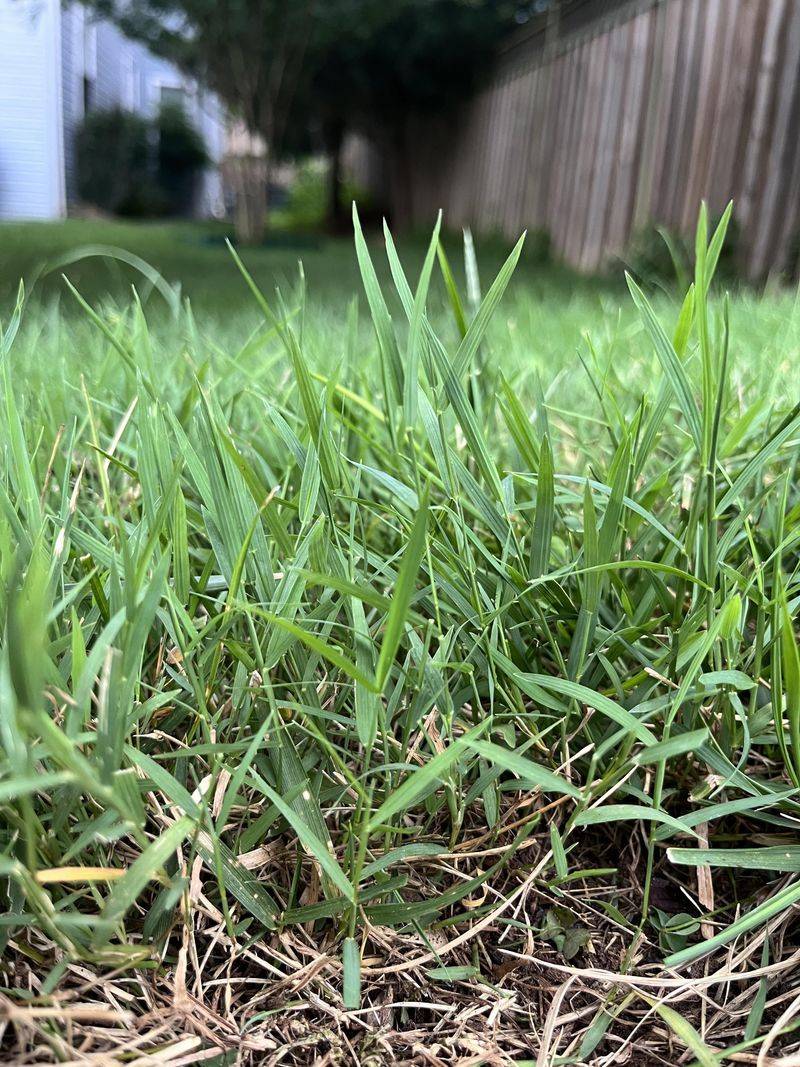
Getting the name right saves time and effort. Penn State’s lawn weed page on Japanese stiltgrass points out look-alikes, including nimblewill, crabgrass, and Pennsylvania smartweed.
Nimblewill is the one that fools many people. According to Penn State’s nimblewill page, it is a native perennial lawn grass, and it lacks the silvery stripe on the leaf that marks stiltgrass.
Because it is perennial, it comes back from the same plant year after year, while stiltgrass restarts from seed.
Crabgrass is another summer lawn weed that can look similar from a distance. Pennsylvania smartweed is not a grass at all, but its growth habit can lead to a mix-up when you are scanning a patch quickly.
These plants do not necessarily need the same handling. A method that suits one may be wasted on another, or may harm the lawn for no benefit.
Timing, tools, and any product choice can differ.
To sort them out, look at the leaf surface in good light and check for the silvery stripe. Note whether the plant comes back in the same spot every year.
If you are still unsure, bring a sample to your county Penn State Extension office, or send clear photos. A confirmed identification is the starting point for every decision that follows.
A persistent seed bank calls for follow-up
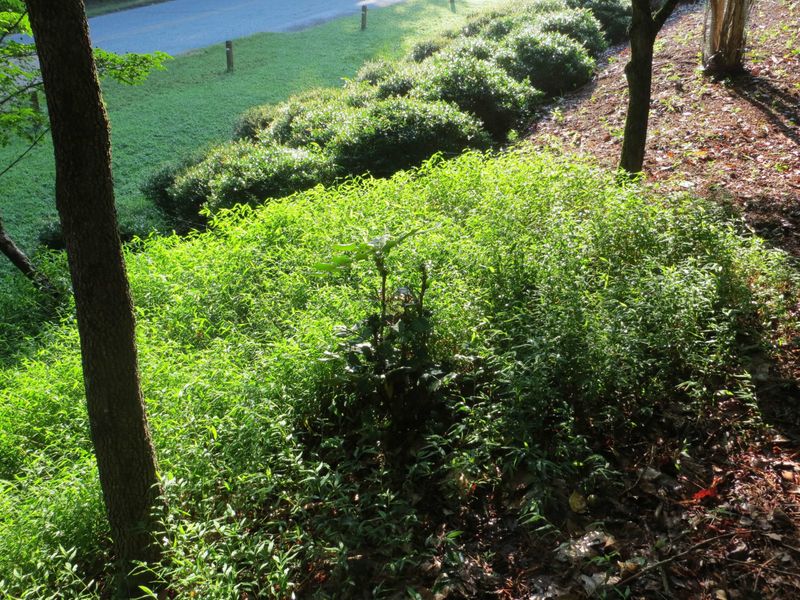
Stiltgrass lives a single season, but its story does not end when the plant dies. UConn’s factsheet describes it as a summer annual that reproduces by seed, and notes that seeds can persist in soil for years.
That life cycle explains why one cleanup rarely settles the matter. Each plant that sets seed adds to a hidden supply in the soil, and some of those seeds sprout in later seasons.
The goal is to stop new seed from forming and then keep checking the spot.
Timing is where people get tripped up. Penn State’s stiltgrass guidance advises avoiding mechanical work before June where it could trigger another flush of germination, and finishing before seed heads emerge.
Disturbing soil too early can simply wake up more seeds.
That does not make a particular date a rule for every yard. Spring warmth, shade, and how fast plants develop all differ from one property to the next.
Watch the plants themselves. Work once they are growing well, and wrap up before flower spikes begin to form.
Plan on revisiting. A walk through the area each month in summer, and again the following year, will show whether new seedlings are coming up.
Marking the patch on your phone or a garden map makes it easier to compare year to year.
Pull or cut small patches before they set seed
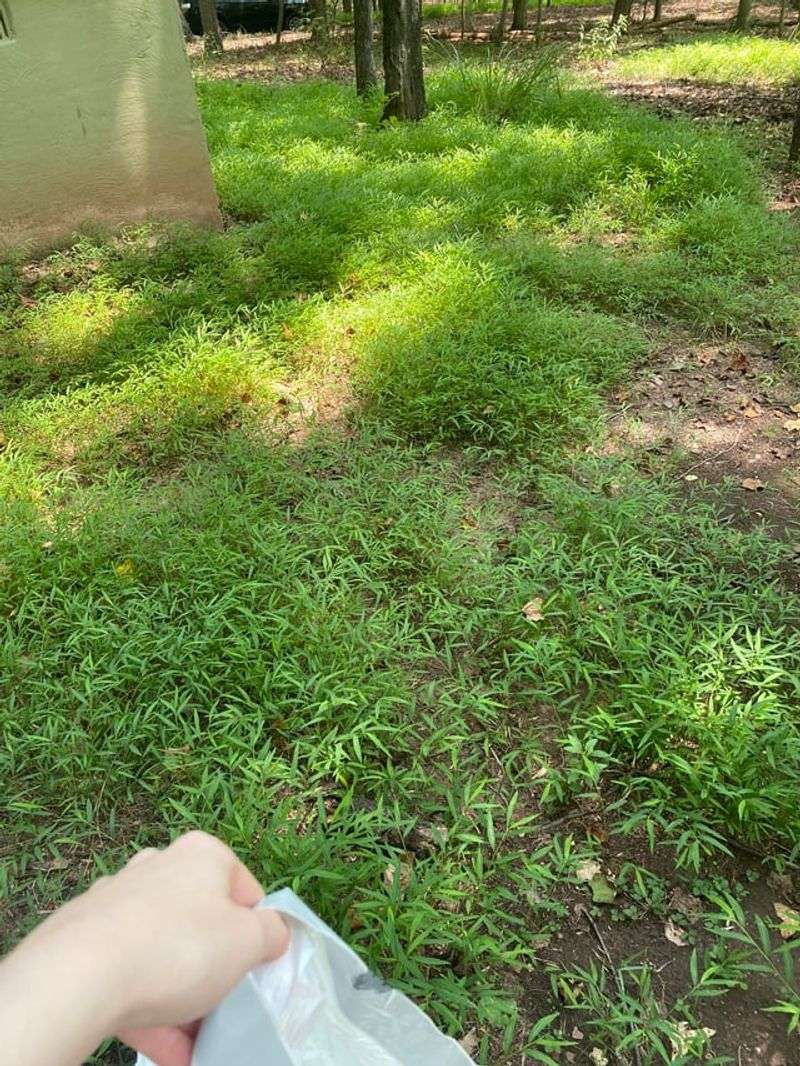
For a small, confirmed patch, hands-on work is a sound first choice. Rutgers lists pulling or cutting before seed production in its home lawn fact sheet.
Stiltgrass has shallow roots, so plants often come out of damp soil with little effort.
Pull before flower spikes appear, and bag the plants instead of leaving them on the ground. If a patch is too large to pull, cutting plants low before seed forms is another option, and Penn State’s guidance on mechanical control supports finishing before seed heads emerge.
Do not count on routine mowing alone to wipe it out. Stiltgrass can regrow from stem nodes, and low mowing may allow plants to set seed anyway, just closer to the ground.
A mower can also carry seed to other parts of the yard, so clean the deck after working near a patch.
Plan to repeat the effort. Because seed stays in the soil, new plants can appear in following years, and monitoring the spot is part of the job.
A dense, healthy lawn also helps. Thick turf leaves fewer bare spots where seedlings can get started.
That is a helpful discouragement, not a guarantee, so treat it as one tool among several rather than a shield.
Choose herbicides only with the lawn and label in mind
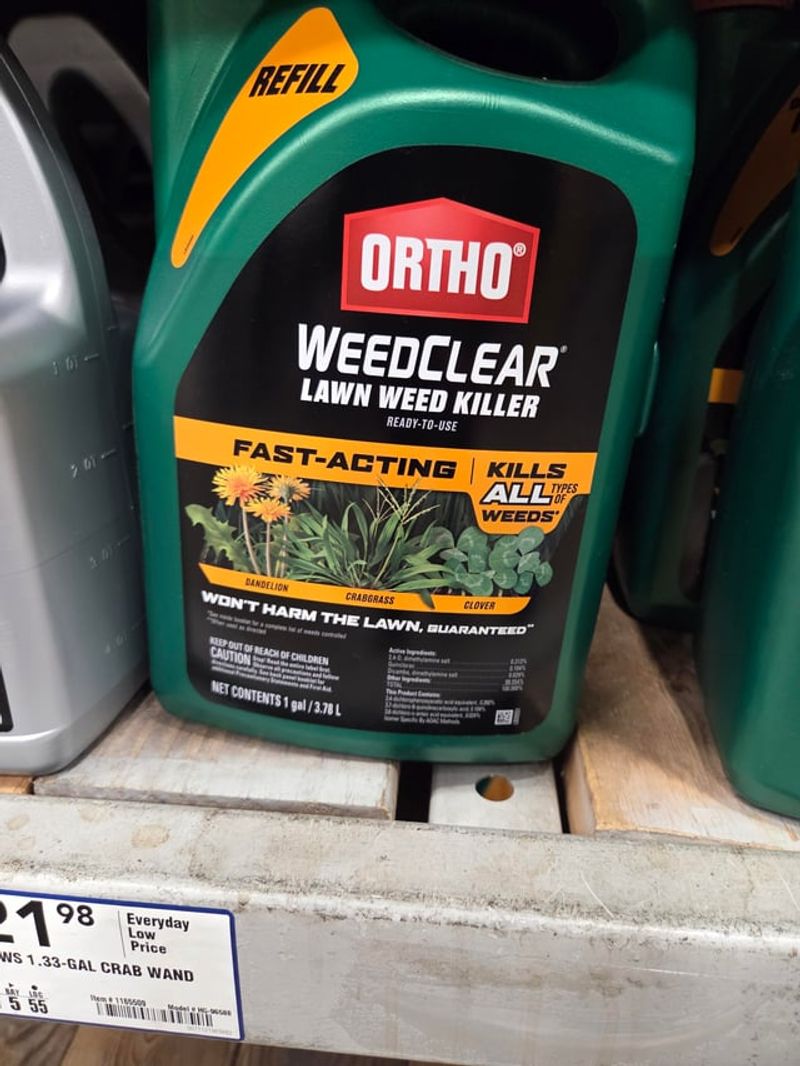
Some homeowners will want to consider a product, and the details matter a great deal. Rutgers says in its stiltgrass fact sheet that preemergent timing in lawns is earlier than for crabgrass, because stiltgrass germinates earlier.
Applying on a crabgrass schedule could miss the window.
Preemergent products can also affect lawn seeding. If you plan to overseed or patch bare areas, University of Maryland Extension advises checking the label for reseeding restrictions first.
For plants that are already up, Rutgers and Maryland Extension describe fenoxaprop as an option for young plants, not mature ones. That is a narrow use, and it does not make the product suitable for every lawn.
Before buying anything, run through a short checklist. Confirm the plant is stiltgrass and not nimblewill or another look-alike.
Confirm your turf species is listed on the label. Check the application timing and any waiting period before reseeding.
Then follow the label directions exactly.
Maryland Extension also suggests considering nonchemical options first and treating herbicides as a last resort. If hand-pulling and cutting have not kept a patch in check, or the infestation is too large, a local Extension office can help weigh the choices for your yard.
No product is a default answer, and none is the right fit everywhere.
Confirm the grass and keep watch
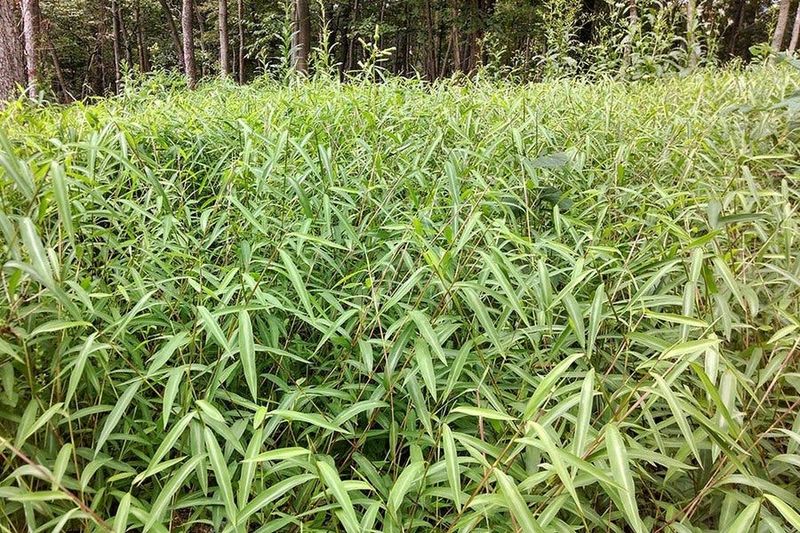
Start with a close look at the leaf, since a silvery stripe is the first thing to verify, and Penn State’s stiltgrass lawn weed page can help you confirm it. If it is stiltgrass, keep plants from setting seed, as Rutgers Extension recommends, and check the area again next season.
The concern is real in documented places, such as southeastern Pennsylvania and lawns near infested areas, as the state’s fact sheets show. It is not proof that most lawns are infested or that most homeowners overlook it.
A small patch noticed early is the easiest kind to handle.
Share this story