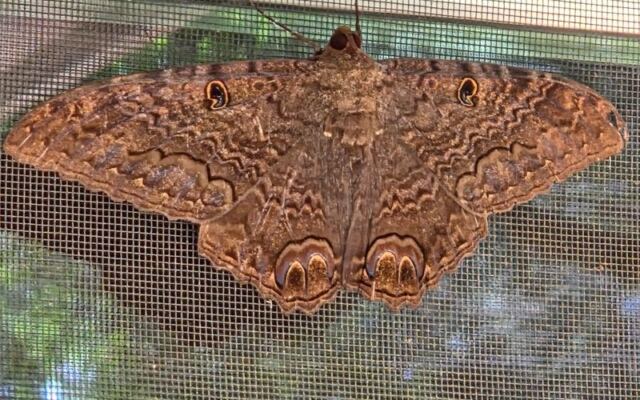
A giant, shadowy moth clinging near your porch light can stop you in your tracks. Some people wonder if it is a rare visitor, and others worry it means something spooky.
The black witch moth is one possible answer, and it comes with a lot of stories. Here is how to look closely, sort fact from folklore, and know what to do next.
A black witch moth has distinctive features
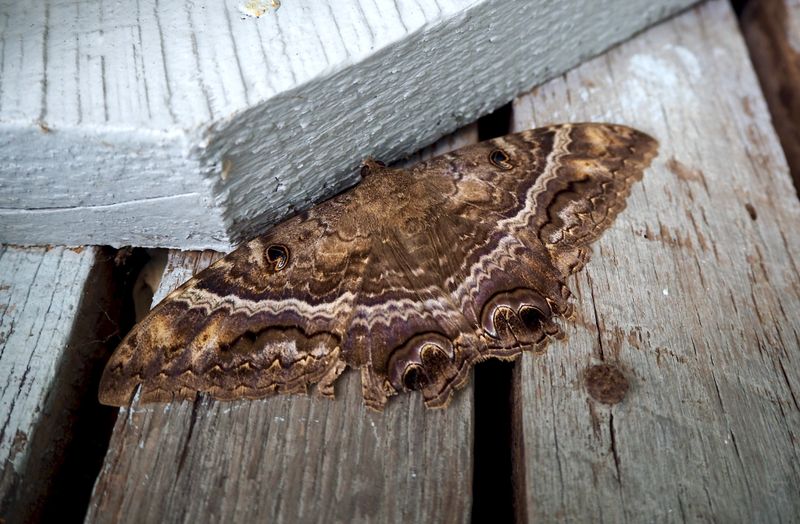
Picture a moth wider than your hand. The black witch (Ascalapha odorata) has a wingspan of about 11 to 15 cm, roughly 4.3 to 5.9 inches, according to Butterflies and Moths of North America.
Its wings range from brown to blackish.
Look at the wing shapes and patterns. The forewings are pointed, and both pairs usually show wavy lines or spots, so the moth is rarely a flat, plain black.
Those markings are easy to miss from a distance but show up well in a close photo.
Sex makes a difference too. As Colorado State University describes, females usually have pale pinkish-white bands across the wings, while males lack them.
So a moth with no pale band could still be a male black witch.
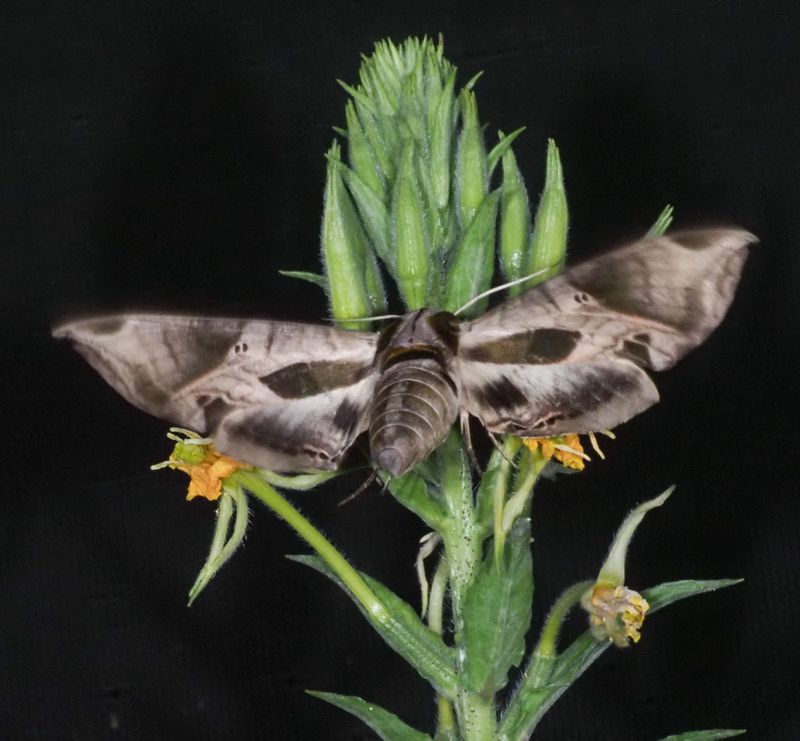
Here is the catch. Plenty of big, dark moths exist, and size and darkness alone cannot confirm which one is on your door frame.
Treat black witch as a possible match, then check the pointed forewings, the wing lines or spots, and the overall span. If several of those fit, your guess gets stronger.
If they do not, you may simply be looking at a different moth.
Black witches have been documented in Alabama
Seeing one in Alabama is not far-fetched. A Lepidopterists’ Society publication lists photo observations from Northport and Mobile in July 2012.
Those are two different corners of the state, one in the west-central region and one on the Gulf Coast.
There is also a museum record. BugGuide points to a specimen in the Auburn University Entomology Museum, collected in Alexander City in 1991.
A preserved specimen like that gives researchers something concrete to examine.
What do these records tell you? They show the species has turned up in Alabama more than once.
That makes a black witch a reasonable guess for a big dark moth at your door.
What they do not tell you is just as useful. A few records do not mean the moth is common across the state, and they say nothing about the identity of the moth you found.
Many large, dark moths could be resting on your porch, so keep the black witch idea open while you check the details.
Migration, lights, and shelter can bring moths near homes
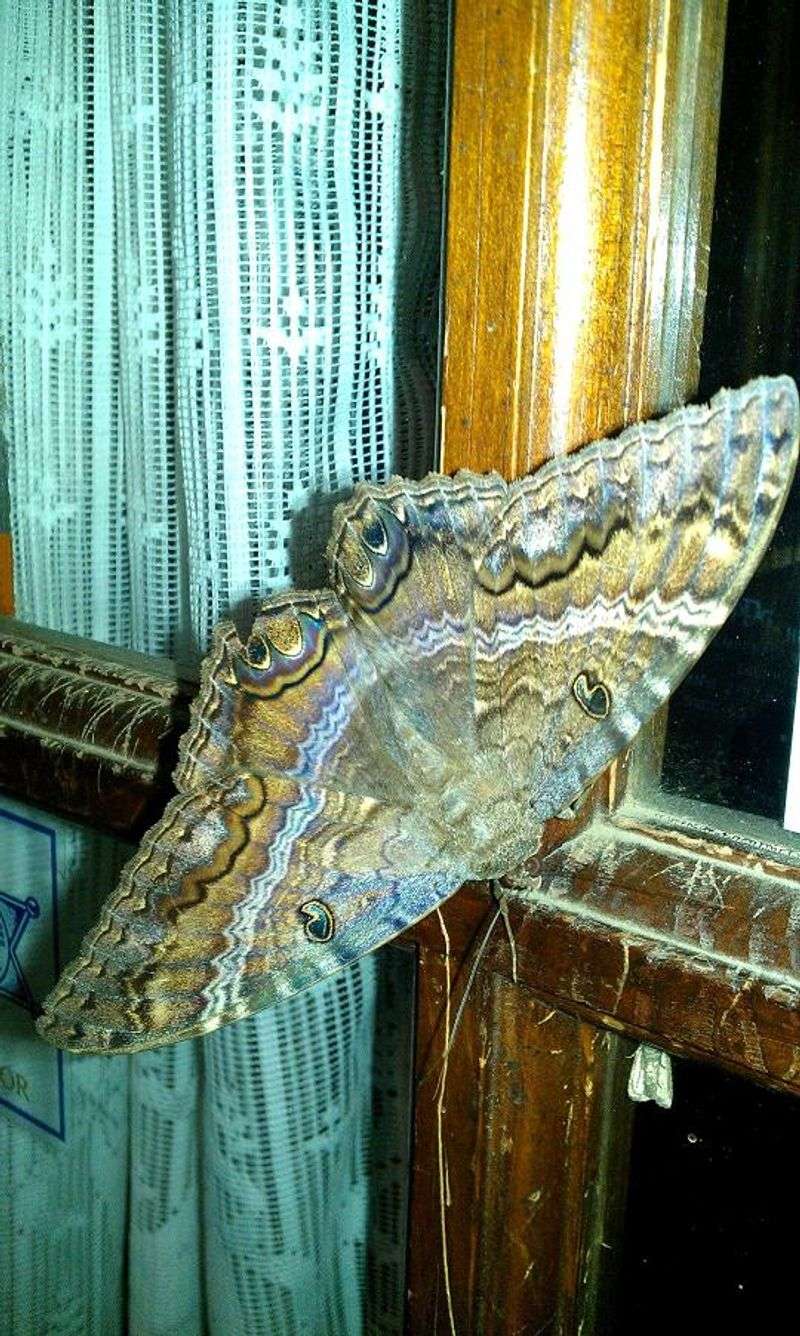
Black witches are travelers. They are common in tropical parts of the Americas, and individuals move north into the United States, as Butterflies and Moths of North America explains.
Some regional sources describe sightings in summer and fall.
Homes offer a few things a moth might use. Colorado State University notes that black witches may rest under house eaves or in garages during the day.
They are also attracted to lights, so a bright entryway can draw one in after dark.
That combination can make a doorway sighting feel strange, but it is one possible explanation, not proof. A single moth by your door does not show that a migration is happening, and nobody can say why that particular moth picked your porch.
It could be passing through, drawn by a bulb, or just sheltering from daytime sun.
Older reports should be read with care, too. Texas Parks and Wildlife shared natural history notes in a 2004 release, but its migration observations describe that year in Texas.
They are not a forecast for Alabama today.
Folklore gives the moth different meanings
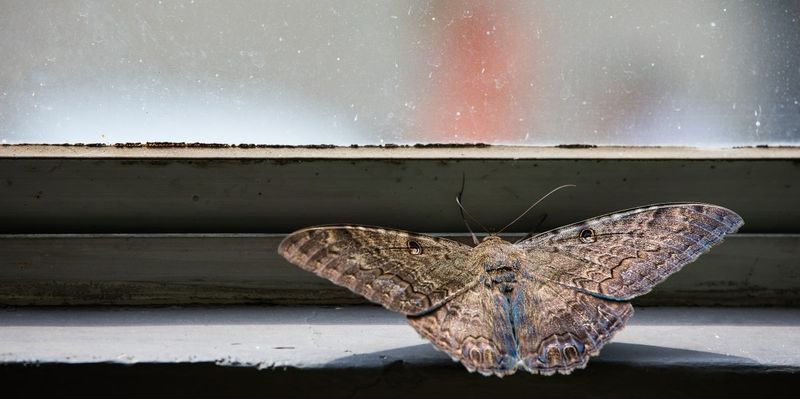
The moth’s spooky reputation comes from stories, not from anything it does. Those stories also change from place to place.
No single meaning follows the black witch everywhere.
Texas Parks and Wildlife has recorded two very different ideas. One is a death-omen belief, in which the moth is seen as a sign that someone will die.
The other is a more recent lottery-luck superstition, in which a visit is said to bring winning numbers.
Belief also looks different far from Texas. A 2025 study interviewed 32 people in one Colombian town, Miraflores in Boyacá.
They described several local beliefs, some negative and some positive.
Notice how each belief is tied to a specific community. A story told in one Texas setting, or one Colombian town, does not speak for everyone.
Plenty of people in those same places hold no such belief at all.
So if a neighbor tells you the moth means bad news, you can treat that as a local tale. If another says it means luck, same answer.
Folklore is part of human culture and can be fun to hear, but it is a different thing from what the moth actually does.
A sighting does not predict what happens next
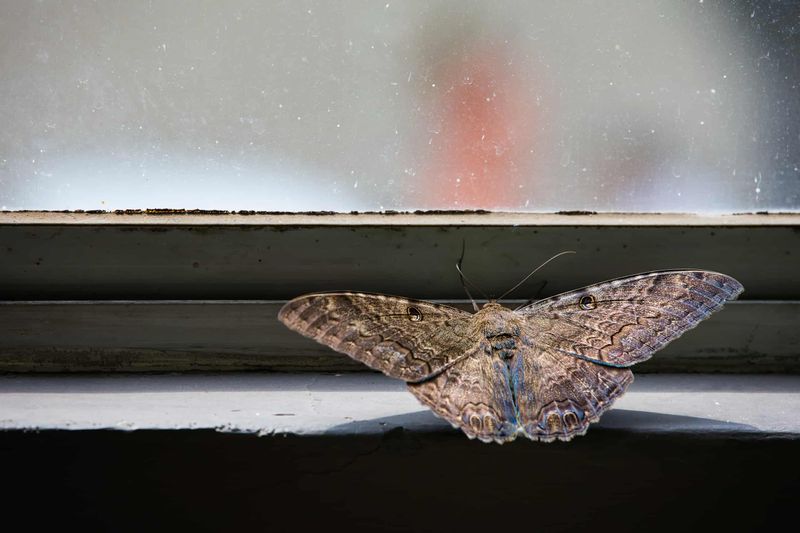
Nothing about a moth’s visit can tell you about illness, death, money, or any other event ahead. Those ideas belong to cultural stories.
A moth on your door is a wildlife encounter, nothing more.
There is good news on the practical side. Texas Parks and Wildlife describes black witches as harmless to people and not pests.
That is how that agency characterizes the species, and it is a comforting place to start.
Their caterpillars feed on woody legumes, which are trees and shrubs in the bean family, according to the same source. Details on the species’ range and host plants are also covered by Butterflies and Moths of North America.
That is a very different diet from stored food or clothing.
One moth outside is not a sign of an infestation in your home. It is a single insect resting for a while.
And these notes describe the species in general, so they are not a promise about every individual moth.
Photograph it and move it without touching its wings
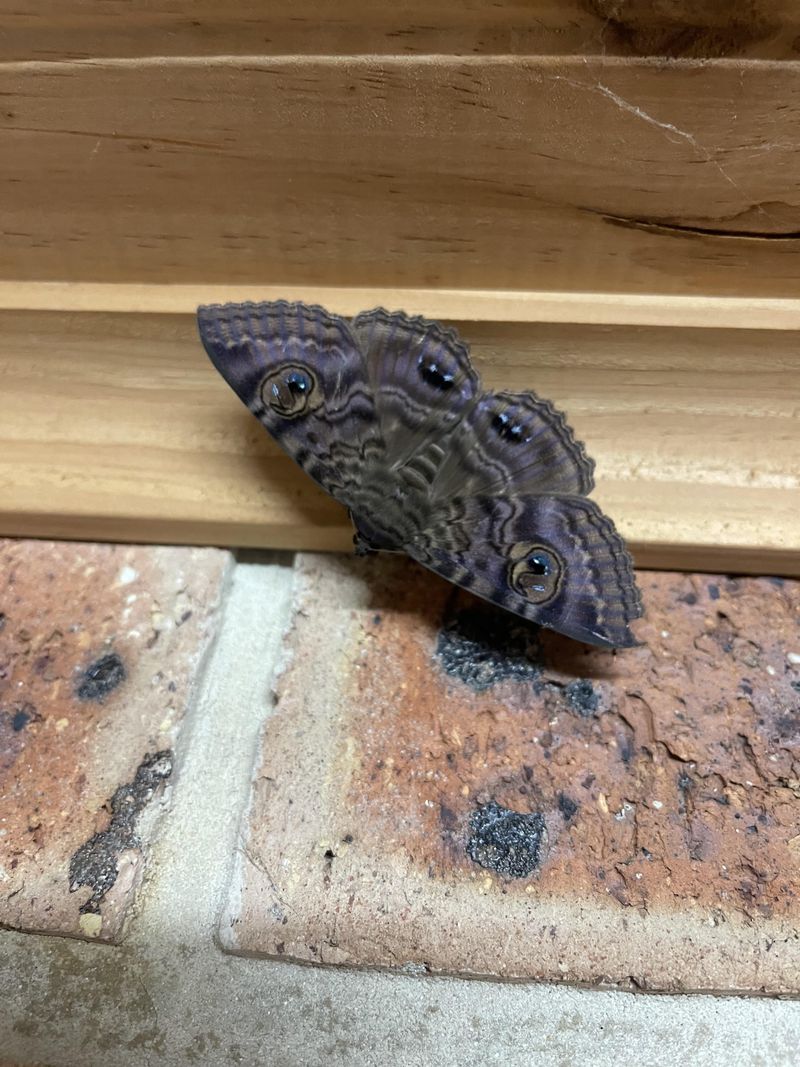
Grab your phone before anything else. Take clear shots of the wings and markings from more than one angle, since size and color alone can mislead.
Photos can help you document and assess the moth, though they are not guaranteed to give a definitive identification. UF/IFAS Extension offers guidance on photographing and documenting moths.
If the moth is indoors and needs to go outside, try a no-touch transfer. Set a cup over it, slide a piece of stiff paper underneath, and carry it out to release.
This approach follows advice from Ask an Entomologist on relocating insects.
Skip grabbing or rubbing the wings, because rough handling can harm a moth. Move slowly, and let it climb onto the paper if it wants to.
Photos may also be worth sharing if you think you have a black witch. Alabama has documented records, so the guess is plausible.
Still, the pointed wings, wavy lines, and span matter more than any omen. The moth just wants a quiet place to rest.
Share this story