Get the latest garden guides in your inbox →
Gardening Latest
  • General Gardening
  • Lawn Care
  • Plant Care
  • Composting
  • Soil Health
  • Backyard
  • Garden Muse Magazine
  • General Gardening
  • Lawn Care
  • Plant Care
  • Composting
  • Soil Health
  • Backyard
  • Garden Muse Magazine
  • News
  • Gardening Calendar
  • Garden Structures
  • Vegetable Garden
  • Vertical Garden
  • Raised Beds
  • Hydroponics
  • General Equipment
  • Community Gardens
Garden Themes
  • Spiritual Garden
  • Hydroseeding
  • Seeding and Laying Sod
  • Artificial Grass
  • Lawn Care Equipment
  • Plants
  • Trees
  • Planting Tools
  • Composting Basics
  • Fertilizer
  • Alternative Growing Mediums
  • Front Yard
  • Backyard Activities
  • Landscaping
Gardening Latest

Explore by state

Which state is your garden in?

Currently viewing Indiana

All states

Northeast

  • Connecticut —
  • Delaware 20
  • Maine —
  • Maryland 6
  • Massachusetts 22
  • New Hampshire —
  • New Jersey 6
  • New York 16
  • Pennsylvania 16
  • Rhode Island —
  • Vermont —

Southeast

  • Alabama 6
  • Arkansas —
  • Florida 6
  • Georgia 7
  • Kentucky 20
  • Louisiana 5
  • Mississippi —
  • North Carolina 4
  • South Carolina 19
  • Tennessee 3
  • Virginia 5
  • West Virginia —

Midwest

  • Illinois 5
  • Indiana 8
  • Iowa 19
  • Kansas —
  • Michigan 6
  • Minnesota 5
  • Missouri 5
  • Nebraska —
  • North Dakota —
  • Ohio 7
  • South Dakota —
  • Wisconsin 21

Southwest

  • Arizona 6
  • Colorado —
  • Nevada —
  • New Mexico —
  • Oklahoma —
  • Texas 5
  • Utah —

West

  • Alaska —
  • California 6
  • Hawaii —
  • Idaho —
  • Montana —
  • Oregon —
  • Washington —
  • Wyoming —

No state matches that search.

Site menu

Gardening Latest
  • General Gardening
    • News
    • Gardening Calendar
    • Garden Structures
    • Vegetable Garden
    • Vertical Garden
    • Raised Beds
    • Hydroponics
    • General Equipment
    • Community Gardens
    Garden Themes
    • Spiritual Garden
  • Lawn Care
    • Hydroseeding
    • Seeding and Laying Sod
    • Artificial Grass
    • Lawn Care Equipment
  • Plant Care
    • Plants
    • Trees
    • Planting Tools
  • Composting
    • Composting Basics
  • Soil Health
    • Fertilizer
    • Alternative Growing Mediums
  • Backyard
    • Front Yard
    • Backyard Activities
    • Landscaping
  • Garden Muse Magazine

Explore

  • About GardeningLatest.com
  • Contact Us

Get the latest from the garden

New guides on lawn care, plants and backyard projects, sent when they go up.

Subscribe →

Follow

  • Facebook
  • X
  • Pinterest
  • YouTube
Indiana Gardening

Spot A Big Black Caterpillar With White Spots In Indiana? Here’s Why You Shouldn’t Touch It

Leave that big dark caterpillar alone until you know what it is, and keep your bare hands off it.

DH

By Dale Hutchins

November 23, 2026 · 6 min read

Spot A Big Black Caterpillar With White Spots In Indiana? Here’s Why You Shouldn’t Touch It
Spot A Big Black Caterpillar With White Spots In Indiana? Here's Why You Shouldn't Touch It

Leave that big dark caterpillar alone until you know what it is, and keep your bare hands off it. In Indiana yards, a large caterpillar with pale marks could be a white-lined sphinx, or it could be a hornworm carrying tiny wasp cocoons.

Those two look-alikes call for very different choices in your garden. A few quick visual clues can help you decide what to do next.

At a glance

Where
Indiana Gardening
Hardiness zone
6 −10 to 0°F
Read
6 minutes
Published
November 23, 2026

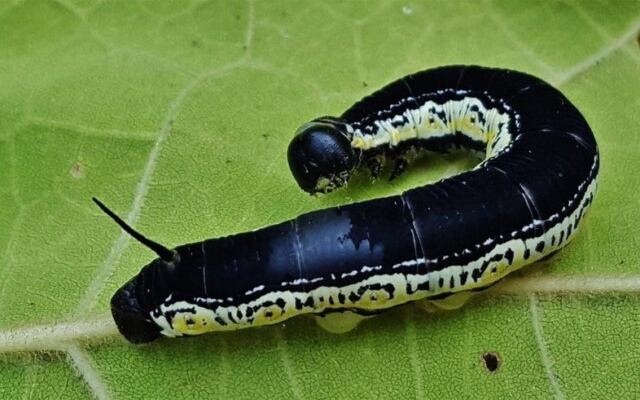
A dark caterpillar with pale marks needs a closer look
A dark caterpillar with pale marks needs a closer look
© Reddit

Start with one rule: do not pick up an unidentified caterpillar with bare hands. Color and pale marks alone cannot tell you what you are looking at, and a quick description over the fence will not settle it either.

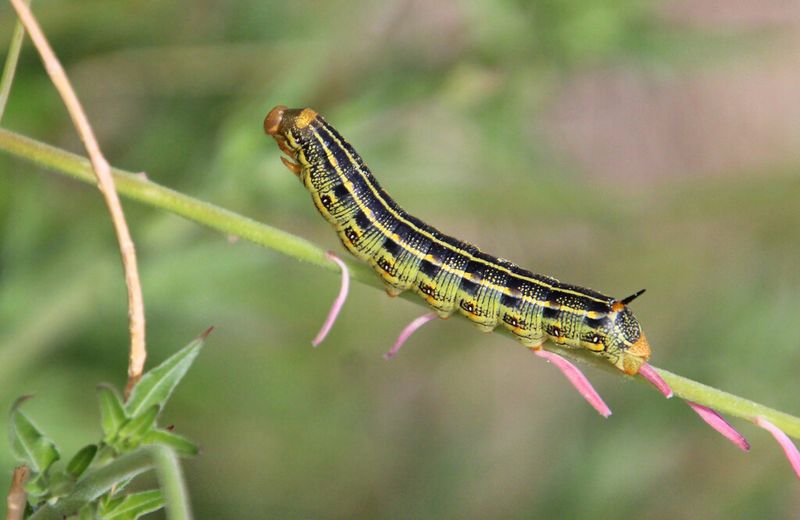
Several caterpillars can look dark with light markings. One possibility is the white-lined sphinx, a hornworm relative whose color can range all the way to nearly black.

Its coloring and spots vary quite a bit from one caterpillar to the next.

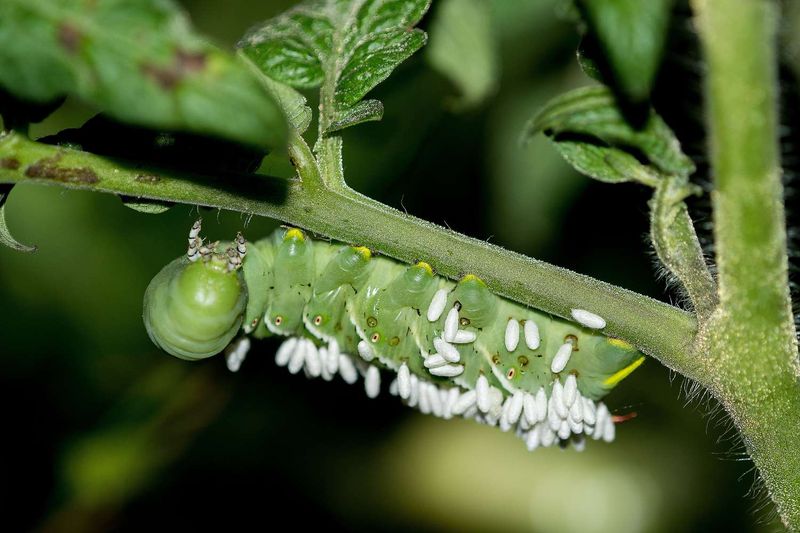
A second possibility is a tomato or tobacco hornworm that is carrying braconid wasp cocoons. Those are not the same thing as ordinary body markings.

Purdue Extension notes that numerous raised, rice-like cocoons on a hornworm’s back are a sign to leave it where it is.

So the shape and placement of the white marks matter. Flat stripes, dots, or lines that are part of the skin point one way.

Raised, rice-shaped bumps stuck on top of the body point another. Even then, the safest approach is to look closely, take a clear photo, and avoid claiming a species from a brief glance.

Look at the shape and placement of the white marks
Look at the shape and placement of the white marks
© The Ethogram

You can learn a lot without touching anything. Crouch down, check the whole body, and snap a photo that shows the markings, the horn, and the plant it is sitting on.

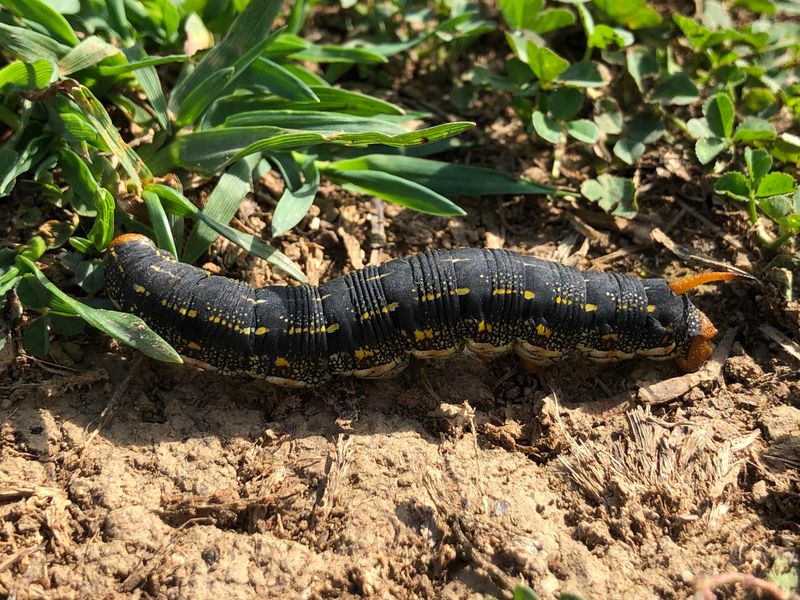
White-lined sphinx larvae vary in color, can be nearly black, and have a horn at the rear, according to University of Wisconsin Extension. Their spots and lines can differ from one caterpillar to another, so a single picture in your head may not match the one on your plant.

Inside those cocoons, wasps are finishing their development, and once they emerge, they go looking for other hornworms.

Tomato and tobacco hornworms are generally green. They are large, with diagonal pale marks along the sides and a horn on the tail end, as described in Purdue’s vegetable insect guide.

Now compare those side marks with anything that looks like it was added to the body. Rice-like structures are raised, stand out from the skin, and sit attached to the caterpillar, often in clusters on the back.

Side stripes are part of the body pattern and lie flat.

These clues are helpful, but they do not guarantee an identification. If you are unsure, a photo sent to your county Extension office is a good next step.

Rice-like bumps are wasp cocoons, not hornworm eggs
Rice-like bumps are wasp cocoons, not hornworm eggs
© The Spruce

Many gardeners assume those white bumps are eggs waiting to hatch. They are not.

Purdue identifies them as the pupal stage of braconid wasps, which means the cocoon is where a young wasp changes into an adult.

The story begins earlier. A female wasp lays eggs in a hornworm, and the wasp larvae feed inside the caterpillar.

When they are ready, they chew out and spin small white cocoons on the outside of its body.

Braconid wasps are parasitoids, not predators. Their larvae develop in or on a living host and ultimately kill it, rather than hunting and eating prey the way a predator does.

The tiny adult wasps are not a concern for people.

By the time cocoons show up, the caterpillar is usually very weakened. It typically eats little or no more foliage, so it is no longer a big threat to your plants.

That is why the sight of a hornworm dotted with these bumps tells a different story from a healthy, munching one.

Leave a cocoon-covered hornworm where it is
Leave a cocoon-covered hornworm where it is
© Maryland Grows – University of Maryland

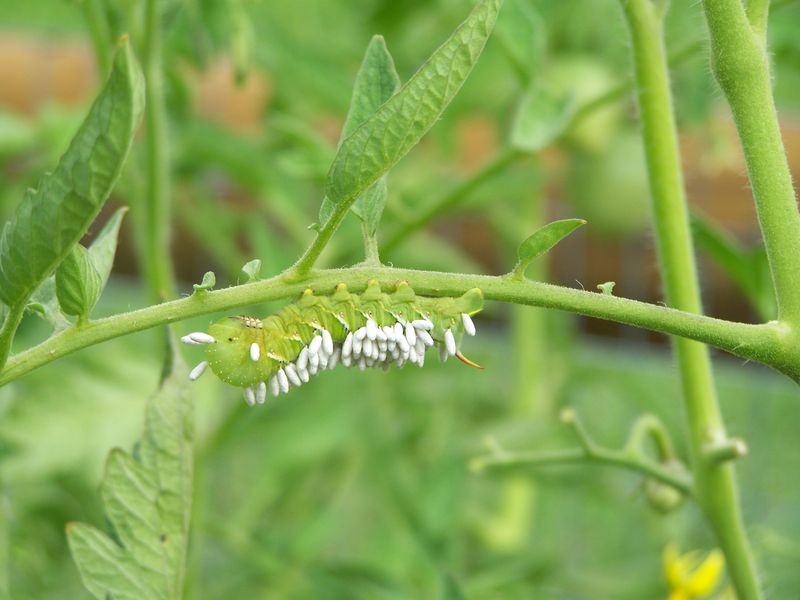
Picture a small nursery on a leaf. Inside those cocoons, wasps are finishing their development, and once they emerge, they go looking for other hornworms.

Purdue Extension says the wasps will emerge and parasitize other hornworms.

Removing or squashing the caterpillar would end that process. Leaving it in place lets the wasps complete their life cycle, as the Purdue plant lab explains.

The result is a bit of free pest control for your tomatoes.

This advice is narrow. It applies to a hornworm that is clearly carrying cocoons, not to every caterpillar with a dark body or pale markings.

A black caterpillar with spots and no raised bumps may be something else entirely, and it may or may not be a problem for your plants.

When in doubt, watch from a distance, take a photo, and decide later. Nothing is lost by waiting a day to be sure.

Hornworms without cocoons can damage garden plants
Hornworms without cocoons can damage garden plants
© Gardenary

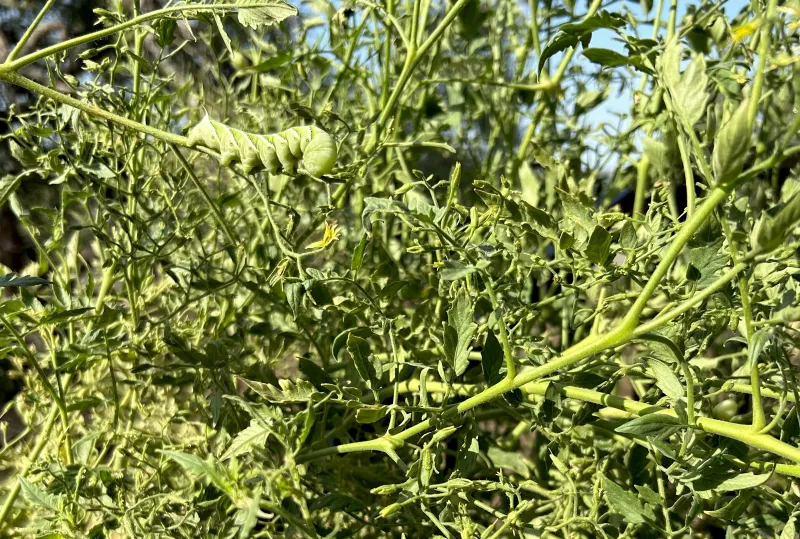
A healthy hornworm is a hungry one. Tobacco and tomato hornworms feed on tomato, potato, pepper, and eggplant foliage, and they can reach about four inches long, according to Purdue’s vegetable insect guide.

Heavy feeding can strip leaves and hurt the plant.

In Indiana tomato gardens, Purdue says tobacco hornworms are more common than tomato hornworms. Either one can be hard to spot because the green body blends in with the leaves.

Look for bare stems, dark droppings on lower leaves, and missing foliage at the top.

For hornworms without wasp cocoons, hand-picking is a practical control in home gardens. Wear gloves, drop the caterpillar into a bucket of soapy water, and check the plant again over the next few days.

Keep this separate from the earlier advice. A caterpillar with raised cocoons stays put, while a clean, actively feeding hornworm is fair game.

Likewise, a sphinx caterpillar that eats leaves can affect plants too, so nothing here means every caterpillar is harmless to your garden.

The rear horn is not a stinger
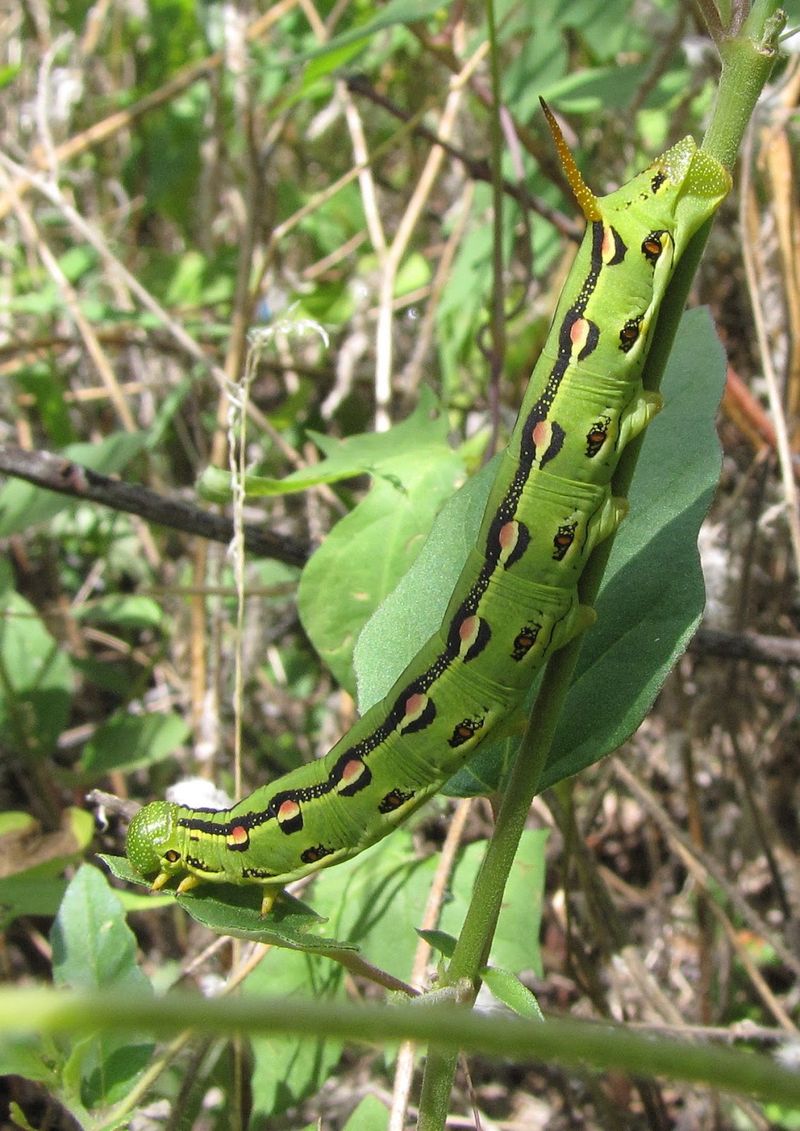
The rear horn is not a stinger
© Bug Eric

That curved spike on the tail looks threatening, but on the white-lined sphinx, the horn is not a stinger. The same source describes the caterpillar as harmless to people.

Even so, skip the bare hands. Some caterpillars have irritating or venomous hairs or spines, and Poison Control guidance on caterpillar stings explains what can happen when people touch the wrong one.

If you cannot name it, treat it as unknown.

Instead, observe the markings, the horn, and the plant from a comfortable distance. Take a photo for later.

If you see raised, rice-like cocoons on a hornworm, leave it in place, and remember that not every caterpillar is harmless to people or plants.

A caterpillar rewards patience more than a quick grab.

Share this story
DH

Written by

Dale Hutchins

More from Dale Hutchins →

About Gardening Latest

Gardening Latest provides in-depth guides to maintaining and enhancing your garden and backyard. Learn how to make the most of the space you have and create a beautiful garden.

More about us →

Latest stories

  • California GardeningThis Is the California Shrub Rattlesnakes Love to Hide Under Near Your Path

    This Is the California Shrub Rattlesnakes Love to Hide Under Near Your Path

    Just now
  • New York GardeningStink Bugs Sneaking Into Your New York House? This Cheap Trap Catches Them Overnight

    Stink Bugs Sneaking Into Your New York House? This Cheap Trap Catches Them Overnight

    5 min ago
  • Ohio GardeningWhen Your Neighbor’s Tree Crashes Into Your Ohio Yard, Here’s Who Actually Pays

    When Your Neighbor’s Tree Crashes Into Your Ohio Yard, Here’s Who Actually Pays

    11 min ago
  • Pennsylvania GardeningThese Backyard Plants Are Actually Banned In Pennsylvania And Growing Them Gets You In Trouble

    These Backyard Plants Are Actually Banned In Pennsylvania And Growing Them Gets You In Trouble

    22 min ago
  • Arizona GardeningKissing Bugs Head Indoors As Arizona Nights Get Colder, So Check These Bedroom Spots

    Kissing Bugs Head Indoors As Arizona Nights Get Colder, So Check These Bedroom Spots

    27 min ago

Gardening by state

Stories for your state, and the hardiness zone most of it gardens in.

Keep exploring

Read next

All Indiana Gardening →
Indiana GardeningTiny Red Dots Moving Across Your Sunny Indiana Windowsill Are Clover Mites
Indiana Gardening

Tiny Red Dots Moving Across Your Sunny Indiana Windowsill Are Clover Mites

2 hr ago
Indiana GardeningThat Crusty Tan Blob On Your Indiana Shrub Branches Is Something You Want To Keep
Indiana Gardening

That Crusty Tan Blob On Your Indiana Shrub Branches Is Something You Want To Keep

6 hr ago
Indiana GardeningThese Poisonous Plants Are Probably Already Growing Somewhere In Your Indiana Yard
Indiana Gardening

These Poisonous Plants Are Probably Already Growing Somewhere In Your Indiana Yard

9 hr ago

More from Indiana Gardening

  • This Is the California Shrub Rattlesnakes Love to Hide Under Near Your Path

    Just now
  • Stink Bugs Sneaking Into Your New York House? This Cheap Trap Catches Them Overnight

    5 min ago
Back to top

Leave a response Cancel

Your email address stays private. Required fields are marked with an asterisk.

Gardening Latest

In-depth guides to maintaining and enhancing your garden and backyard: how to make the most of the space you have, and how to make it beautiful.

  • Facebook
  • X
  • Pinterest
  • YouTube

We may earn a portion of sales from products or services that are purchased through our site as part of our affiliate partnerships with retailers.

Explore

  • About GardeningLatest.com
  • Contact Us
  • Terms and Conditions
  • Privacy
  • Editorial Note:
  • FTC Disclosure

Newsletter

New garden guides and seasonal tips, straight to your inbox.

We’ll email you a link to confirm. Unsubscribe any time.

Almost there! Check your inbox and tap the link to confirm.

© 2026 Gardening Latest. All rights reserved.

Back to top