After a fire ant sting, get away from the ants, wash the spot with soap and water, and leave any white bump alone. That little bump is usually a harmless reaction to venom, not a sign of trouble.
Opening it is what can cause problems, because broken skin lets germs in. Here is how to care for stings at home and how to tell when you need help.
Get away from the ants and wash the sting
Speed matters first. Step away from the mound right away, because fire ants can sting more than once and they keep biting while they cling to skin.
Brush or flick off any ants still on you, and check shoes, socks, and pant legs, since they climb fast. Kids may need a helper to do this quickly.
Once the ants are gone, wash the area with soap and water. Poison Control advice lists these same steps for ant stings, and North Carolina Poison Control offers similar guidance for stinging insects.
Plain soap and water is enough. There is no need for harsh chemicals or home mixtures.
A cluster of red, itchy, burning spots fits a fire ant sting, but the marks alone cannot prove which insect did it. NC State Extension describes the red imported fire ants found in North Carolina, yet a sting mark is not an identification test.
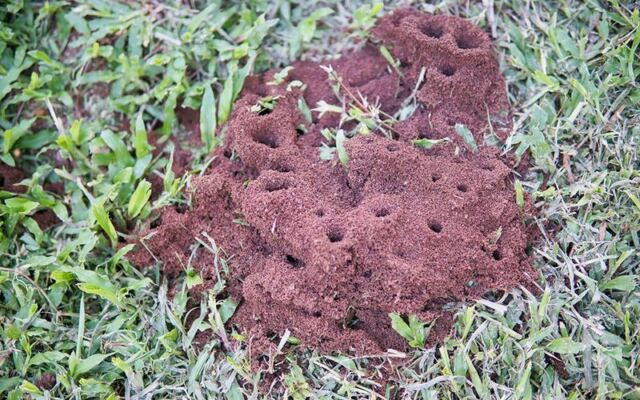
If you saw a dirt mound and swarming ants, that is a stronger clue. Either way, the first steps are the same: move away, remove the ants, and wash the skin.
Ease discomfort and itching
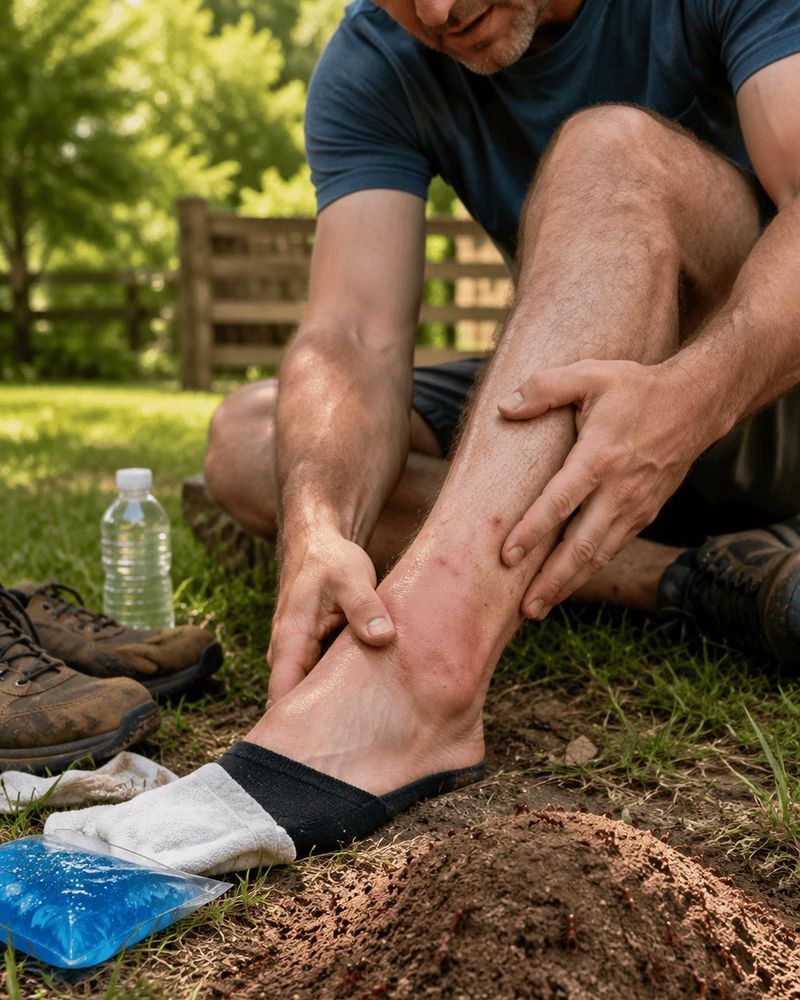
Stings burn and itch, and a cold compress is a simple way to take the edge off. Wrap ice or a cold pack in a cloth first so it never touches bare skin.
The cold can calm swelling and discomfort around the sting.
For mild stings, MedlinePlus guidance suggests applying the wrapped ice for 10 minutes, then taking it off for 10 minutes. People with circulation problems should use shorter applications.
MedlinePlus also says not to wash the area with alcohol, so stick with soap and water.
Itching can be the hardest part. The ACAAI says topical corticosteroid ointments or oral antihistamines may help with itch.
Think of them as options, not requirements, and follow the directions on the product label.
Ask a clinician or pharmacist before using them if the person is a child, is pregnant, has a medical condition, or takes other medicines. That quick question can prevent a bad mix.
Skip folk remedies and household chemicals, since they are not established first aid.
A white bump can be a normal reaction to the sting
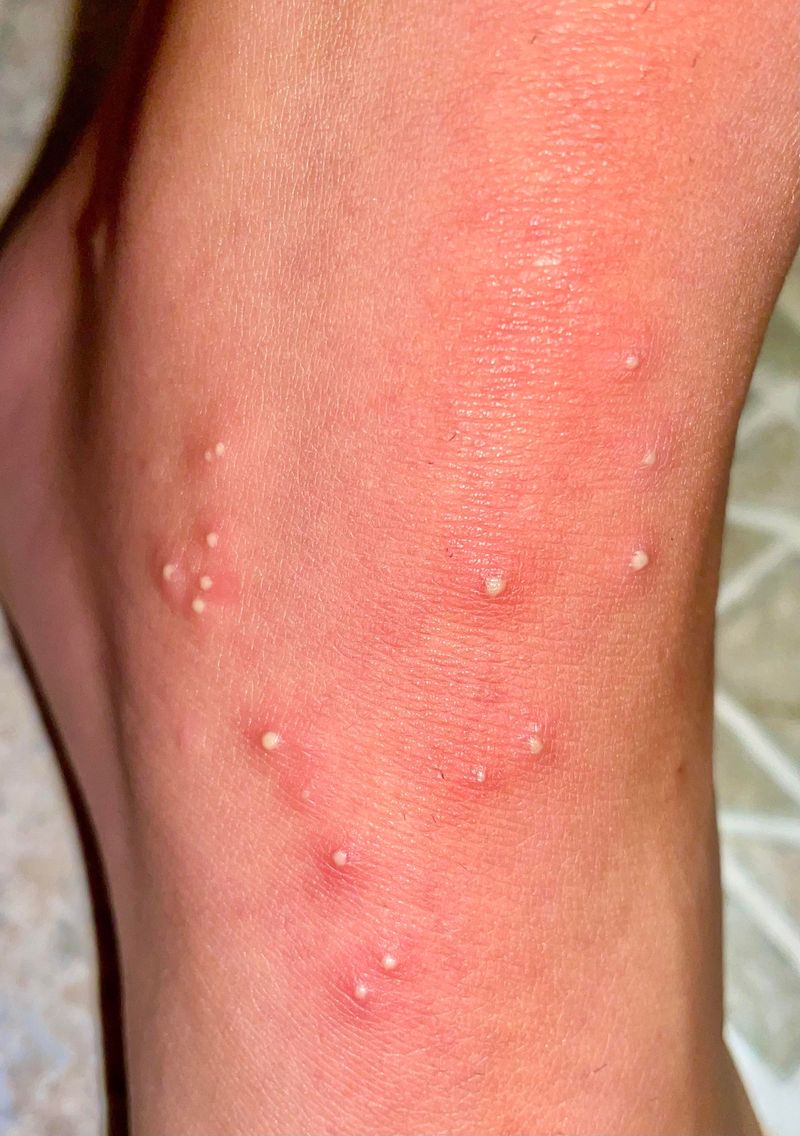
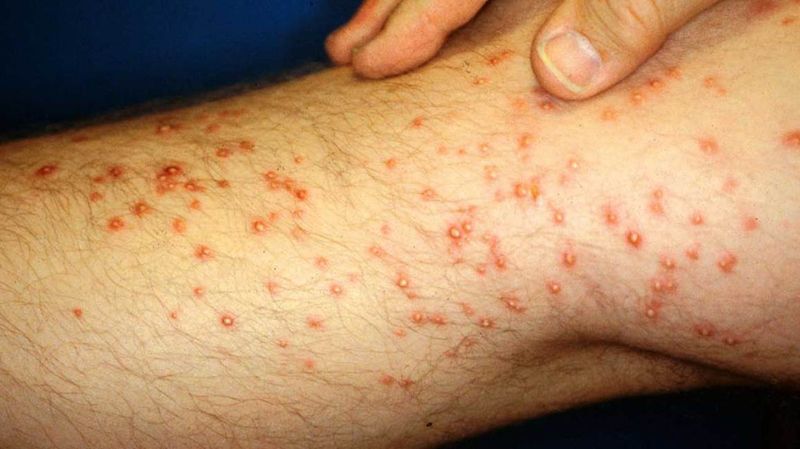
Here is the usual story. Right after the sting you get an itchy, raised red spot.
Within about a day, a small white bump that looks like pus often forms on top, and that surprises many people.
ACAAI information describes this pustule as a typical result of fire ant stings, and Mississippi State University Extension explains the same pattern. The word pustule describes how the bump looks.
It does not mean bacteria are growing inside.
The typical bump is usually a sterile reaction to the venom, not infected pus. That is why it can look alarming and still be perfectly normal.
A white head by itself is not a reason to rush for antibiotics.
Also keep in mind that the bump is only consistent with a fire ant sting. NC State Extension notes that red imported fire ants live in North Carolina, but marks on skin do not confirm the culprit.
What matters most is how you treat the spot over the next few days.
Keep the pustule clean and intact
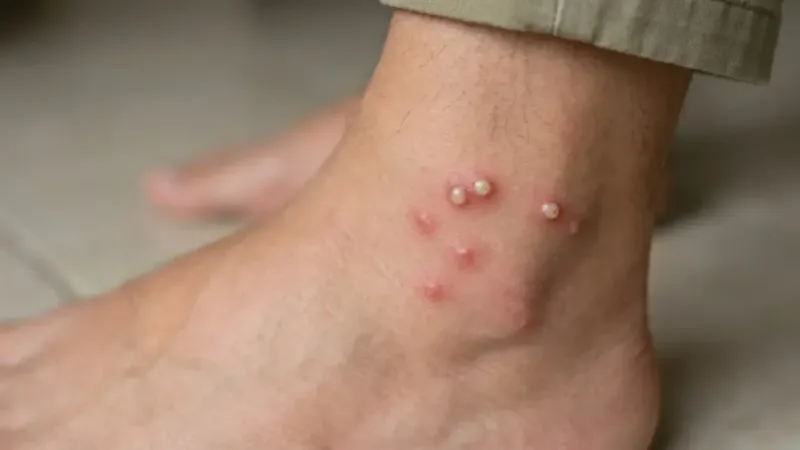
Picture the bump as a tiny natural bandage. As long as it stays closed, your skin is still doing its job as a barrier.
Popping or scratching it breaks that barrier and can give germs an entry point for a secondary infection.
That does not mean infection will always follow. It simply means opening the bump adds risk you do not need.
ACAAI guidance and NC State Extension both point toward leaving the pustules alone. Opening them may also contribute to scarring.
Keep the spot clean and try not to scratch. Short nails, a loose cover over the area, or a cold compress when the itch spikes can all help, especially for kids.
If a bump opens by accident, wash it with soap and water and keep it clean. ACAAI says this is generally enough to help prevent infection.
A PubMed study on local skin response to imported fire ant stings is another reason not to treat a normal intact pustule as an infection. Routine antibiotics are not part of the advice for a normal-looking, closed bump.
Know when skin changes need medical advice
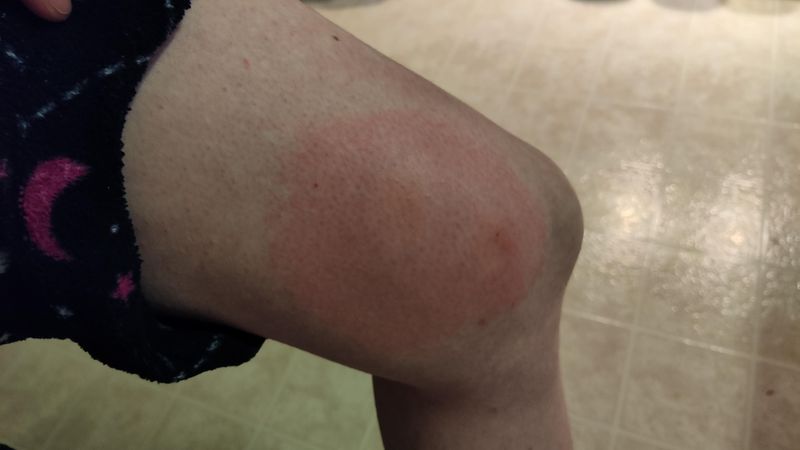
Most stings follow a predictable path: redness, itch, maybe a white bump, then slow healing. Early redness and itching around the sting are common and should not automatically be called infection.
The skin simply reacts to venom.
Watch for changes that go beyond that pattern. Seek medical advice if redness is spreading or getting worse, if the area becomes more painful or more swollen, if drainage appears, or if a fever develops.
Also get help if the person simply seems unwell.
NC State Extension and HealthyChildren.org describe these as signs to take seriously. A trick that helps: lightly mark the edge of the redness with a pen and check it in a few hours.
If it keeps creeping past the line, call a clinician.
The white bump alone does not tell you the spot is infected, so judge by the whole picture, not just how it looks.
Have questions about a sting? In North Carolina, you can call NC Poison Control at 1-800-222-1222.
Details on stinging insects are also on the NC Poison Control website.
Get emergency help for a serious reaction or many stings
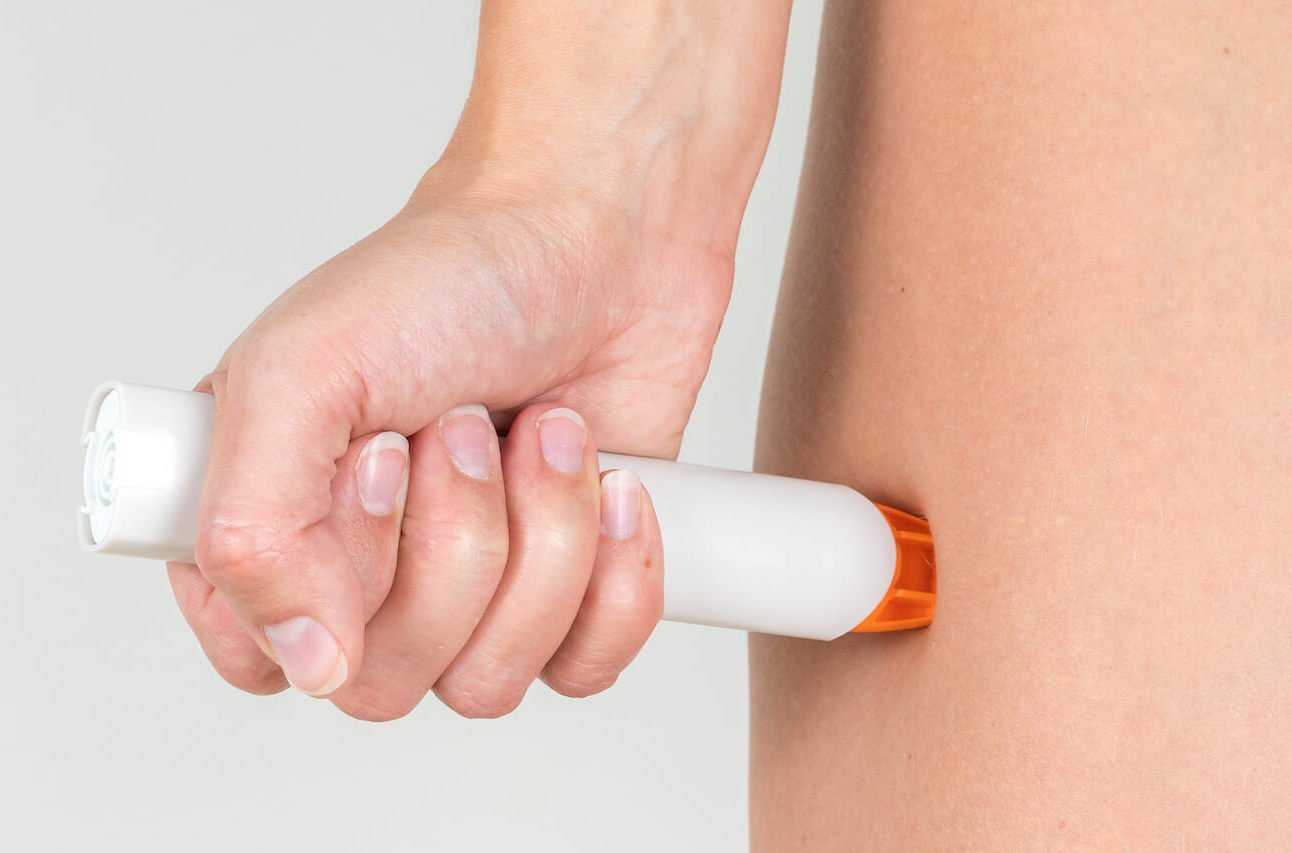
A sore skin spot and a body-wide emergency are two different problems. Local skin trouble stays near the sting.
A serious allergic reaction affects the whole body, and it can happen after only a few stings.
Call 911 for trouble breathing, throat or chest tightness, fainting, or significant swelling of the face or neck. Do not wait to see if it passes.
NC Poison Control and the ACAAI both list these warning signs.
If you have a known severe sting allergy, use your prescribed epinephrine as directed and get emergency medical care, even if symptoms improve. Relief can be temporary, and symptoms can return.
Numbers matter too. Mississippi State University Extension and MedlinePlus note that a large number of stings can be dangerous even without an allergy.
A child, an older adult, or anyone who fell into a mound needs prompt medical attention.
A bump is a nuisance, but trouble breathing is a 911 call.
Share this story