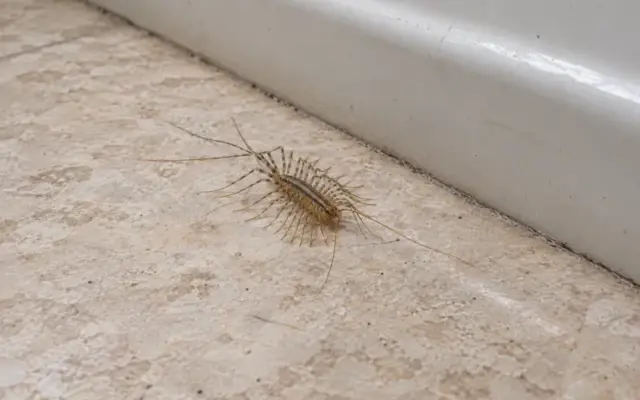
That fast bug with all the legs darting across your basement floor is most likely a house centipede. It does have a venom-delivering bite, and it does hunt cockroach nymphs along with other small creatures.
Bites are uncommon and usually mild, and the hunting does not mean you have a roach problem or that the centipede can fix one. Here is how to tell what you saw, what it eats, and what to do next.
A fast basement visitor may be a house centipede
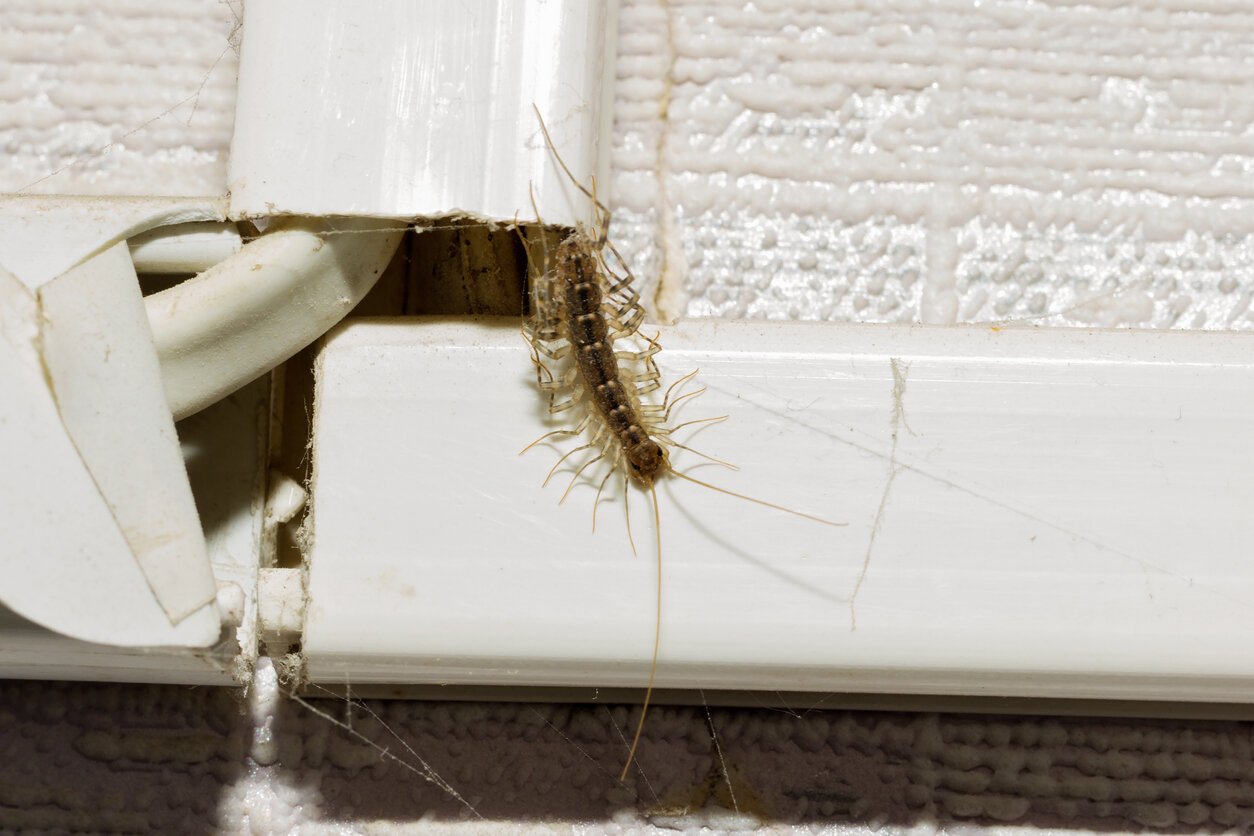
Picture a flash of motion on the basement wall, a thin body with legs everywhere, gone before you can blink. In Illinois homes, the usual suspect is the house centipede, Scutigera coleoptrata.
A quick glimpse will not always settle the question, so it helps to know what to look for.
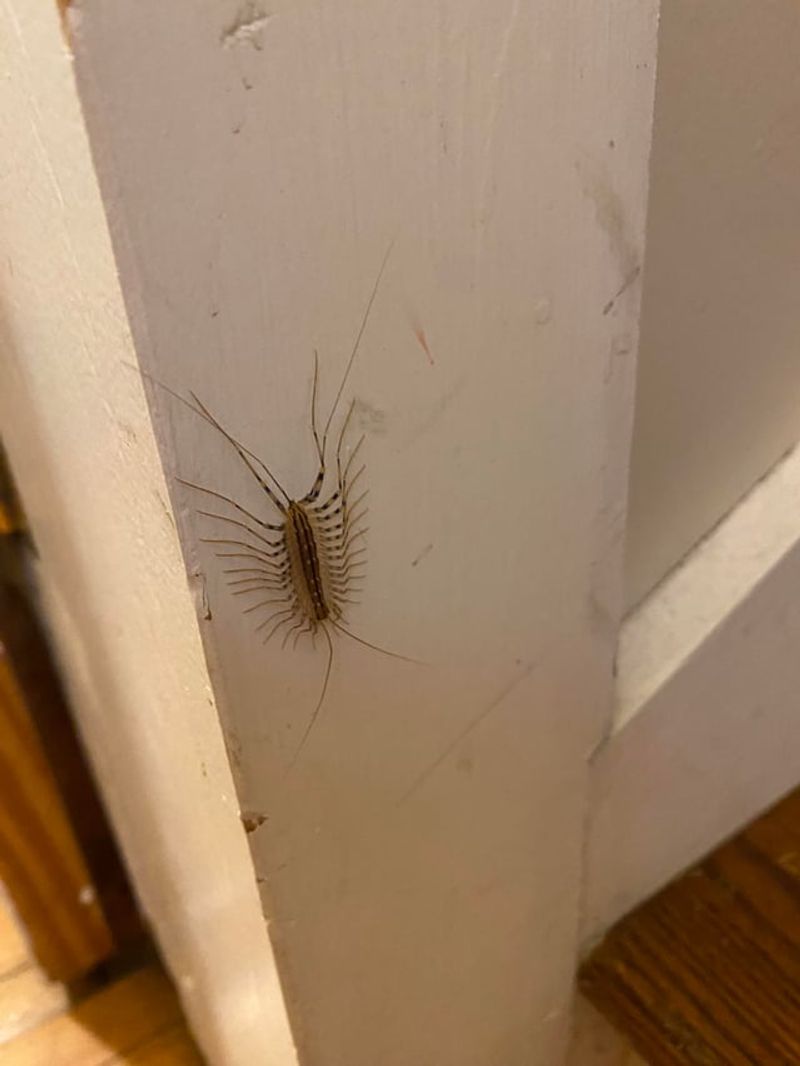
Adult house centipedes have an elongated body and 15 pairs of long, delicate legs. The back legs trail behind like streamers, which can make the animal look even bigger than it is.
That leggy outline is what makes people stop in their tracks, and it is also a handy clue for recognizing one.
Habits help too. According to University of Illinois Extension, house centipedes often shelter in cool, damp, dark places, which is why basements, cellars, crawlspaces, and bathrooms turn up in so many sighting stories.
They are nocturnal, so you are most likely to meet one after dark or when you move a box that has been sitting for months.
They are also quick to flee when disturbed. If the creature sprinted for a crack the moment the light came on, that fits the pattern.
The Illinois Department of Public Health lists centipedes among occasional invaders that wander indoors.
Still, not every fast, many-legged visitor is a house centipede. Other centipedes and some look-alikes exist.
A clear photo, or a calm look at one that has been caught or stopped, gives you a much better identification than a blur at the edge of your vision.
It hunts cockroaches and other small arthropods
Behind that startling look is a working predator. House centipedes prey on small arthropods, and the list includes cockroach nymphs, spiders, silverfish, flies, and ants.
Their speed and nighttime activity suit a life of chasing prey through dark corners.
The Missouri Department of Conservation describes them as fast hunters that feed on household arthropods. The Penn State Extension fact sheet likewise treats them as predators of other indoor creatures.
That is where the roach connection comes from.
Cockroaches, though, are only one item on a varied menu. A centipede in your basement does not tell you what it has been eating.
It might have been working on silverfish, flies, or spiders, and nobody can read its dinner history from one sighting.
There is also a gap between eating pests and controlling them. The Illinois Department of Public Health groups centipedes with occasional invaders, not with pest-control tools.
None of these sources show that a centipede can reliably or sufficiently reduce a household pest population.
So think of the centipede as a small hunter doing its own thing in your basement. It is an interesting bit of natural history, but not a service you can count on.
A bite is possible, but usually mild
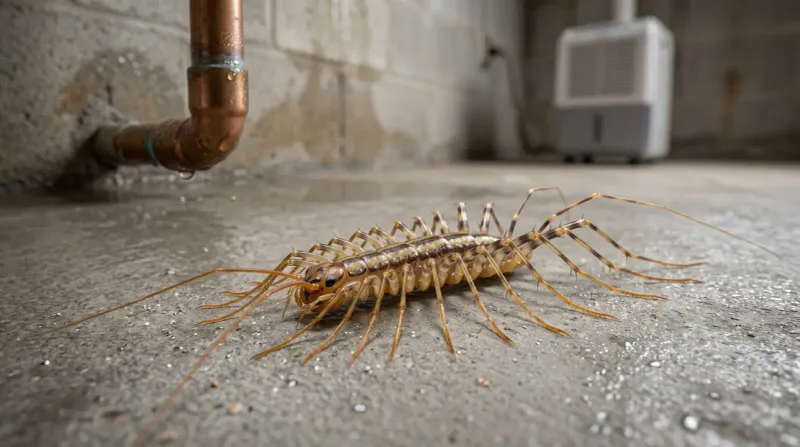
Yes, house centipedes are venomous. They use venom-delivering appendages to subdue prey, and they can bite people.
Even so, bites are uncommon, and most are mild.
The Illinois Department of Public Health says a house centipede wound can resemble a bee sting. That comparison fits a short-lived, local sting, and it is a guide for house centipedes only.
It should not be stretched to every centipede, since larger species can cause more painful injuries, as the Missouri Department of Conservation notes.
A bite may cause local pain, redness, and swelling. It is not something to dismiss as impossible, and it is not a reason to panic.
Most people never get bitten, because the centipede would rather run.
For care, MedlinePlus advises these steps:
Wash the area with soap and water. Use a wrapped ice pack intermittently, never directly on bare skin.
Contact Poison Control for guidance.
Get urgent medical attention for breathing difficulty, throat swelling, or other signs of an allergic reaction. Those symptoms call for emergency help right away, not waiting at home.
A centipede sighting does not confirm roaches
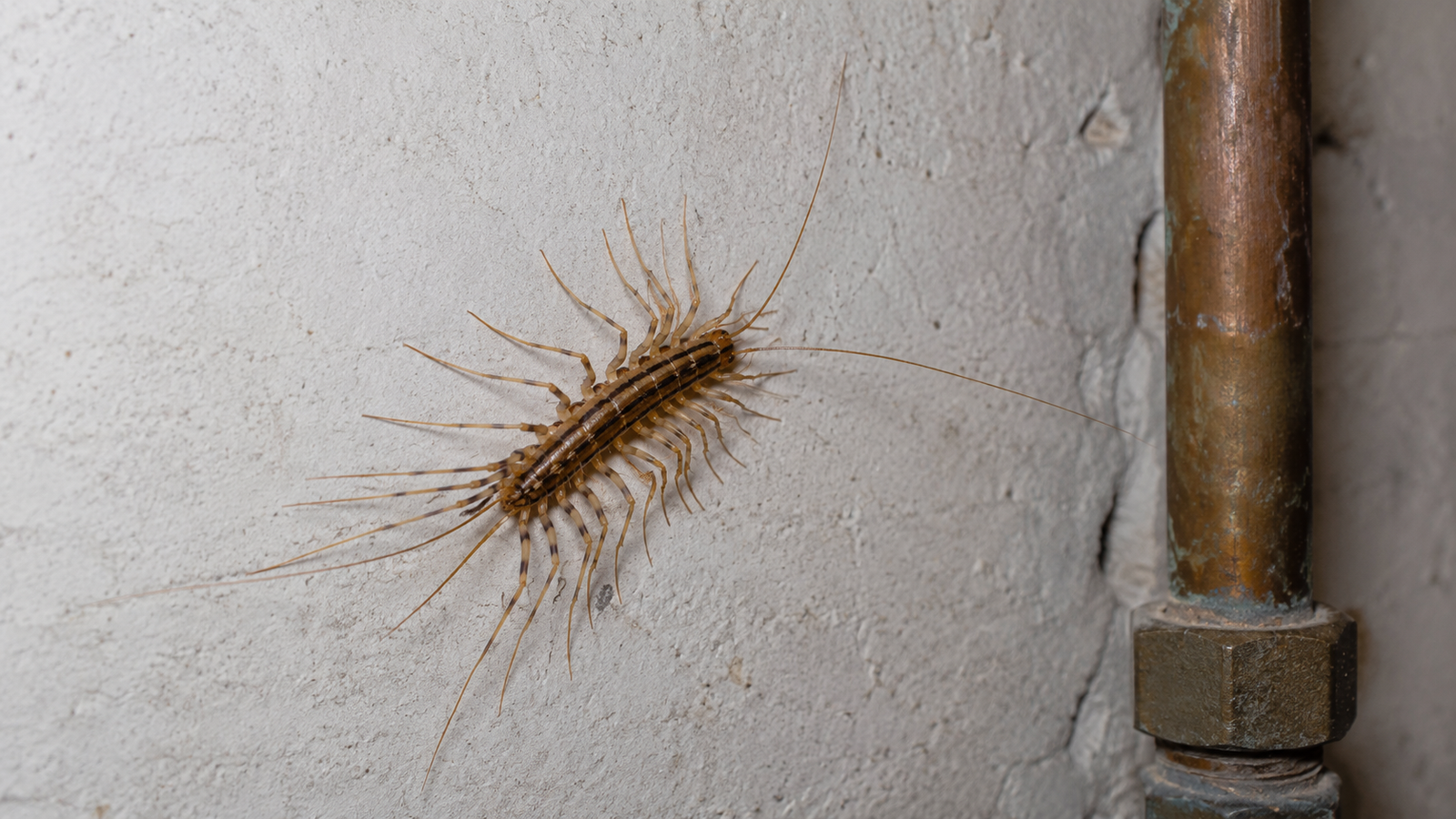
Spotting a house centipede feels like a clue, but it points in many directions. These animals eat several kinds of arthropods, so even a repeat visitor cannot tell you which prey is around.
A centipede alone does not prove a cockroach infestation.
If you keep seeing them, treat that as a reason to look around. Check for other insects and spiders that could be feeding them, and look for damp conditions that make the space comfortable.
Penn State Extension suggests monitoring for other prey when centipedes are numerous, and sticky traps can help show what is active.
There is no magic number of sightings that turns a few centipedes into an infestation. The sources offer no threshold, so a count is not the right test.
What matters is what the traps and your own inspection reveal.
When cockroaches are the worry, monitoring is also the first step in Illinois guidance. The Illinois Department of Public Health recommends watching for cockroach activity.
Put traps where you suspect trouble, check them regularly, and note what you catch.
Keep the line clear in your mind. A centipede is a reason to investigate.
Roaches in your traps, however, are what make it a confirmed roach problem.
Make the basement less inviting
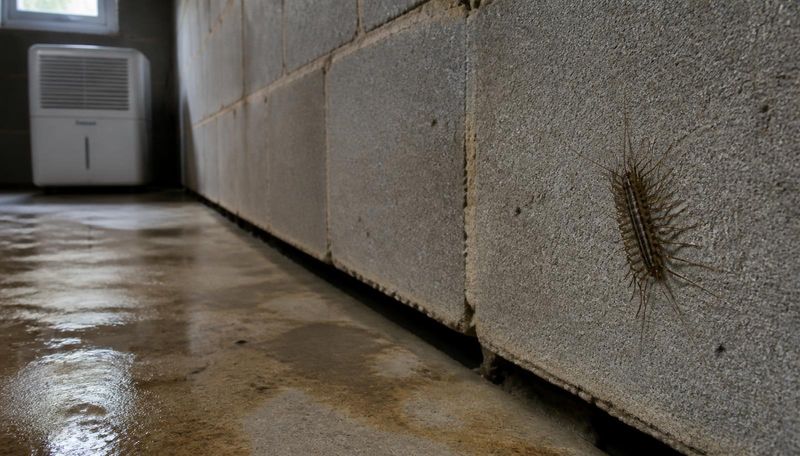
For the occasional centipede, the simplest tool may already be in your closet. University of Illinois Extension recommends vacuuming it up.
It is quick, it avoids contact with your hands, and it needs no chemicals.
After that, work on why it was there. Centipedes like dampness, so reduce moisture indoors.
A dehumidifier, fixing leaks, and better airflow all help make a basement less comfortable.
Next, take away places to hide. Clear clutter, such as stacked cardboard boxes, piles of old papers, and things shoved against walls.
Fewer hiding spots mean fewer places for a centipede to rest during the day.
Outside, clear leaves and debris near the foundation. Then seal cracks and crevices where creatures could slip in, including gaps around pipes and along the foundation walls.
These steps discourage centipedes, but they do not guarantee that none will ever return. Even so, they work on the habitat and food sources that draw them in.
Broad pesticide spraying aimed only at killing centipedes is not the place to start.
Confirmed cockroaches need a separate plan
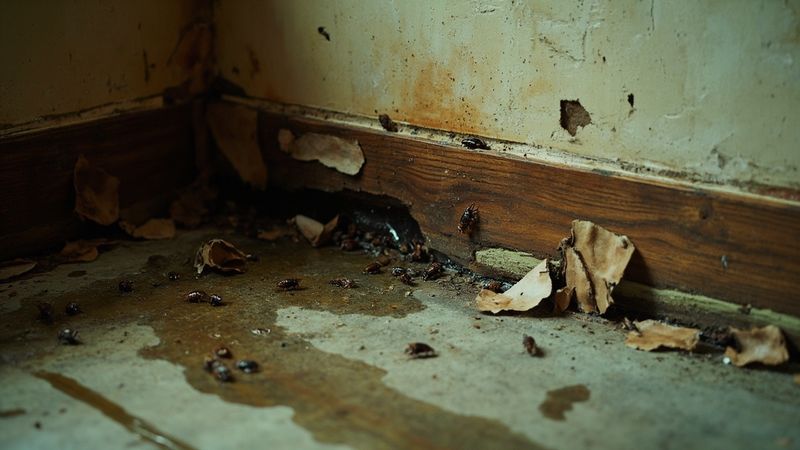
Once cockroaches are confirmed, the plan changes. Centipede tips will not solve it, and the centipede itself is no replacement for real control.
Cockroaches call for their own steps.
Illinois guidance from the Illinois Department of Public Health describes an integrated approach. Inspect and monitor to learn where roaches are active.
Remove food and water sources, reduce hiding places, and seal entry points.
Think of it as a set of steps working together. Wipe up crumbs, store food in sealed containers, fix drips, clear clutter, and close gaps that give roaches a path indoors.
Infestations are rarely eliminated by one method alone, so expect to combine actions and keep checking your traps.
If you use pesticides, follow the label exactly. Labels tell you where a product can be used and how to use it safely.
Be careful with foggers. They may fail to reach roaches in hiding places, and they can scatter them.
That makes fogging a poor simple fix.
A basement centipede may be hunting something small in the dark, but roaches deserve a plan made for them.
Share this story