If you spot a gray paper nest in a leafless Georgia tree, the safest move is usually to leave it alone until winter. When the nest is well away from people and pets, staying back beats trying to remove it.
Cold weather does the work for you, though it does not follow a calendar. Here is how to wait wisely, and when waiting is not the right call.
When it is safe to wait, leave the nest alone
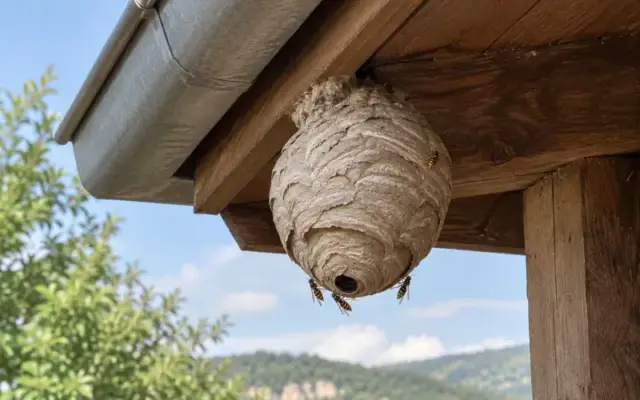
When an exposed social-wasp nest sits well away from people and pets, keeping your distance and leaving it undisturbed is generally safer than approaching or removing it while it is active. UGA Extension advice says to leave wasp and hornet nests alone unless they are near doors or other busy areas.
The colony dies in winter, and the nest can be removed after that.
Think of a nest high in a tree at the back of a yard, far from the patio, the mailbox, and the dog run. Nobody has to walk past it, so the risk of a sting stays low as long as nobody bothers it.
Poking at it, throwing things, or trying to take it down is what turns a quiet nest into a problem.
Leaving a nest alone does not mean it is harmless. A nest that is active has wasps that will defend it, and that is exactly why distance matters.
University of Maryland Extension notes that freezing weather ends the remaining activity, so patience can solve the problem for you.
This is general guidance for an out-of-the-way nest, not a rule for every situation. A nest near a door or other spot you cannot avoid, a household member with a serious sting allergy, or a suspected yellow-legged hornet all call for a different plan.
Each of those cases gets its own section below.
A paper nest can suggest a species, but it cannot confirm one
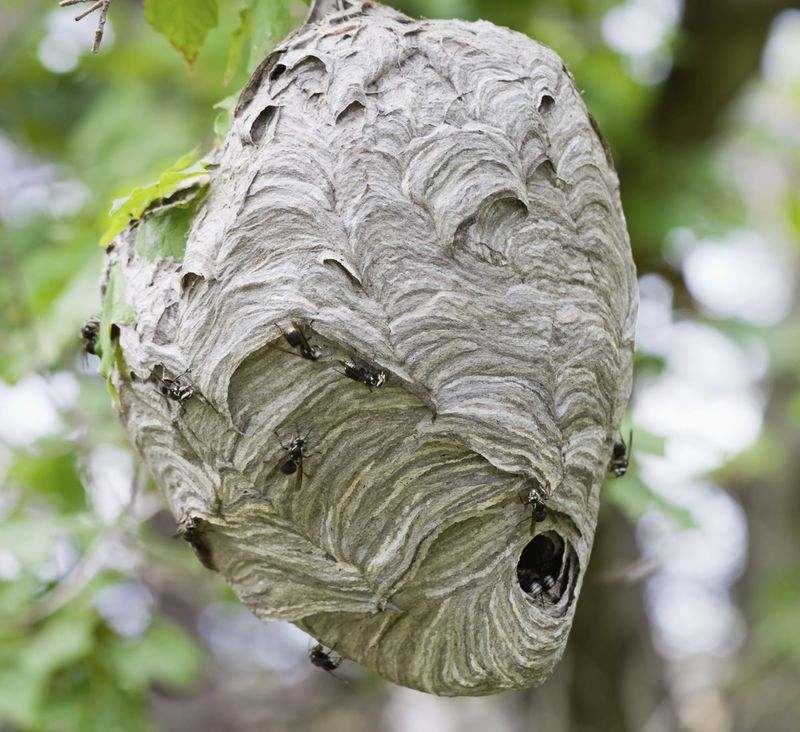
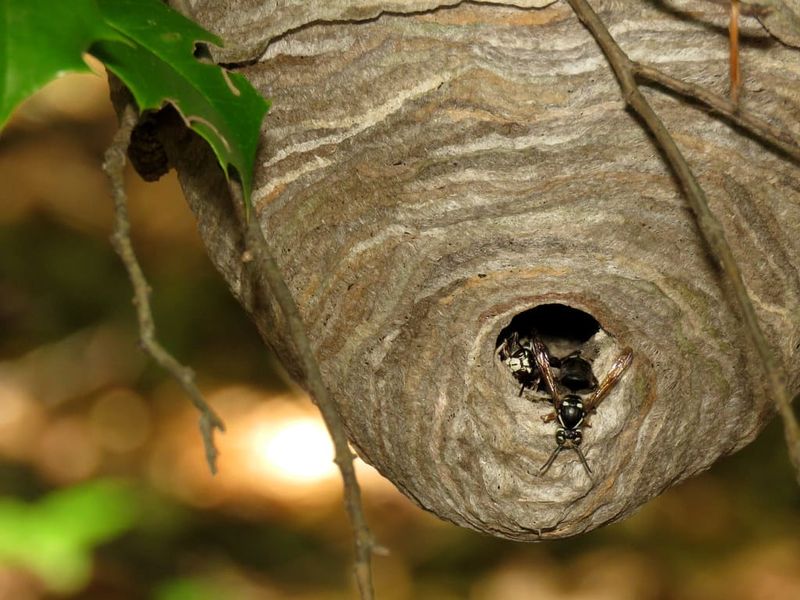
A big, closed-in, football-shaped paper nest dangling from a tree or shrub may be consistent with a bald-faced hornet nest. That shape is a helpful clue, but it is only a clue.
Looks alone cannot tell you which insect built it.
The name can be confusing too. According to UGA Cooperative Extension, the bald-faced hornet is an aerial yellowjacket, not a true hornet.
It builds paper nests in the open, which is why people spot them so easily once the leaves drop.
Bare branches make nests look new, but they were likely there all summer, hidden by leaves. Seeing one in a bare tree does not prove what built it.
Other hanging paper nests can look similar, and the tree it hangs in is not a reliable identification tool.
That matters because one look-alike needs special handling. The Georgia Department of Agriculture FAQ covers the invasive yellow-legged hornet, which people can mistake for other stinging insects.
Please do not walk up for a closer look. A zoom lens on a phone camera gives you a photo without putting you in range.
If you want a second opinion, share the picture with your county Extension office.
Cold weather ends the colony, but there is no set date
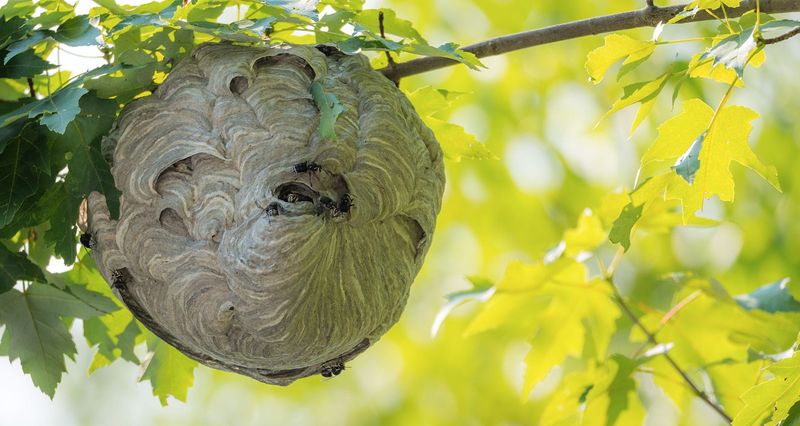
A social-wasp colony grows all through the warm season. Late in summer or in autumn, new queens and males leave the nest to mate.
The young queens then look for sheltered spots, such as bark crevices or leaf litter, to spend the winter, as described by University of Maryland Extension.
The old colony does not survive. Freezing weather ends activity in the original workers and the nest.
The University of Kentucky describes this same yearly cycle, with only the mated queens carrying on.
The tricky part is timing. Georgia stretches from the mountains to the coast, and fall weather swings a lot from place to place and year to year.
A mild autumn can leave wasps flying well into the season, as UGA Extension in Fannin and Gilmer counties notes for hornets.
So there is no date you can circle on a calendar. One chilly night does not mean the nest is empty, since a warm afternoon can bring wasps back out.
Sustained cold, with repeated hard freezes, is what ends the colony.
If you see wasps still coming and going from the nest, that is your sign that it is still active. Keep waiting, and keep your distance.
Wait from a distance; do not test the nest
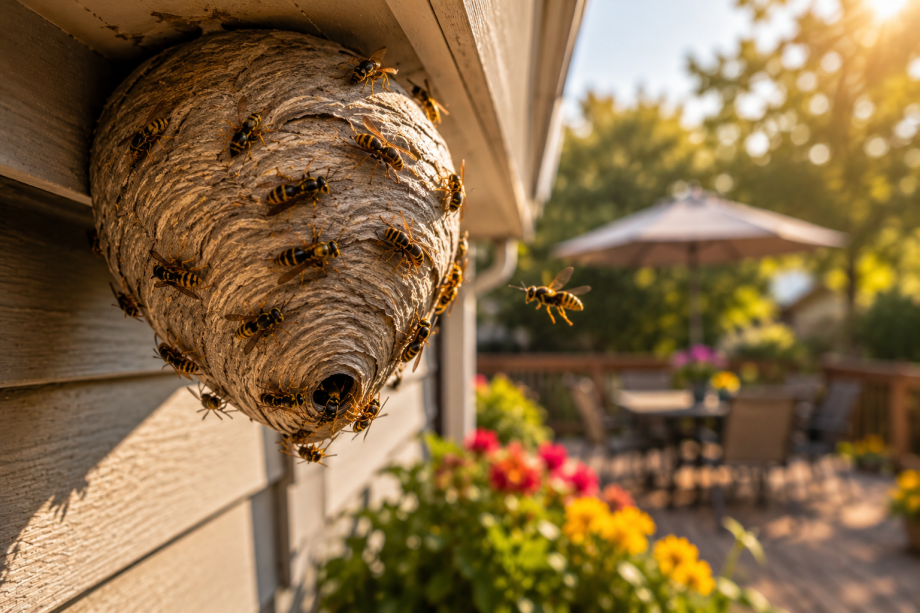
Waiting safely is mostly about keeping everyone away. Steer kids and pets clear of the tree, and skip mowing or trimming right beneath it.
Vibration and noise near a nest can set off the wasps inside.
Do not knock down, open, or treat an active enclosed nest yourself. The University of Kentucky guidance warns that breaking the paper envelope can scatter wasps.
Disturbing the nest can provoke defensive wasps, and an angry swarm is far more dangerous than a quiet nest.
It is tempting to sneak up and check whether the nest is abandoned. Please don’t.
A nest that looks quiet or ragged may still hold live wasps, and appearance alone does not confirm that it is inactive.
If you want to watch, do it from across the yard or from a window. Binoculars or a phone zoom will show you whether wasps are flying in and out, without putting you at risk.
The same rule applies, even more strongly, to a suspected yellow-legged hornet nest. USDA APHIS advises watching such nests only from a safe distance and not disturbing them.
When to get help before winter
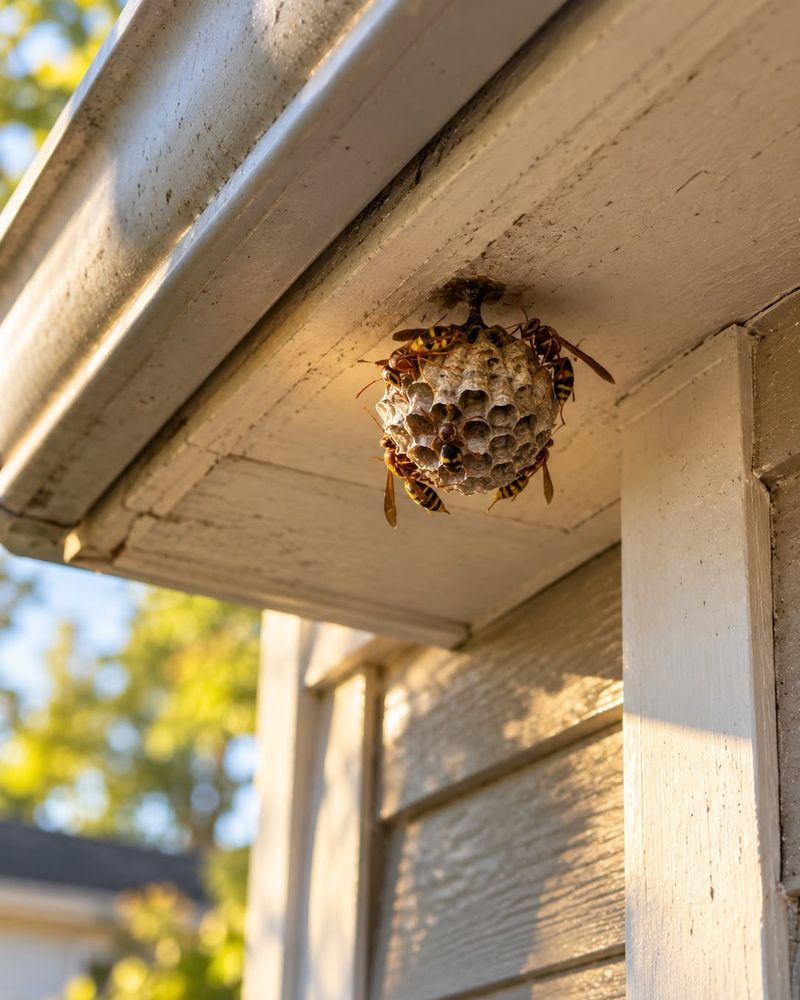
Some nests cannot wait for winter. The UGA advice to leave nests alone applies only to nests that are not near doors or other high-traffic spots, as UGA Extension explains.
Picture a nest above the front steps, beside the garage door, or over the path to the grill. You or your family would pass it daily, and each pass raises the chance of a defensive sting.
In a case like that, call a pest-management professional rather than trying anything on your own, as Michigan State University Extension also advises for hard-to-reach or busy locations.
Sting allergy changes the picture as well. UGA pest guidance tells people to account for venom allergy.
If anyone in your household has had a serious reaction to stings, even a distant nest deserves individualized advice from a professional and your doctor.
This article does not give removal steps, because removing an active nest is risky. A licensed professional has the protective gear and training to do it safely.
Ask them about timing and cost before you decide.
So wait when the nest is truly out of the way, but get help early when it is not.
A suspected yellow-legged hornet needs a different response
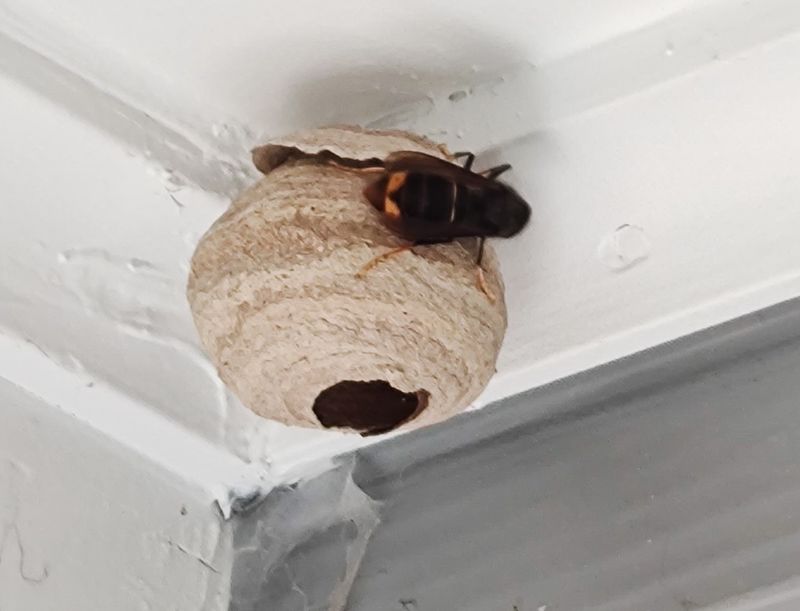
Georgia is dealing with an invasive insect called the yellow-legged hornet. USDA reports detections in Georgia, South Carolina, and North Carolina.
That makes the usual wait-and-see advice a poor fit if you think this is what you are seeing.
You cannot identify one from a nest photo or shape alone. Many paper nests look alike from the ground.
So treat it as a possibility, not a conclusion, and let the experts decide.
If you suspect one, especially in coastal Georgia, stay back and do not try to remove the nest. Contact the Georgia Department of Agriculture, whose yellow-legged hornet FAQ explains what the insect is and how to report it.
The state has also asked for help from the public. In a public advisory, Agriculture Commissioner Tyler J.
Harper urged residents to report suspected nests rather than remove them.
This is an official reporting path, separate from calling a pest company for a nest by your door. Note the location, take a photo from a safe distance if you can, and let the state take it from there.
An old nest does not prevent a new one
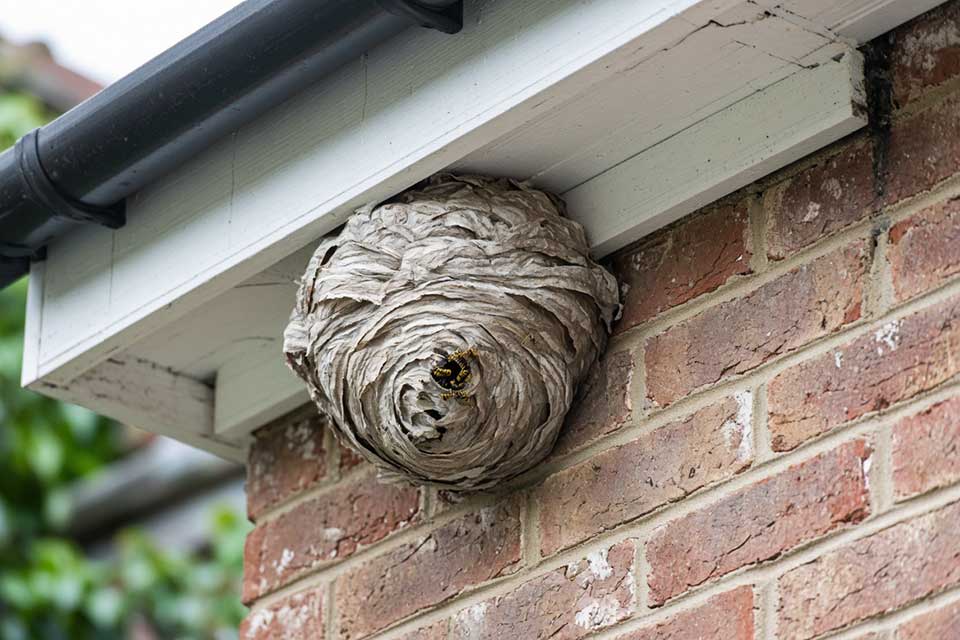
Once sustained cold has ended the colony, the old nest is an empty shell. The colony generally does not reuse it next year, according to University of Maryland Extension.
Other insects may shelter in the old paper, as the Colorado State University bald-faced hornet sheet notes.
A spot that suits wasps, though, may attract a new queen the following spring. University of Kentucky guidance points the same way.
Taking down the old nest will not guarantee that no new nest appears.
Until you are sure the nest is inactive, do not walk up to it. Confirm that wasps have stopped flying through hard, lasting cold.
Per UGA Extension, removal can wait until after the colony dies.
The choice stays simple. If the nest is safely out of the way, wait.
If it is near your door, if someone in your home is allergic, or if you suspect a yellow-legged hornet, get the right help instead.
Winter is the quiet cleanup crew, so give it time.
Share this story