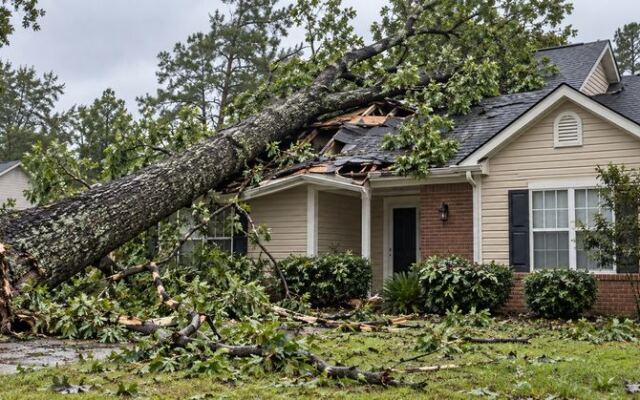
When a neighbor’s tree crashes into your South Carolina yard, the first bill usually goes to your own homeowners insurance, not to the neighbor. The neighbor only has to pay if the facts show they failed to use reasonable care.
That split between insurance and blame can save you time, money, and arguments over the fence. Here is how the pieces fit together.
The tree’s owner does not automatically pay
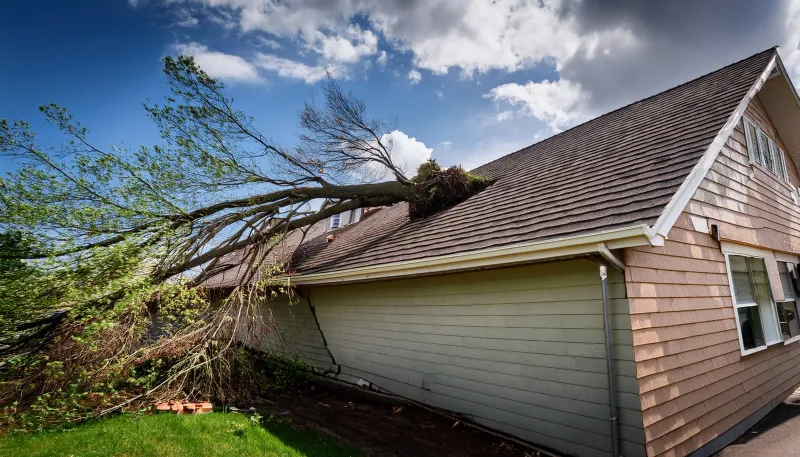
Here is the short answer. For covered damage, a homeowner in South Carolina generally starts with their own insurance company, and the neighbor may be responsible only if evidence shows negligence.
Owning the tree is not the same as being at fault when it falls.
The South Carolina Department of Insurance explains that the damaged homeowner’s policy generally covers the loss. If the neighbor was negligent, your insurer may then try to get its money back from the neighbor’s insurer.
That is the usual path, though your actual policy decides what is covered.
It helps to treat two questions separately. The first is practical: what do I do right now about the damage?
The answer is to report the loss to your own insurer. The second is legal: why did the tree fall, and did anyone fail to act reasonably?
That question takes facts, and it often takes time to sort out.
Picture a fence crushed by a neighbor’s pine after a windy night. You can file a claim for the fence without first proving anything about the neighbor.
Whether the claim is paid depends on your policy, your deductible, and any exclusions that apply.
Nothing here promises that your insurer, or the neighbor, will pay a given amount. Coverage and responsibility both depend on the details.
Gathering those details early gives you the best footing for either path.
When can a neighbor be legally responsible?
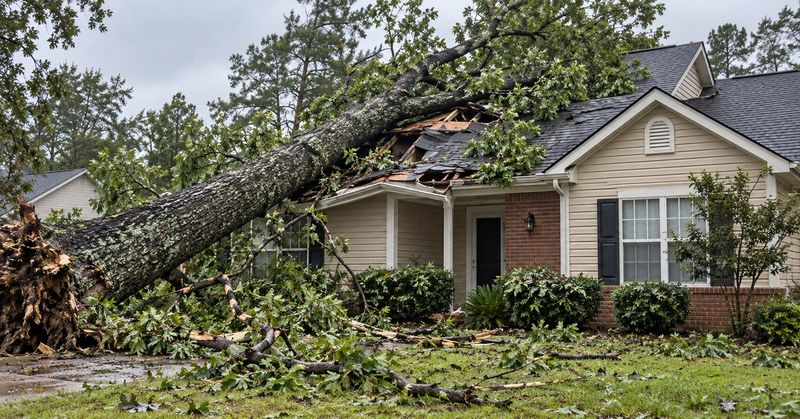
A negligence claim has three main parts: a duty, a breach of that duty, and damage caused by the breach. All three must be shown.
Simply owning the tree does not prove any of them.
South Carolina appellate courts have recognized that landowners in urban areas have a duty of reasonable care to inspect their trees and keep them safe. The key question is whether a dangerous condition could have been spotted with reasonable care.
A tree with obvious rot, a heavy lean, or large dead limbs raises that question in a way a healthy tree does not.
Think of clues you might look for after a fall. Was the trunk hollow or the bark peeling?
Were there dead branches for months? Did anyone point out a problem before the tree came down?
Photos, past messages, and an arborist’s opinion can all help show what was visible.
An unpublished Court of Appeals decision gives a useful illustration. In that case, the court found no evidence of breach where the tree was live and healthy and the plaintiffs did not show the problem could have been found by reasonable inspection.
Because it is unpublished, it is nonprecedential, so its facts do not decide other cases.
Notice can also matter. A letter or message telling a neighbor about a worrying tree may be relevant evidence.
It does not automatically make the neighbor liable, because duty, breach, and causation still have to be shown.
A storm does not settle the liability question
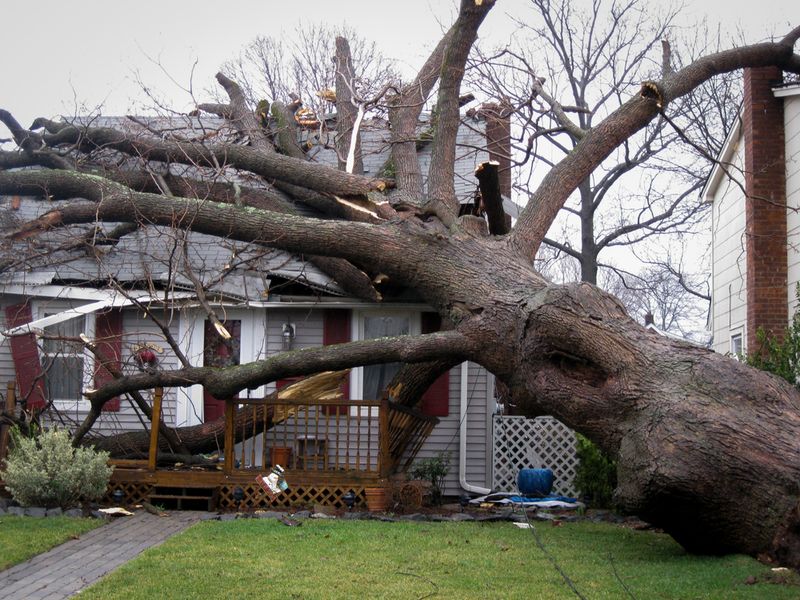
Many people assume that if a storm knocked the tree down, nobody is to blame. That is too broad.
A storm may be the cause, but it does not automatically end the question of responsibility.
South Carolina Appleseed’s disaster-law guide, Falling Trees, Flying Limbs and Loud Neighbors, describes the act-of-God defense as applying when natural forces are the sole cause of the harm. If a human failure also played a part, the defense may not fit.
The guide notes that neglecting a diseased or dead tree can contribute to a loss.
Consider two trees in the same windstorm. One is healthy and snaps in extreme winds.
The other has been dead for years, with brittle limbs and a rotting base. The storm is part of both stories, but the condition of the second tree raises more questions.
The guide is general information. It does not say that any particular neighbor was negligent.
Whether a person was at fault depends on the tree’s condition, what was visible, and what the owner knew or should have known.
That is why photos of the trunk, roots, and break point can matter later. They help show whether the tree looked sound or already had warning signs.
A storm report for the date of the fall can also give context.
Start with your own insurer
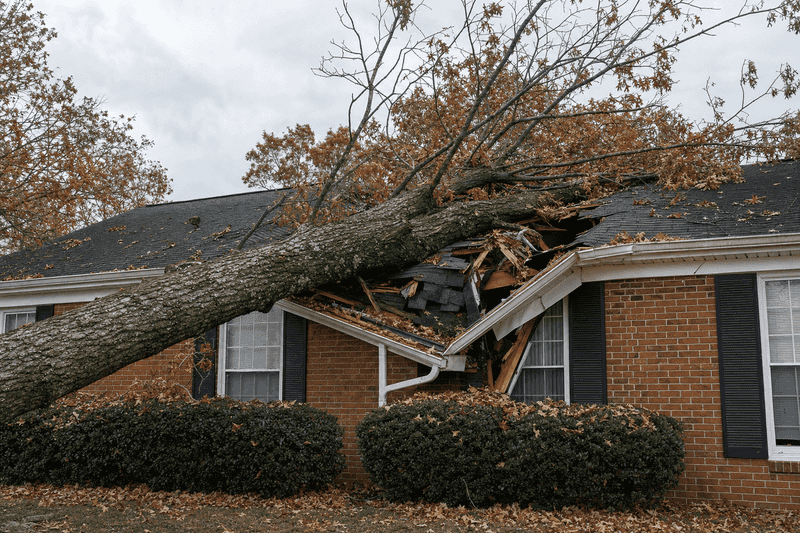
If the tree hit your house, fence, shed, or another insured structure, call your own homeowners insurer first. Ask what your policy covers for tree damage, what your deductible is, and whether any exclusions might apply.
Coverage depends on the policy wording and the circumstances, so there are no guarantees.
The South Carolina Department of Insurance notes that your insurer may seek reimbursement from the neighbor’s insurer if the neighbor was negligent. This is called subrogation.
If that effort succeeds, the insurer may also recover your deductible, though that outcome is not certain.
The Insurance Information Institute offers a helpful overview of how tree-damage claims commonly work under homeowners policies. Reading it before your call can help you ask sharper questions.
Report the loss promptly, as the department’s claims guidance recommends. Keep notes on who you spoke with and when.
Remember that the claims process and the blame question are different. Your insurer can handle your claim without deciding the neighbor was at fault.
A neighbor’s possible negligence also does not guarantee that their insurer will pay, since that takes evidence and a coverage decision.
Tree removal has separate coverage limits
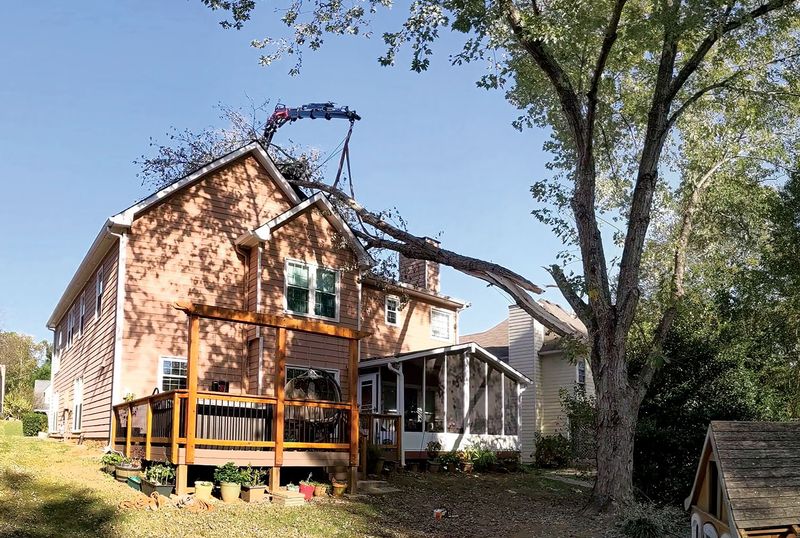
Fixing a roof or fence is one cost. Hauling away the tree is another, and policies often treat them differently.
Your claim for damage may be handled under one set of rules while removal falls under a smaller limit.
The South Carolina Attorney General’s Office, relaying insurance guidance, says policies may pay up to $1,000 in reasonable removal expenses, with a cap of $500 per tree. Those numbers are possible limits, not promised benefits.
Your policy wording and your circumstances control, so confirm with your insurer.
What if the tree simply landed in the grass? The Insurance Information Institute says there is generally no debris-removal coverage when a tree or limbs fall without damaging covered property.
Insurance does not pay to remove every fallen tree.
There can be exceptions. Some policies may cover a tree that blocks a driveway or an accessibility ramp.
Ask your insurer directly whether your policy has that kind of provision.
Before you hire anyone, get the removal question answered in writing if you can. Then you will know whether to expect help with the cost or plan to pay on your own.
Document the damage and stay clear of hazards
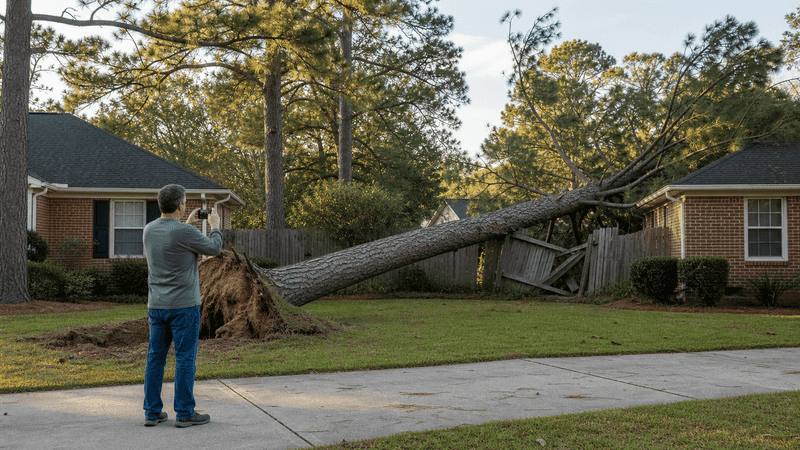
Once everyone is safe, start recording what happened. Photograph the tree, the damage, and the surrounding area before any cleanup, but only if it is safe to do so.
Save relevant messages and any arborist assessment, and report the loss to your insurer quickly, as South Carolina Department of Insurance guidance suggests.
Safety comes first. Stay away from downed or dangling power lines, and from trees that may have wires tangled in them.
The Office of Regulatory Staff advises contacting the utility about trees near power lines.
For big trees, leave the work to experts. State public health guidance says large uprooted trees should be removed by professionals.
Cutting a tree under tension or near wires is not a weekend project.
Photos of the trunk, roots, and break point can show whether the tree looked healthy or had signs of rot. That matters because any claim against the neighbor depends on evidence of negligence, such as whether a defect could have been found with reasonable care.
Ownership of the tree alone does not settle it.
Your own policy remains the first place to check for coverage. Read it for deductibles and exclusions before you decide next steps.
A tree falls in seconds, but the paperwork afterward lasts for weeks, so good photos are worth taking.
Share this story