Get the latest garden guides in your inbox →
Gardening Latest
  • General Gardening
  • Lawn Care
  • Plant Care
  • Composting
  • Soil Health
  • Backyard
  • Garden Muse Magazine
  • General Gardening
  • Lawn Care
  • Plant Care
  • Composting
  • Soil Health
  • Backyard
  • Garden Muse Magazine
  • News
  • Gardening Calendar
  • Garden Structures
  • Vegetable Garden
  • Vertical Garden
  • Raised Beds
  • Hydroponics
  • General Equipment
  • Community Gardens
Garden Themes
  • Spiritual Garden
  • Hydroseeding
  • Seeding and Laying Sod
  • Artificial Grass
  • Lawn Care Equipment
  • Plants
  • Trees
  • Planting Tools
  • Composting Basics
  • Fertilizer
  • Alternative Growing Mediums
  • Front Yard
  • Backyard Activities
  • Landscaping
Gardening Latest

Explore by state

Which state is your garden in?

Currently viewing Delaware

All states

Northeast

  • Connecticut —
  • Delaware 25
  • Maine —
  • Maryland 11
  • Massachusetts 27
  • New Hampshire —
  • New Jersey 11
  • New York 20
  • Pennsylvania 20
  • Rhode Island —
  • Vermont —

Southeast

  • Alabama 10
  • Arkansas —
  • Florida 11
  • Georgia 11
  • Kentucky 25
  • Louisiana 10
  • Mississippi —
  • North Carolina 9
  • South Carolina 24
  • Tennessee 7
  • Virginia 10
  • West Virginia —

Midwest

  • Illinois 10
  • Indiana 12
  • Iowa 24
  • Kansas —
  • Michigan 11
  • Minnesota 9
  • Missouri 9
  • Nebraska —
  • North Dakota —
  • Ohio 11
  • South Dakota —
  • Wisconsin 25

Southwest

  • Arizona 10
  • Colorado —
  • Nevada —
  • New Mexico —
  • Oklahoma —
  • Texas 9
  • Utah —

West

  • Alaska —
  • California 10
  • Hawaii —
  • Idaho —
  • Montana —
  • Oregon —
  • Washington —
  • Wyoming —

No state matches that search.

Site menu

Gardening Latest
  • General Gardening
    • News
    • Gardening Calendar
    • Garden Structures
    • Vegetable Garden
    • Vertical Garden
    • Raised Beds
    • Hydroponics
    • General Equipment
    • Community Gardens
    Garden Themes
    • Spiritual Garden
  • Lawn Care
    • Hydroseeding
    • Seeding and Laying Sod
    • Artificial Grass
    • Lawn Care Equipment
  • Plant Care
    • Plants
    • Trees
    • Planting Tools
  • Composting
    • Composting Basics
  • Soil Health
    • Fertilizer
    • Alternative Growing Mediums
  • Backyard
    • Front Yard
    • Backyard Activities
    • Landscaping
  • Garden Muse Magazine

Explore

  • About GardeningLatest.com
  • Contact Us

Get the latest from the garden

New guides on lawn care, plants and backyard projects, sent when they go up.

Subscribe →

Follow

  • Facebook
  • X
  • Pinterest
  • YouTube
Delaware Gardening

That Giant Flower Stalk on Your Delaware Rhubarb Is Telling You Something, and Here’s Whether to Cut It

That tall stalk shooting up from your rhubarb is a flower stalk, also called a seed stalk, and if you want…

OP

By Owen Pruitt

November 24, 2026 · 6 min read

That Giant Flower Stalk on Your Delaware Rhubarb Is Telling You Something, and Here’s Whether to Cut It
That Giant Flower Stalk on Your Delaware Rhubarb Is Telling You Something, and Here's Whether to Cut It

That tall stalk shooting up from your rhubarb is a flower stalk, also called a seed stalk, and if you want to harvest rhubarb, you should cut it off near the base. It is a normal part of how the plant grows, and it does not mean your rhubarb is sick.

Flowering also does not make the stalks you eat poisonous. Here is how to tell what you are looking at, what to do about it, and when it is fine to leave it alone.

At a glance

Where
Delaware Gardening
Hardiness zone
7 0 to 10°F
Read
6 minutes
Published
November 24, 2026

That tall stalk is part of rhubarb’s reproductive cycle
That tall stalk is part of rhubarb’s reproductive cycle
© Gardener’s Path

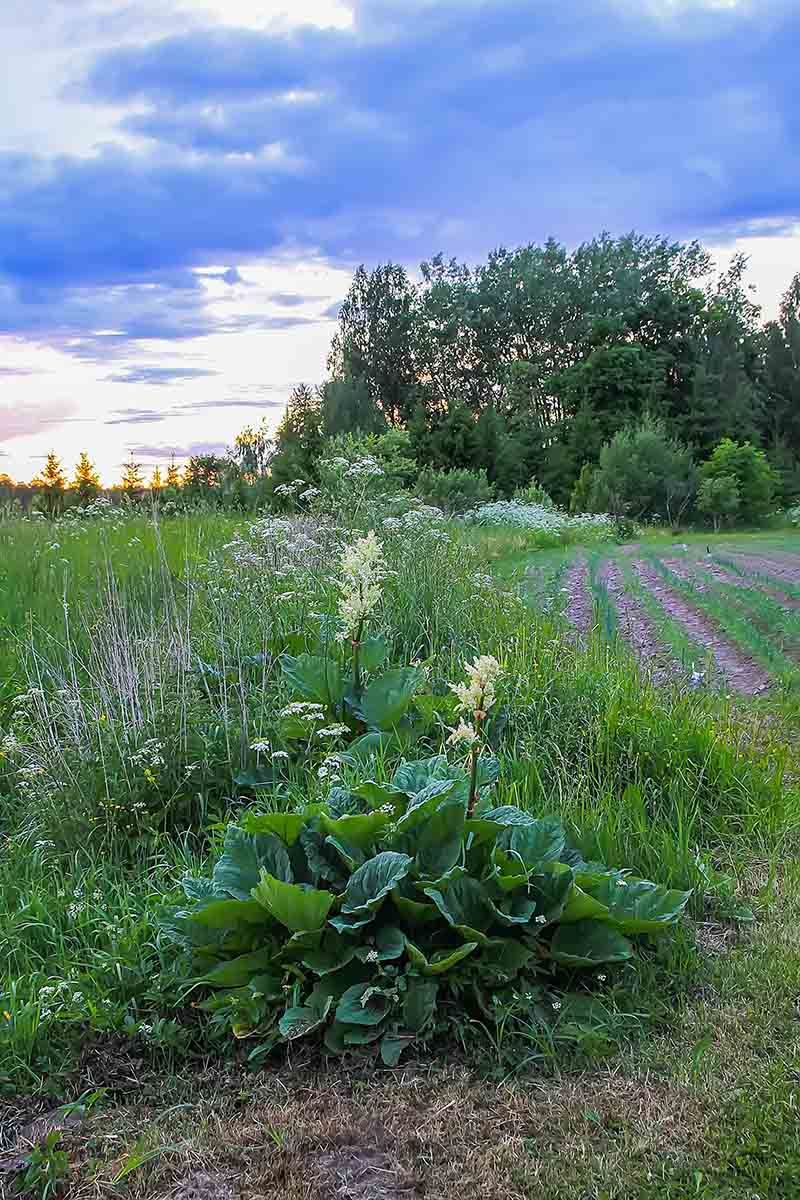
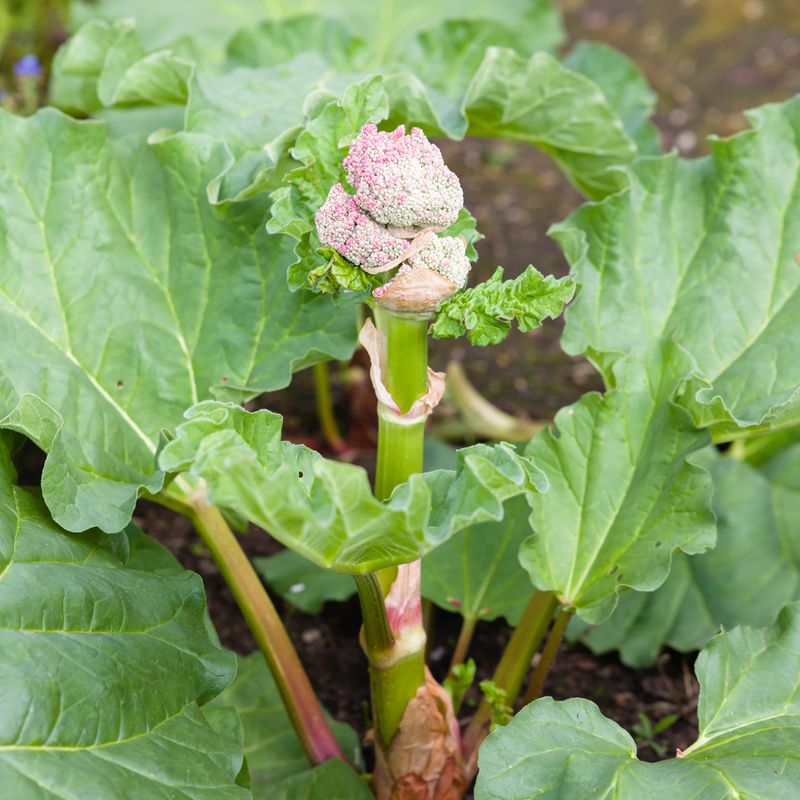
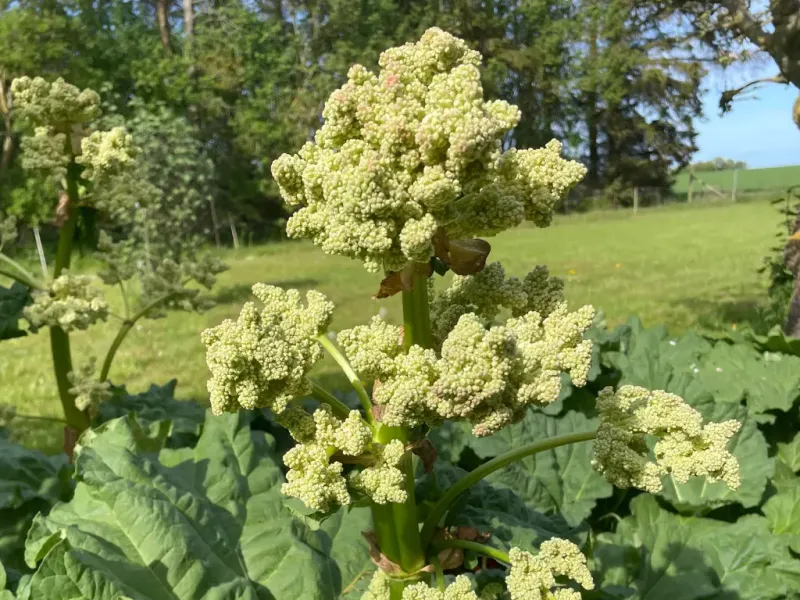
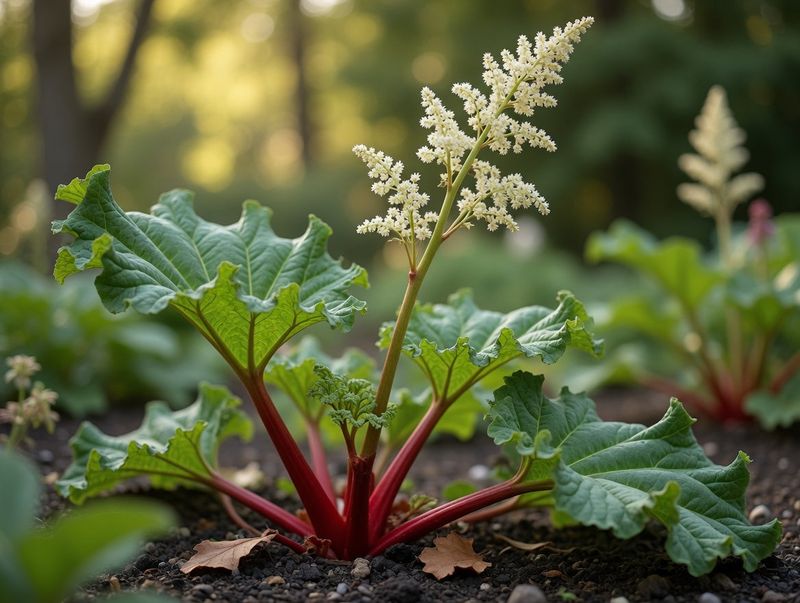
Gardeners often spot it first thing in spring or early summer: one thick stalk climbing well above the leaves, topped with a knobby bud that opens into a puffy cluster of tiny creamy flowers. That is a rhubarb flower stalk, sometimes called a seed stalk.

Making flowers and seeds is simply part of the plant’s reproductive cycle.

The biggest worry most people have is that something has gone wrong. A flower stalk on its own is not a sign of disease.

Plenty of healthy plants send one up, and Purdue Extension’s rhubarb guidance treats it as normal growth rather than a problem to panic over.

It helps to know how to tell the flower stalk apart from the stalks you cook with. The edible leafstalks grow from the crown and each one ends in a big, wrinkled leaf.

The flower stalk is thicker and rounder, often looks hollow or ribbed, and carries a budding flower head instead of a leaf.

Once you can spot the difference, you can relax and decide what you want from the plant. Whether to cut the stalk depends on your goal, and the next section covers that choice.

Cut the flower stalk if leafstalk harvest is your goal
Cut the flower stalk if leafstalk harvest is your goal
© Gardening Know How

If you grow rhubarb for pie, sauce, or jam, take the flower stalk off. Cut it as close to the base as you can, or pull it away, whichever works for your plant.

Go slowly so you do not nick or damage the crown, which is the part that produces next year’s growth.

If the stalks looked good and tasted fine before the flower stalk appeared, flowering by itself is not a reason to throw them out.

Extension advice is to remove the stalk at its base, and Penn State Extension adds a useful reminder: check the plant again later. Rhubarb can send up another stalk after you remove the first, so a quick look every week or two keeps you ahead of it.

The usual reason for cutting is about energy. Making flowers and seeds uses resources the plant could otherwise put toward leaf growth or building up reserves, which is the general rationale given by Purdue.

Keep your expectations realistic, though. Removing one stalk does not promise bigger or more leafstalks.

Think of it as a sensible bit of garden housekeeping that points the plant toward the part you want to eat, not a guaranteed way to boost your harvest.

A flower stalk cannot tell you why the plant bloomed
A flower stalk cannot tell you why the plant bloomed
© Garden Nursery

Several things can nudge rhubarb into flowering, and the stalk itself does not say which one is at work. Purdue lists plant maturity, cultivar, heat, drought, and poor nutrition.

Illinois Extension adds crowding, old plants, and low fertility to the list.

Some named varieties also flower more readily than others, so a plant may bloom simply because of what it is. A clump that has sat in the same spot for many years may flower for a different reason than a younger plant in a dry, hot season.

Looking at the stalk will not sort those out.

That is why it is better not to blame stress alone, and not to point at Delaware weather. The general guidance does not tie flowering to any local cause, so no one can honestly say the weather in your county made your plant bloom.

What you can do is look at the conditions you control. Ask whether the clump is packed tight, whether the soil has gone a long time without feeding, and whether it dries out in summer.

Those are reasonable things to check, but treat them as possibilities, not a diagnosis.

Flowering does not make the edible stalks poisonous
Flowering does not make the edible stalks poisonous
© Pépinière.ca

You can set aside one common fear. A flowering plant does not turn its edible leafstalks toxic, according to Purdue.

If the stalks looked good and tasted fine before the flower stalk appeared, flowering by itself is not a reason to throw them out.

The real safety line runs between the leafstalks and the leaves. Rhubarb leaves are not edible and should be removed and discarded.

University of Minnesota Extension notes that the leaves contain toxic levels of oxalic acid.

When you harvest, trim the leaf off right away and toss it. That habit keeps the leaves from ending up in the kitchen by accident.

If a plant has been damaged by a hard freeze, play it safe and discard any stalks that look soft or limp. Extension sources do not fully agree on what happens inside frozen plants, so the careful move is simply to skip material that has turned mushy.

Young plants still need time to establish
Young plants still need time to establish
© MyGardenLife

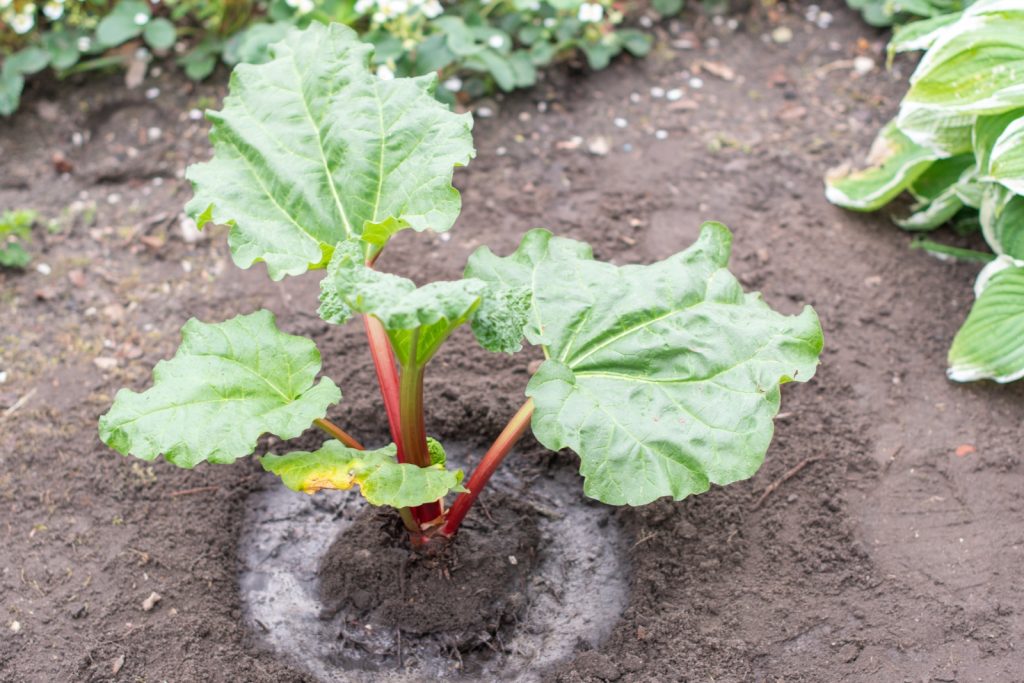
A newly planted rhubarb needs to build strength before it gives you much. The advice from South Dakota State Extension is to skip harvesting in the first year, then keep harvests light while the plant settles in.

Pulling too many stalks from a young plant can weaken it. Leaves are how the plant gathers energy, so taking most of them leaves little to store for next season.

This is also where mix-ups can happen. If a young plant sends up a tall stalk, do not treat it as a bonus stalk to pick.

The flower stalk is not the edible part, and its arrival is no cue to harvest heavily.

Instead, look for the true leafstalks with leaves attached, and leave most of them in place. Patience in the early years usually means a sturdier plant later, which is a better trade than one big first pull.

Leave the flowers when they suit your garden
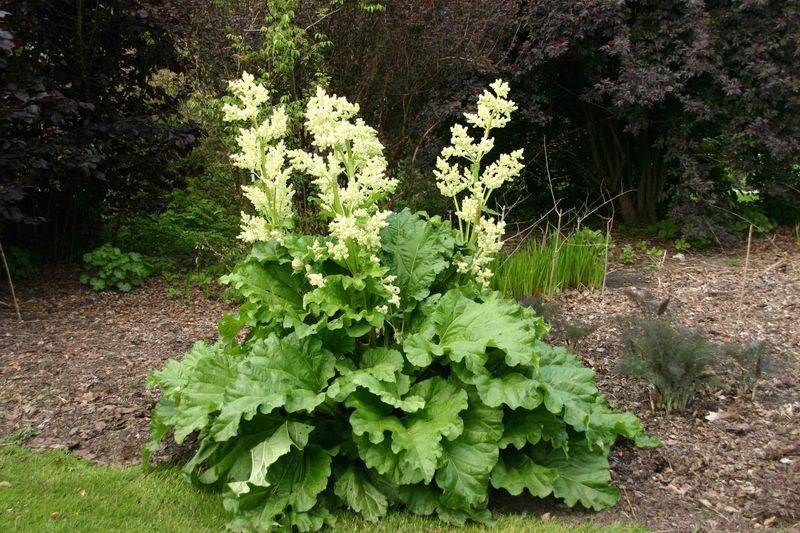
Leave the flowers when they suit your garden
© Laidback Gardener

Not every gardener needs the flower stalk gone. Rhubarb blooms are tall, feathery, and surprisingly showy, and some people simply enjoy them.

Others want to collect seed. Leaving the flowers is a reasonable choice in either case.

If you would like the show but not the seeds, Purdue notes you can let the plant flower and then remove the stalks afterward to prevent seed from forming.

So the right call comes down to what you want from the plant. Cut the stalk early if leafstalks are the goal.

Let it bloom if you value the look. Keep it through seed set if you want to save seed.

No single choice is best for everyone, and none comes with a promised yield.

Either way, your rhubarb is doing what rhubarb does. A tall stalk is a signal, not a verdict.

Share this story
OP

Written by

Owen Pruitt

More from Owen Pruitt →

About Gardening Latest

Gardening Latest provides in-depth guides to maintaining and enhancing your garden and backyard. Learn how to make the most of the space you have and create a beautiful garden.

More about us →

Latest stories

  • Illinois GardeningCopperheads, Timber Rattlesnakes, And Brown Recluses All Turn Up In Illinois Yards, So Here’s How To Tell Them Apart

    Copperheads, Timber Rattlesnakes, And Brown Recluses All Turn Up In Illinois Yards, So Here’s How To Tell Them Apart

    4 min ago
  • Louisiana GardeningFrom Cottonmouths To Brown Recluses, Here’s How To Identify The Venomous Creatures In Louisiana Yards

    From Cottonmouths To Brown Recluses, Here’s How To Identify The Venomous Creatures In Louisiana Yards

    10 min ago
  • South Carolina GardeningFor Every Seedling You Pull, Another Pops Up: The Invasive Tree Overrunning South Carolina Neighborhoods

    For Every Seedling You Pull, Another Pops Up: The Invasive Tree Overrunning South Carolina Neighborhoods

    24 min ago
  • Kentucky GardeningKentucky Has a Tiny Mammal With a Venomous Bite, and It’s Hunting Under Your Lawn All Winter

    Kentucky Has a Tiny Mammal With a Venomous Bite, and It’s Hunting Under Your Lawn All Winter

    30 min ago
  • Florida GardeningWhy That Bald Eagle Keeps Circling Over Your Florida Yard Isn’t an Accident

    Why That Bald Eagle Keeps Circling Over Your Florida Yard Isn’t an Accident

    36 min ago

Gardening by state

Stories for your state, and the hardiness zone most of it gardens in.

Keep exploring

Read next

All Delaware Gardening →
Delaware GardeningWho Actually Pays When Your Neighbor’s Tree Comes Down in Your Delaware Yard
Delaware Gardening

Who Actually Pays When Your Neighbor’s Tree Comes Down in Your Delaware Yard

2 hr ago
Delaware GardeningThat Tiny Shrew Tunneling Under Your Delaware Garden Is Actually a Venomous Mammal
Delaware Gardening

That Tiny Shrew Tunneling Under Your Delaware Garden Is Actually a Venomous Mammal

6 hr ago
Delaware GardeningYes, Delaware Has Coyotes, and Those Late-Night Howls Near Your Home Are Saying Something
Delaware Gardening

Yes, Delaware Has Coyotes, and Those Late-Night Howls Near Your Home Are Saying Something

9 hr ago

More from Delaware Gardening

  • Found a Woolly Bear Caterpillar Curled Up in Your Delaware Leaf Litter? Leave a Sheltered One Undisturbed

    Nov 22
  • Can Your Delaware Neighbor’s Tree Branches Legally Hang Over Your Yard? Here’s What the Law Actually Says

    Nov 21
Back to top

Leave a response Cancel

Your email address stays private. Required fields are marked with an asterisk.

Gardening Latest

In-depth guides to maintaining and enhancing your garden and backyard: how to make the most of the space you have, and how to make it beautiful.

  • Facebook
  • X
  • Pinterest
  • YouTube

We may earn a portion of sales from products or services that are purchased through our site as part of our affiliate partnerships with retailers.

Explore

  • About GardeningLatest.com
  • Contact Us
  • Terms and Conditions
  • Privacy
  • Editorial Note:
  • FTC Disclosure

Newsletter

New garden guides and seasonal tips, straight to your inbox.

We’ll email you a link to confirm. Unsubscribe any time.

Almost there! Check your inbox and tap the link to confirm.

© 2026 Gardening Latest. All rights reserved.

Back to top