When the air turns crisp in Missouri, people are not the only ones looking for a warm, cozy spot. Snakes, spiders, and other venomous creatures start searching for shelter before winter, and that often leads them right into backyards, garages, and woodpiles.
Most of these critters want nothing to do with you, but knowing who they are can save you a painful bite or sting. Here are ten venomous neighbors worth learning about this fall.
1. Copperhead
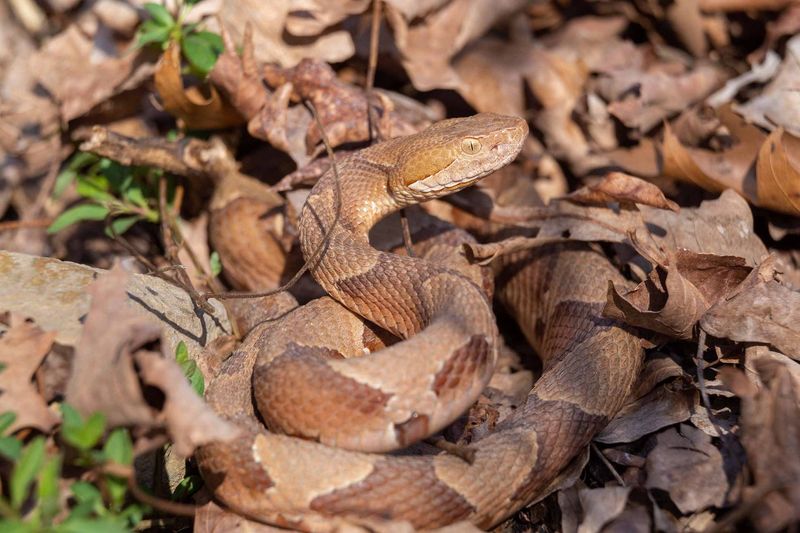
Picture yourself raking a pile of orange and brown leaves, and one of those leaves suddenly moves. That is the copperhead’s whole trick.
Its coppery, hourglass-banded body blends into autumn ground cover almost perfectly.
Copperheads are the most common venomous snake in Missouri, and they live in nearly every county. In fall, they head toward rocky hillsides to den up for winter, and suburban yards often sit right in their path.
Woodpiles, landscaping rocks, and thick mulch beds are favorite stops along the way.
The good news is that copperhead bites are rarely deadly, though they hurt a lot and need medical care. Wear gloves and sturdy shoes when doing yard work.
Fun fact: young copperheads have bright yellow tail tips they wiggle like worms to lure in frogs.
2. Timber Rattlesnake
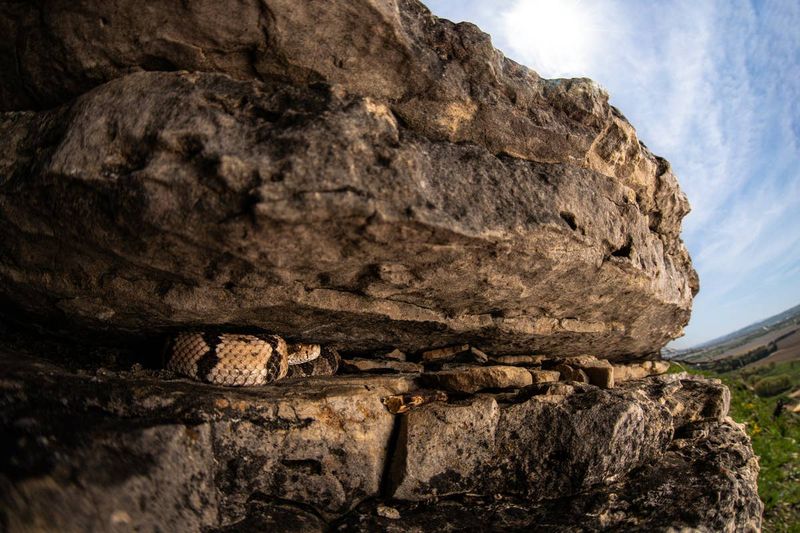
Few sounds stop a hiker faster than a buzzing rattle in the leaves. The timber rattlesnake is Missouri’s largest venomous snake, sometimes stretching past four feet long.
Dark zigzag bands and a velvety black tail make it easy to recognize, if you spot it first.
These big snakes are surprisingly calm and usually stay still, hoping you walk on by. Each fall, they travel back to the same rocky dens they have used for years, sometimes sharing them with dozens of other snakes.
Homes built near wooded bluffs and glades in the Ozarks see the most visitors.
Timber rattlers are protected in some areas, so the best plan is simply to give them space. Back away slowly and let them leave on their own schedule.
3. Cottonmouth
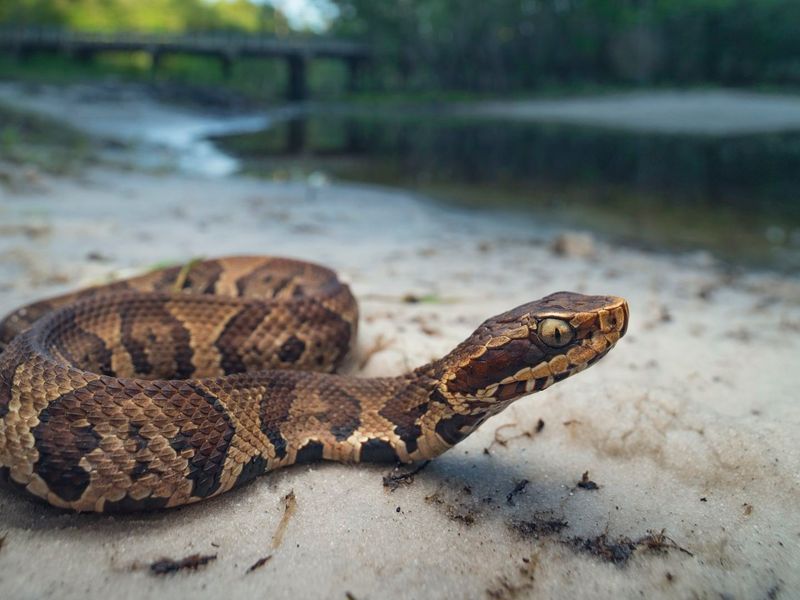
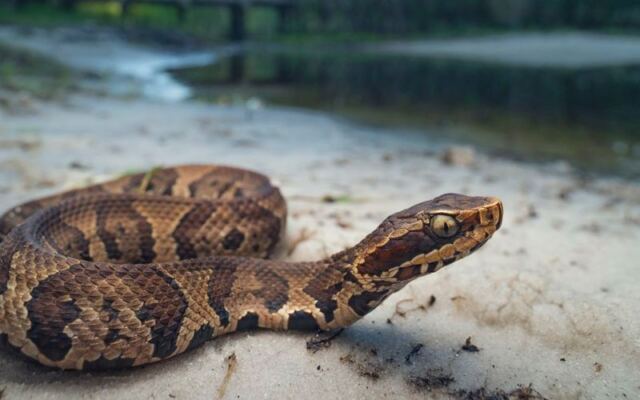
Open wide! When threatened, the cottonmouth gapes its jaws to flash a bright white mouth lining, which is exactly how it got its name.
It is a warning that says, back off now.
In Missouri, cottonmouths mostly live in the southern half of the state, especially the swampy Bootheel region. They love sloughs, ditches, and slow creeks.
As temperatures drop, they leave the water to find burrows and stumps for winter, which can bring them near farm ponds and rural homes.
Plenty of harmless water snakes get mistaken for cottonmouths, so do not assume every snake in a pond is dangerous. Still, keep your distance from any thick-bodied snake that stands its ground.
Their venom is stronger than a copperhead’s, so a bite means a trip to the hospital.
4. Massasauga Rattlesnake
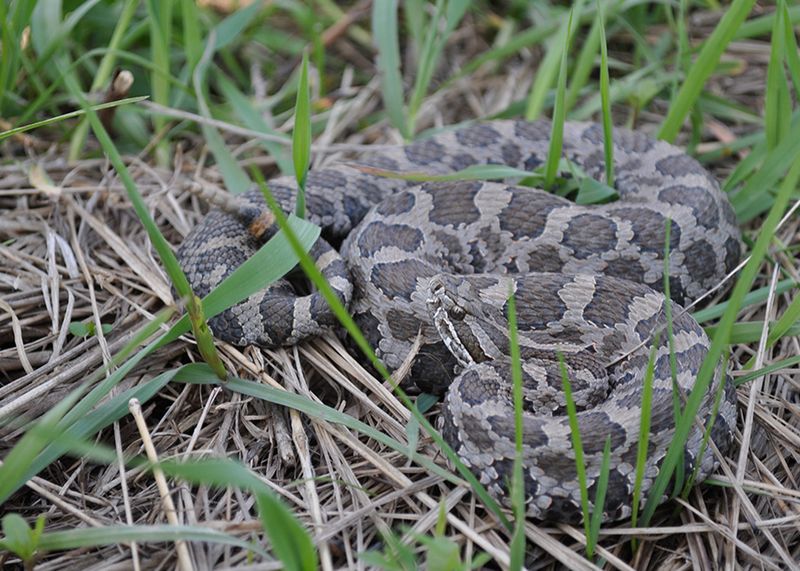
Rarity is this little rattler’s claim to fame. The eastern massasauga is one of the hardest snakes to find in Missouri, and it is listed as endangered in the state.
Massasaugas prefer wet prairies and marshy grasslands, mainly in northern Missouri near big river floodplains. They are small, usually under two and a half feet, with gray skin and chunky brown blotches.
Their rattle is tiny too, so it sounds more like a buzzing insect than a warning.
Sightings in yards are uncommon, but homes near wetlands and conservation areas can get an occasional visit in fall when the snakes look for crayfish burrows to hibernate in. If you see one, snap a photo from a safe distance and report it to the Missouri Department of Conservation.
Scientists would love to know.
5. Pygmy Rattlesnake
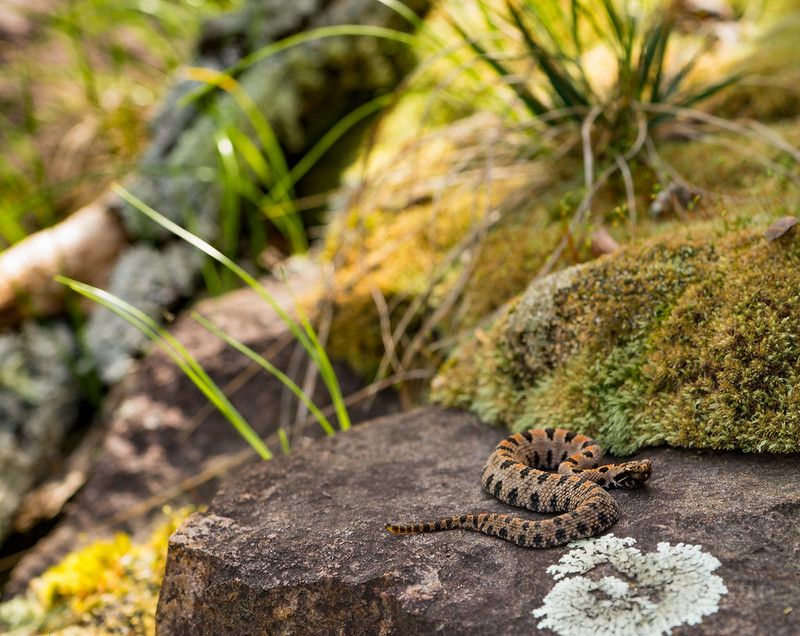
Tiny but feisty, the western pygmy rattlesnake rarely grows longer than 20 inches. Its rattle is so small that many people say it sounds like a grasshopper.
You will find pygmies in rocky glades and open woods in southern Missouri. They have gray bodies with dark spots and often a rusty orange stripe down the back.
Because they are short-tempered, they will strike quickly if you step too close.
Fall yard cleanups are when most surprise encounters happen. Lifting flat rocks, boards, or old tarps can reveal a pygmy curled underneath.
Their bite is painful but rarely serious for adults, though children and pets need fast attention. Use a rake or stick to flip objects instead of bare hands.
6. Brown Recluse Spider
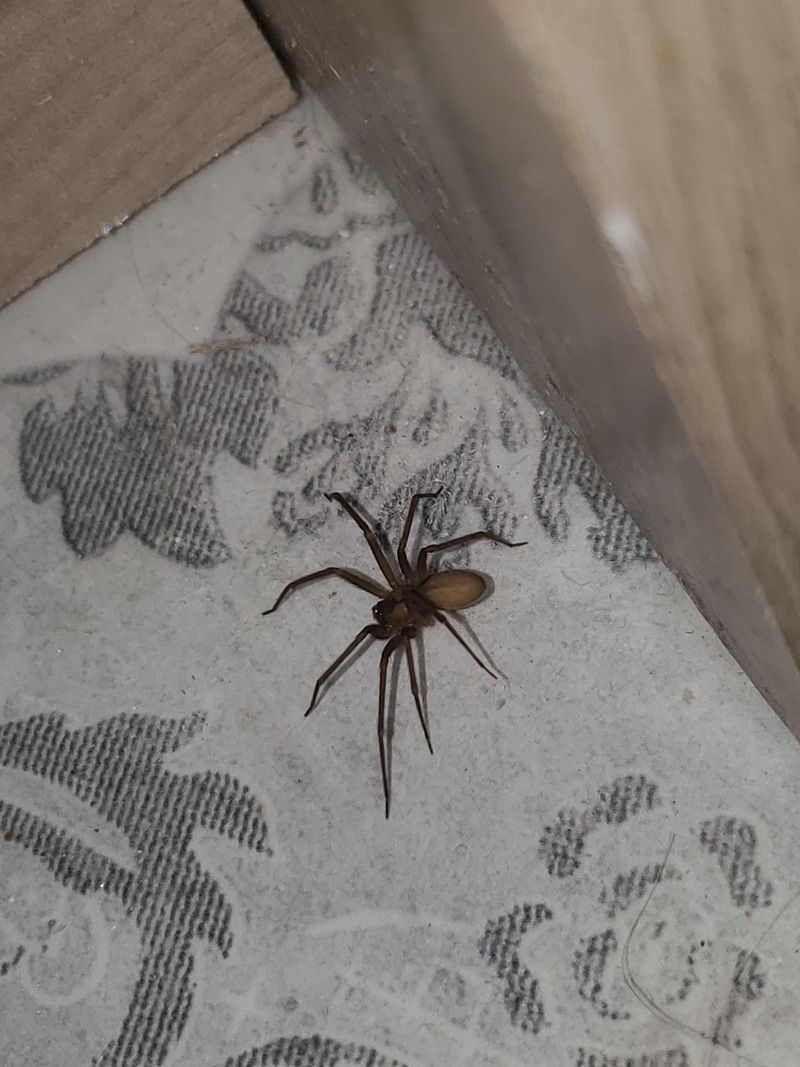
Here is a fact that surprises a lot of Missourians: brown recluses can live in homes by the hundreds without anyone noticing. Missouri sits right in the middle of their range, and they are very good at staying hidden.
Look for a tan spider with a dark violin shape on its back and six eyes instead of eight. As nights cool down, recluses move deeper into basements, closets, garages, and stored boxes.
Clothes and shoes left on the floor make perfect hideouts.
Most bites happen when someone accidentally presses a spider against their skin. Shake out gloves and shoes before wearing them, store items in sealed plastic bins, and set sticky traps along walls.
A bite can cause a nasty wound, so see a doctor if one looks red and keeps getting worse.
7. Black Widow Spider

Glossy, jet black, and marked with a red hourglass, the female black widow looks like she dressed up for Halloween. Fittingly, fall is when many people find her.
Black widows build messy, tangled webs in quiet, dark places. Under decks, inside water meter boxes, around outdoor furniture, and in stacks of firewood are classic spots.
Missouri has both southern and northern black widows.
Their venom affects nerves and can cause cramps and muscle pain, but they are shy and bite only when squeezed. Before grabbing firewood or pulling out the patio cushions for storage, take a quick look.
Did you know? Only the larger females are a concern; males are small and harmless.
8. Striped Bark Scorpion
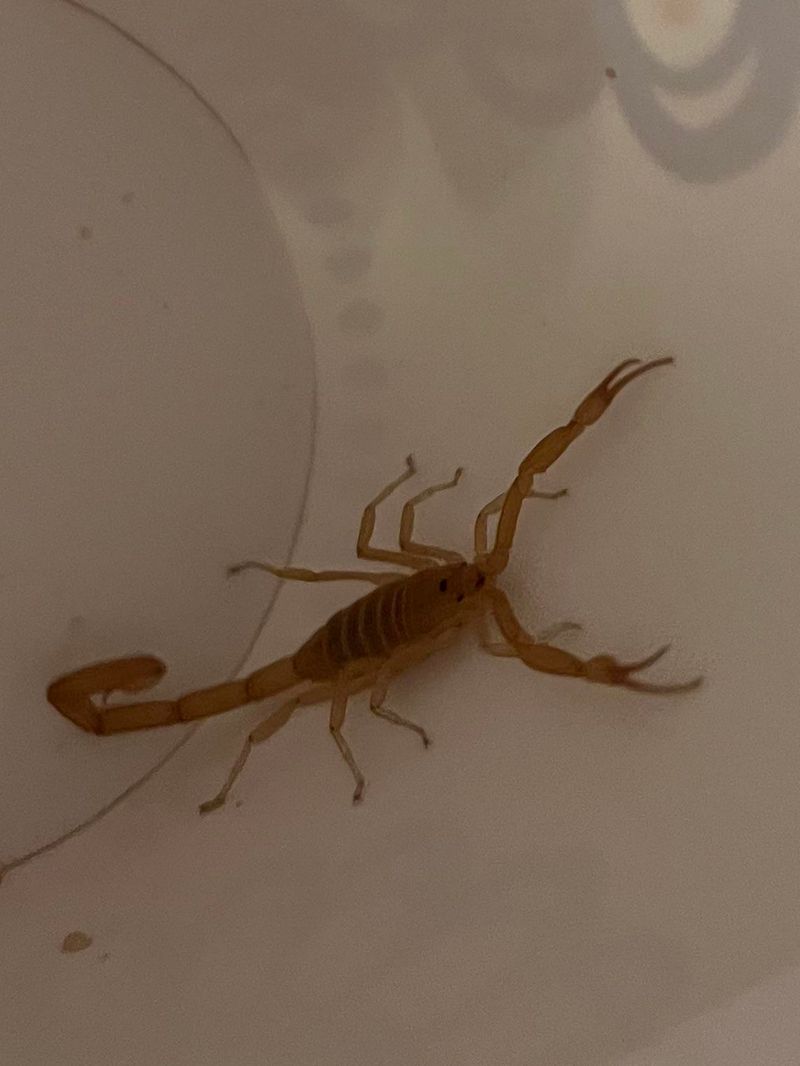
Scorpions in Missouri? Yep.
The striped bark scorpion lives in the rocky glades of southern and southwestern parts of the state, and it is the only scorpion found here.
About two inches long and yellowish tan with two dark stripes, it hunts insects at night. During the day, it hides under rocks, bark, and loose boards.
When fall arrives, some wander into homes, sheds, and garages looking for shelter.
Their sting feels like a bad bee sting, with burning and swelling, but it is rarely dangerous for healthy adults. Seal cracks around doors and foundations to keep them out.
Fun bonus: scorpions glow a bright blue-green under a black light, so a UV flashlight makes evening scorpion hunts surprisingly easy.
9. Giant Desert Centipede
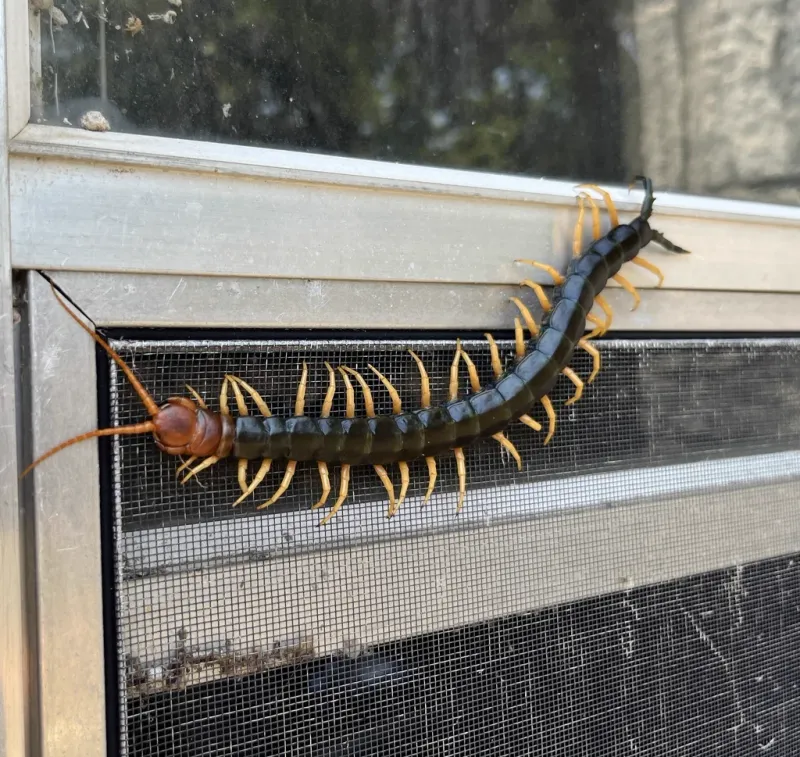
Some critters just look like trouble, and this one has the legs to prove it. Missouri’s giant centipede, related to the Texas redheaded centipede, can grow six inches long with an orange head and dark bands.
Centipedes do not bite with their mouths in the usual way. Instead, they use special front legs shaped like fangs to inject venom into insects, lizards, and even small mice.
A human bite is very painful, though it usually fades within a day.
In the cooler months, giant centipedes crawl under logs, rocks, and garden debris, and sometimes slip into garages. Keep leaf piles away from your foundation, and never pick one up.
Smaller house centipedes are common indoors too, but they are mostly harmless bug hunters.
10. Yellowjacket
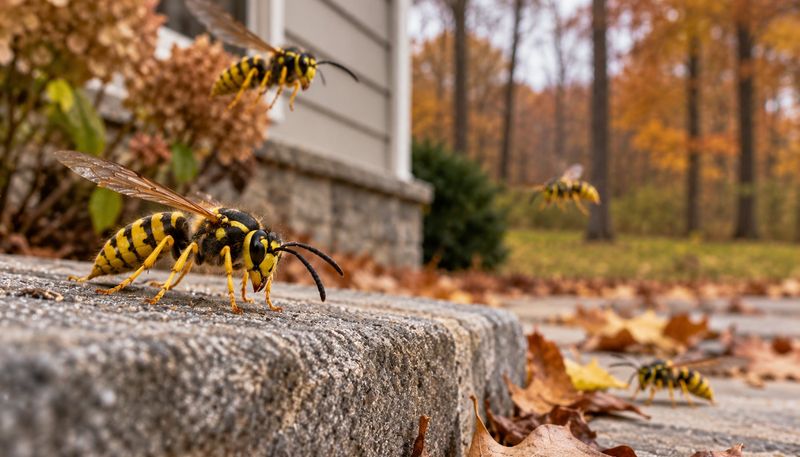
Every fall picnic seems to attract the same uninvited guest. Yellowjackets get bolder and grumpier as autumn rolls in, and they are behind more painful stings than any other critter on this list.
By late summer, their colonies can hold thousands of wasps. As flowers fade, they hunt for sugar in soda cans, rotting fruit, and trash bins.
Many nests are underground, so mowing over one can trigger an angry swarm.
Unlike honeybees, yellowjackets can sting again and again. Cover drinks outdoors, pick up fallen apples, and keep trash tightly closed.
People allergic to stings should carry their medicine. The silver lining?
The first hard freeze wipes out most of the colony, leaving only queens to sleep through winter.
Share this story