The plain answer is that the Indiana authorities reviewed do not name one person who must clean up leaves that blow next door. Fall leaves cross fences every October, and many neighbors assume there is a clear rule.
There isn’t a simple statewide one, but local codes and HOA documents can still matter. Here is what the law and HOAs actually say, and what to check first.
Indiana has no established statewide rule for ordinary leaf cleanup
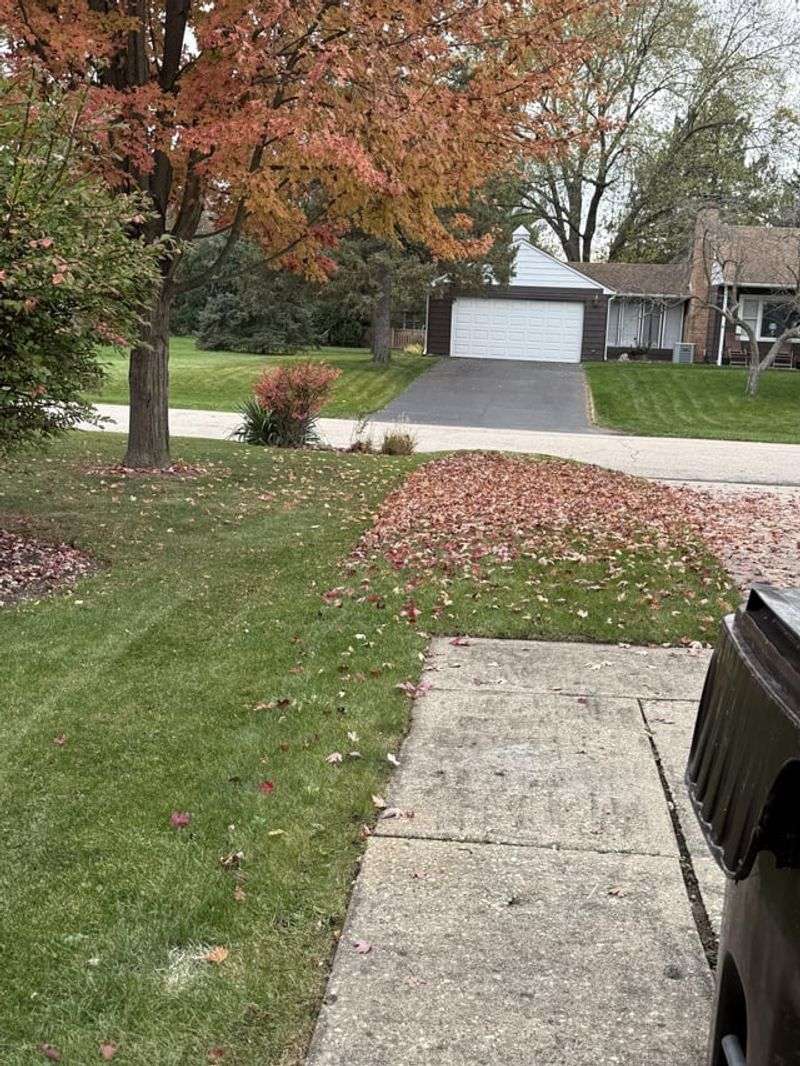
Short answer first: the Indiana authorities reviewed do not establish a specific statewide rule assigning responsibility for naturally fallen leaves. That covers both the tree owner and the neighbor whose yard receives the leaves.
No statute or court decision in the material reviewed says either side must collect leaves that drift over a property line.
You may hear confident claims from friends or online posts. One says every homeowner must clean up any leaves that land in their yard.
Another says the owner of the tree is always responsible for its leaves. The reviewed Indiana sources support neither statement as a statewide legal rule, though either may be common practical advice.
Indiana courts have written about trees, but those cases deal with something different. In an Indiana Court of Appeals decision on tree conditions, the focus was on known dangerous trees in urban or residential settings, where the risk is injury or property damage.
A rotting limb that threatens a roof is a very different problem from ordinary autumn leaf fall.
Because of that gap, those dangerous-tree decisions should not be stretched to claim a tree owner must collect leaves that fall next door. The conclusion here is limited to the authorities reviewed.
Local rules, an HOA’s documents, or the facts of a particular dispute could still change the practical answer, so the next sections cover where to look.
Deliberately moving leaves is different from leaves drifting over

Wind and gravity are one thing. A person raking or blowing a pile across the property line is another.
Natural leaf fall involves no one making a choice, while deliberately moving leaves involves a decision by a specific person.
Indiana’s civil trespass principles come up in this discussion, but their reach here is limited. In Mills v.
Kimbley, the Court of Appeals recognized that a person may commit civil trespass by causing a thing to enter another’s land. The allegations there involved other material, including an encroaching sprinkler and mulch, not leaves.
The court said those allegations raised factual questions. It did not decide whether moving leaves across a boundary is trespass, and it declined to decide the likelihood of success on the disputed material-entry theory.
So the case cannot fairly be read to say that leaf-blowing is trespass, or that it is not.
It also would be wrong to call leaf-blowing automatically criminal. The reviewed case discusses civil principles, not a leaf-specific criminal offense.
Whether a particular act breaks a rule depends on the circumstances and on any applicable local ordinance or HOA document, so a neighbor who pushes piles onto your lawn raises a different question than one whose tree simply sheds.
Check local rules for leaf handling and disposal
Cities and towns often have their own say about leaves. IDEM says local governments may set yard-waste ordinances and tells residents to contact their local agency about requirements.
That means handling, collection, and disposal rules can differ a lot from one community to the next.
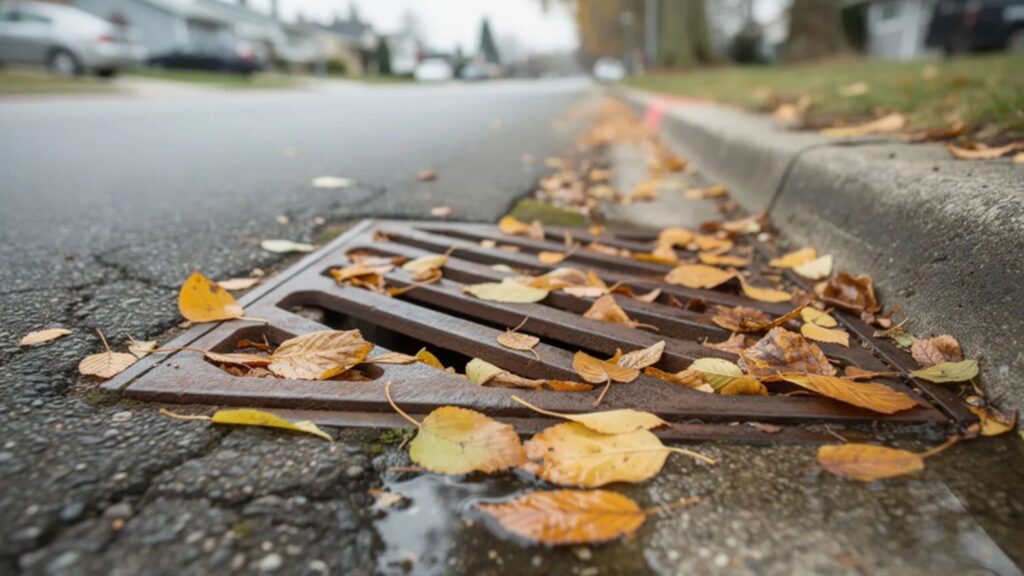
Two local examples show the kind of rules that exist. Union City’s code prohibits placing leaves in public streets or gutters except as directed for an authorized collection program.
Elkhart’s code enforcement FAQ warns that street or storm-drain disposal may create hazards, clog drains, and lead to a code violation or fine.
Both are local examples, not statewide requirements. They deal with streets and storm drains.
They do not decide who must collect naturally fallen leaves from a neighbor’s yard, so look for an explicit local rule on that point before drawing the conclusion. Check your own city or town code and collection instructions rather than assuming curbside practices are the same everywhere.
Burning is another area where assumptions go wrong. IDEM recommends composting, mulching, or chipping as alternatives, and notes that composting vegetative matter from your own property is exempt from compost-facility registration.
State rules generally prohibit open burning, subject to limited exemptions and conditions, as outlined in IDEM’s open-burning guidance. Burn-barrel burning of leaves is not allowed in Clark, Floyd, Lake, or Porter counties, or wherever a local ordinance bans it.
Burning is neither always allowed nor always prohibited everywhere.
Your HOA documents may set separate requirements

If you live in a neighborhood with an association, a second layer of rules may apply. The declaration, covenants, bylaws, and current rules can each add requirements beyond city code.
They may also give the association authority to enforce them, when their language allows it.
Indiana courts have recognized this general point. In Severance v.
Pleasant View Homeowners’ Association, the Court of Appeals dealt with governing documents creating enforceable covenants and an association’s ability to enforce them. The case supports that principle only.
It sets no blanket leaf rule.
So not every HOA has a leaf rule, and no association can automatically fine a resident over leaves. Some documents say nothing on the subject.
Others may address yard maintenance, debris, or the appearance of lots in general terms, and whether a leaf-related condition violates those words depends on the exact language and the facts.
Before deciding that you or a neighbor broke a rule, get the actual documents. Read the sections on lot upkeep, nuisances, and enforcement, and check for any rules the board has adopted more recently.
If the wording is unclear, ask the board or management company how it applies to your situation, in writing if possible.
HOA fines require a schedule and notice

Fines are their own topic. Indiana Code § 32-25.5-3-12 is described as effective July 1, 2026.
It does not apply before that date, and it does not replace an association’s governing documents.
Under the statute, fines for covered covenant violations are allowed only after the board adopts a fine schedule. The schedule must list the violations, the fine amounts, the terms for recurring fines if the association uses them, and a maximum aggregate fine.
A fine that does not follow that structure would not meet the statute’s requirements.
Notice matters too. The member must receive specified notice of the violation and the fine before a fine is assessed.
In practice, that gives a resident a chance to learn what is alleged and respond before any money is owed.
None of this means every HOA may fine residents for leaves. The association still needs authority in its own documents, and the conduct must be a covered violation.
Check both the statute and your governing documents, and ask the board whether a schedule has been adopted if you receive any fine notice.
Start by checking the rules that apply to your property
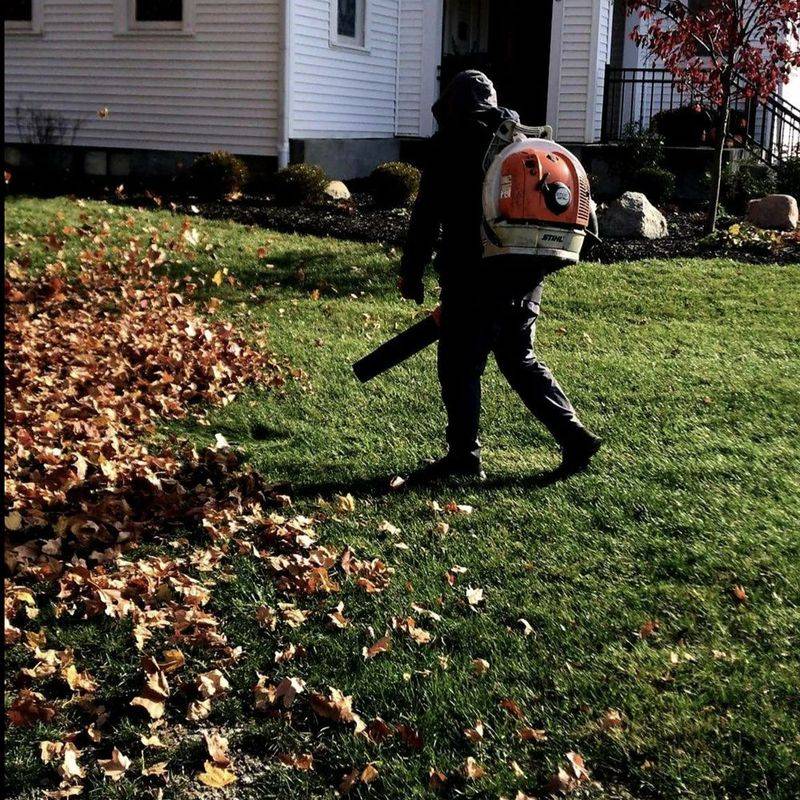
Begin by asking how the leaves got there. Did they drift over on their own, or did someone rake or blow them across the line?
Then look up your city or town’s yard-waste rules and IDEM’s yard-waste guidance, and read your HOA documents if an association covers your lot.
With that in hand, talk to your neighbor calmly and specifically, without assuming either of you is automatically at fault. Leaf season ends, but a good relationship lasts much longer than a pile of maple leaves.
Share this story