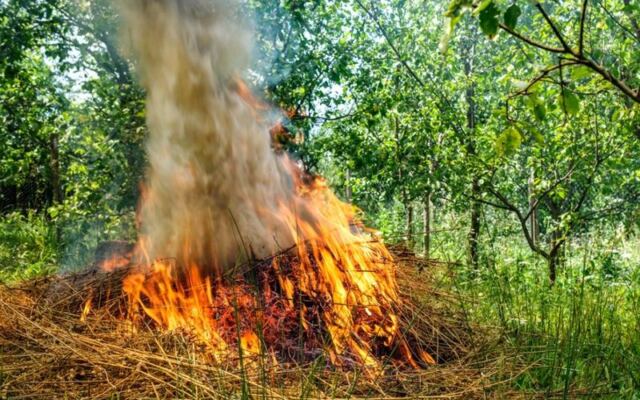
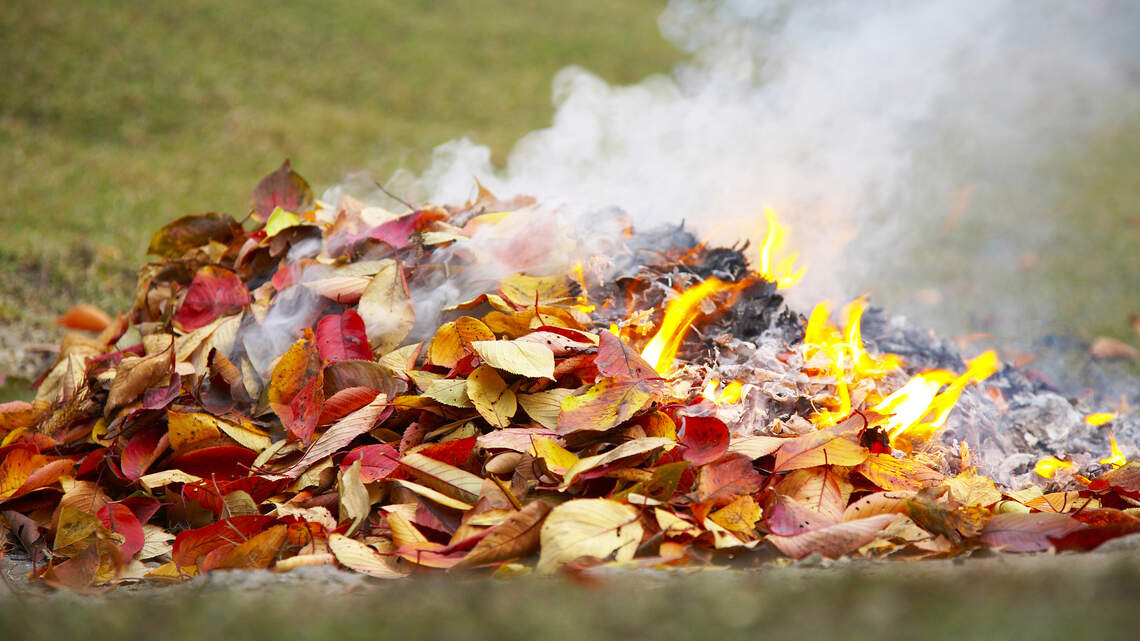
Whether you can burn leaves in Pennsylvania depends on where you live and what day it is. The state has an air rule, your town may have its own ordinance, and a county can order a temporary burn ban.
Any one of them can make a leaf fire against the rules, and fines can follow. Here is what to check first, in the order that saves you the most trouble.
Start with the three checks
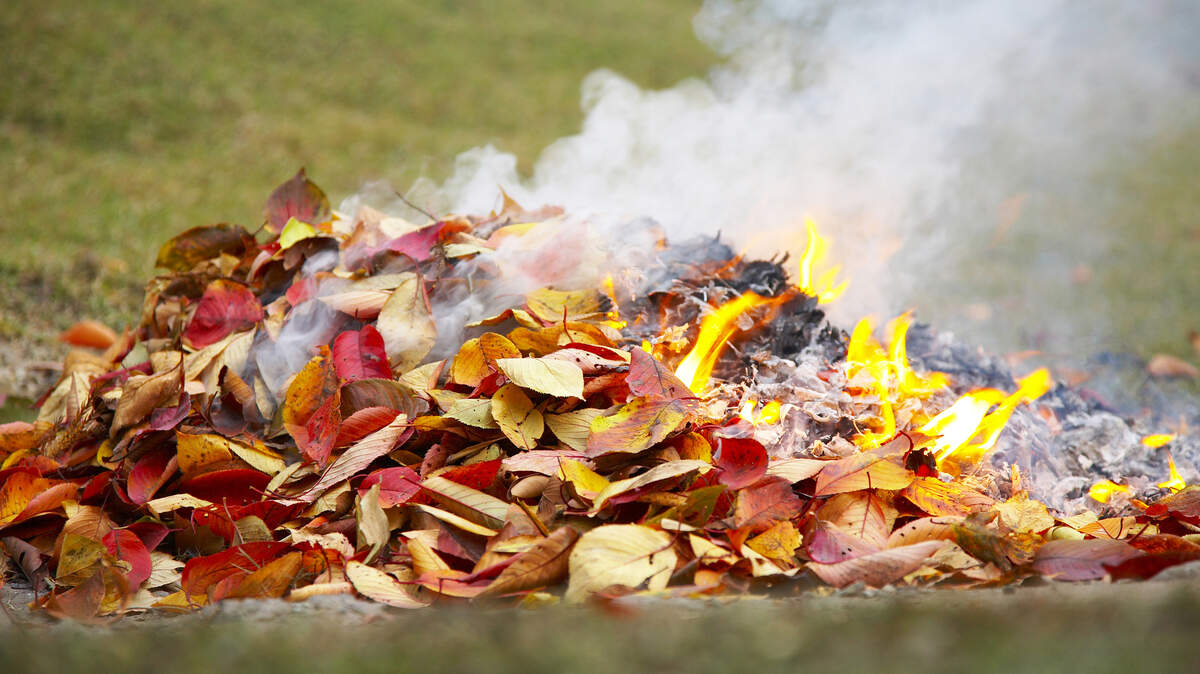
Pennsylvania has no single statewide yes-or-no answer for burning a leaf pile. Whether you may do it at your address depends on three separate checks: the state air rule, your municipality’s ordinance, and any county or state restriction that is active right now.
Each check can stop a burn on its own. The state rule might allow a fire that your township bans outright.
Your township might allow burning in general, yet a county burn ban could be in force this week. Passing one check tells you nothing about the other two.
The state rule is 25 Pa. Code § 129.14, which covers open burning.
Local ordinances are written by your township, borough, or city. Temporary restrictions come from county offices or the state, and DCNR’s burn-ban guidance says municipalities and county offices may add restrictions of their own.
A barrel or fire pit does not replace any of these checks. Putting leaves in a container does not turn a prohibited fire into a permitted one.
The rules look at the burning itself, not the hardware around it.
The sections below take the checks in a practical order: the state rule first, then your town’s ordinance, then current bans, then penalties. Fire-safety advice comes only after the legal questions are settled.
What the state air rule says about leaves
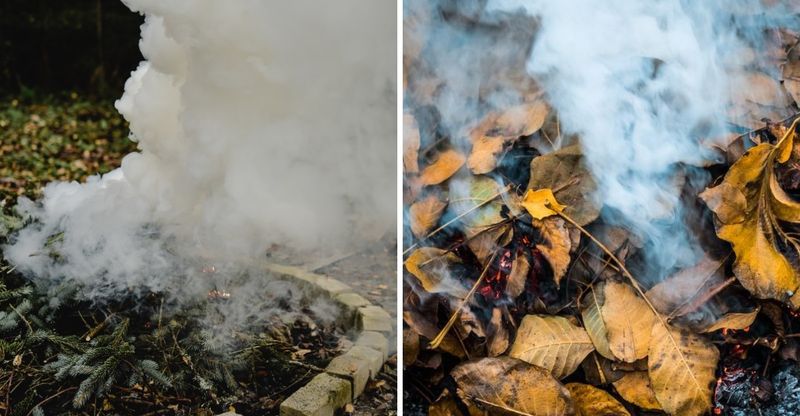
The state’s open-burning rule works on a geographic split. Under 25 Pa.
Code § 129.14, open burning is prohibited in designated air basins, subject to a list of exceptions. Outside those basins, the rule takes a different approach.
In areas outside air basins, the regulation limits burning that causes certain problems. That includes fires whose visible or smelly smoke reaches beyond your property, fires that interfere with other people’s reasonable enjoyment of their property, fires that damage property or vegetation, and fires that may harm health.
A leaf pile that smokes out the neighbors’ windows can fall into these limits even where burning is not flatly banned.
The rule also lists exceptions, and one covers certain household domestic refuse fires. Do not read that as a green light for leaves.
The regulation describes household refuse from normal occupancy, and it does not expressly name a leaf pile as an exception, so it does not clearly establish a general authorization to burn yard leaves.
That is why the state rule alone cannot give you an answer for your address. You would still need to know whether your property sits in a designated air basin, and you would still need your municipality’s ordinance and the current burn-ban status.
Treat the state rule as the first layer, not the last word.
Your municipality may set stricter rules
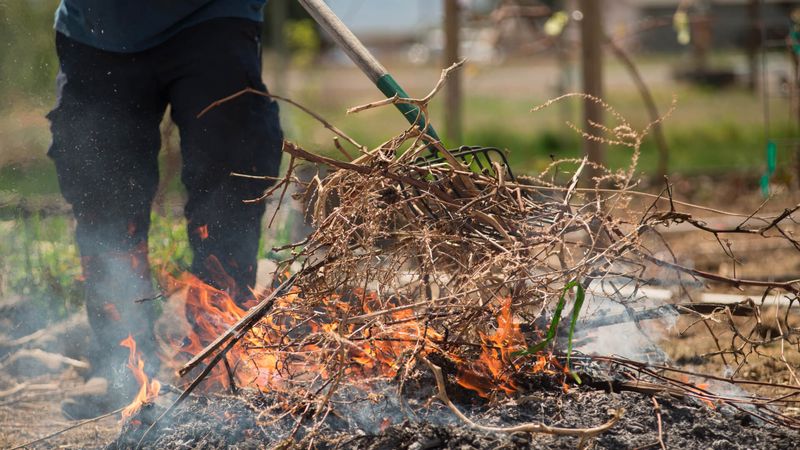
Your own town’s ordinance may be stricter than anything the state requires. Townships, boroughs, and cities can write their own open-burning rules, so a neighbor two municipalities over may live under a different answer than you do.
DEP publishes a model open-burning ordinance. It treats yard-waste burning as a possible, limited local exception, and it explains that municipalities may adopt stricter rules, including a total open-burning ban.
It is a model that towns may adapt or reject, not the ordinance automatically in force everywhere. Its sample exceptions and penalty language should not be assumed to apply in your town.
Leaf collection law adds another wrinkle. An amendment to Act 101 calls for leaf-waste collection and composting programs in specified circumstances for mandated recycling municipalities.
DEP’s grant guidance points to the same framework.
A qualifying municipality with more than 5,000 residents and a density of 500 or fewer people per square mile can be exempt from setting up that collection program if it prohibits leaf-waste burning. That is a rule about municipal programs, not a blanket statewide answer on whether individual residents may burn leaves.
So look up your municipality’s code, usually posted online or available from the township office. Search for terms like open burning, yard waste, or outdoor fires, and call if the wording is unclear.
Check for a temporary burn ban
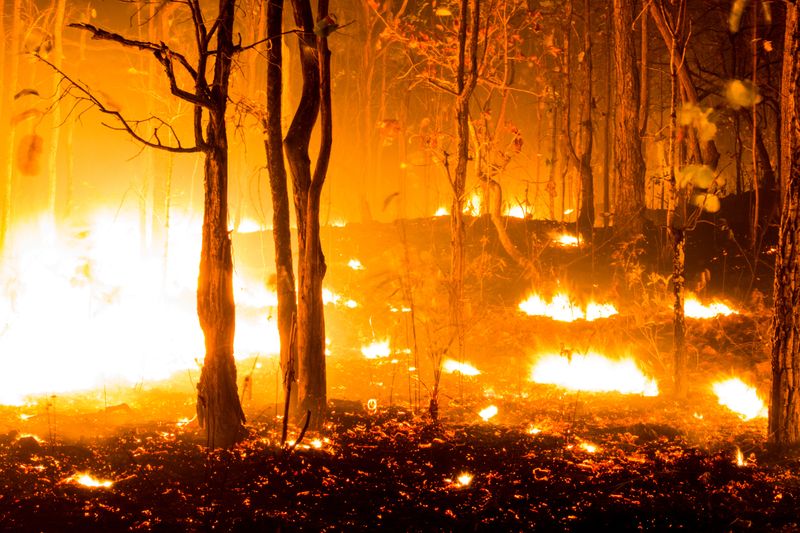
A burn ban is a separate layer from your town’s ordinance. Even if your municipality allows burning on a normal day, a county ban can shut it down for a stretch of dry weather.
Per DCNR’s burn-ban guidance, county bans generally last up to 30 days, and they can be extended for up to another 30 days. State lands restrictions or a statewide ban fall into a different category from county bans and from municipal ordinances, so one notice does not cover all three.
DCNR provides a county-ban map, and your county’s emergency or commissioner’s office can confirm the current status. Look at it on the day you plan to burn, not the week before.
An old notice or an old map screenshot can mislead you in either direction. A ban you saw last month may have expired, and a clear map from last week may not reflect a new order.
The ban definition also matters for containers. Under DCNR’s definition, open burning covers outdoor burning of leaves and other debris whether it happens on the ground or in a barrel.
A fire pit or burn barrel should not be assumed to escape a ban.
The penalty depends on the rule you break
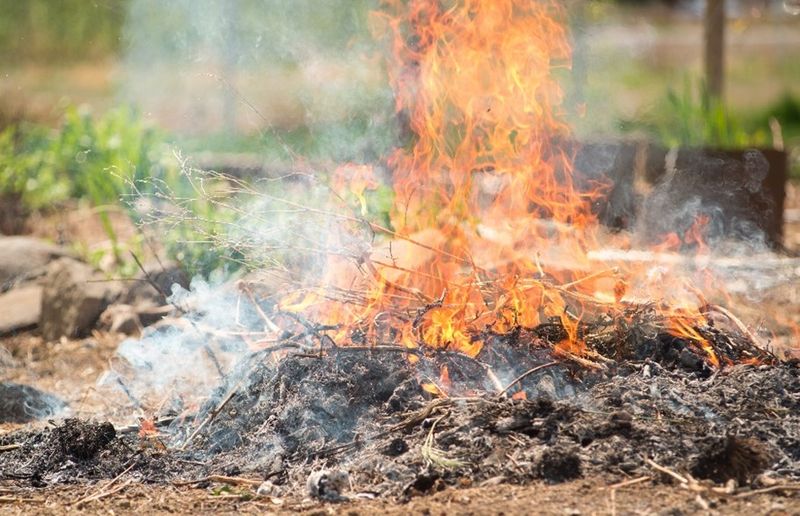
What you pay, if anything, depends on which rule you broke. A county burn ban carries one set of penalties, and a local ordinance carries its own.
For county burn-ban violations, DCNR’s burn-ban guidance lists statutory fines of up to $100 for a first offense, up to $200 for a second, and up to $300 for a third. Those are caps set for the county-ban statute.
Local penalties are separate. Cambria Township, for example, lists a graduated penalty schedule in its solid waste code for burning leaves, grass, or yard waste.
It shows that a town can set its own schedule, and yours may look quite different.
Neither schedule is the fine for every leaf-burning violation in Pennsylvania. A single universal number does not exist, and a figure you hear from a neighbor may belong to a different town or a different rule.
To learn what applies to you, read the penalty section of your municipal ordinance and note whether a county ban is active. That tells you which schedule would actually govern.
If burning is allowed, reduce the risks
Safety steps come after the legal checks, and they never make a prohibited fire legal. If burning is lawful at your address and no ban applies, these steps lower the risk.
PEMA’s wildfire guidance advises against burning in dry or windy conditions. It also says never to leave a fire unattended and to put it out with water and dirt before you walk away.
DCNR’s debris-burning flyer adds keeping water and a rake or shovel close by and making sure the fire is cold before you leave.
The stakes are real. DCNR identifies debris burning as the state’s leading cause of wildfires.
Smoke matters too. PEMA notes that smoke can affect air quality, and DEP says smoke particles can cause health effects.
DEP names children, older adults, pregnant people, and people with certain health conditions as more vulnerable to smoke, so a fire that seems minor to you may hit a neighbor harder.
You may not need fire at all. DCNR’s flyer suggests composting leaves or chipping and mulching sticks as alternatives, and both keep smoke out of the air.
Verify the rules before you light a fire
Work through the checks in order. First, identify which municipality your property is in and read its ordinance, since it may be stricter than the model DEP offers in its open-burning template.
Second, see how the state air rule applies to your location and your planned burn. Third, look up the current county and state restrictions on DCNR’s burn-ban page.
Fourth, confirm that your material and your method are both allowed. Only if every check comes back clear should you turn to the safety steps.
If any answer is unclear, a call to the township office settles it faster than a fine does. The cheapest leaf pile to deal with is the one you checked on before you struck a match.
Share this story