If a saddleback caterpillar stings you while you trim shrubs or rake leaves, act quickly and stay calm. Gently lift any leftover spines off your skin with fresh sticky tape, then wash the area with soap and water.
A wrapped cold pack can help with the pain, and the South Carolina Poison Center can give advice for your situation. Here is how to spot this caterpillar, treat the sting, and know when to get help.
How to recognize a saddleback caterpillar
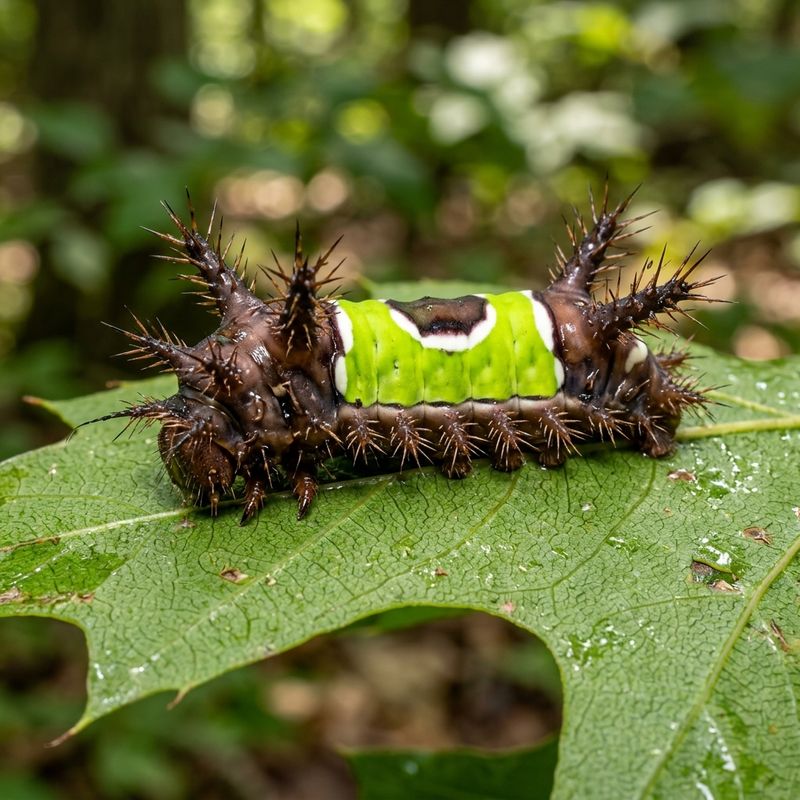
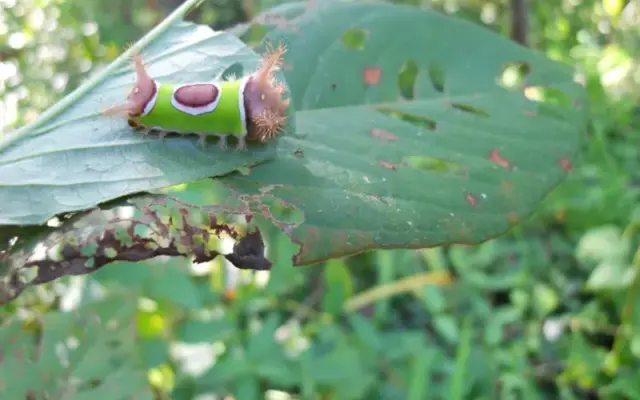
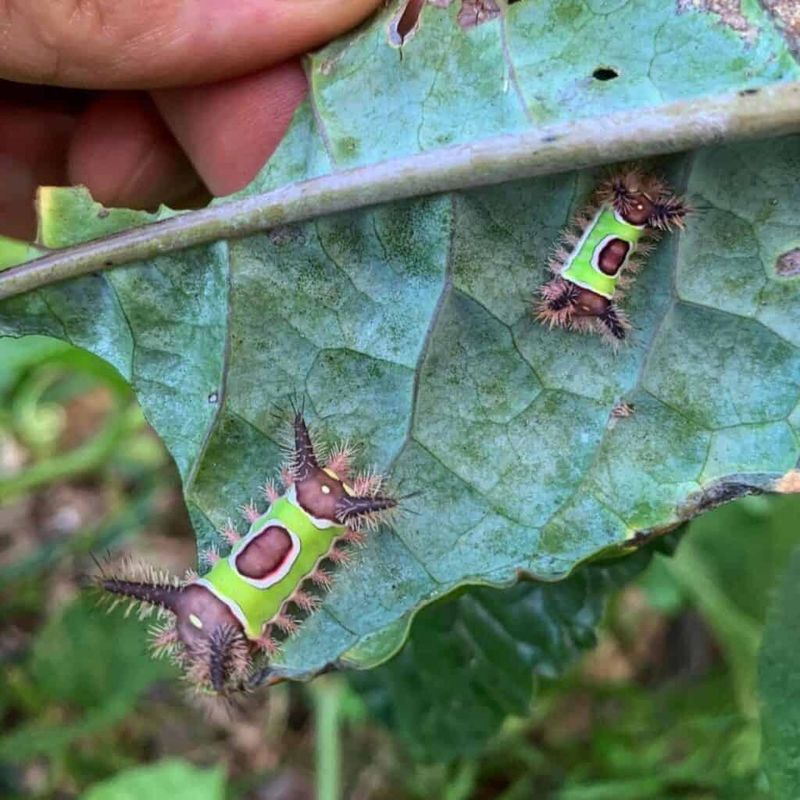
Picture a small caterpillar wearing a green blanket with a brown patch in the middle, like a saddle on a horse. That is the saddleback caterpillar (Acharia stimulea).
It also has prominent knobs at both ends that carry clusters of spines, and these spines are what cause trouble.
Saddlebacks feed on many trees and shrubs, so they can end up on the plants you trim, prune, or brush past. According to University of Florida IFAS Extension, the species is found across much of the eastern United States.
Brushing against one is a recognized way people get hurt.
The injury does not come from a bee-like stinger. It comes from contact with venomous spines, and “sting” is just the familiar shorthand.
Contact can cause burning pain right away, along with a local skin reaction. One extension source, Virginia Cooperative Extension, describes the pain as bee-sting-like and says saddlebacks are generally found on shade trees and ornamental shrubs in late summer.
That is a personal comparison, not a measure of how serious an injury is.
It helps to keep the local picture in perspective. Saddlebacks live across the eastern states, but the sources reviewed do not show how often South Carolina gardeners meet them or that fall yard work is a special risk period.
Observations of late-summer caterpillars in other states do not prove a local season.
Also, pain and redness alone cannot tell you which caterpillar was involved. Other species can cause skin reactions too, as NC State Extension notes in its saddleback profile.
Most caterpillars are harmless, so there is no need to fear every one you see.
Lift remaining spines and wash the skin
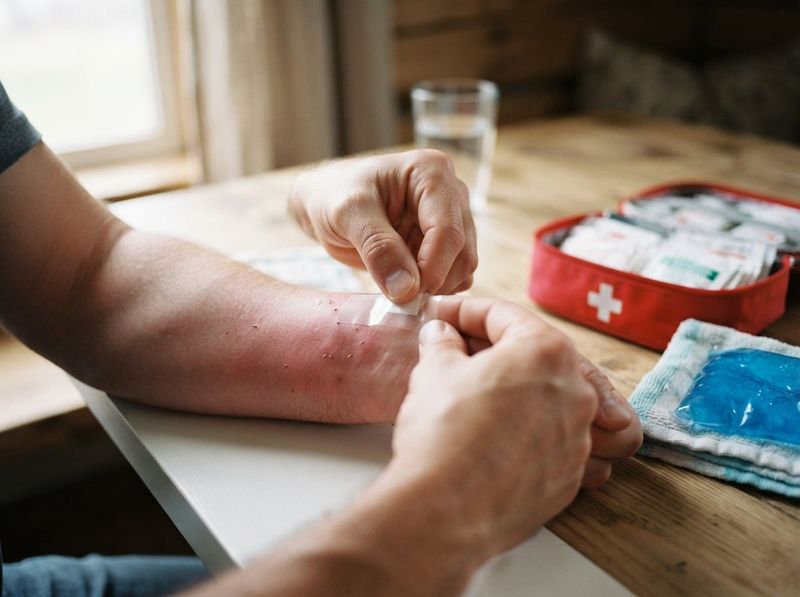
After possible contact, the first move is to stop touching the caterpillar. Do not brush it off with a bare hand, since that can push more spines into your skin.
If it is still on you, flick it away with a stick or tool, or use gloves.
Next, focus on removing any spines left behind. Poison Control stresses taking out hairs or spines and washing the skin before treating symptoms.
Press a piece of sticky tape sticky-side down over the affected area, then lift it off gently.
Use a fresh piece of tape each time and repeat a few times. Avoid rubbing or scratching, because that can work the spines in deeper.
Duct tape, packing tape, or ordinary clear tape can all do the job.
Then wash the area well with soap and water. MedlinePlus gives similar steps for caterpillar contact.
Rinse thoroughly and pat the skin dry with a clean towel.
Sources differ on whether to tape first or wash first, and the order has not been tested as a strict rule. What matters most is that spines come off and the skin gets cleaned.
If you are unsure, tape gently, wash, and then check the skin again for any spines you can still see.
Pain relief alone is not enough here. A sore, burning patch may still have tiny spines in it, and those can keep irritating the skin until they are lifted away.
Use a wrapped cold pack for comfort

Once the spines are off and the skin is clean, cold can take the edge off. A cold compress or ice pack may ease pain or swelling.
It will not remove spines, and it does not replace washing.
Always put a clean cloth between the ice and your skin. MedlinePlus suggests using ice for 10 minutes on and 10 minutes off.
That rhythm gives your skin a break and helps avoid cold injury.
A bag of frozen peas wrapped in a thin towel works well if you do not have a cold pack. Set it gently on the spot rather than pressing hard.
Stop if the skin turns very pale, numb, or more painful.
Cold is for comfort only. There is no promise that it will prevent a reaction or make it shorter.
Poison Control puts spine removal and washing ahead of symptom treatment, so keep that order of priorities in mind.
Some sources mention baking-soda paste. It is not a proven antidote and should never stand in for tape, washing, advice from poison experts, or urgent care when needed.
Know when to get medical help
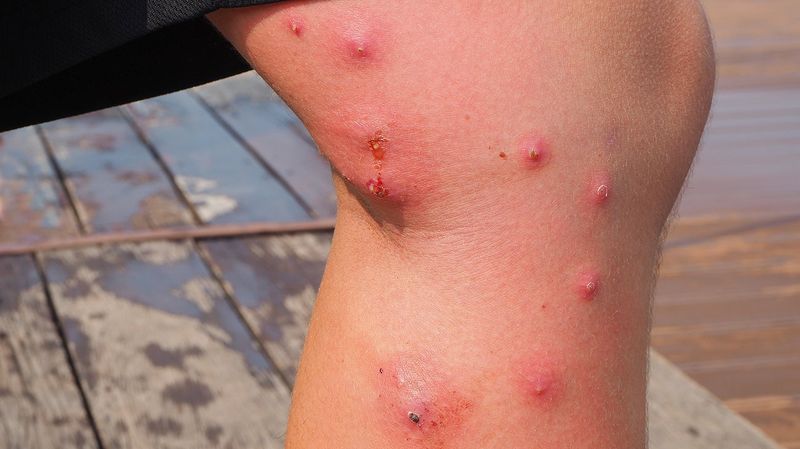
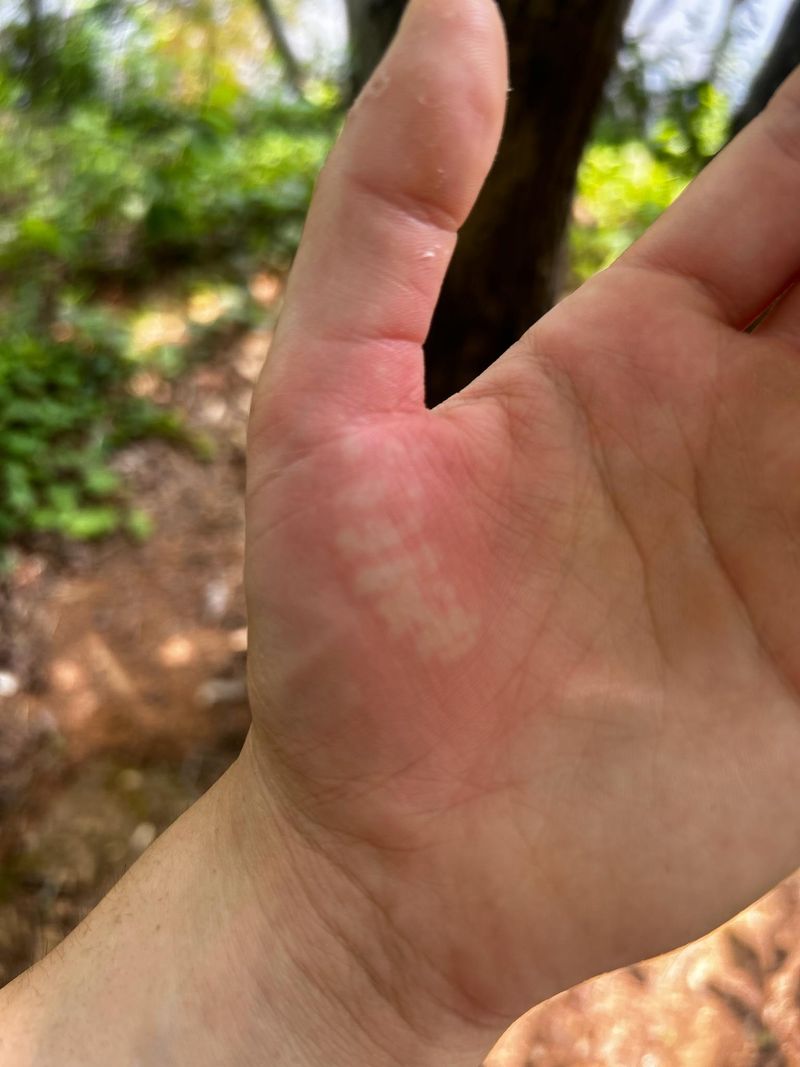
Most skin contact leads to a local reaction. That can mean burning pain, redness, swelling, welts, or blisters, as described by NC State Extension.
Reactions and how long they last vary from person to person, so there is no fixed recovery time to count on.
A painful but uncomplicated skin reaction is not an emergency by itself. Keep the area clean, avoid scratching, and watch how it changes.
If the pain is hard to manage, the redness spreads, or you are worried, call Poison Control for guidance.
Eyes need extra care. If spines or hairs get into an eye, rinse with plenty of water right away and contact Poison Control.
Poison Control advises getting medical care if eye symptoms persist, such as ongoing pain, redness, or blurry vision.
Some signs mean it is time to call 911. According to Poison Control’s emergency guidance, these include trouble breathing, collapse, seizure, or being unable to wake the person.
Severe allergic reactions are possible but rare.
If you are unsure which category you are in, make the call. Poison experts can help you decide whether home care is enough or whether someone should be seen in person.
Call the South Carolina Poison Center for advice
Keep one number handy: 1-800-222-1222. That is the South Carolina Poison Center, and it serves all 46 counties in the state.
The line is open around the clock, so you can call after dinner or on a Sunday morning.
According to the South Carolina Poison Center caregiver guide, the center is there to help with suspected exposures. A trained specialist can give advice that fits your situation, such as how bad the contact seems, how old the person is, and which symptoms are showing.
It helps to have a few details ready. Know where on the body the contact happened, what you have done so far, and whether the person has allergies or other health concerns.
If you can safely snap a photo of the caterpillar from a distance, that may help too.
The Poison Center is a source of guidance, not a replacement for emergency care. If someone has trouble breathing, collapses, has a seizure, or cannot be woken, call 911 first, as Poison Control’s emergency page explains.
Avoid contact with spiny caterpillars outdoors
The simplest sting to treat is the one that never happens. Do not touch, brush off, crush, or handle a spiny caterpillar with bare hands.
Crushing one or swatting it can leave more spines in your skin.
If one is in your way, leave it alone or move around it. When it must be moved, use a tool such as a stick and keep your hands clear.
Poison Control recommends avoiding handling and keeping children from picking up spiny caterpillars.
Talk with kids about looking without touching. Fuzzy or spiky caterpillars can look cute, but some cause painful reactions.
A simple rule helps: if it has spines or hairs, it stays on the plant.
Dress for the job as well. MedlinePlus notes that protective clothing can help.
Wear gloves, long sleeves, and long pants when you trim shrubs, pull weeds, or rake where caterpillars may be present.
These habits lower your chances of contact but cannot remove every risk, and they do not mean fall is a proven peak season in South Carolina. Most caterpillars you meet will be harmless.
A little caution and a good pair of gloves go a long way toward keeping yard work boring, which is exactly how it should be.
Share this story