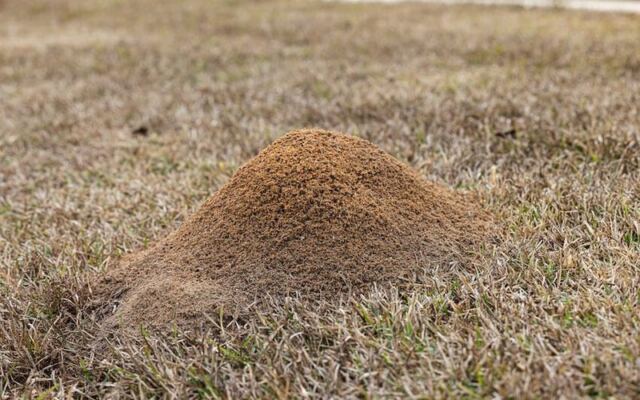
A fresh, fluffy mound that shows up after a South Carolina rain is a sign that ants have been moving soil. That is the message, and it is a smaller one than many people expect.
It does not prove the ants just moved in, and it does not say anything certain about your drainage. Here is what the mound can tell you, what it cannot, and how to decide whether to act.
Rain can make mound repair more visible
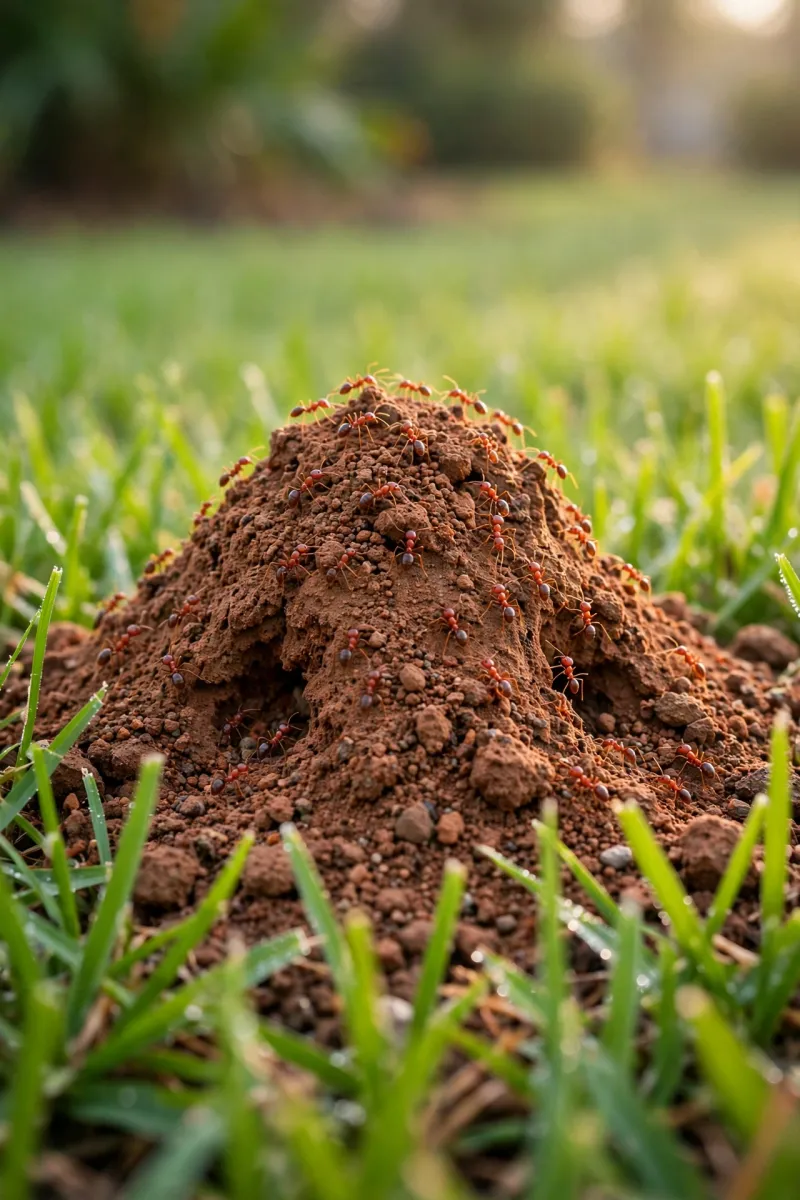
Soil that has been soaked often gets pushed around, and ants respond to it. After a heavy rain, workers carry wet soil up from below and rebuild the surface of the mound.
The result can look brand new, with loose, dark, crumbly dirt on top.
That idea has some research behind it. In a USDA Agricultural Research Service experiment on imported fire ants in northeastern Mississippi, water was linked to more visible signs of mound-surface construction.
The mounds did not grow much in size over the short term, though. In other words, what changed was the look of the surface, not the overall bulk.
For a homeowner, this matters because the fresh look is something you can actually see. A mound that seemed flat and weathered yesterday may look tall and tidy today because the ants have been busy patching it.
That is repair work, and it is different from a story about where the colony came from.
The experiment was done on mounds in one region, so it describes a pattern rather than a rule for every lawn. Treat it as a helpful reason why mounds can appear to pop up overnight.
It is not proof that each new-looking mound was built because of the latest storm.
What a fresh mound cannot tell you
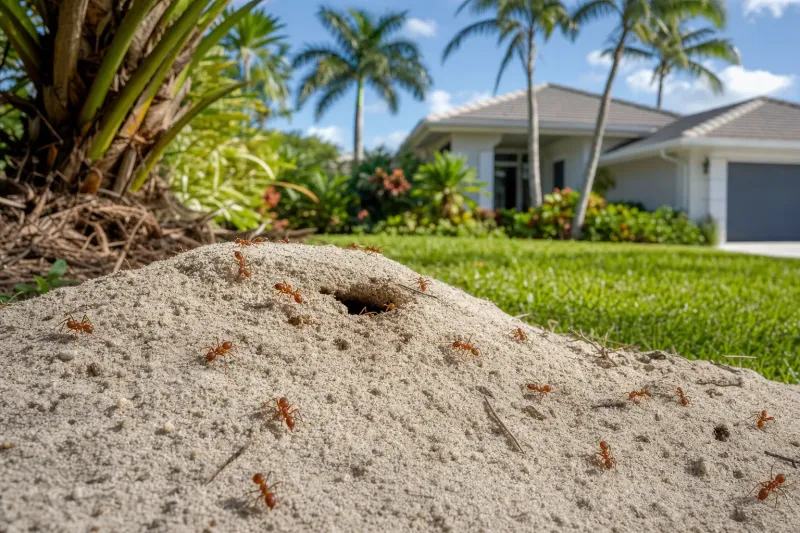
A fresh-looking mound is one clue, and it leaves a lot of questions open. By itself it cannot show that a colony relocated, that a brand-new colony was founded, or how many colonies share your yard.
It also cannot show that your yard drains poorly. A lawn with perfect drainage can still show a freshly rebuilt mound after a storm.
Mound shape depends on more than rain. A study of mound shape along a north to south gradient found that height was tied to rainfall, temperature, and sun angle.
The link with rainfall was not as simple as more rain meaning bigger mounds. Season, sun exposure, and soil all play a part, so shape and weather are only some of the conditions in play.
Another report, from South China, described nest repair by fire ants after rainfall. It adds context and supports the idea that repair after rain is real.
It is a separate study in a different climate, so it should not be read as a precise forecast for a South Carolina lawn.
Regional findings like these help explain what you might be seeing. They cannot diagnose your particular yard.
If you want to know how many colonies you have, you would need to look at the whole lawn over time, not at one mound on one wet morning.
Is it an imported fire-ant mound?
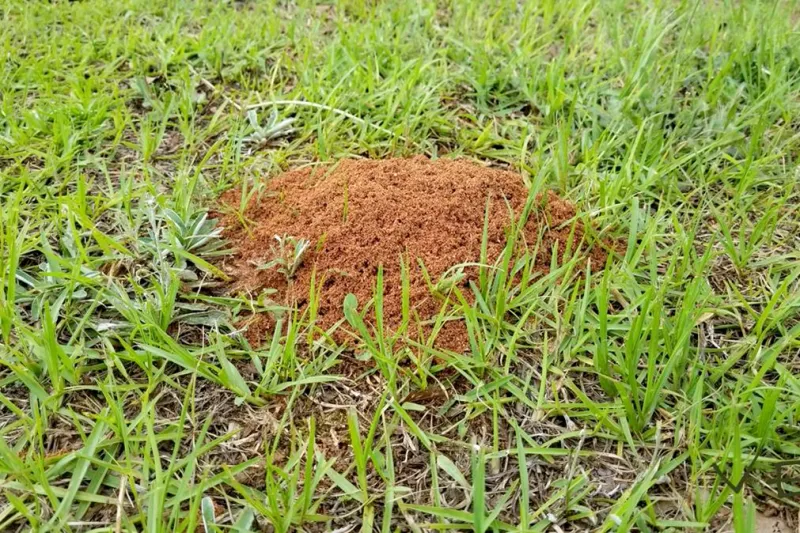
Before thinking about control, figure out which ant you have. South Carolina is home to many ant species, and Clemson notes that most of them do not warrant control.
Treating the wrong ant wastes money and puts pesticide in your yard for no reason.
One helpful clue comes from Clemson Extension guidance. Imported fire ant mounds generally lack a central exit hole, because the ants come and go through underground tunnels.
If ants are streaming in and out of a hole in the middle of the mound, Clemson says it is not a fire ant mound.
Treat that as a clue and not a final test. Mounds can be damaged, flattened, or partly rebuilt, and a single glance from a distance will not settle it.
Look at the overall picture, such as how the mound looks, where it sits, and how the ants behave.
If you are not sure, a county Extension office can help with identification. Getting that answer first is the step that keeps you from using pesticide on an ant that never needed it.
Leave a suspected mound undisturbed
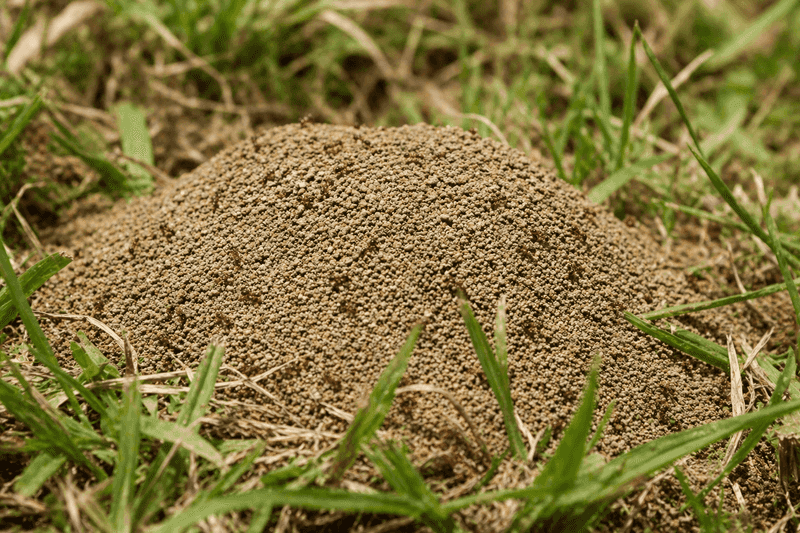
Once you suspect fire ants, the safest move is to do nothing to the mound itself. Do not kick it, step on it, or dig into it to see what is inside.
Clemson warns that disturbing a mound can agitate the ants and prompt an attack.
The stings are painful. For some people they can also set off a severe allergic reaction, which is a good reason to keep children and pets well back.
Anyone who develops trouble breathing, swelling beyond the sting site, or dizziness after being stung should get medical help right away.
A simple habit helps. Look from a few steps away, note where the mound sits, and mark the spot in your mind or with a flag placed from a distance.
Keep mowers and string trimmers from running over it, since the vibration can stir up the colony.
Staying calm and keeping your distance also gives you time to think. You can confirm the ant type, look around the yard for other mounds, and decide how big the problem is.
That decision comes next, and it goes better when nobody has been stung first.
Match the control method to the scale of the problem
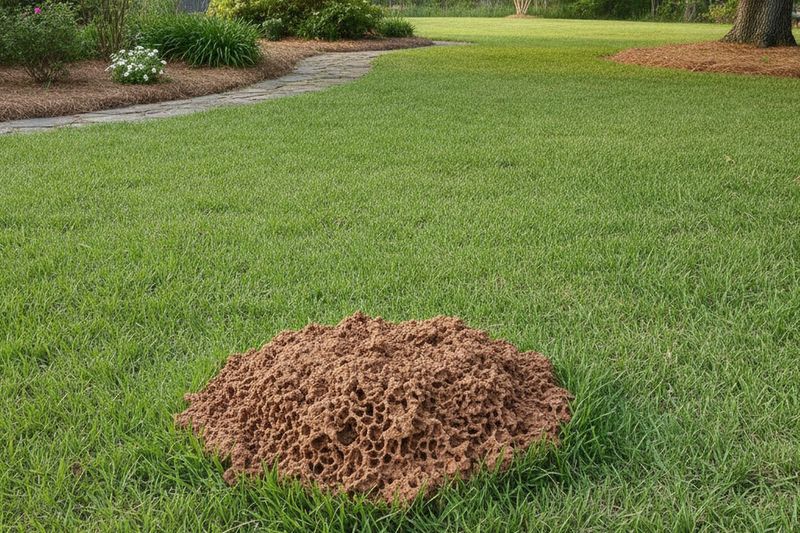
One mound in a corner of the yard is not the same as a lawn dotted with them. For a lawn-wide problem, Clemson recommends broadcast baiting over treating only the mounds you can see.
Ants forage beyond their mounds, and some colonies are not visible at all.
For a single nuisance mound, the approach is different. Choose a product labeled for that site and purpose, and follow its directions.
Not every mound needs treatment, so it is fine to decide that a mound far from where people walk can be left alone.
Skip the home remedies. Clemson explains that grits do not work because worker ants cannot swallow the solid pieces.
Texas A&M warns that gasoline, diesel, chlorine, and ammonia can be dangerous, can contaminate soil or groundwater, and may cause colonies to relocate.
Boiling water is not a dependable fix either. Texas A&M estimates that very hot water eliminates ants about 60 percent of the time, and it can damage plants and burn the person pouring it.
None of these is a safe blanket answer.
Apply bait only when conditions and the label allow
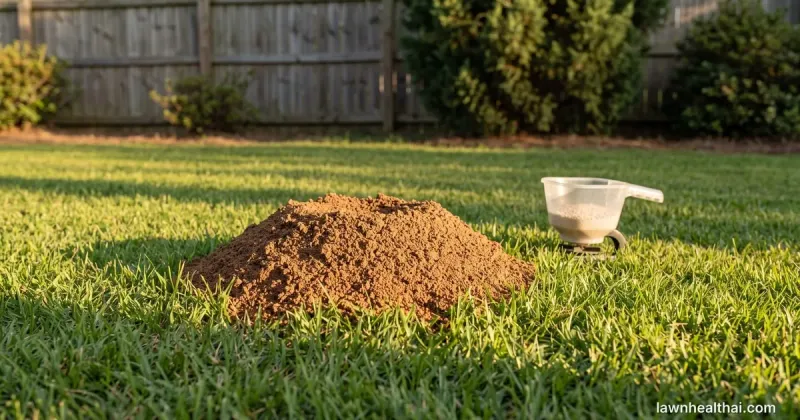
Bait works only if the ants carry it home, so timing matters. Clemson advises applying it when ants are actively foraging and the ground and grass are dry.
Wet grass can make the granules stick or break down before ants find them.
You can check ant activity with a simple test. Place a plain, greasy potato chip near a mound and see whether ants gather on it after a short time.
Clemson also points to a soil-surface temperature of roughly 70 to 85 degrees Fahrenheit as a good range. Both are rough checks and not guarantees.
Keep the bait dry before and after use. Clemson suggests allowing at least four hours before expected rain.
That is Clemson advice, though, and the product label governs the application, so follow its directions on timing, amount, and where it can be used.
Keep bait and other pesticides out of surface water. Rain and rising water can carry material toward ditches, ponds, and streams, and sweeping stray granules off hard surfaces back onto the lawn helps.
Expect to wait. Clemson says visible effects can take 2 to 12 weeks, depending on the product and conditions.
Seeing mounds linger for a while after baiting does not mean it failed.
Use the mound as a clue, not a diagnosis
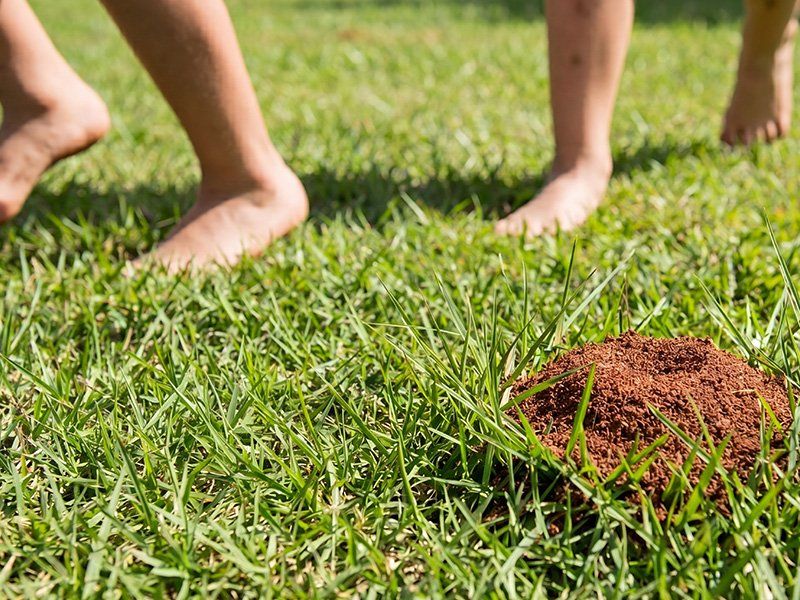
A mound that looks fresh after rain can simply reflect ants repairing their work, as in the USDA experiment. It does not reveal a colony’s history or whether your yard drains well.
Identify the ants, keep your feet and tools away from a suspected fire ant mound, and let the size of the problem guide your choice, following Clemson guidance and the product label.
After a storm, the mound is a note from the ants about their own housekeeping, and your yard has not said anything more.
Share this story