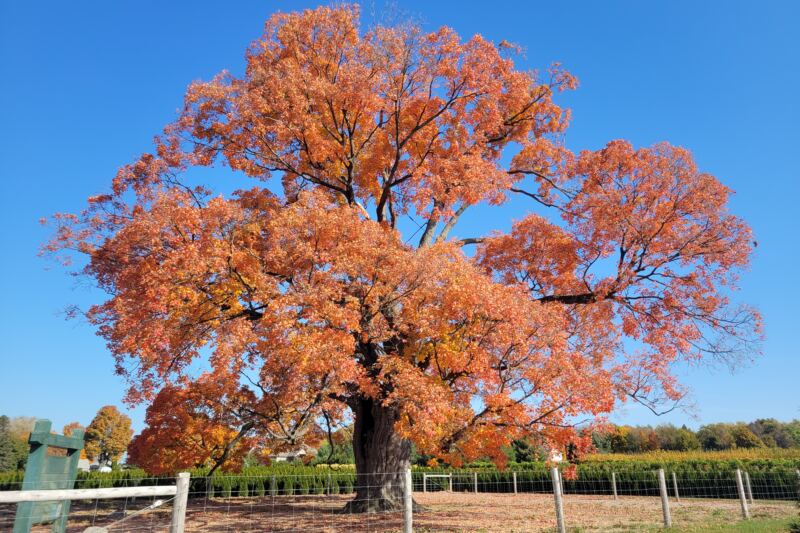
The yips and howls you hear after dark are coyotes talking to each other, and the time of year gives helpful clues about what is going on in the neighborhood. Late fall is a season when young coyotes may be moving on from their family groups, and breeding and pup seasons come next.
Still, a single chorus cannot tell you exactly why those coyotes are calling or how many are out there. Knowing what the sounds can and cannot mean helps you feel calmer and know what to do.
What does a coyote chorus actually say?
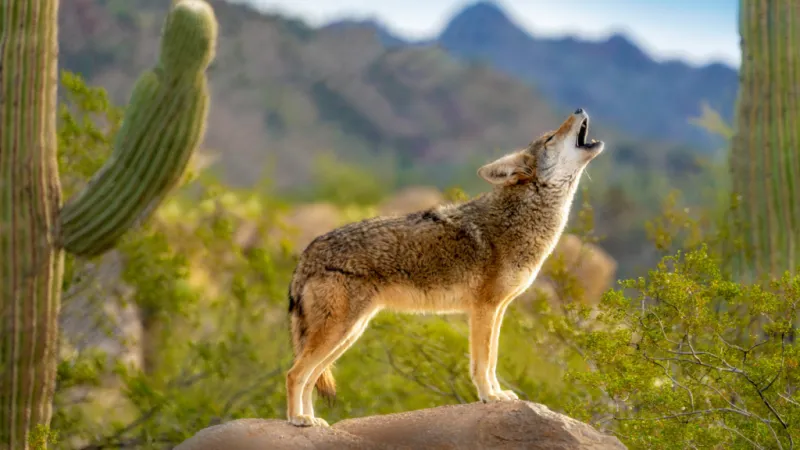
Coyote yips, barks, and howls are a way of talking to other coyotes. They are not a code that announces one particular event.
When you hear a burst of sound from the canyon behind your house, you are listening to animals keeping in touch.
UC Statewide IPM Program explains that calls can help coyotes find or reunite with family members, and they can also advertise or maintain territory. In other words, one call can serve more than one purpose.
The same howl might be a hello, a location check, or a signal that an area is taken.
You may have heard that a group yip-howl is a sign of courtship or bonding. The research is a bit more careful than that.
A University of Wyoming analysis of coyote long-distance vocalizations associates group yip-howls with reinforcing group bonds as well as signaling that a territory is occupied.
That is a pattern across many calls, not a verdict on the chorus outside your window. A group yip-howl does not prove that the coyotes are courting, that a pair is bonding at that moment, or that a den is being guarded.
It also does not prove that pups are nearby, that the animals are hunting, or that something was just caught.
You may also run into the claim that coyotes howl because they just made a kill. A wildlife conflict guide from Humane World for Animals calls that a misconception.
The safest way to think about it is that the call tells you coyotes are around and communicating, and not much more than that.
The sound can still feel eerie in the dark, especially when it echoes off hillsides. That reaction is normal.
The sound itself is ordinary coyote communication.
Late fall shifts the seasonal context
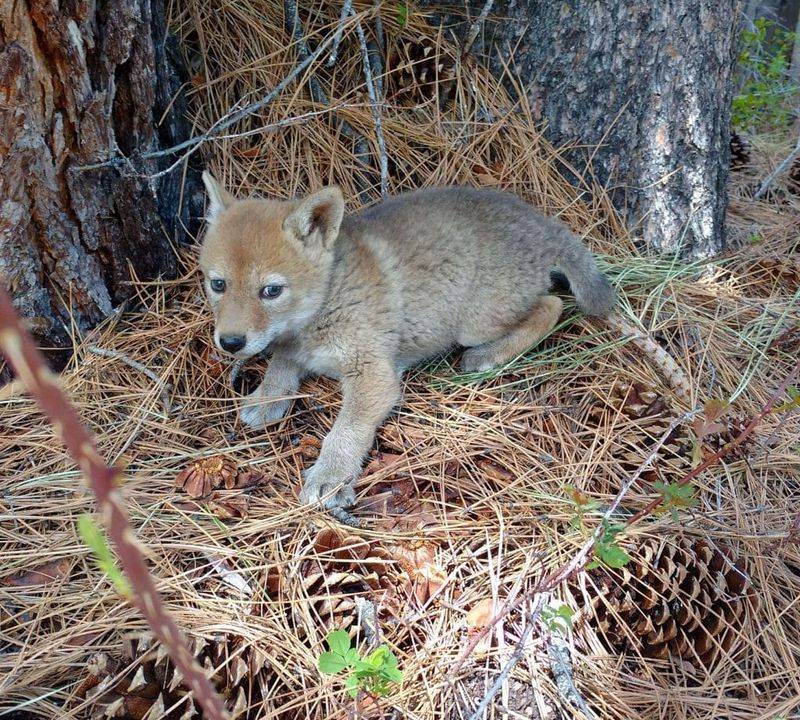
Late November puts California coyotes in a particular part of their yearly cycle. According to UC IPM, juveniles may disperse by late fall, meaning young coyotes can leave the area where they were raised.
That makes dispersal more seasonally relevant right now than the breeding and pup seasons that are still ahead.
Seasonal relevance is not the same as cause. Nobody can listen to a chorus and say it came from a young coyote heading out on its own.
The calendar adds context, but it cannot decode one particular night of howling.
Looking ahead, UC IPM gives typical California timing: breeding in late January and February, and pups born in March and April. Treat those months as general guidance.
Timing can differ from one region to another, and no one calendar fits every canyon or foothill.
Calling also does not switch on and off with the seasons. The same UC IPM source says coyotes vocalize in the evenings and at night through most of the year, though less in the early stages of pup-rearing.
So a quiet stretch or a noisy one does not have a single explanation.
For a local example, the Presidio Trust in San Francisco describes its pup season as running from March through September. That is local guidance for that park, not a statewide schedule.
Your area could be a little earlier, later, or longer, so use these dates as a rough frame and nothing more.
A chorus can sound larger than it is
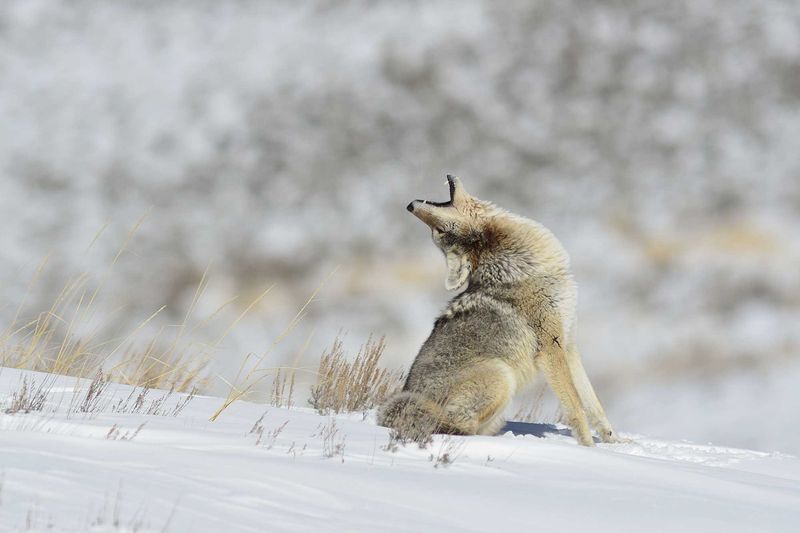
A burst of yips from several directions can make it sound like a whole pack has surrounded your street. Human ears are not great at counting coyotes, though.
A chorus cannot reliably tell you how many animals are calling, or prove that a large pack is nearby.
One study put numbers on this. In research by Brewster and colleagues in 2017, 427 participants listened to recordings of one to four coyotes.
On average, they overestimated the number they heard by nearly twofold.
Keep the limits of that study in mind. It used recordings and participants in southern Texas, not a California neighborhood.
It supports caution about counting by ear, and it does not give a precise estimate for what you hear at home.
Group size is also not always what you might picture. UC IPM notes that coyotes may live alone, in pairs, or in family groups, depending in part on conditions.
Two or three animals can sound like many more, especially when their voices bounce off canyon walls.
So if you hear what seems like a crowd, try not to jump to the idea of a big pack. A better takeaway is that a few coyotes may simply be vocal, and the sound makes them seem more numerous.
Night calls near a home do not prove danger
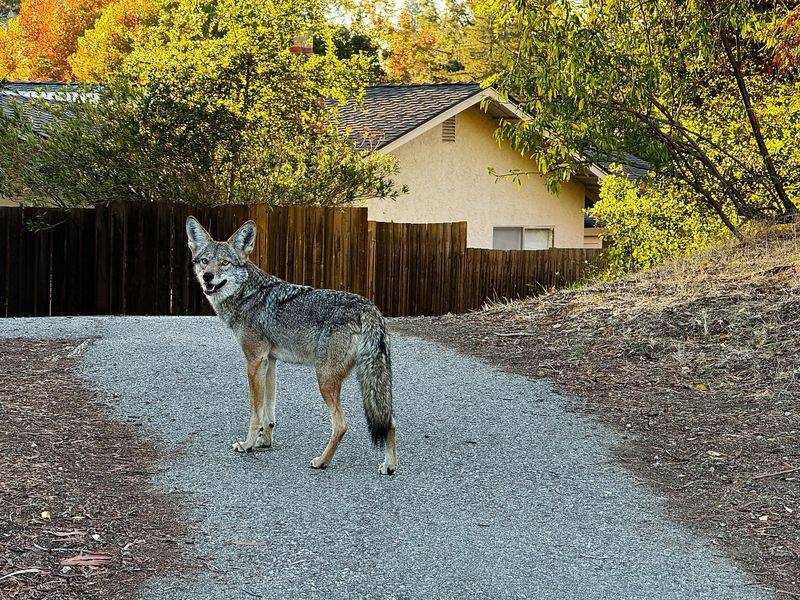
Coyotes already live across California, in urban, suburban, and rural areas. The California Department of Fish and Wildlife says they may call to one another with yips, howls, or barks at any time of day or night.
Hearing them near your home, by itself, is not evidence of an immediate threat.
It helps to separate presence from behavior. A coyote heard in the canyon, or seen trotting through at dawn, is ordinary wildlife activity.
Seeing one in daylight does not prove it is sick or aggressive.
What does call for a response is an approach. The Presidio describes daytime activity as possible, and its guidance treats approach behavior, not mere presence, as the reason to haze and report.
It advises reporting an approach within 50 feet if the coyote does not move away, according to the Presidio Trust.
That 50-foot figure is local advice for the Presidio, not a statewide threshold. Still, it shows the useful idea: what matters is whether a coyote is coming toward people and not leaving when you make yourself known.
So when the howls start after dark, you can listen without feeling you must act. Pay attention to the practical things you can control, like pets and food sources, and save your concern for a coyote that gets close.
A few household habits reduce attractants
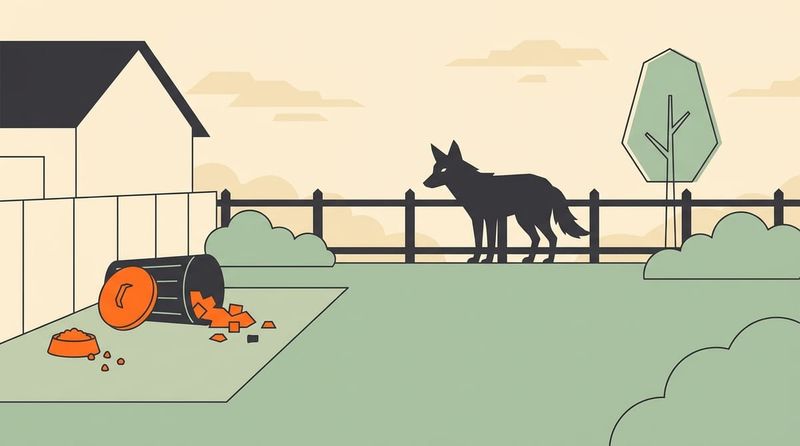
Most of what keeps coyotes from becoming a problem happens around your house, not in the canyon. The goal is to remove easy opportunities.
These steps will not stop coyotes from calling or walking through, but they lower the chance of conflict.
Start with food. Secure your garbage, and do not leave pet food outside.
Never feed coyotes on purpose, since a coyote that links people with food can lose some of its natural caution. These points come from CDFW guidance.
Next, think about your pets. Keep small pets indoors or in enclosed areas, leash dogs on walks, and supervise animals when they are outside.
CDFW recommends bringing pets inside at night when possible.
If you keep chickens, rabbits, or other small livestock, house them in secure pens. A sturdy enclosure with a solid top and a closed door at dusk is a simple example.
UC IPM also points to these kinds of exclusion and pet-protection steps.
Finally, do not let your dog approach a coyote, even if it looks curious or friendly. A quick lap around the yard before bedtime to check for fallen fruit, open food bowls, and loose trash can take two minutes and help.
When a coyote approaches, distance matters
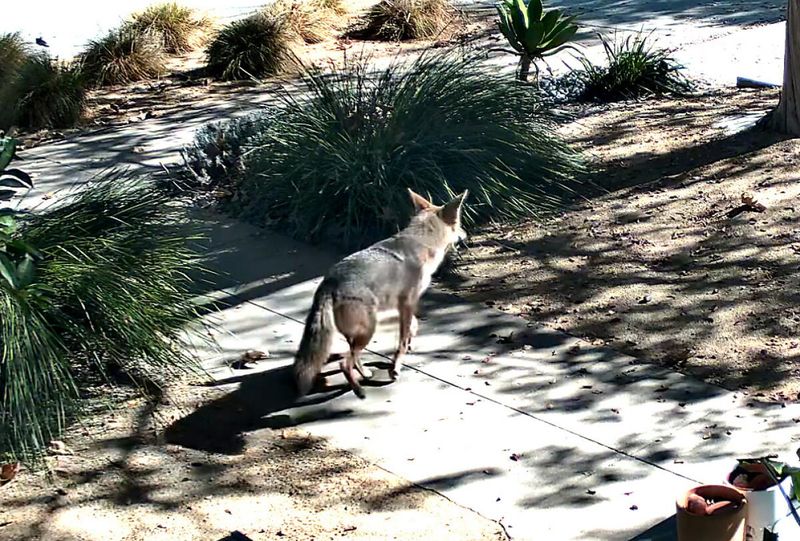
Most coyote encounters end quickly, but it helps to know what to do if one comes toward you. Keep children and pets close.
Make yourself look larger, make loud noise, and back away slowly rather than running or turning your back, as CDFW advises.
Running can feel natural, but it is not the best move. Standing tall, clapping, and using a firm voice shows the coyote that you are not an easy target.
Move away calmly while keeping it in view.
If you or someone else is bitten or scratched, wash the area and seek immediate medical attention. UC IPM also advises reporting aggression or an attack to local animal control and CDFW.
A few things to avoid are just as important. Do not approach a den, do not try to investigate pups, and do not let a pet go toward a coyote.
Keep your distance and follow local wildlife-agency guidance.
Remember that an approach is different from simply hearing or spotting a coyote. Calls from the hillside are not a reason for these steps.
They are for the moment a coyote moves toward you.
What the sound can—and can’t—tell you
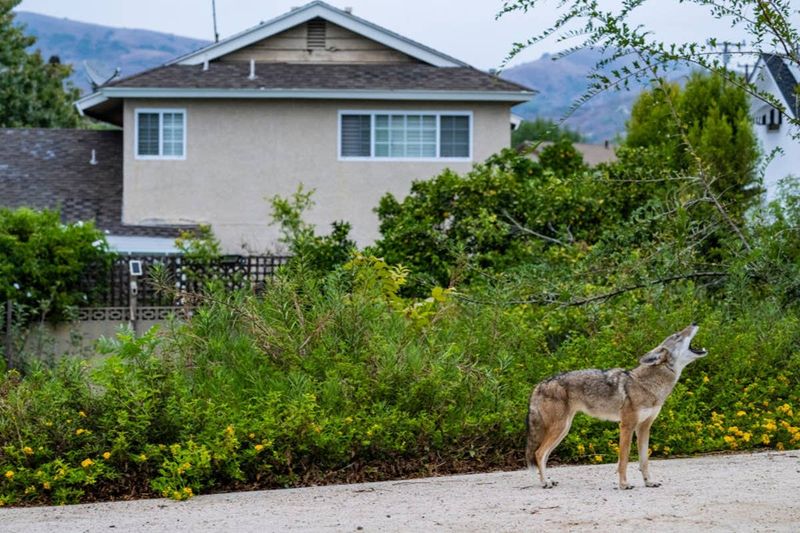
Season gives helpful background, but a call alone cannot reveal exactly what coyotes are doing or how many are out there. UC IPM and CDFW both point toward the same practical path: reduce attractants and protect your pets.
A chorus is not a warning or a precise seasonal signal. It is the neighborhood’s wild residents staying in touch.
Let the howls be the soundtrack, and let your habits be the plan.
Share this story