
Chips are crunchy, salty, and easy to grab, so it makes sense that people wonder about trading them for celery. The headline version of this story sounds exciting, but nobody has counted how many Californians actually do this every day.
What we can check is what celery offers, what research does and does not show, and how to handle it safely. Here is a realistic look at what a simple snack swap may change.
What could the swap change?
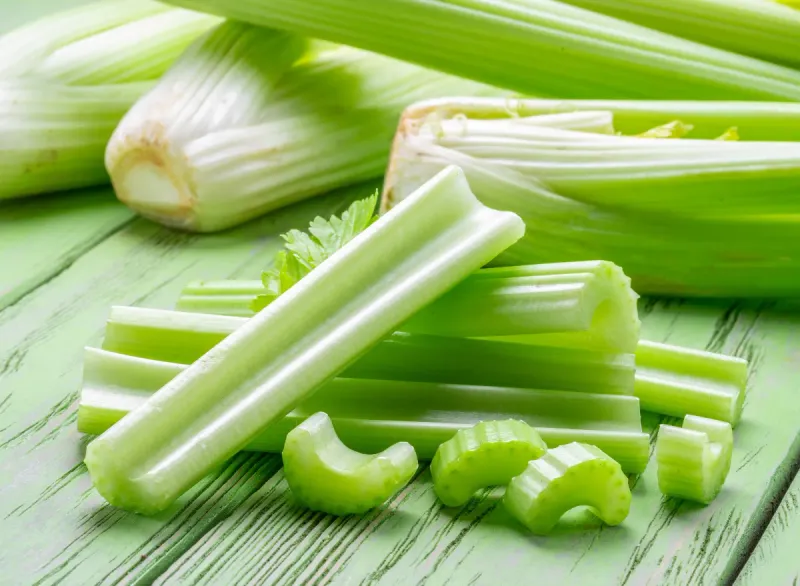
Picture two snack bowls on the counter. What matters is not celery alone, but what celery pushes out of your day.
If a big handful of chips gets replaced by celery, the snack gets lighter. If celery just gets added on top of the chips, nothing gets lighter at all.
The numbers on the celery side are clear. FDA figures for raw vegetables list two medium stalks, about 110 grams, at 15 calories.
That makes celery a low-calorie food. It is not calorie-free, and it is not a magic food that burns more than it gives.
Whether the swap saves calories overall depends on a few everyday details. How big was the chip portion you skipped?
Did you add a creamy dip or peanut butter to the celery? Did you feel hungry an hour later and eat something else?
Each of these can shrink the difference or erase it.
That is why nobody can promise what the swap will do for your weight. Bodies, habits, and portions vary too much.
There is also no data showing how many Californians make this trade daily, so the trend in the headline is a guess, not a fact.
A better question is a practical one. What do you usually snack on, and would celery fill the same craving for crunch?
If it does, the swap may trim some calories. If it leaves you unsatisfied, a different snack may serve you better.
What two stalks provide
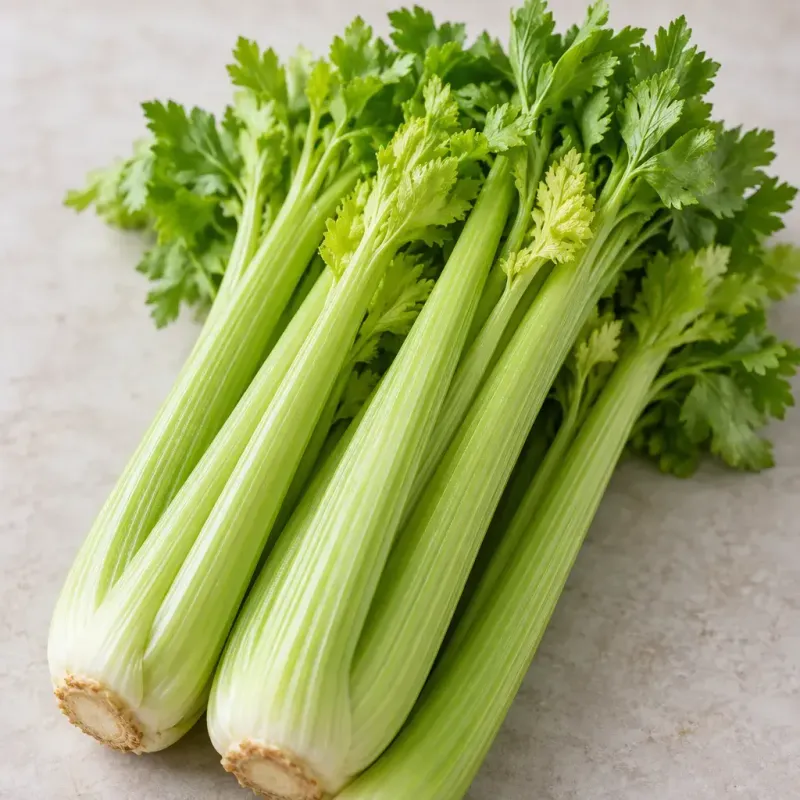
Let’s look at what is actually in a serving. According to the FDA’s raw vegetable chart, two medium celery stalks weigh about 110 grams.
That serving has 15 calories, 2 grams of fiber, 115 milligrams of sodium, and 260 milligrams of potassium.
Start with the fiber. Two grams is a modest amount.
It counts for something, but it does not make this a high-fiber snack on its own. If you want more fiber in your day, celery is one small contributor among many foods.
The sodium and potassium numbers are worth a glance too. Celery has 115 milligrams of sodium, which is naturally occurring and fairly small compared with many salty snacks.
It also has 260 milligrams of potassium. Those are real nutrients, but they are small pieces of a daily total, not a full solution.
Celery is also mostly a crunchy, watery vegetable. That is part of its appeal as a snack.
It fills a plate and gives you something to chew without adding many calories.
Still, one vegetable cannot cover everything your body needs. Think of celery as a light addition to a varied diet, alongside fruits, other vegetables, whole grains, and proteins.
It does its job quietly, and that job is modest.
All of these figures come from the FDA nutrition information for raw vegetables, and they describe a measured serving, not a promise about any one person’s body.
Research on celery preparations does not prove effects from stalks
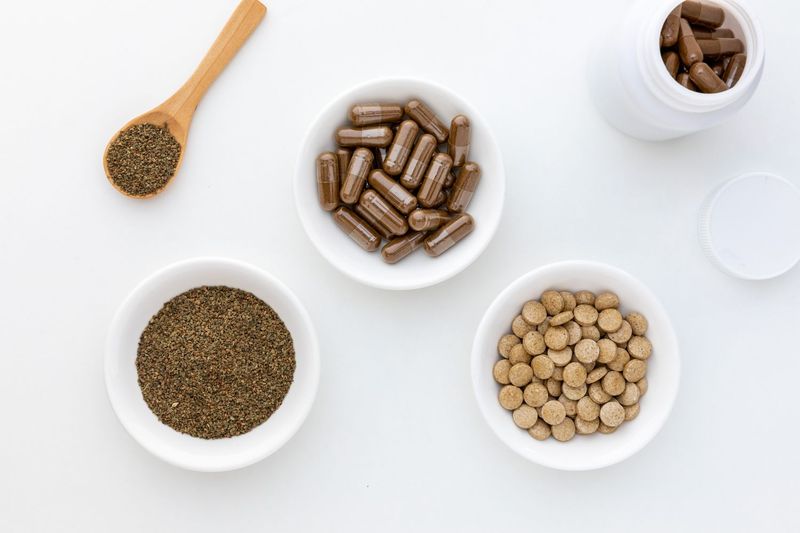
Some online posts claim that eating celery every day changes your blood pressure, blood sugar, or cholesterol. The research is more tangled than that.
Studies exist, but they mostly look at celery in forms other than a plain stalk.
A 2025 systematic review, published through PubMed, pooled 10 randomized trials with 511 adults. It looked at blood pressure, blood glucose, and blood fats such as triglycerides.
The interventions included celery seeds and other celery preparations.
That detail matters. Seed extracts and concentrated preparations are not the same as crunching on two stalks with lunch.
Results from one form cannot simply be carried over to another.
The authors also pointed out limits in the studies. The interventions varied a lot from trial to trial, and the results differed substantially between them.
The trials were small, and the authors called for better-designed studies.
So what does this mean for a chip lover thinking about celery? It means no one has shown a daily stalk amount that causes a particular change.
The studies also did not follow people who swapped chips for celery over the long term.
The honest summary is that celery preparations are an interesting research topic, but the findings do not prove that eating stalks every day will change your body in a specific way. If you have a health condition, your doctor is a better guide than a headline.
California’s production figure is specific to 2024
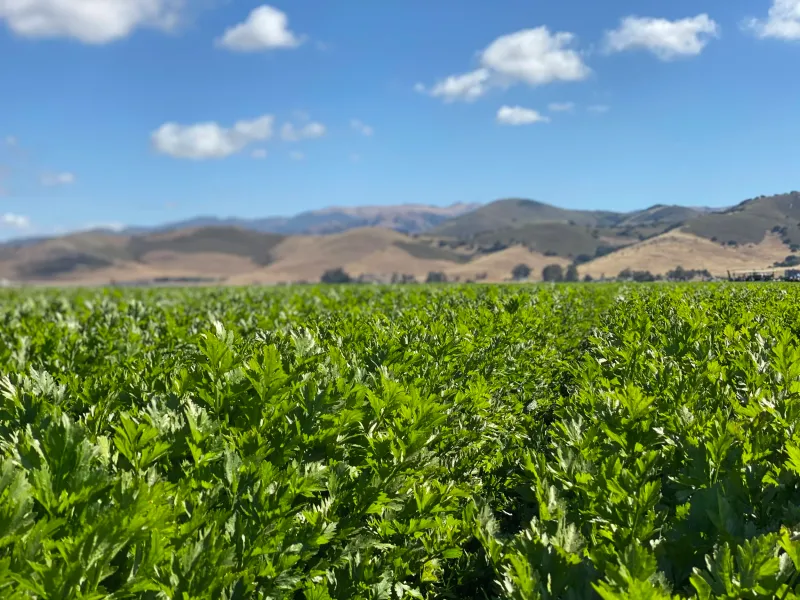
California gets mentioned a lot in celery stories, and there is a number behind it. USDA’s 2024 vegetable summary reports 14.916 million hundredweight of celery for both California and the United States.
Because the two figures match, California accounts for all the celery production reported in that summary.
You can read the report yourself in the USDA National Agricultural Statistics Service summary. It is a snapshot of one year.
Farming patterns can shift, so it is best to treat the number as a 2024 finding rather than a timeless fact.
It also helps to know what the number does not say. Production totals describe how much celery was grown and reported, not what is for sale at every corner stand.
A farmers market may or may not have celery on any given week, depending on the season and the growers who show up.
The figure also says nothing about shopping or eating habits. It does not tell us how many Californians snack on celery, or whether anyone is trading chips for it each day.
What it does give you is context. If you pick up celery in California, you are buying a vegetable from a state with a big role in growing it, at least by the most recent USDA numbers.
Prepare and store celery safely
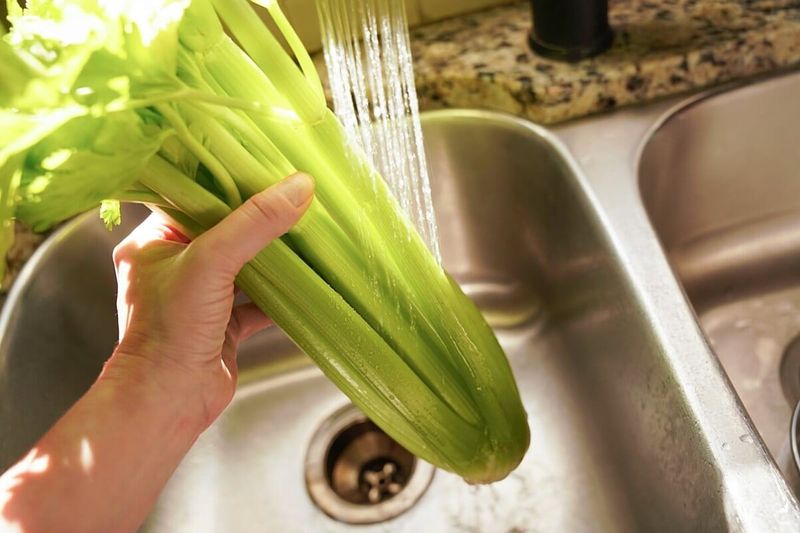
Celery is easy to prepare, but a few steps keep it safe. Rinse the stalks under running water before you cut or eat them.
That goes for celery from a store, a farmers market, or your own backyard garden.
According to FDA guidance on selecting and serving produce safely, washing can reduce bacteria but will not eliminate them. Do not use soap, detergent, or commercial produce wash.
The FDA warns that produce can absorb those products.
Once celery is cut, put it in the refrigerator. A covered container works well for ready-to-grab snack sticks.
Keeping cut produce cold is part of the same safety advice.
Now think about what goes on top. The celery figures in the FDA vegetable chart describe plain stalks only.
A scoop of ranch, cream cheese, or peanut butter adds its own calories, which can change the whole snack.
That does not mean dips are off limits. It just means the dip belongs in your math.
A small portion measured onto a plate is easier to track than eating straight from the tub.
A simple routine can help. Wash, cut, chill, and portion the dip.
After that, the snack is ready whenever the crunch craving hits.
A snack choice, not a health promise
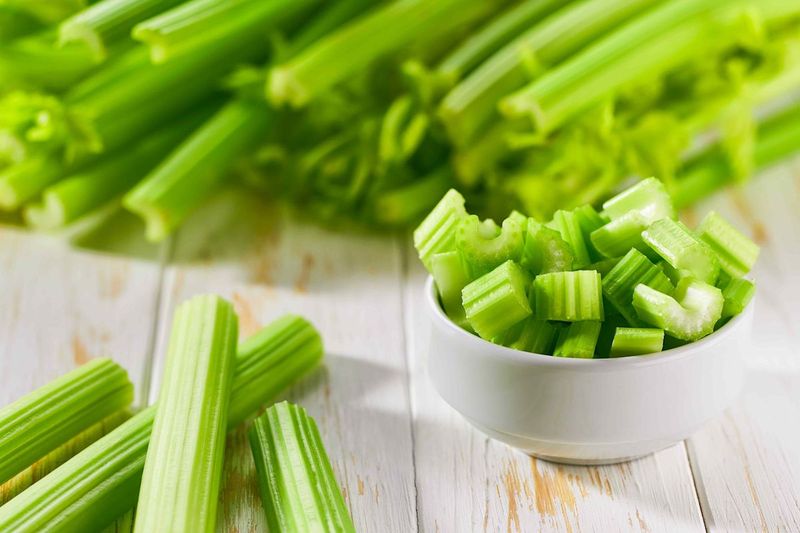
Put it all together and celery looks like a handy, low-calorie option when it replaces a higher-calorie snack. Whether that saves calories depends on the portions, the dips, and what you eat later.
The research on celery seeds and other preparations does not show that plain stalks change the body in any specific way.
Nothing in the evidence shows that Californians are making this swap every day, and the 2024 USDA production figure says nothing about snack habits. Celery is a fine thing to crunch on, and that is about as far as the promise goes.
Share this story