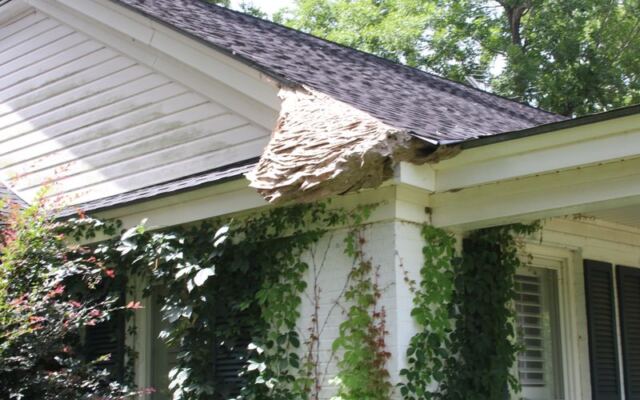
A yellow jacket nest near your Delaware home does not always have to be destroyed. If you and your pets can stay away from it, the safest move is often to keep your distance and cut down on the food that draws wasps in.
If the nest is close to a busy spot, hard to reach, or near someone with a serious sting allergy, stay clear and call a pest-control professional. Here is how to tell which situation you are in.
Decide based on who could encounter the nest
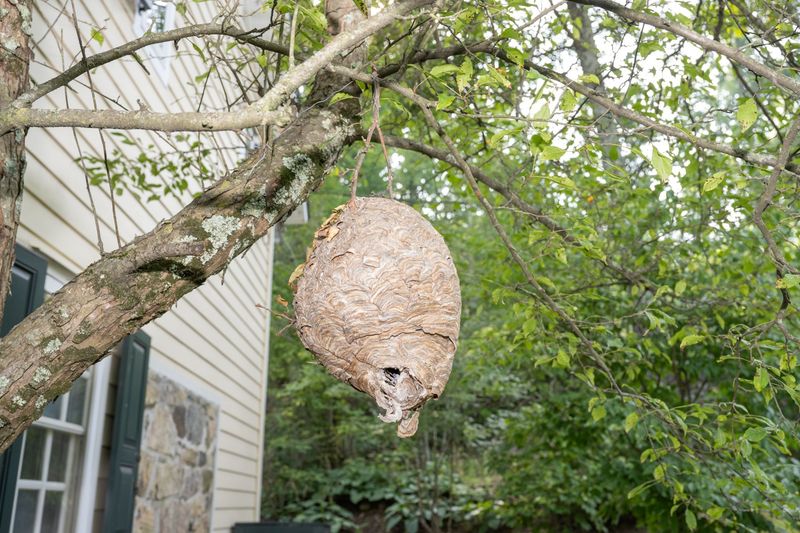
Finding a nest does not mean you have an emergency. What matters most is who might run into it.
A nest at the far edge of a big yard, away from paths and play areas, is a very different problem from one beside your front steps.
Maryland Extension recommends avoiding nests when possible, treating pesticides as a last resort, and hiring a professional for hard-to-reach nests or when a homeowner is uncomfortable treating one. That advice fits the way most households actually live.
Ask yourself a few plain questions. Do children, pets, or guests walk or play near it?
Is it by a doorway, a deck, a grill, or a mailbox path? Can everyone in the house reliably stay away from it?
If the answer is yes to the last question and no to the others, leaving the nest alone while you keep your distance may be reasonable. Tell everyone in the household where it is so nobody wanders close by accident.
If the nest sits next to a frequently used space, if you cannot get to it safely, or if someone nearby has a serious sting allergy, step back and plan on professional help. Owning the property does not mean you have to handle the nest yourself.
The right response depends on exposure and access, not on the fact that the nest is on your land.
A small entrance can hide a hard-to-reach nest
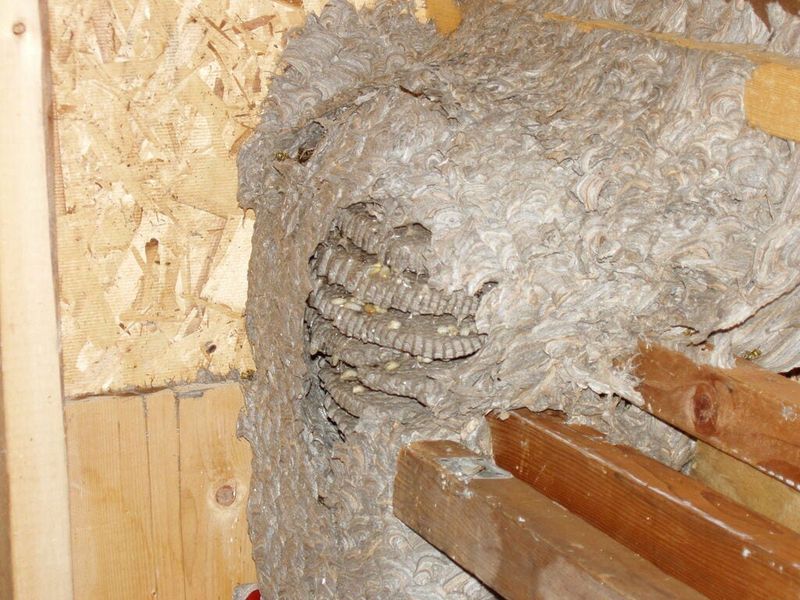
Many people picture yellow jackets living only in the ground. In reality, they can nest underground, in shrubs, in sheds, and in wall voids.
Because of that, the spot where wasps come and go is not a reliable map of what is hiding behind it.
A tiny opening can lead to a big nest. Maryland Extension notes that concealed nests can be hard to find or reach, and large ones may hold thousands of workers.
A small hole does not tell you the nest is small.
If you are not sure what kind of insect you are seeing, keep clear. Do not walk up to check, poke at the opening, or shine a light into it.
Yellow jackets defend their nests, and getting close is how many stings happen.
Vibrations matter too. Lawn mowing or other work near a nest can set off a defensive response, so a mower pass near a suspicious spot is a bad idea.
If you have noticed wasps flying in and out of one area, mow elsewhere or around it at a safe distance until you know more.
A better way to learn about the nest is to watch from far away. Notice where the wasps travel and whether the spot is near a path or door.
That information will help a professional if you call one.
Reduce food attractants and avoid close encounters
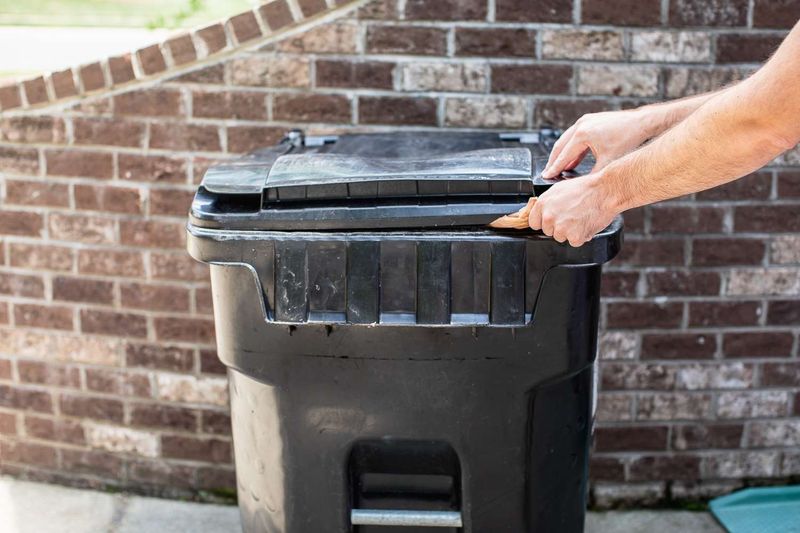
When a nest is far enough away that people can avoid it, your best job is making your yard less appealing. Yellow jackets love sweet drinks and meats, so keep food and drinks covered while eating outside.
Close garbage can lids tightly, and pick up ripe fruit that has fallen from trees.
UC IPM suggests these steps as part of its guidance on social wasps. A cup of soda left on a patio table can bring wasps to your family within minutes.
If a yellow jacket lands on you, stay calm and do not swat it. Waving and slapping can make it more likely to sting.
Wait for it to fly off, or gently brush it away.
Traps are sometimes sold as the answer. Virginia Tech notes that traps may catch some foragers but will not eliminate them all.
Treat a trap as a small extra step, not a fix for the nest itself.
Removing food sources and keeping them out of reach works alongside any trap. Check outdoor dining spots, pet food bowls, and recycling bins for sticky spills.
A clean, covered yard gives wasps fewer reasons to hang around your family.
When professional help makes sense
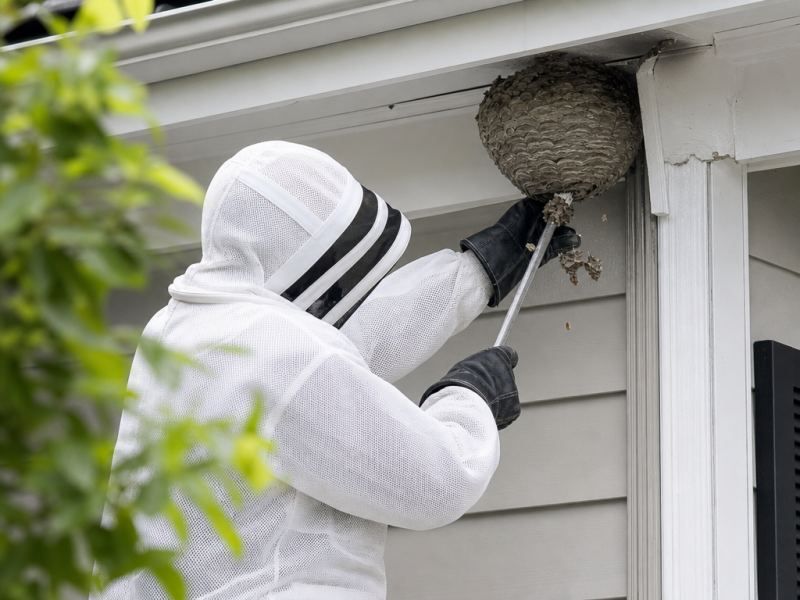
Some nests are better left to people with training and the right gear. Calling a pro makes sense when the nest is close to routine activity, such as a front walkway or play area.
It also makes sense when the location is difficult or hidden, like a wall void or a spot you cannot reach safely.
Comfort level counts as well. Maryland Extension advises hiring a professional for hard-to-reach nests or when a homeowner is uncomfortable treating them.
Feeling uneasy is a good enough reason.
Allergy changes the picture most of all. The AAAAI advises people with stinging-insect allergy to have nests removed by a trained exterminator.
If someone in your home or a neighbor’s has a serious allergy, do not try this yourself.
In Delaware, the Department of Agriculture offers a page for residents and homeowners with a lookup for certified applicators and licensed businesses. Using it helps you find someone who is properly credentialed.
While you wait for an appointment, keep family and pets away from the area and avoid mowing near it. Be ready to describe where the wasps are entering and when you see the most activity.
Do not seal a nest entrance in a wall
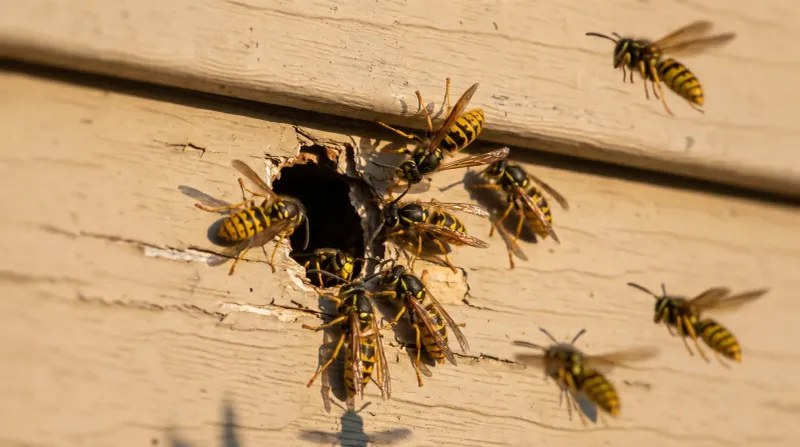
A nest inside a wall is its own kind of problem. It may be tempting to stuff the hole with caulk, foam, or a rag and hope the wasps go away.
That plan can backfire.
Virginia Cooperative Extension warns that trapped workers may chew a new route or find another way out, and that can lead them into the house. Instead of fewer wasps outside, you could end up with wasps in a bedroom or kitchen.
Wall-void nests are also hard to treat. You cannot see the nest, you cannot tell how big it is, and the wasps may travel along gaps behind drywall or siding.
A treatment aimed at the wrong spot can fail and stir up the colony.
The safer plan is to leave the opening alone and call a licensed pest-control operator. Tell them where you see wasps coming and going, and whether any have shown up indoors.
Repairs can wait until the nest is dealt with. Once a professional has handled the colony, you can fix siding or gaps so that the space is not inviting again.
Meanwhile, keep people and pets away from that side of the house. If wasps appear inside, close the door to that room and let the professional know.
Follow pesticide labels and avoid dangerous shortcuts
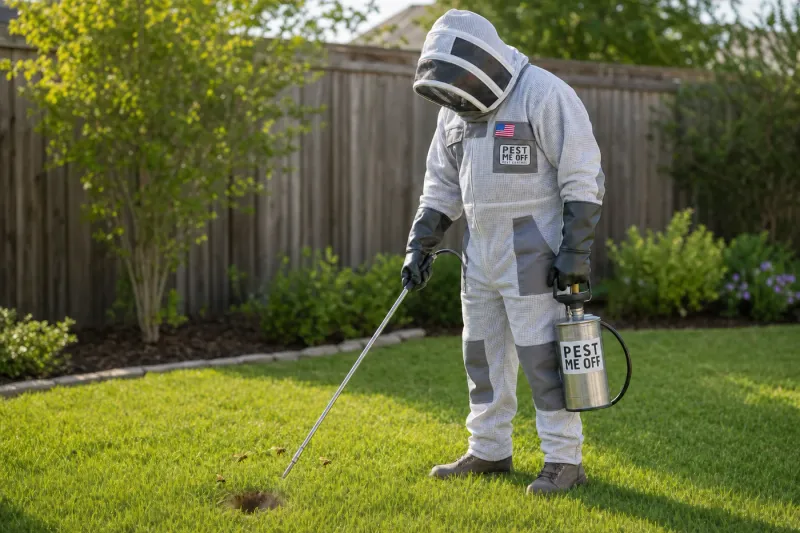
If you are thinking about a pesticide, start with the label. Choose a product labeled for the pest and the site where you plan to use it.
Then follow that product’s directions exactly.
The EPA says to keep children and pets away as the label directs, use the protective measures the label lists, and avoid conditions that could cause drift or runoff. Labels differ from product to product, so a tip that fits one can be wrong for another.
That is why this article does not give a treatment time or a step-by-step recipe.
Remember that Maryland Extension treats pesticides as a last resort. If the label feels confusing, or the nest is hard to reach, a licensed professional is the better choice.
Some home remedies are simply unsafe. Pouring gasoline on a nest, burning it, or flooding a burrow may fail to stop the colony, and they can raise your chance of getting stung or injured.
Virginia Tech warns against gasoline and burning.
Fire can also hurt people and damage property, and fuel can contaminate soil and water. These are not treatment options.
If a shortcut sounds quick and dramatic, it is probably the riskiest path.
Know which sting symptoms need emergency care
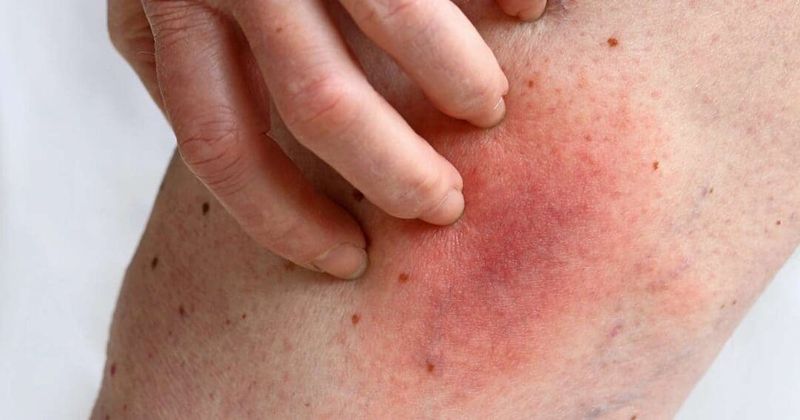
Most stings hurt, and that is normal. Localized pain, redness, and swelling around the sting site are common, and they do not by themselves mean someone is allergic.
The AAAAI separates these local reactions from systemic symptoms that affect other parts of the body.
Watch for signs beyond the sting site. Difficulty breathing, dizziness, or swelling of the face or throat after a sting should be treated as a medical emergency.
Do not wait to see if it passes.
For suspected anaphylaxis, use epinephrine if it is available and call 911. The AAAAI explains these steps in its anaphylaxis resource.
Even if symptoms ease, emergency responders should still evaluate the person.
A big, sore swollen patch around a sting is not enough to label someone allergic or to call it anaphylaxis. If you are unsure, or if a person has had a worrying reaction before, talk with a doctor about next steps.
Know in advance where epinephrine is kept if someone in your household has been prescribed it. Make sure family members can find it fast.
Choose the next step without disturbing the nest
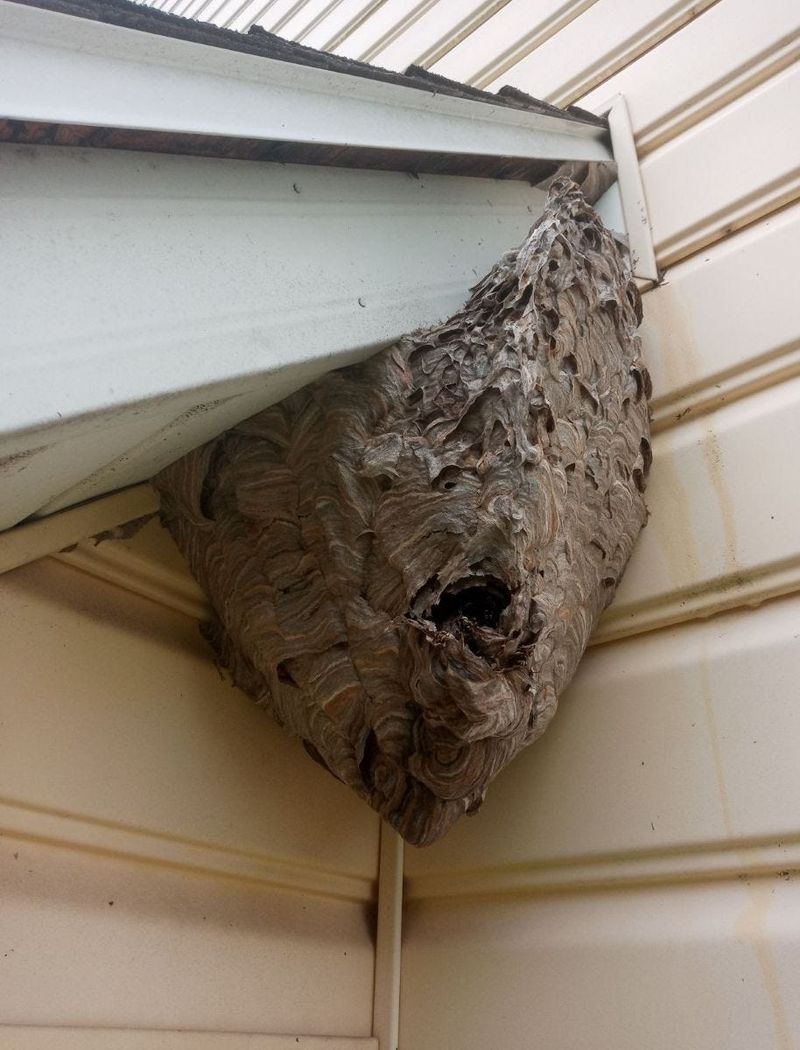
If the nest is safely out of the way, keep clear, tell the household where it is, and reduce food attractants. If the location, access, or allergy risk raises the stakes, contact a qualified pro, and see Delaware’s lookup for certified applicators.
Never disturb a nest just to confirm what it is, because yellow jackets defend their nests. Distance is your best tool, and patience costs far less than a swarm of angry wasps.
Share this story