Many Delaware gardeners pull up a skinny tree, turn around, and find more of them coming up nearby. The culprit is often tree-of-heaven, a fast-growing invasive tree that can bounce back with surprising energy.
It spreads by seed and by shoots from roots that are already in the ground. Knowing which kind of growth you have makes it much easier to decide what to do next.
Delaware lists tree-of-heaven as invasive
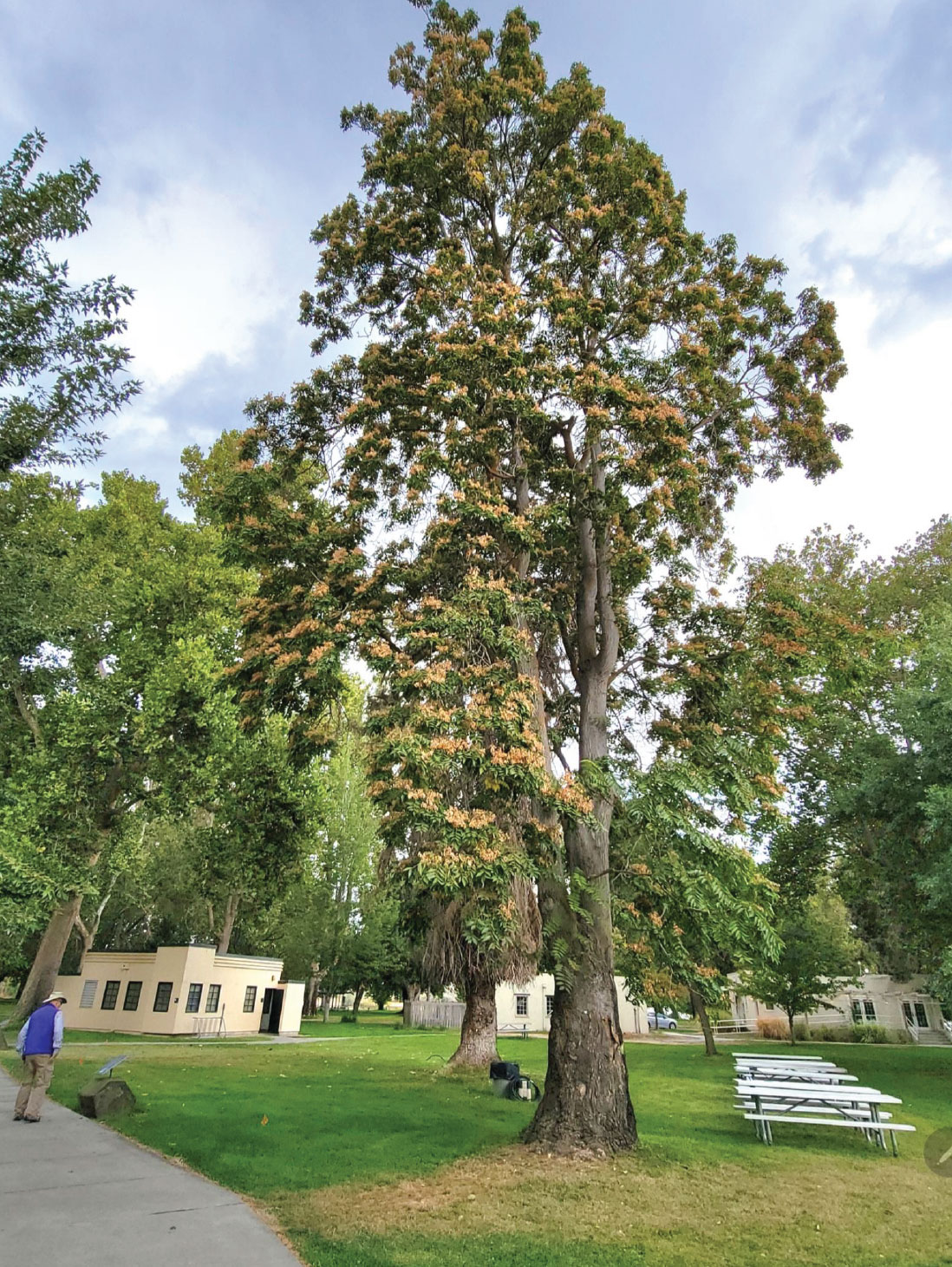
Fast growth and stubborn comebacks are the reputation of tree-of-heaven, known to scientists as Ailanthus altissima. Delaware treats it as a problem plant, and it appears on the state’s list of invasive species under Delaware Code, Title 3, Chapter 29.
That listing is a good reminder that a young tree in a flower bed or along a fence may not be a harmless volunteer.
The tree grows quickly and sprouts vigorously. A USDA Forest Service species review describes both its rapid growth and its strong ability to resprout.
That does not mean every pulled plant returns, and nobody has timed it against a gardener’s pulling speed. It does explain why many people feel they are chasing it around the yard.
Two routes of spread matter most. A tree can send out seed, and female trees can produce a lot of it, so new seedlings may appear at some distance from the parent.
A tree can also send up shoots from roots that are already established, which means new stems may be connected to a root system that stays alive underground.
These two routes behave differently once you try to remove the plants. A seedling is a small, separate plant with its own young root.
A shoot from an existing root is more like a branch of something much bigger below ground. Telling them apart is the first step toward realistic expectations, and the rest of this article builds on it.
Could that sapling be a native look-alike?
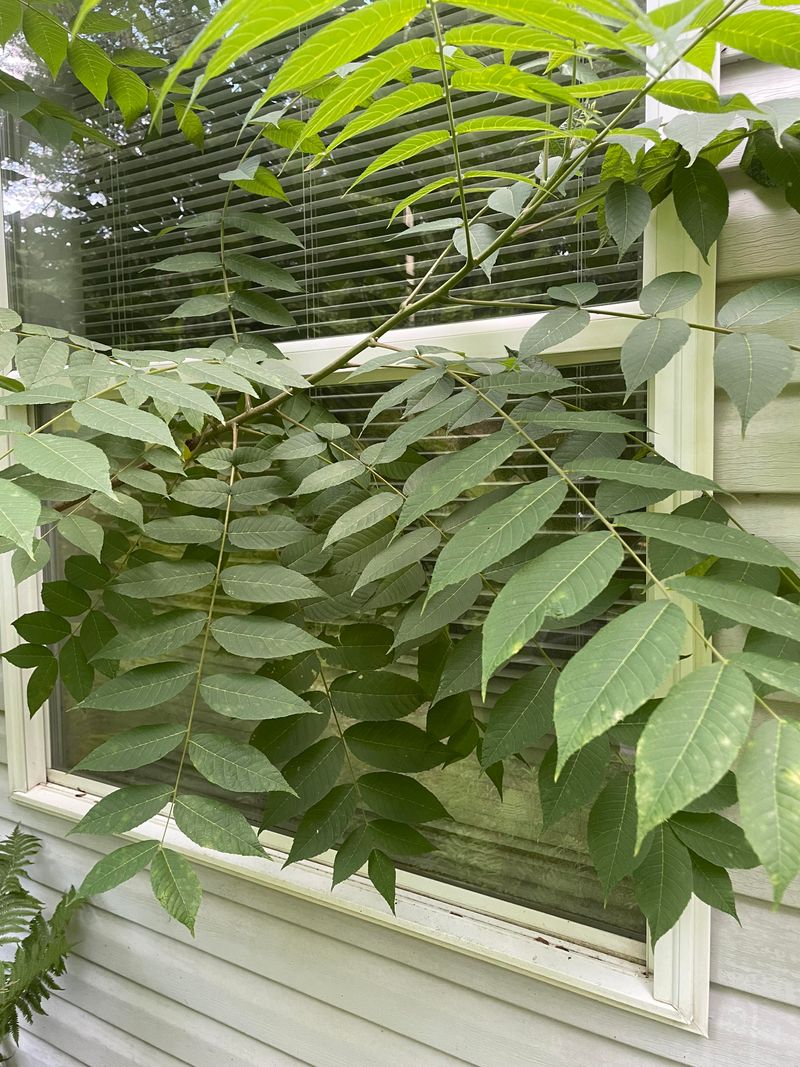
A quick glance can fool even experienced gardeners. Native sumacs and black walnut can be confused with tree-of-heaven, and Delaware’s Department of Agriculture fact sheet warns about exactly this.
Pulling out a native tree because of a guess would be a real loss, so it pays to slow down.
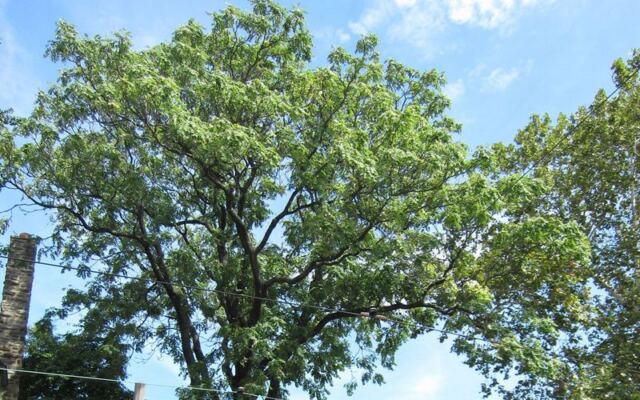
Start with the leaves. Tree-of-heaven has long compound leaves made of many leaflets arranged along a central stalk.
That description also fits the look-alikes, which is why leaves alone are not enough.
Next, try the smell. Crushed or cut parts of tree-of-heaven give off a distinctive odor, which many people find unpleasant.
Smelling a leaf is a useful clue, though you should wash your hands afterward and avoid handling sap more than you need to.
Then look for fruit. Female trees carry hanging clusters of winged seed pods, and these look quite different from the upright, fuzzy red fruit clusters of sumac and the round nuts of black walnut.
Not every tree will have fruit when you find it, so bark and leaflet shape help too.
The safest habit is to compare several features rather than lean on one. If the clues disagree, take photos and ask a local extension office or a trained professional before you cut or treat anything.
Seedlings and root suckers need different approaches
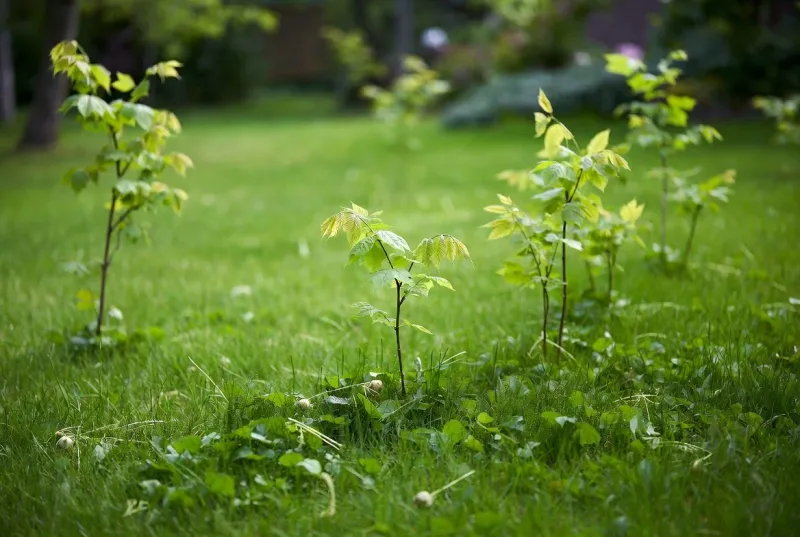
Two shoots can look nearly identical and still be very different problems. A seedling grows from a seed, so it has its own small root.
A root sucker grows from an existing lateral root, so it is attached to a larger root system underground.
For a genuinely young seedling, pulling can be a reasonable choice. Extension guidance, including Penn State Extension’s tree-of-heaven page, says small seedlings can be pulled or dug up when the soil is moist, with as much of the root removed as possible.
Moist soil lets the root slide out more completely instead of snapping off.
Suckers are another story. A shoot that rises from a lateral root may look like a seedling but is much harder to pull successfully, a point that appears in an Ask Extension answer on tree of heaven.
Tugging may only break the shoot off the root, leaving the root ready to send up another.
You can often tell them apart with a little digging. Follow the base of the stem down.
If it ends in a small, tapering root, you are probably holding a seedling. If it joins a thicker horizontal root running through the soil, it is likely a sucker.
Look at the pattern, too. A line or cluster of shoots spreading out from a bigger tree often points to suckers.
A lone plant far from any adult tree may be a seedling.
Setting expectations this way saves frustration. Pulling small seedlings is a fair first move, while suckers call for a different plan.
Why cutting can bring more shoots
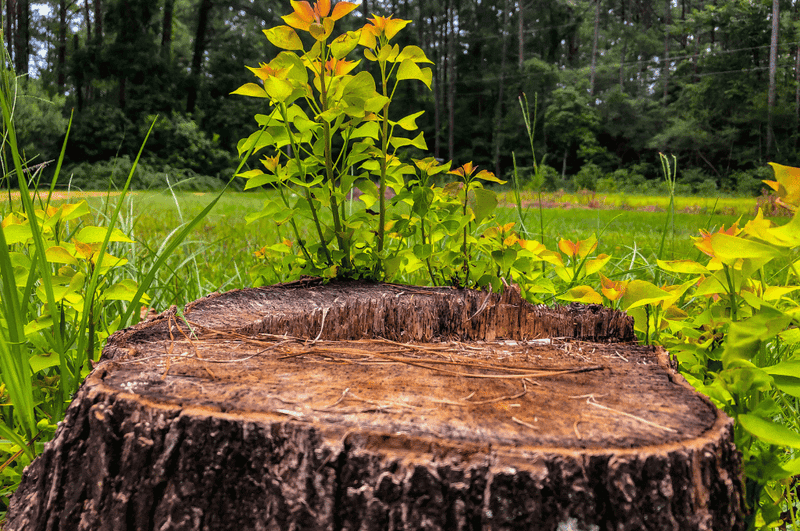
Cutting down a big tree feels decisive, yet the ground often tells a different story a few weeks later. Established tree-of-heaven can resprout from its roots, its root crown and its stump after damage above ground.
The USDA Forest Service review describes this resprouting ability in detail.
The reason is simple. The root system holds stored energy, and removing the top of the tree does not remove the roots.
A cut can even prompt new shoots, so a yard that looked finished may fill with stems again.
Delaware’s Department of Agriculture notes that cut trees can regrow from stumps and roots, and it points toward a plan that includes herbicide treatment rather than cutting alone. Repeated treatments may be needed.
Treating the stump is not a guaranteed fix either. Penn State Extension cautions that cut-stump treatment does not effectively control root suckering, even though other guidance describes cut-surface methods in particular situations.
Advice differs, so the right choice depends on the tree and the site.
Keep this separate from the seedling question. Removing a small seedling by hand takes out a whole young plant.
Cutting an established tree leaves a large root system behind, so a follow-up plan matters.
Control depends on size, timing and follow-up
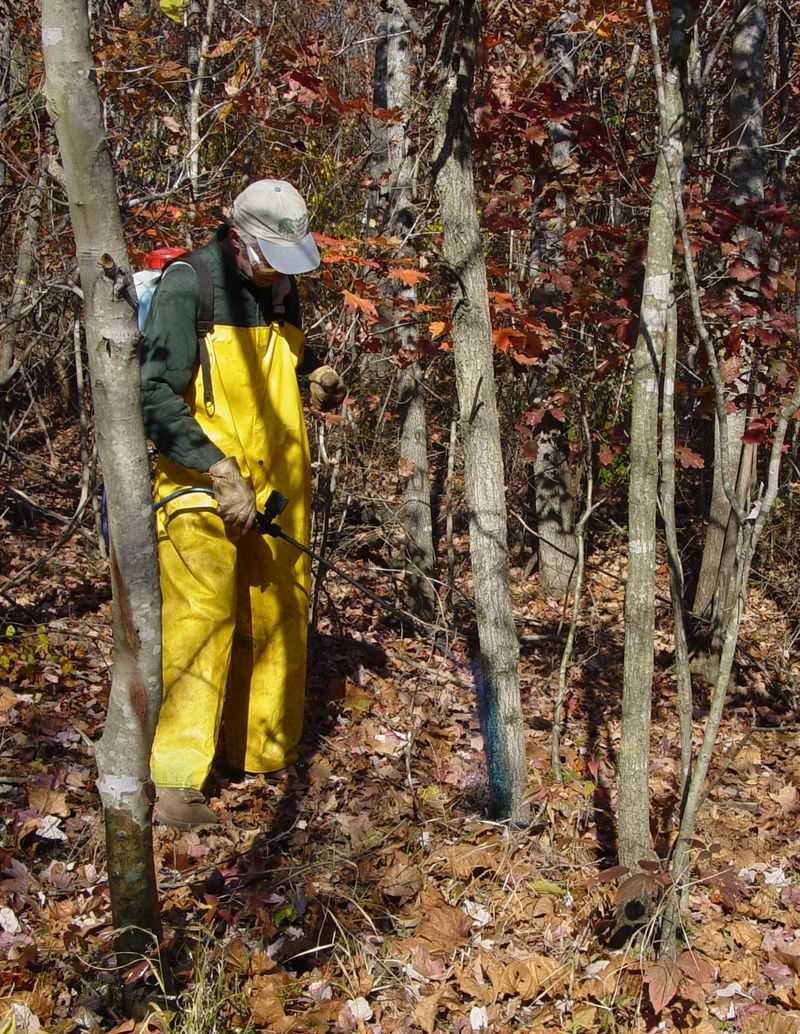
No single method suits every tree. Size, location and timing all change which approach makes sense, and the timing can decide whether a treatment reaches the roots or mostly injures the top growth.
Penn State Extension places several of its treatment methods in the period from July 1 until fall color begins. It also describes basal-bark treatment for trees generally under 6 inches in basal diameter.
These are extension recommendations with limits, not rules for every yard in Delaware.
Consider a few practical questions. How big is the tree, and is it a single stem or a patch of suckers?
Is it near a vegetable bed, a well, a neighbor’s property or a tree you want to keep? Those answers shape what is safe and sensible.
Plan for follow-up from the start. Delaware guidance, including the state’s spotted lanternfly page, warns that repeated treatments may be needed.
Expect to return to the site, and treat a first round as the beginning of the plan.
One caution about a related topic. Delaware’s lanternfly guidance discusses male trap trees for municipalities and businesses, but that is specialized pest management and not general advice for homeowners.
Whatever you pick, write down the date and what you did. Notes make it easier to judge what worked next season, and they help if you ask an extension agent or a licensed professional for advice.
Check labels and protect your skin
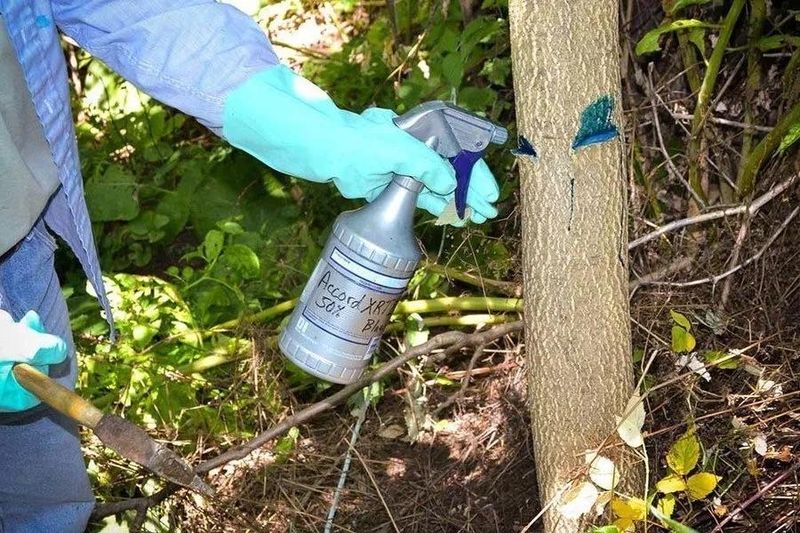
Before any product leaves the shed, read its label. The EPA explains that pesticide labels specify where and how a product may be used and what precautions apply.
Use the current label for the exact product in your hands, and think about site conditions and nearby plants before you apply anything.
Rules also depend on who is doing the work. In Delaware, applying pesticides to another person’s property as a business requires state certification and a pesticide business license, as the Department of Agriculture’s applicator certification page explains.
That statement is about business applications, so it does not describe every homeowner’s situation. If you hire someone, ask whether they hold the needed credentials.
Skin deserves attention too. A published case report in PubMed documents acute contact dermatitis after exposure to tree-of-heaven sap.
That shows a reaction is possible, not that everyone will have one.
Gloves and protective clothing are prudent precautions when handling the plant, a point also made in a Western New York PRISM best management practices guide. Long sleeves, durable gloves and washing up afterward are simple habits that cost little.
Plan for follow-up after removal
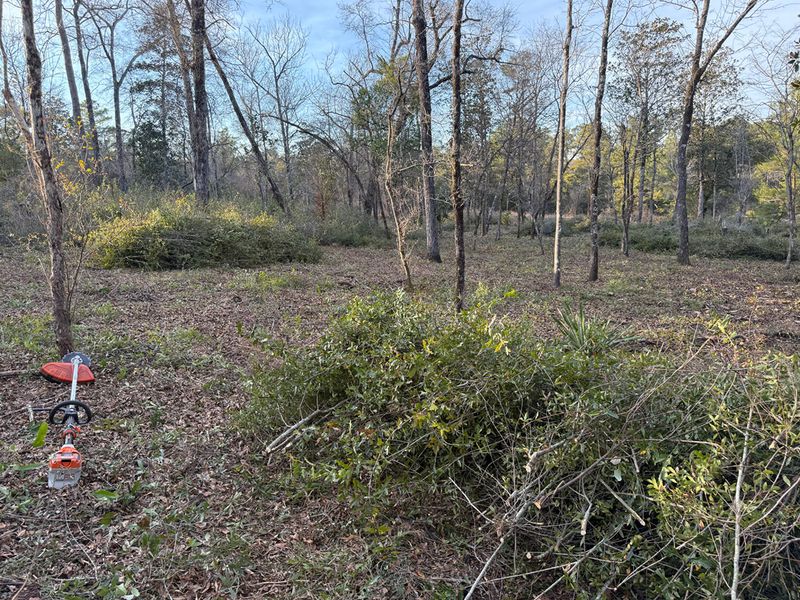
A workable plan has three steps. Confirm the plant’s identity first, then work out whether the growth is a seedling or a root sucker, and finally choose control that fits the tree and the site.
Pulling still has a place for young seedlings, but it is not a universal answer for established root systems.
After removal, watch the area. Check the same spots through the growing season and again the next year, because Penn State Extension and Delaware’s Department of Agriculture both point toward ongoing follow-up.
Deal with new shoots while they are small, and keep notes on what you tried.
This tree rewards patience more than a single heroic afternoon of yanking.
Share this story