Yes, Louisiana law lets you cut certain plant growth that crosses onto your land, or ask your neighbor to trim it at their cost. The catch is that the growth has to get in the way of how you enjoy your property.
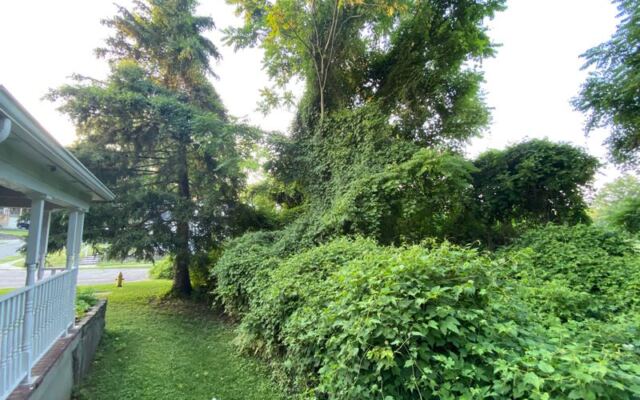
Vines climbing over a fence stir up many neighbor fights, and a wrong cut can cause trouble of its own. Here is what the law says and where it stops.
What Article 688 Lets You Do
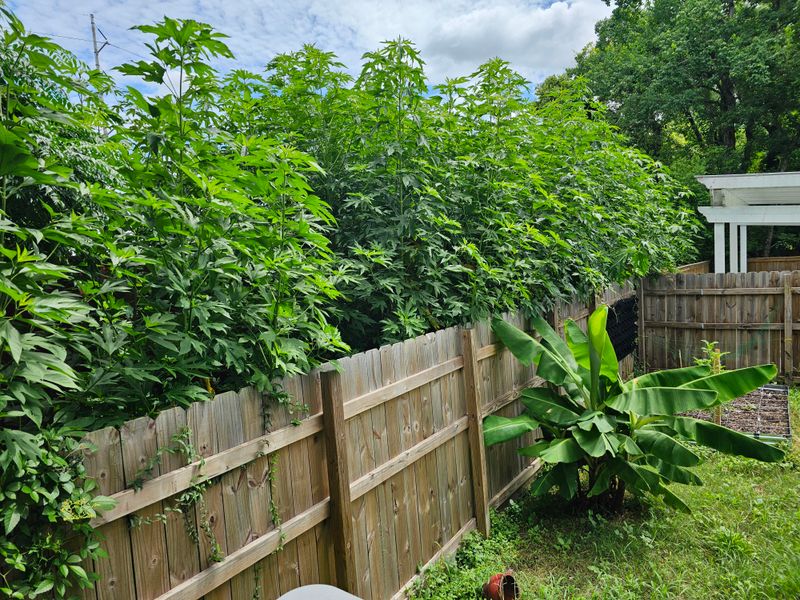
Louisiana Civil Code Article 688 deals with branches of trees, bushes, or plants that extend over a landowner’s property, and with roots that reach into it. When that growth interferes with the landowner’s enjoyment of the property, the law gives two options.
You may cut the qualifying encroachment under Article 688, or you may demand that the neighbor trim it at the neighbor’s expense.
Those are two separate rights, and they work differently. Cutting is a limited permission that covers only the branches or roots that actually cross onto or into your land.
Demanding that the neighbor trim is a request that puts the work and the cost on the neighbor, which is often the calmer path.
Interference with enjoyment is a required condition. A branch that simply hangs over the line, without bothering you in any real way, may not qualify.
The statute also sets no specific measurement, such as a number of inches, and no dollar-damage threshold.
That means there is no handy rule of thumb to point to. Whether growth qualifies depends on how it affects your use of the property.
Not every overhang counts, so think about the actual problem it causes before you reach for the pruning shears or write that letter.
How the Rule May Apply to a Vine
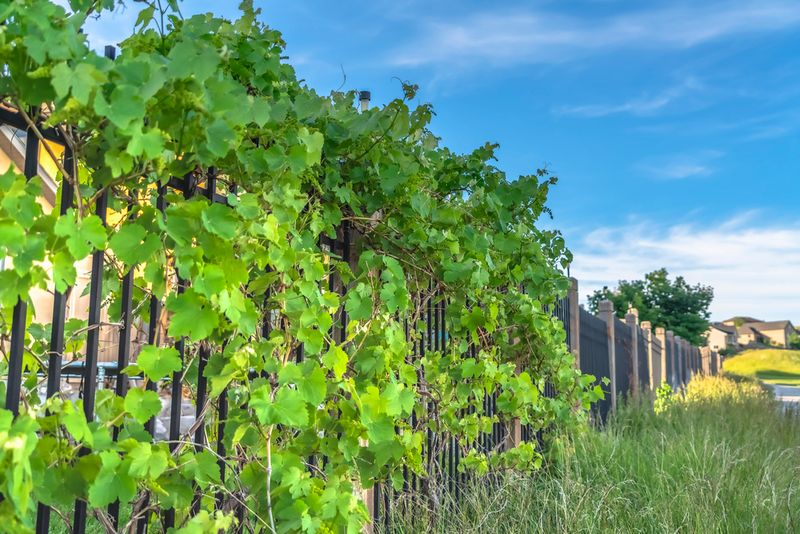
Article 688 refers to trees, bushes, or plants. A vine rooted on your neighbor’s land that stretches onto your side appears to fit within that wording, since a vine is a plant.
That is a reading of the statute’s broad language, not a ruling about vines.
The appellate cases usually cited on this topic involve trees and a hedge. None of them decides a dispute over a vine, so applying the article to one remains an interpretation.
A court could view a vine differently, and readers should keep that uncertainty in mind.
Interference with enjoyment is still necessary. A few tendrils reaching over the fence may be an annoyance without meeting that condition.
The statute gives no bright-line test, so a stray leaf or a minor nuisance should not be assumed to qualify.
A better question is what the vine actually does to you. Does it smother a garden bed, drop heavy debris on your patio, or crowd a walkway?
Concrete problems like these make a stronger case than a general dislike of the sight.
Check Where the Plant and Boundary Are

Before doing anything, find out where the growth starts. A vine rooted on your neighbor’s land and spreading over the line is handled differently from a plant growing right on the boundary.
Look at the base of the plant and see which side of the line it comes out of.
Do not treat the fence as proof of where your land ends. A fence is not necessarily the legal boundary, and many fences sit a bit off the true line.
A survey or your property records give a more reliable answer.
Growth that crosses over from the neighbor’s land falls under Article 688. A plant actually on the boundary falls under Article 687, and the two rules are not interchangeable.
Under Article 687, plants on the boundary are presumed to be common unless there is proof otherwise.
That article also allows a demand to remove a boundary plant that interferes with enjoyment. The difference is the cost, since the adjoining owner who makes that demand bears the expense.
Knowing which rule applies shapes both what you ask for and who pays.
Stay Within the Statute’s Limits
Article 688’s cutting permission is narrow, and a Louisiana case shows what can go wrong when it is stretched. In Bentley v.
Fanguy, an adjoining owner pruned a neighbor’s hedge and pointed to Article 688 as a defense.
The Third Circuit rejected that defense for the pruning at issue. The hedge was substantially damaged, and the case involved a damages award.
The lesson is that the statute covers qualifying branches or roots that cross onto or into your land, not cutting that goes beyond that and harms the plant.
The case does not say that every limited cut needs the neighbor’s permission. It also does not say that any trimming automatically leads to liability.
It is a warning about pruning that exceeds the statute’s scope or does serious harm to a neighbor’s plant, and it involved a hedge, not a vine.
The same statute also lets you demand that the neighbor trim at the neighbor’s expense, which avoids the risk. Whatever you choose, do not enter the neighbor’s land to do the work.
Stay on your side and limit yourself to what has crossed over.
Courts May Order Trimming in Some Cases
When a neighbor ignores a reasonable request, court action may be available for qualifying encroachment. Cosenza v.
Hemmans shows how that can play out. In Cosenza, the Fourth Circuit upheld an order requiring a neighbor to trim trees at least once a year.
Branches in that case crossed the property line. The court found that the combined inconveniences from falling debris interfered with the owner’s enjoyment of the property.
That mix of problems is what justified the order.
Treat the case as an example tied to its own facts. It does not set a universal pruning schedule, and Louisiana has no rule that overhanging growth must be trimmed every year.
It also does not promise relief for every overhanging plant or vine.
If you may end up in court, keep records. Dated photos of debris, notes on how it affects your yard, and copies of your requests to the neighbor help show the real interference.
A lawyer can tell you whether your situation looks like the one in Cosenza.
Take Care With an Unidentified Vine
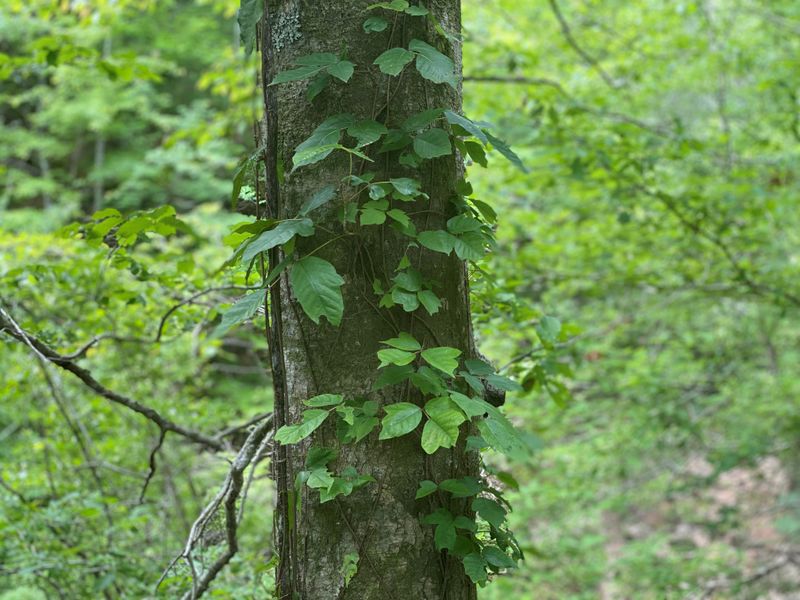
Some vines are not safe to grab. Poison ivy is one of them, and LSU AgCenter guidance explains that urushiol, the irritating oil, is present in all parts of the plant, including the stems.
That means a bare vine in winter can still cause a reaction. If you do not know what a vine is, handle it as though it could be harmful until you have a reliable answer.
Never burn an unidentified vine. The same guidance says burning suspect material can carry the irritant in smoke, which can reach your skin and lungs.
Before you cut or pull anything, get the plant identified by a trusted local source, such as an extension office. Doing that first protects your health and keeps you from damaging something you had no right to touch.
HB 81 Did Not Create a 30-Day Rule

You may hear that Louisiana lets you send a notice, wait 30 days, and then trim a neighbor’s growth yourself. That idea comes from a proposal, not from current law.
HB 81 in 2026 proposed a notice-and-trim approach for specified circumstances.
The bill status page shows that the measure passed the House. Then, according to the Senate committee record, a Senate committee deferred it indefinitely on May 12, 2026.
Because it was never enacted, its notice period is not part of Article 688. Do not rely on it as a waiting period that unlocks a right to cut.
Article 688 as it stands is the rule to follow.
Choose a Practical Next Step
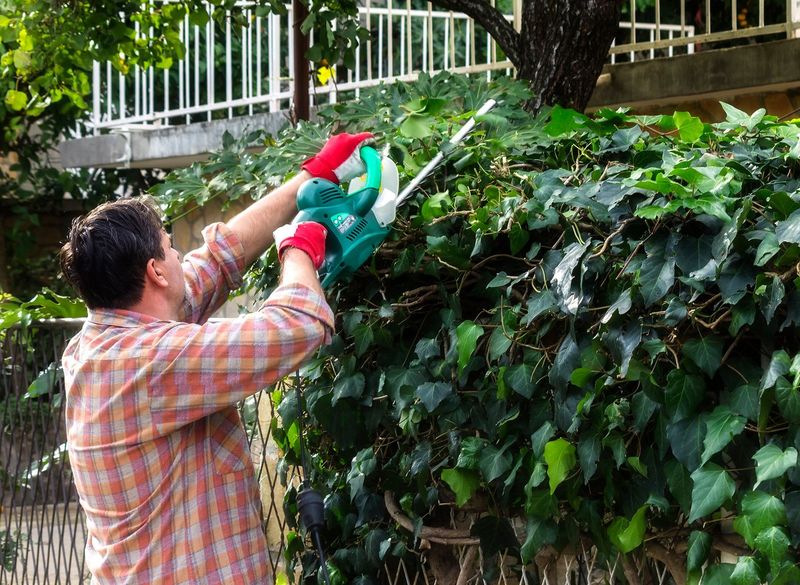
Start by confirming the boundary and where the vine is rooted. Then decide whether the growth truly interferes with your enjoyment of the property.
From there, you can cut only the qualifying encroachment within Article 688’s limits, or ask the neighbor to trim it.
Remember that applying the statute to a vine follows its wording, not a vine ruling, and that Bentley warns against overcutting. A polite request usually beats a pair of shears.
Share this story