A shrew small enough to hide in your palm lives in Louisiana, and plenty of references say its bite is venomous. It spends its life in the leaf litter and rotting wood on the forest floor, the same kind of cover you rake and mulch at home.
Knowing what the science actually shows helps you spot this animal and treat it with calm respect. Here is what we know, what we don’t, and what to do if one ever bites.
Meet the small shrew found across Louisiana
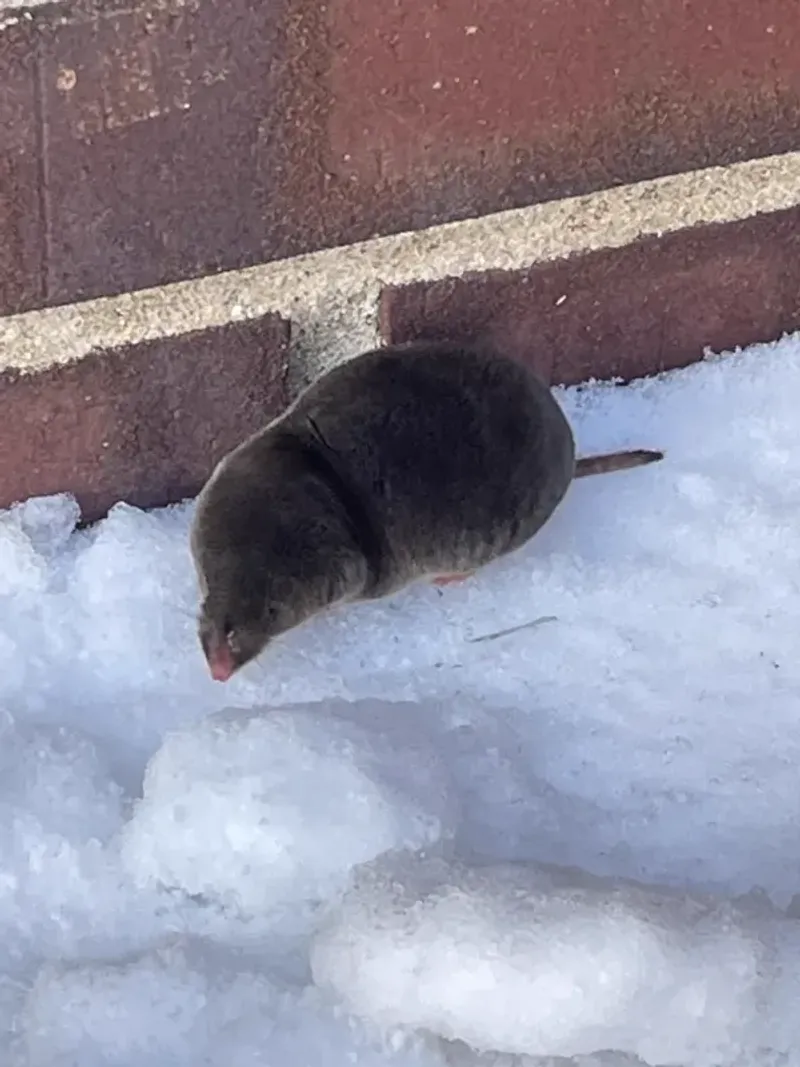
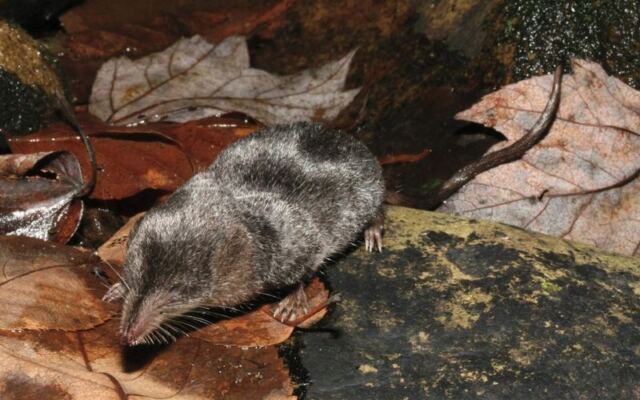
Picture an animal about the length of your hand and lighter than a few coins. The likely animal here is the southern short-tailed shrew, Blarina carolinensis.
A U.S. Forest Service species account gives its total length as 79 to 123 millimeters, which is roughly 3 to 5 inches, and its weight as 8 to 15 grams.
That size is why people call it mouse-sized. It is only shorthand, though.
A shrew is not a mouse. It has a long, pointed snout, tiny eyes, small ears hidden in dense gray fur, and a short tail.
Mice have larger eyes and ears and a longer tail. The same Forest Service account notes that it can be confused with related shrews, so a quick look does not always settle the name.
Louisiana gardeners are in its home range. A peer-reviewed species account from the American Society of Mammalogists reports it throughout the state, and the society’s current species page also lists Louisiana in its range.
Being documented statewide does not mean one lives in every yard or garden bed.
Its size is the easy part of the story. What science has actually shown about its bite is a separate question, and the next sections take it step by step.
Leaf litter can suit it, but does not prove it is in your garden
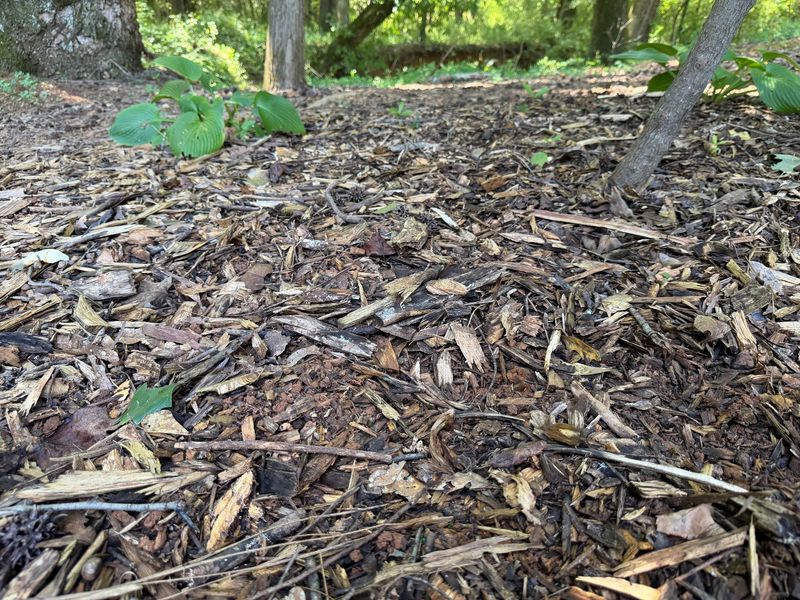
Few small mammals are as flexible about where they live. The Forest Service guide calls the southern short-tailed shrew a habitat generalist, found in forests, old fields, pine stands, and wetlands.
It is not tied to one kind of landscape.
The same guide points to certain features that may support higher densities. These include coarse woody debris, thick leaf litter, and moist microhabitats.
Think fallen logs, deep layers of old leaves, and damp soil. Such spots shelter the insects, worms, snails, and other small prey that shrews hunt.
Gardeners can draw a careful link from that. A leaf pile, a shady bed with a deep layer of fallen leaves, or a damp corner with old branches looks a bit like that natural ground cover.
So it is reasonable to say such spots could suit a shrew.
Suitable is not the same as occupied. The sources do not show that this shrew prefers mulch or garden beds, and they cannot predict whether your yard has one.
A tidy bed in a dry, sunny spot may never see a shrew, while a wooded lot with logs and leaves might.
A practical clue is the surroundings. Yards that border woods or wetlands, with moist, shaded ground, are the most plausible places.
Even there, shrews spend most of their time out of sight.
What researchers have established about its bite
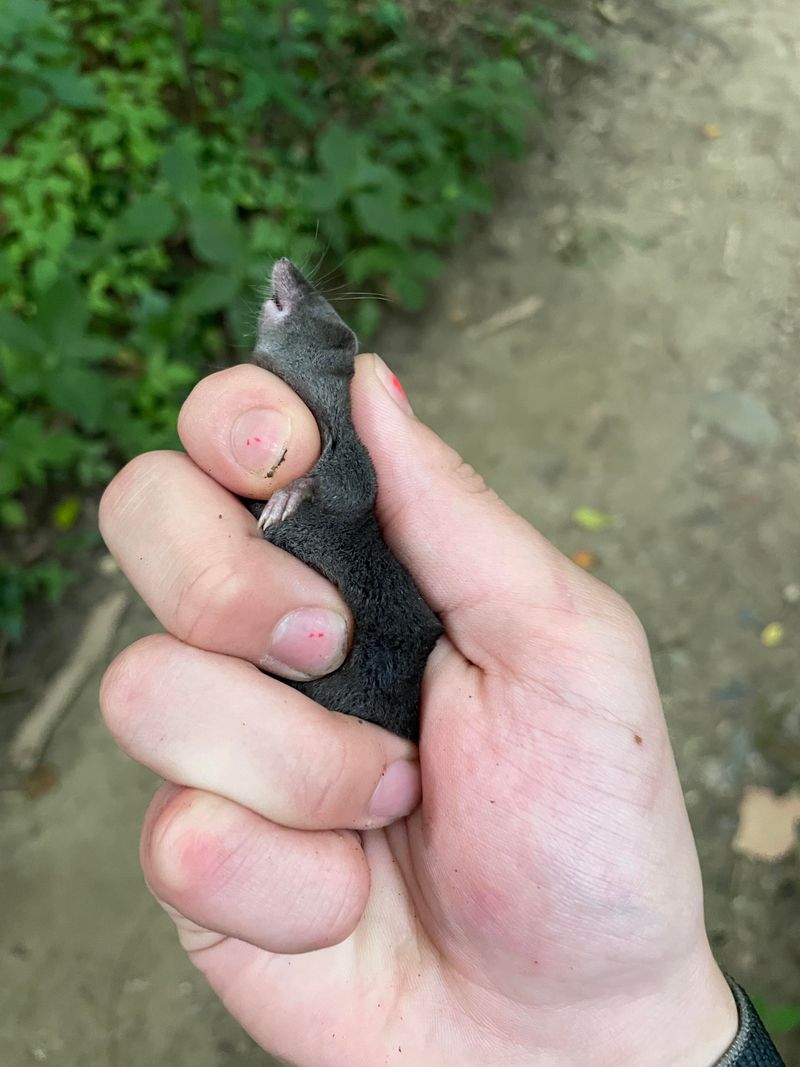
Search for this animal and you will find the word venomous again and again. Some respected references do say so.
The Forest Service guide describes the southern short-tailed shrew as having a venomous bite, and the Texas Tech species account does too.
Those are published descriptions. They are not lab results.
The sources reviewed for this article do not show that anyone has tested this species’ saliva and confirmed venom. The University of Michigan’s Animal Diversity Web account says that test has not been done, and a 2013 review of venom in shrews and their relatives likewise says the southern species’ saliva has not been experimentally tested.
The species does have modified salivary glands, which is one reason the venom label is so common. But a gland shaped a certain way is a clue, not proof.
Repeating a description in several books does not turn it into a test result either.
So the fair reading is simple. Many references call the bite venomous, and that may well be right, but direct testing in this species is missing from what researchers have published and what we reviewed.
That gap is the honest answer, and it is no reason for alarm.
The toxin study examined a northern relative
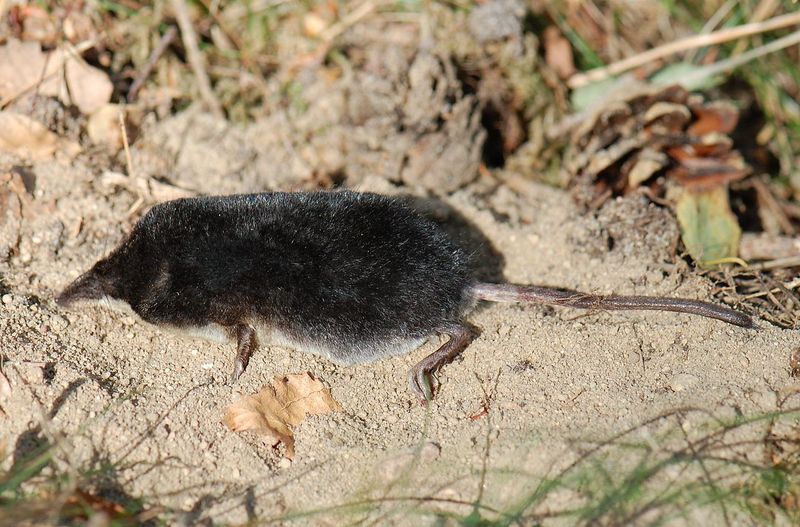
The strongest direct evidence of shrew venom comes from a different animal. In 2004, researchers led by Kita published a study in the Proceedings of the National Academy of Sciences on a toxin from Blarina brevicauda, the northern short-tailed shrew.
That species ranges farther north than Louisiana, and it is not Blarina carolinensis.
The team isolated and characterized a toxin from the northern species’ venom glands. They called it Blarina toxin.
In their tests, the effects were reported in experimentally treated mice, so the findings describe what the toxin did in lab animals.
The paper also mentions accounts of people bitten by the northern species, with local burning and swelling. Those accounts are worth knowing about, but they come with limits.
They describe the northern shrew, not the one in Louisiana.
The two are close relatives, so it is natural to wonder if the southern shrew is similar. That is a fair guess, and it may explain why references use the venom label.
Still, a relative’s toxin does not tell us how toxic the Louisiana shrew’s saliva is, or what a bite would do to a person.
In short, the study shows that one shrew species makes a real toxin. It does not settle the question for ours.
Use care when moving leaf litter
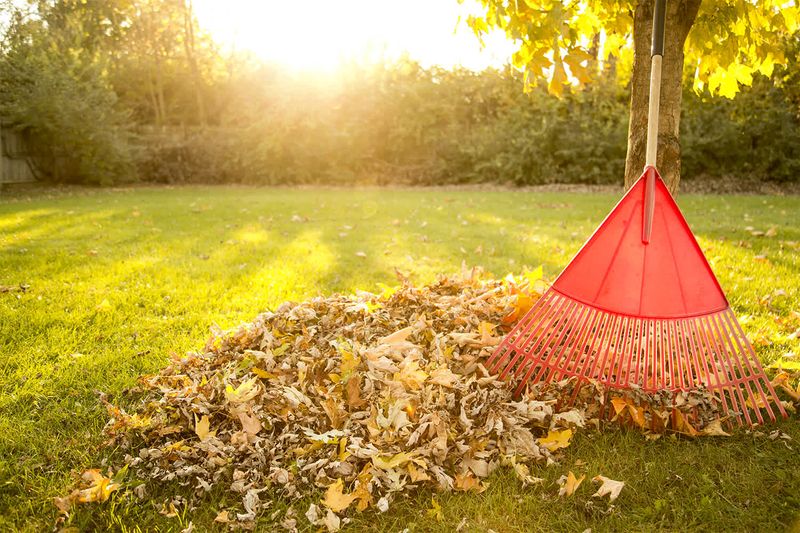
Most yard chores never bring you face to face with a shrew, and they should not make you nervous. Still, a few easy habits make sense any time you disturb ground cover where small wild animals could be tucked away.
Wear sturdy gloves, and use a rake or a hand tool to turn leaves or move debris instead of scooping it up with bare hands. Go slowly so anything hiding underneath has time to slip away.
These are general wildlife precautions. They are not shrew-specific rules from any agency, and they do not mean a bite is likely.
If you do spot a small animal, resist the urge to pick it up for a closer look. Handling is not needed to identify it, and a photo from a distance works just as well.
CDC wildlife guidance encourages people to enjoy wild animals from a distance and not to handle them.
Simply step back and let it go on its way. Shrews are shy, fast, and busy, and most would rather escape than stay.
You do not need to capture or kill anything, and no special mulch depth or yard treatment is recommended here. Leaving the animal alone is the simplest way to avoid a bite.
After a bite, wash the wound and get professional advice
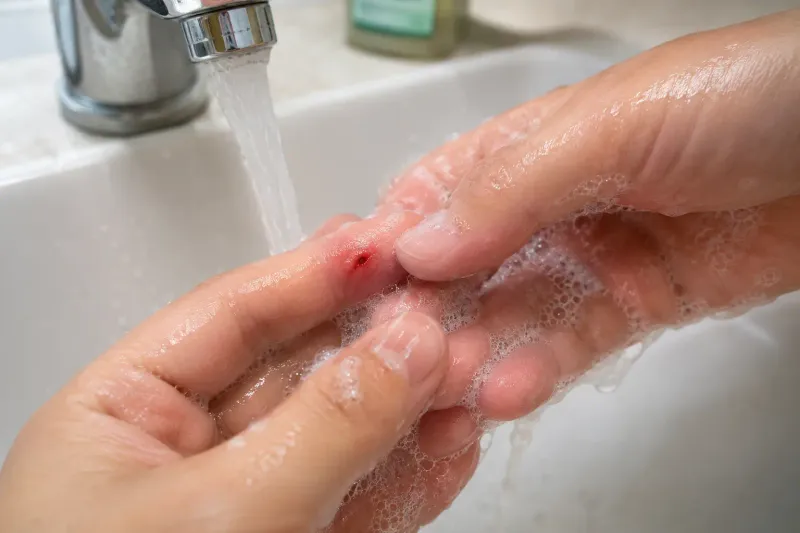
Bites are not expected, but a clear plan helps. If any wild animal bites you, start with the wound.
Wash it with soap and water for 15 minutes, as CDC advice on when to seek medical care recommends for wildlife bites.
Next, call a health professional or your local public health authority and describe what happened. They can talk through rabies risk based on the animal and the situation.
That judgment is theirs to make, so there is no need to guess on your own. Rabies is not a known special concern with this shrew.
Get medical attention sooner if the wound looks serious, bleeds a lot, or does not stop hurting. Watch for signs of infection in the following days, such as spreading redness, warmth, swelling, pus, or fever.
If you can safely note what the animal looked like, that detail may help the professionals. Do not try to catch it.
The takeaway is simple: leave wild animals alone, and if one bites you, wash well and ask for advice.
Share this story