Get the latest garden guides in your inbox →
Gardening Latest
  • General Gardening
  • Lawn Care
  • Plant Care
  • Composting
  • Soil Health
  • Backyard
  • Garden Muse Magazine
  • General Gardening
  • Lawn Care
  • Plant Care
  • Composting
  • Soil Health
  • Backyard
  • Garden Muse Magazine
  • News
  • Gardening Calendar
  • Garden Structures
  • Vegetable Garden
  • Vertical Garden
  • Raised Beds
  • Hydroponics
  • General Equipment
  • Community Gardens
Garden Themes
  • Spiritual Garden
  • Hydroseeding
  • Seeding and Laying Sod
  • Artificial Grass
  • Lawn Care Equipment
  • Plants
  • Trees
  • Planting Tools
  • Composting Basics
  • Fertilizer
  • Alternative Growing Mediums
  • Front Yard
  • Backyard Activities
  • Landscaping
Gardening Latest

Explore by state

Which state is your garden in?

Currently viewing Maryland

All states

Northeast

  • Connecticut —
  • Delaware 33
  • Maine —
  • Maryland 19
  • Massachusetts 35
  • New Hampshire —
  • New Jersey 19
  • New York 28
  • Pennsylvania 28
  • Rhode Island —
  • Vermont —

Southeast

  • Alabama 19
  • Arkansas —
  • Florida 19
  • Georgia 19
  • Kentucky 33
  • Louisiana 18
  • Mississippi —
  • North Carolina 17
  • South Carolina 32
  • Tennessee 16
  • Virginia 18
  • West Virginia —

Midwest

  • Illinois 18
  • Indiana 20
  • Iowa 32
  • Kansas —
  • Michigan 19
  • Minnesota 18
  • Missouri 18
  • Nebraska —
  • North Dakota —
  • Ohio 19
  • South Dakota —
  • Wisconsin 34

Southwest

  • Arizona 19
  • Colorado —
  • Nevada —
  • New Mexico —
  • Oklahoma —
  • Texas 18
  • Utah —

West

  • Alaska —
  • California 19
  • Hawaii —
  • Idaho —
  • Montana —
  • Oregon —
  • Washington —
  • Wyoming —

No state matches that search.

Site menu

Gardening Latest
  • General Gardening
    • News
    • Gardening Calendar
    • Garden Structures
    • Vegetable Garden
    • Vertical Garden
    • Raised Beds
    • Hydroponics
    • General Equipment
    • Community Gardens
    Garden Themes
    • Spiritual Garden
  • Lawn Care
    • Hydroseeding
    • Seeding and Laying Sod
    • Artificial Grass
    • Lawn Care Equipment
  • Plant Care
    • Plants
    • Trees
    • Planting Tools
  • Composting
    • Composting Basics
  • Soil Health
    • Fertilizer
    • Alternative Growing Mediums
  • Backyard
    • Front Yard
    • Backyard Activities
    • Landscaping
  • Garden Muse Magazine

Explore

  • About GardeningLatest.com
  • Contact Us

Get the latest from the garden

New guides on lawn care, plants and backyard projects, sent when they go up.

Subscribe →

Follow

  • Facebook
  • X
  • Pinterest
  • YouTube
Maryland Gardening

Thinking About Cutting Your Neighbor’s Vines Over The Fence? Here’s What Maryland Law Says First

In Maryland, you can generally cut a neighbor's vine back to the actual property line, and you pay for the work yourself…

GC

By Grace Calvert

November 25, 2026 · 6 min read

Thinking About Cutting Your Neighbor’s Vines Over The Fence? Here’s What Maryland Law Says First

In Maryland, you can generally cut a neighbor’s vine back to the actual property line, and you pay for the work yourself. That sounds simple, but the details matter a lot.

A fence may not sit on the real boundary, and stepping onto the other side can cause trouble. Here is how to handle that creeping vine without starting a feud.

At a glance

Where
Maryland Gardening
Hardiness zone
7 0 to 10°F
Read
6 minutes
Published
November 25, 2026

Maryland generally expects the affected landowner to act

Maryland generally expects the affected landowner to act
© Issuu

Maryland generally uses a practice called self-help when a neighbor’s plants grow across the line. That means the person whose yard is affected is usually the one who acts.

You should not assume your neighbor has to remove the vine or pay for ordinary plant growth.

The leading case is Melnick v. C.S.X.

Corp., decided by Maryland’s highest court in 1988. The full opinion talks about vines directly.

It supports cutting encroaching growth back to the property line, and the landowner who does the cutting covers the cost.

A summary from University of Maryland Extension explains the same idea in plain terms for homeowners. If a neighbor’s plant crosses over, the usual path is to trim what is on your side rather than demand that the neighbor fix it.

Notice the word generally. The court described self-help as the rule in almost all circumstances, which is not the same as a promise that it settles every dispute.

Easements, local codes, and special safety problems can call for a separate look. The next sections cover how to check your boundary and where your right to cut ends, so you can act with confidence and stay out of trouble.

Check the actual boundary before you cut

Check the actual boundary before you cut
© Shatkoff Fencing

Many people treat a fence as the edge of their yard. In reality, fences are often built a little inside or outside the true line.

A fence by itself cannot prove where your property ends.

This matters because the general cutback rule stops at the actual line, not necessarily at the fence. If you trim at the fence and the real boundary is farther over, you may have cut on land that is not yours.

UMD Extension advises long sleeves, long pants, gloves, and boots so the plant’s oil never touches bare skin.

The reverse can happen too, and you might leave growth that you were free to remove.

Start with your property records, such as your deed and any survey or plat you received at closing. If the line is still unclear, consider hiring a licensed surveyor to mark it.

A City of Takoma Park guide makes a similar point, noting that a surveyor is needed to determine a property line.

Keep in mind that a city guide gives general advice. It cannot tell you where your own boundary runs.

Only your records or a survey can do that, so settle the question before the first cut.

Stay on your side and stop at the line

Stay on your side and stop at the line
© Baltimore Sun

The right to trim is narrow. You may cut the growth that reaches onto your own parcel, and you stop at the actual boundary.

According to the Maryland Department of Natural Resources study guide, the rule allows cutback to the property line but not entry onto the neighbor’s land.

That limit has real consequences. Seeing a vine cross the fence does not give you the right to cut the whole plant.

Reaching over to pull growth from the neighbor’s side, digging up the vine where it is rooted, or cutting down the tree it climbs all go beyond a limited cutback. Those steps need the neighbor’s permission or some other legal authority.

The Melnick opinion also makes clear that the cutback should not destroy the neighbor’s plant or tree. Trimming back to the line is one thing.

Damaging or killing the plant is another, and it could leave you answering for the harm.

If the best fix requires getting onto the other side, simply ask. A friendly conversation, ideally with a quick written note or text, can save a lot of trouble.

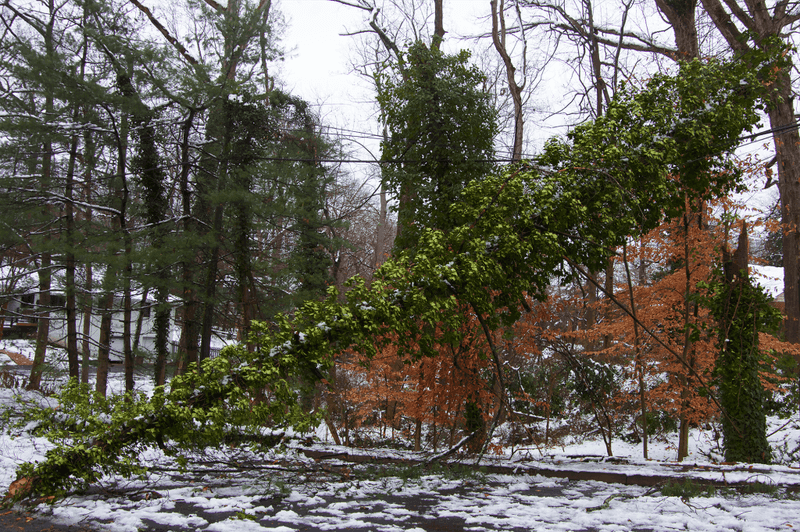
Identify the vine before deciding what it does to a tree
Identify the vine before deciding what it does to a tree
© Piedmont Master Gardeners

Not every vine is a tree killer, so figure out what you have before you make claims or pick a removal plan. A wrong guess could lead to a tense talk with your neighbor or an unnecessary job.

University of Maryland Extension says poison ivy does not harm the tree it climbs. It is a problem for your skin, not for the host tree.

English ivy is a different story, since UMD Extension notes that it can damage trees when it climbs their trunks.

Those two findings apply to those two plants. They do not mean every vine is harmless or that every vine is destructive.

If you are unsure, take clear photos of the leaves and stems and ask your county extension office for help identifying it.

Knowing the plant helps you explain your concern fairly and choose safe steps. It does not widen your legal rights, though.

Even a harmful vine on the neighbor’s side stays off limits unless the neighbor agrees to the work.

Know when to stop and call a professional
Know when to stop and call a professional
© Tree Removal

Some vine jobs are bigger than they look. If the plant might be poison ivy, cover up first.

UMD Extension advises long sleeves, long pants, gloves, and boots so the plant’s oil never touches bare skin.

Wash your work clothes separately from the rest of your laundry afterward. Tools and gloves can carry the oil too, so handle them with care.

Never burn suspected poison ivy. The toxins can travel in smoke and cause serious breathing problems if inhaled.

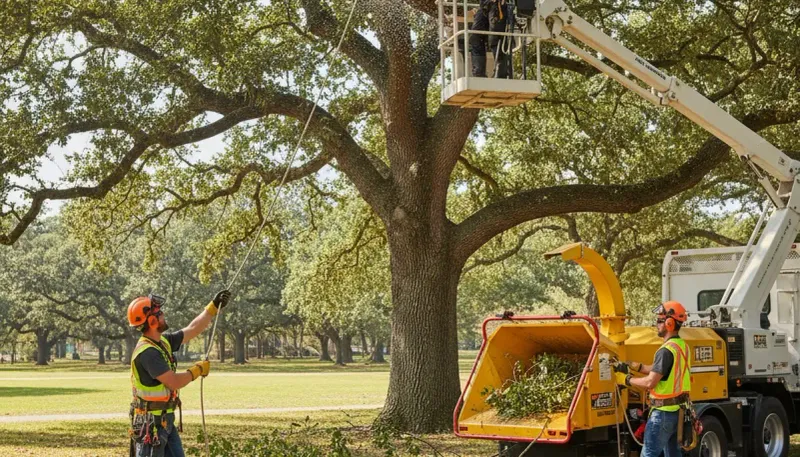
Know your limits with height and size as well. UMD Extension warns that work involving climbing, large trees, or overhead wires is dangerous.

Hire a licensed tree expert or certified arborist for those jobs rather than trying them yourself.

A ladder, a chainsaw, and a tangled vine near a power line are a poor mix. Paying a professional costs far less than an injury, and a pro can also help you keep the cutback within your own property line.

Local rules and special property interests may matter

State-level guidance is only part of the picture. Easements, such as those for utilities, can limit what anyone may do with plants along a boundary.

Public rights-of-way, like land beside a road, may also call for a separate review before you cut anything.

Local governments add their own rules. Takoma Park, for example, has a tree-impact assessment requirement for certain pruning, as shown on its tree ownership and right-to-prune page.

That is a local example, not a statewide law, so check what your own city or county requires.

For trees in a public road right-of-way, Maryland DNR’s Roadside Tree Program requires a permit for tree work.

You may also hear about a state tree-damage law. Natural Resources Article section 5-409 is narrow.

It covers specified wrongful entry involving merchantable trees or timber, and it is not a rule about cutting any vine or plant.

If an easement, a public strip, or a local code might apply, pause and get that answered first.

Make a measured plan before trimming
Make a measured plan before trimming
© Cactus Decking

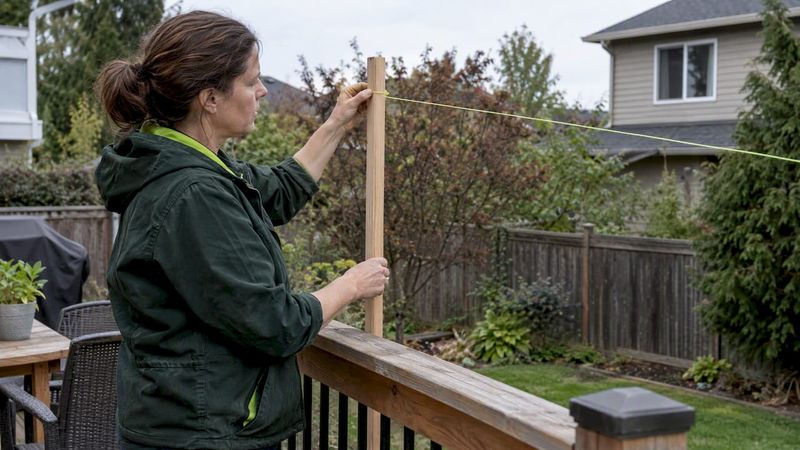
Start by confirming where the actual boundary runs, using your records or a surveyor. Next, identify the vine so you know what hazards come with it.

Then limit any cutback to the growth on your side of the line, as described in the DNR study guide and the Melnick opinion.

Ask your neighbor before crossing the line for any reason. If the boundary, the hazards, or a local requirement feels uncertain, stop and sort it out first.

A vine that took years to cross the fence will wait a few days for good information.

Share this story

GC

Written by

Grace Calvert

More from Grace Calvert →

About Gardening Latest

Gardening Latest provides in-depth guides to maintaining and enhancing your garden and backyard. Learn how to make the most of the space you have and create a beautiful garden.

More about us →

Latest stories

  • California GardeningIf a Gray Fox Keeps Trotting Through Your California Yard This Winter, Here’s What It’s After

    If a Gray Fox Keeps Trotting Through Your California Yard This Winter, Here’s What It’s After

    11 hr ago
  • Arizona GardeningWhen a Gray Fox Trots Through Your Arizona Yard This Winter, It’s on a Mission

    When a Gray Fox Trots Through Your Arizona Yard This Winter, It’s on a Mission

    12 hr ago
  • Texas GardeningNeighbor Vines Crossing Into Your Texas Yard: Texas Tree-Branch Guidance Is Clear, but the Answer for Vines Is Less Settled

    Neighbor Vines Crossing Into Your Texas Yard: Texas Tree-Branch Guidance Is Clear, but the Answer for Vines Is Less Settled

    12 hr ago
  • Wisconsin GardeningWisconsin Neighbors Fight Over Snow Piled on Their Property, and Here’s What the Law Actually Says

    Wisconsin Neighbors Fight Over Snow Piled on Their Property, and Here’s What the Law Actually Says

    12 hr ago
  • Missouri GardeningYellow Jackets Nesting Near Your Missouri Home? This Is What You Should Do First

    Yellow Jackets Nesting Near Your Missouri Home? This Is What You Should Do First

    12 hr ago

Gardening by state

Stories for your state, and the hardiness zone most of it gardens in.

Keep exploring

Read next

All Maryland Gardening →
Maryland GardeningYour Neighbor’s Tree Fell on Your Maryland Property, and Who Pays Isn’t Who You’d Expect
Maryland Gardening

Your Neighbor’s Tree Fell on Your Maryland Property, and Who Pays Isn’t Who You’d Expect

13 hr ago
Maryland GardeningA Red Fox Crossing Your Maryland Yard This Winter Is Doing Exactly What It’s Supposed To
Maryland Gardening

A Red Fox Crossing Your Maryland Yard This Winter Is Doing Exactly What It’s Supposed To

19 hr ago
Maryland GardeningSaddleback Caterpillars Lurk in Maryland Gardens Each Fall, and Here’s How to Treat a Sting
Maryland Gardening

Saddleback Caterpillars Lurk in Maryland Gardens Each Fall, and Here’s How to Treat a Sting

22 hr ago

More from Maryland Gardening

  • The Hammer-Headed Worm Showing Up In Maryland Gardens Carries The Same Toxin As Pufferfish

    Nov 24
  • The One Clue In Your Maryland Yard That Means A Coyote Walked Through Overnight

    Nov 23
Back to top

Leave a response Cancel

Your email address stays private. Required fields are marked with an asterisk.

Gardening Latest

In-depth guides to maintaining and enhancing your garden and backyard: how to make the most of the space you have, and how to make it beautiful.

  • Facebook
  • X
  • Pinterest
  • YouTube

We may earn a portion of sales from products or services that are purchased through our site as part of our affiliate partnerships with retailers.

Explore

  • About GardeningLatest.com
  • Contact Us
  • Terms and Conditions
  • Privacy
  • Editorial Note:
  • FTC Disclosure

Newsletter

New garden guides and seasonal tips, straight to your inbox.

We’ll email you a link to confirm. Unsubscribe any time.

Almost there! Check your inbox and tap the link to confirm.

© 2026 Gardening Latest. All rights reserved.

Back to top