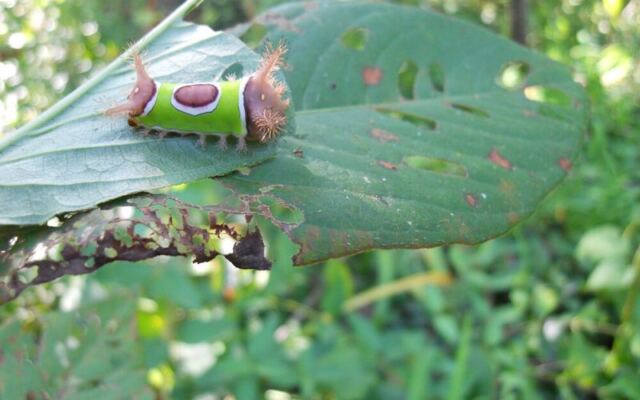
If a saddleback caterpillar touches your skin, lift the spines off with sticky tape, wash gently with soap and water, then ease the pain with a wrapped cold pack. These small, spiny caterpillars can turn up in Maryland yards in late summer, so it helps to know what to do before you reach for the pruning shears.
Most gardeners will never meet one, but a brush with its spines can hurt. A few calm steps can make a big difference.
Saddlebacks can appear in Maryland in late summer
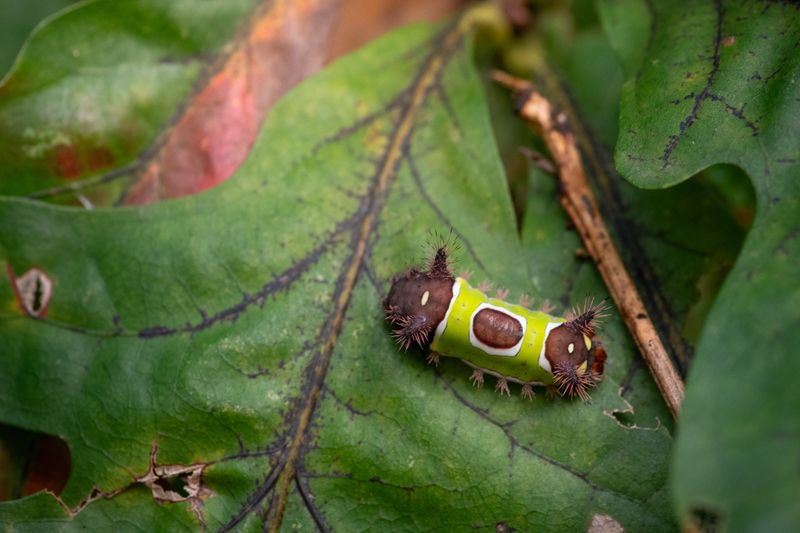
Garden work in August can bring surprises, and one of them is the saddleback caterpillar. University of Maryland Extension landscape reports have noted saddlebacks on shrubs, small trees, perennials, and weeds in August and early September.
That makes late summer and early fall the time to stay alert, though they are not limited to autumn.
Seeing one is not a given. Maryland Extension’s caterpillar overview says stinging caterpillars are not frequently encountered, so there is no reason to fear every leafy corner of your yard.
A little awareness is plenty.
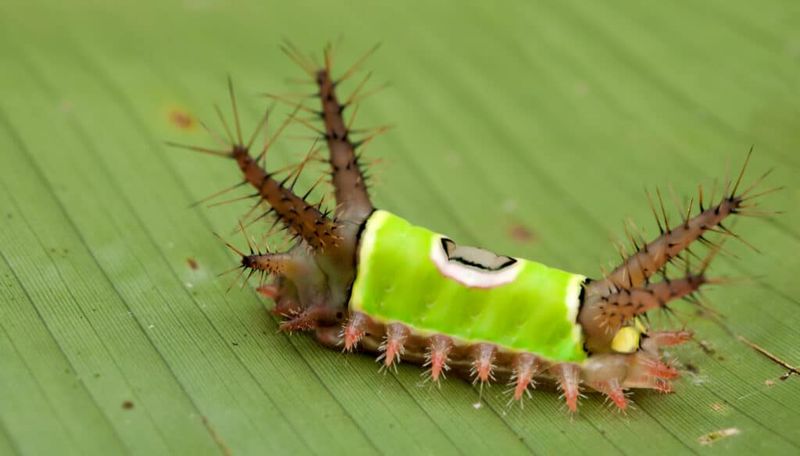
The saddleback (Acharia stimulea) is easy to spot once you know the look. Its body is brown, and a bright lime-green patch on its back looks a bit like a saddle blanket.
Short spines stick out along its body, and it grows to a little over an inch long.
Resist the urge to pick one up for a closer look or to confirm what it is. The spines are the part that causes trouble, and they can do so even on a small caterpillar.
Take a photo from a safe distance instead, or wear thick gloves and long sleeves when you work around shrubs and weedy patches during these weeks.
If you are unsure what you are seeing, a photo is also handy for asking your local extension office for help with identification.
Their spines can cause a painful skin reaction
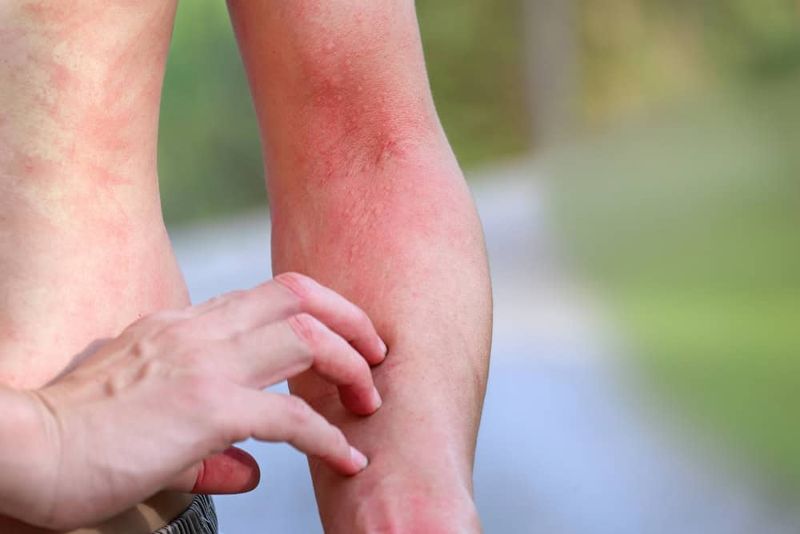
Despite the common word “sting,” a saddleback does not jab like a wasp. Its spines or hairs cause the problem when they touch skin.
North Carolina State Extension describes the spines breaking off and causing a painful local reaction.
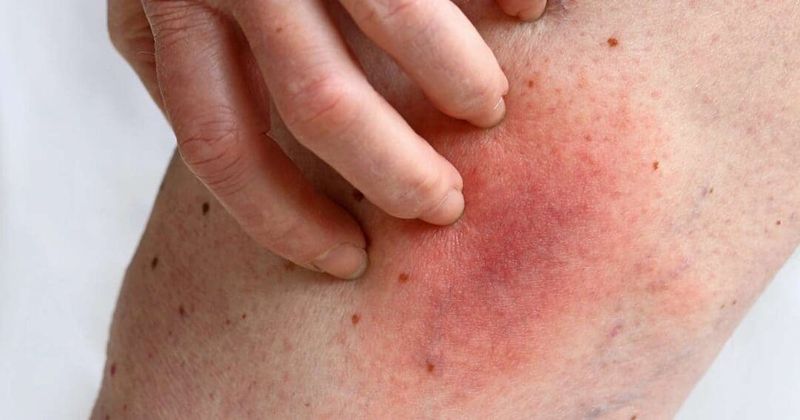
Contact can lead to a burning or itchy feeling, and some people also notice redness, swelling, or blisters. Not every brush with a caterpillar causes a reaction, and the strength of the reaction varies from person to person.
Poison Control’s caterpillar guidance covers these skin symptoms and what to do about them.
A painful, red, or swollen patch is a local reaction. It is uncomfortable, but by itself it does not prove a severe allergic reaction.
Other body-wide symptoms are a different matter, and a later section covers them.
Also keep in mind that saddlebacks are not the only irritating caterpillars around. University of Maryland Extension notes that Maryland has other caterpillars with irritating hairs or stinging spines.
So if you get a rash after yard work, do not assume the culprit was a saddleback.
The first-aid steps are much the same either way, and avoiding contact with any unfamiliar fuzzy or spiny caterpillar is the safest habit.
Lift the spines with tape, then wash the skin
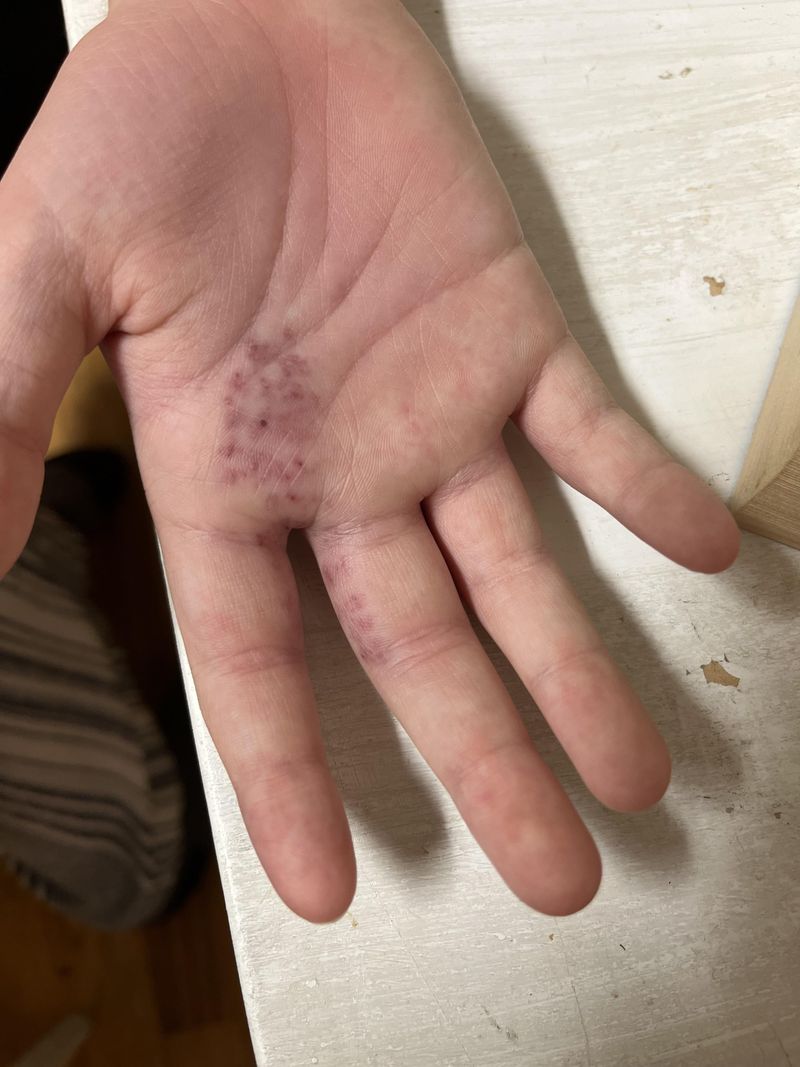
Quick action matters, and the order of steps matters too. If a caterpillar is still on your skin, do not brush it off with a bare hand.
Remove it without using your fingers, for example by flicking it away with a stick or a folded piece of paper, then deal with the skin.
Next, press a piece of sticky tape gently onto the affected area and lift it straight off. Spines that stay behind can often be pulled out this way.
Poison Control advises using fresh pieces of tape and repeating as needed.
Once the tape has done its job, wash the area gently with soap and water. Use a light touch, since scrubbing hard can irritate skin that is already sore.
Do not pick at the spines with your fingernails or tweezers, and do not squeeze the area. Pressing or digging can push tiny spines deeper or break them into smaller pieces.
Only after the spines are lifted and the skin is washed should you turn to comfort measures like a cold pack or creams. Those help with symptoms, but they do not replace taking the spines off the skin.
If you were wearing gloves or a sleeve that touched the caterpillar, handle those carefully too, since spines may cling to fabric.
Ease pain and itching after cleaning the skin
Once the spines are gone and the skin is clean, comfort care can help. A cold pack wrapped in a thin cloth may ease the pain.
Do not place ice directly on bare skin, and remember that cold is for comfort only, not a cure.
For pain, Poison Control notes that oral pain relievers such as acetaminophen or ibuprofen can help. Read and follow the label, and check with a doctor or pharmacist if you have health conditions or take other medicines.
Medicine advice is personal, and what suits one person may not suit another.
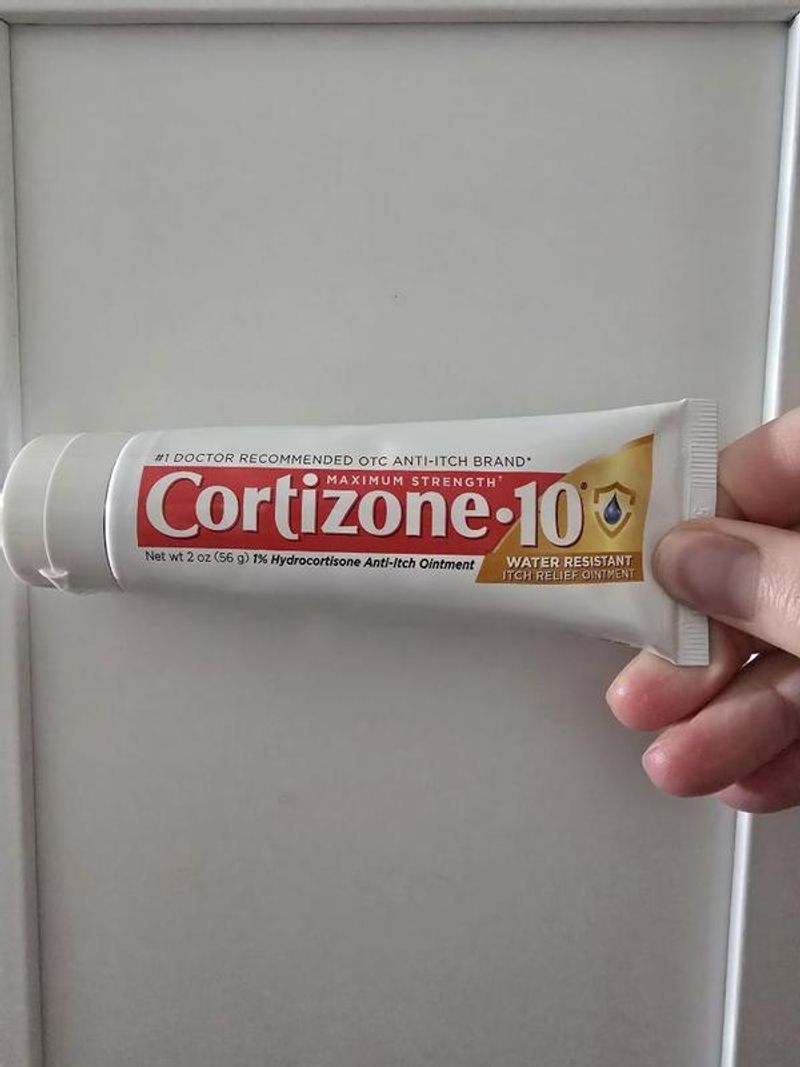
If itching is the bigger problem, hydrocortisone cream is the first option Poison Control suggests. If that does not help, it lists an oral or topical antihistamine as a later step.
Keep in mind that some people react to antihistamine creams, so stop using one if your skin looks worse.
You may come across folk advice about baking-soda paste. It is not established first aid, and it is not a step to rely on here.
Stick with removing the spines, washing, and the symptom relief above.
Mild soreness or itching often settles over a short time. If the area keeps getting worse, blisters widen, or you feel unsure, contact a health professional or Poison Control for guidance.
Know which reactions need emergency care
Most caterpillar contact stays on the skin, but a small number of people have a serious allergic reaction. The difference is in where the symptoms show up.
A sore, red, or swollen patch right at the contact spot is a local reaction. It does not mean anaphylaxis on its own.
Call 911 if you or someone else has trouble breathing or wheezing, swelling of the face or mouth, throat tightness or trouble swallowing, faintness, or marked weakness. MedlinePlus guidance on insect bites and stings lists these as signs of a severe allergic reaction.
If the person has prescribed emergency epinephrine, use it as directed and still get emergency help. Do not wait to see whether the symptoms pass, and do not drive yourself if you feel faint.
Picture a gardener who gets a burning red patch on a wrist but feels fine otherwise. That person can follow the tape and washing steps at home.
Now picture a gardener with the same patch who also feels lightheaded and tight in the throat. That is an emergency.
If you are unsure which situation you are in, Poison Control can help you sort through symptoms. When breathing is involved, call 911 first.
Rinse the eye and get advice when needed
Eyes need special care. If spines or hairs from a caterpillar reach an eye, rinse it with lukewarm water.
Poison Control advises getting medical advice if irritation continues after rinsing. Avoid rubbing the eye, since that can make irritation worse.
For any suspected caterpillar exposure or questions about treatment, you can call Poison Control at 1-800-222-1222. It is a handy number to save in your phone before you start fall yard work.
Gardening in late summer does not need to feel risky. Keep your distance from caterpillars you cannot identify, and wear gloves and long sleeves when you trim shrubs or pull weeds.
If skin contact does happen, remember the order: lift the spines with tape, wash gently with soap and water, and then care for the symptoms.
A spiny caterpillar is small, but a little caution lets you enjoy the garden without worry.
Share this story