
Seeing a red fox trot across your Maryland yard in winter is a normal part of life with local wildlife. These foxes stay active all year, so a cold-season visitor is not a strange event.
What the fox was up to is something a quick glance cannot tell you. Here is what a sighting means, what it does not, and how to respond calmly.
A winter crossing can be normal fox movement
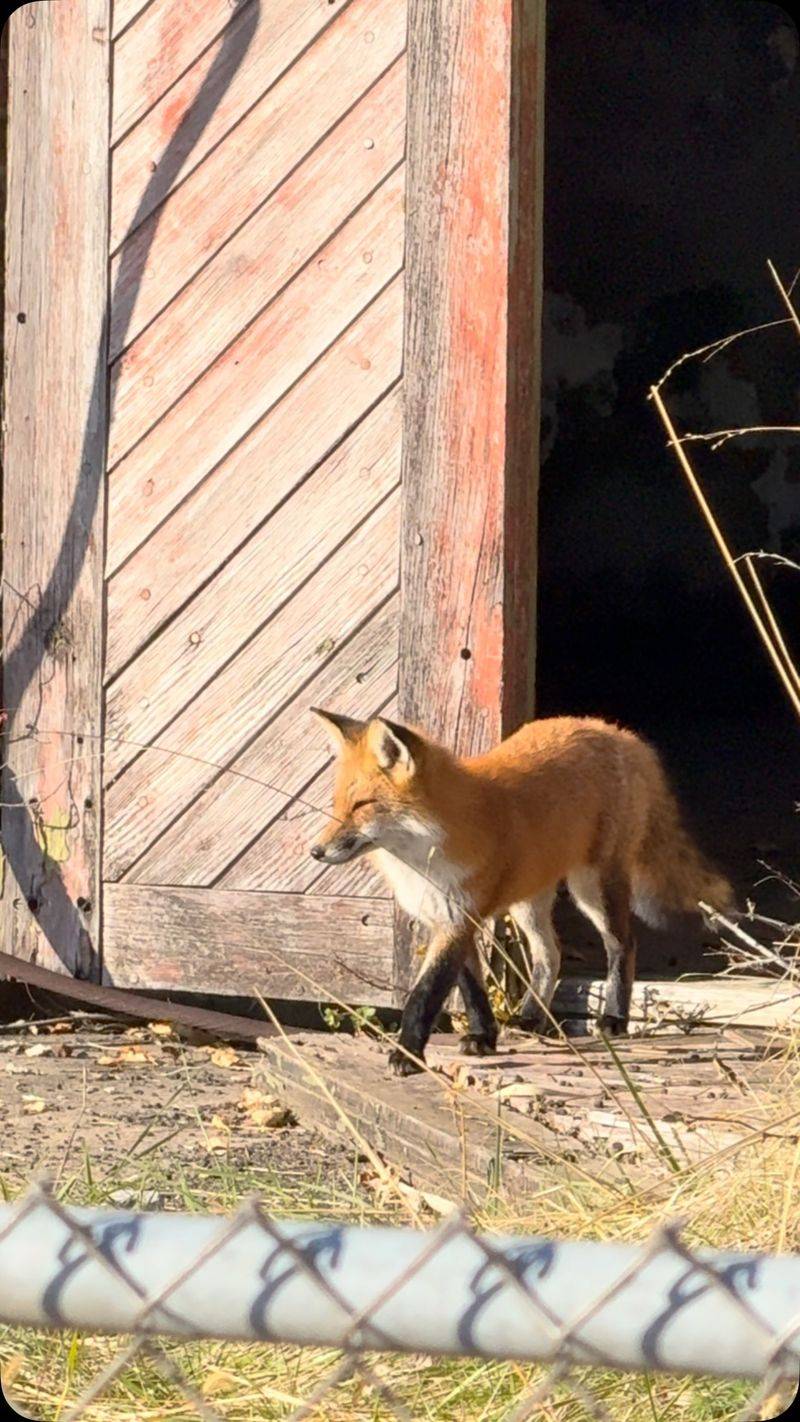
Red foxes do not take the winter off. Maryland Department of Natural Resources materials say red foxes are active year-round and do not hibernate.
They can be seen at any time of day, though they hunt most often around dawn and dusk.
So a fox moving across your lawn in January is doing what Maryland red foxes do in every season. Cold weather does not tuck them away, and a winter sighting is not unusual on its own.
The state also notes that red foxes live in urban and suburban areas, which means yards and neighborhoods are part of the landscape they move through.
There is a limit to what one glimpse can tell you. A fox crossing a yard fits ordinary movement, but it does not show that the animal is healthy, and it does not show that every sighting is harmless.
It also cannot tell you why the fox was there. You were only watching a few seconds of its day.
That is a useful way to think about it. A sighting is just a sighting, not a reason to worry and not a reason to relax your guard.
Whatever the fox is doing, it is still a wild animal, so enjoy the view from a distance, keep pets close, and let it go on its way.
The sections ahead separate a quick pass-through from situations that deserve more attention, and they explain what to do if something goes wrong.
Suburban yards can be part of fox habitat

Red foxes live throughout Maryland, and they adjust well to towns and suburbs. According to the Maryland DNR red fox page, they do well in landscapes that mix open areas with cover.
A neighborhood with lawns, hedges, wood edges, and small green spaces can fit that description.
Their menu is wide, too. Red foxes eat both animal and plant foods, so there is no single item that explains their presence near homes.
That variety is part of why they can live in so many places. It does not tell you what any particular fox was hunting or seeking when it passed your window.
Maryland has two fox species, so it helps to look carefully before assuming. The red fox typically has a white tail tip, while the gray fox has a black tail tip.
Lighting, distance, and a quick glimpse can make that hard to judge, so treat tail color as a clue and not as a guarantee.
Knowing which fox you saw is handy if you later describe it to a neighbor or to local animal control. Either way, the same practical habits apply: stay back, keep pets protected, and avoid leaving out things that might draw wildlife close.
Breeding season provides context, not a reason

Winter lines up with an important stretch of the fox calendar. Maryland DNR says red foxes generally breed from January through March.
Females then give birth in spring, after about 51 to 53 days, to litters that average four or five pups.
That timeline is useful background, but it is not an explanation for the fox in your yard. A sighting alone cannot establish a fox’s motive.
The animal may or may not have been looking for a mate, and it may or may not have been heading anywhere in particular. Nothing you saw in a few seconds can settle that.
Spring denning is the other piece. While raising pups, foxes may use abandoned groundhog burrows or spaces beneath decks and sheds.
That is worth knowing if you have an open gap under a structure, but a fox crossing your lawn in winter is not proof that it is scouting a den.
Think of breeding season as the backdrop for the months ahead. If you see a fox in February, you can note that it is the season and leave it there.
Wait for what the fox actually does over time, such as repeated visits or a particular spot it keeps using, before drawing any conclusions.
Daylight alone does not diagnose rabies

Many people assume a fox out in the daytime must be sick. Maryland guidance does not support that.
The DNR furbearer guide says foxes can be seen at any time of day, and Montgomery Parks says a daytime sighting is not necessarily a sign of illness.
The flip side matters too. Daylight activity alone does not indicate rabies, but it also cannot rule out illness.
Time of day simply is not a useful test either way, so please do not try to diagnose a fox from your window.
There are other reasons a fox may be visible in daylight. Maryland DNR notes that foxes with mange may be out more during the day because they need more food and may seek warmth near buildings.
That is one possible explanation, not a rule for every daytime fox.
What should you do? Keep your distance and keep pets away.
If a fox’s behavior worries you, or if anyone has had contact with it, seek professional advice. The Maryland Department of Health lists foxes among the animals in which rabies is found, which is one more reason to give every wild fox room.
Repeated visits and denning are different from a crossing

One pass across the lawn and a fox that keeps coming back are not the same situation. A brief crossing is a fox moving through.
Repeated visits to the same spot, especially around food, suggest the fox has found something worth returning to.
Denning is another step further. As the Maryland DNR notes, foxes may use spaces beneath decks and sheds while raising pups.
If you spot a fox regularly going under a structure, that is a yard-use issue worth addressing.
Neither pattern proves that a fox is sick, and neither is a reason to approach it. Do not corner it, try to handle it, or attempt to treat it.
Stay inside, or at a comfortable distance, and let it be.
Where food is involved, Montgomery Parks guidance points toward removing what draws foxes in and not feeding them. Cutting off easy meals is usually the first practical move, and it needs no confrontation.
A simple habit helps: notice how often and where. A single visit in the afternoon is a story to tell.
The same fox at the same corner every evening is a pattern to act on, using the steps in the next section.
Secure food sources and protect pets

Most prevention is about making your yard less rewarding. Maryland health guidance advises against feeding wild animals, keeping garbage covered, and not leaving pet food outside.
Bring bowls in after meals, and use lids that close.
Montgomery Parks adds a few more steps. Secure compost and birdseed, since both can draw wildlife.
Keep pets indoors at night, and keep livestock in secure enclosures.
For pets, think distance and supervision. CDC wildlife guidance supports keeping pets away from wild animals.
Keep dogs leashed, watch small dogs when they are outside, and keep cats indoors.
Do not chase a fox, corner it, or try to treat it. Never feed it, even a little.
If a fox is around, calmly call your pet inside and wait for the animal to move on.
A fox is not a guaranteed danger, but it is not guaranteed harmless either. Closing off food and keeping your animals close is a quiet way to protect everyone.
After a bite or scratch, get exposure advice

If a fox bites or scratches you, act right away. Wash the wound promptly with soap and water.
Then contact a health professional and your local health department or animal control to ask about possible exposure.
CDC guidance on when to seek care supports getting professional medical advice after contact with an animal that might carry rabies. The decision about what happens next belongs to trained professionals, who can assess the situation.
Maryland lists foxes among the animals in which rabies is found. That is a reason to take any bite or scratch seriously.
It is not a way to judge whether a particular fox had rabies, and you should not try to guess.
Please do not try to catch, handle, or hold the animal for testing. Leave that to animal control and health officials.
Your job is to care for the wound and make the calls.
The same goes if a pet has had contact with a fox. Keep your distance from the fox and get professional guidance on the next step.
Give the fox space and judge the situation

Red foxes stay active all winter, according to the Maryland DNR, so a crossing is ordinary and says nothing about motive. Keep your distance, use prevention steps if visits repeat, and seek advice after any contact, as the Maryland Department of Health recommends.
The fox was just passing through. Let it.
Share this story