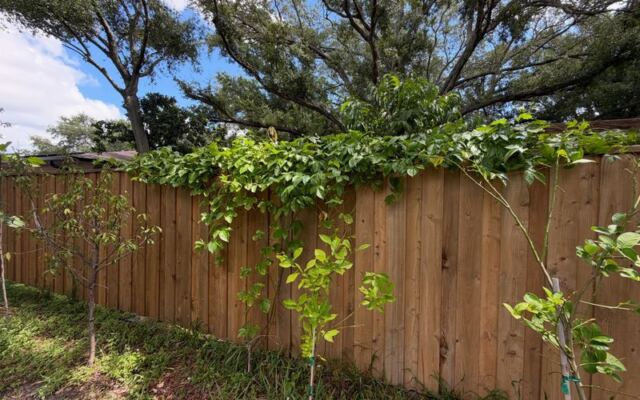
A vine creeps over the fence, wraps around your shrubs, and keeps coming back no matter how often you pull it. It is tempting to grab clippers and fix it today.
Texas does have guidance on trimming plants that cross a property line, but most of it talks about tree branches, not vines. Here is what that guidance says, where it stops, and how to protect yourself before you cut.
Texas’s clearest guidance is about tree branches, not vines

The title of this article promises a clear Texas answer on vines. That promise goes further than the sources reviewed.
What Texas guidance actually covers is a neighbor’s tree branches that reach over the property line.
The Texas State Law Library says there is no specific state statute on this topic. Instead, it points to a common-law right to trim branches that cross onto your land, as long as you stay on your side of the boundary and do not injure the tree.
The issue is handled through court decisions and local rules.
The Texas A&M Real Estate Research Center offers similar guidance in an article by an author who is a State Bar of Texas member.
Neither source sets out a vine-specific rule for the whole state. Applying the branch guidance to a vine is an analogy, and it may or may not hold up in your situation.
Treat everything below as cautious guidance, not a guaranteed right to cut any vine you dislike.
The tree-branch guidance stops at the property line
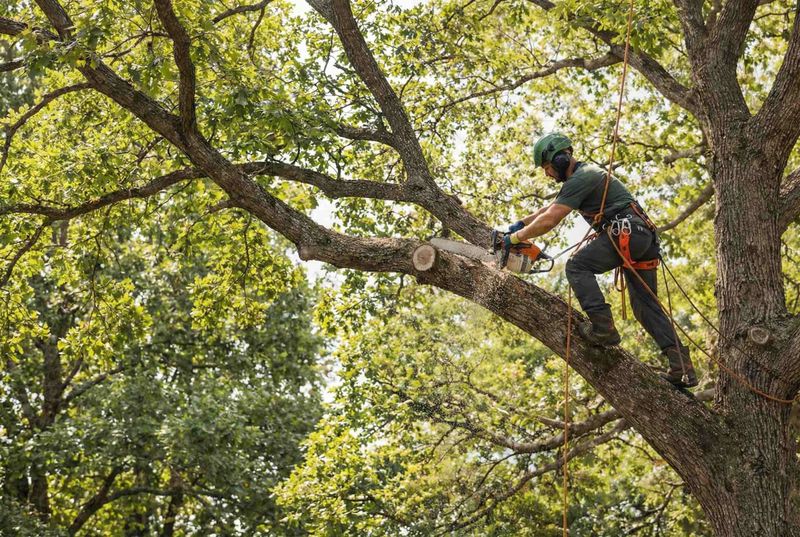
Where the branch guidance applies, it comes with firm limits. Trimming is described as acceptable only up to the property boundary.
You should not step onto the neighbor’s land to reach farther, and you should not hurt the tree.
The State Law Library warns that poor trimming can expose the person doing the cutting to a damages claim. A rough cut that harms the tree or the neighbor’s property could turn you from the annoyed party into the defendant.
The Texas Real Estate Research Center gives similar boundary-focused advice for branches.
Picture a limb that hangs four feet over your lawn. The guidance supports trimming what hangs over your side, while keeping all of the work on your side.
It does not support leaning over the fence, cutting the trunk, or removing the whole plant.
Remember that these points come from tree-branch guidance. They are a reasonable starting point for vines, not a settled vine rule.
Is the fence really the property line?
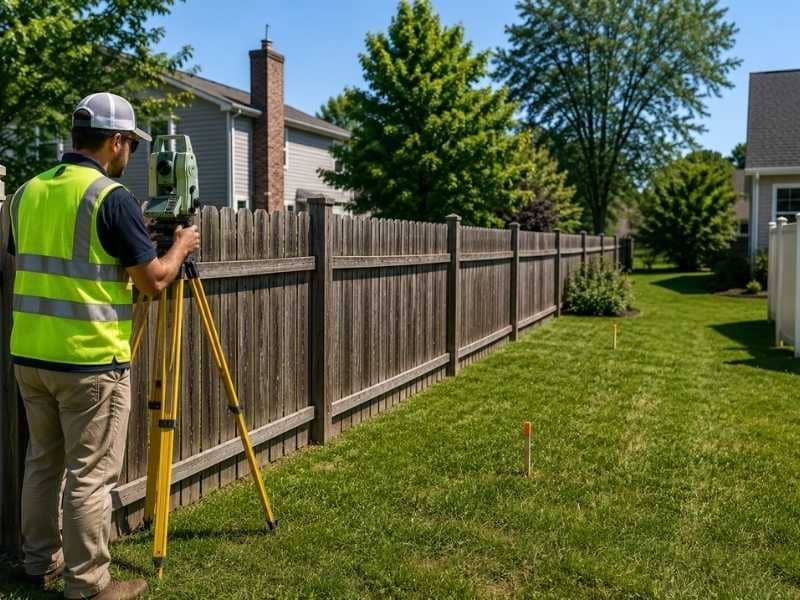
Many people assume the fence marks where their land ends. Fences are often built a little off the true line, sometimes by several feet.
If you cut based on the fence, you could end up cutting on your neighbor’s side.
According to the Texas A&M Real Estate Research Center, boundaries generally follow the deed description and survey, not simply where a fence stands.
Before you trim anything, find your deed and any survey that came with your home purchase. These documents describe your lot lines.
If you cannot find them, a licensed surveyor can mark the boundary on the ground.
Verifying the line matters because the cautious guidance only works if you know where your side ends. A vine that looks like it is crossing may actually be on your land, or it may be sitting on the boundary itself.
This article cannot tell you how to read your particular survey. If the paperwork is confusing or the line is unclear, ask a local professional before you cut.
A vine rooted on the boundary may be a different case
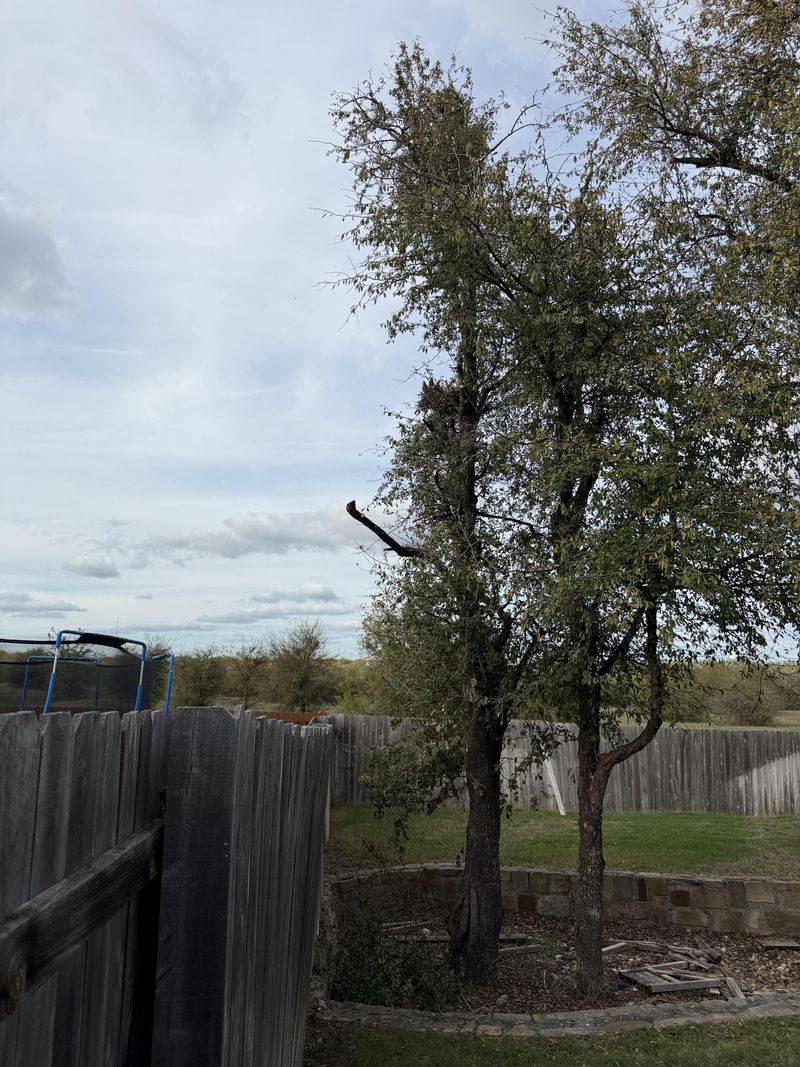
A vine rooted in your neighbor’s yard that stretches into yours is one situation. A vine rooted right on the line, or a tree whose trunk straddles it, is another.
Courts have treated boundary plants as raising their own questions.
In 4415 W Lovers Lane, LLC v. Stanton, a Texas appeals court looked at a tree whose trunk sat on a property line.
In Lisle v. DO-MO Joint Venture, another Texas appeals opinion about border vegetation stated that parties may not remove or cut back border trees or vegetation without the adjoining owner’s consent.
These cases involved boundary-situated plants. They do not decide every overhanging-vine dispute, and they should not be read that way.
A practical clue is to look at where the stem meets the ground. If it emerges clearly on one side, you may be dealing with crossing growth.
If it comes up at the fence line or along the boundary, pause and get consent or advice before cutting.
An overhang does not automatically require the neighbor to act
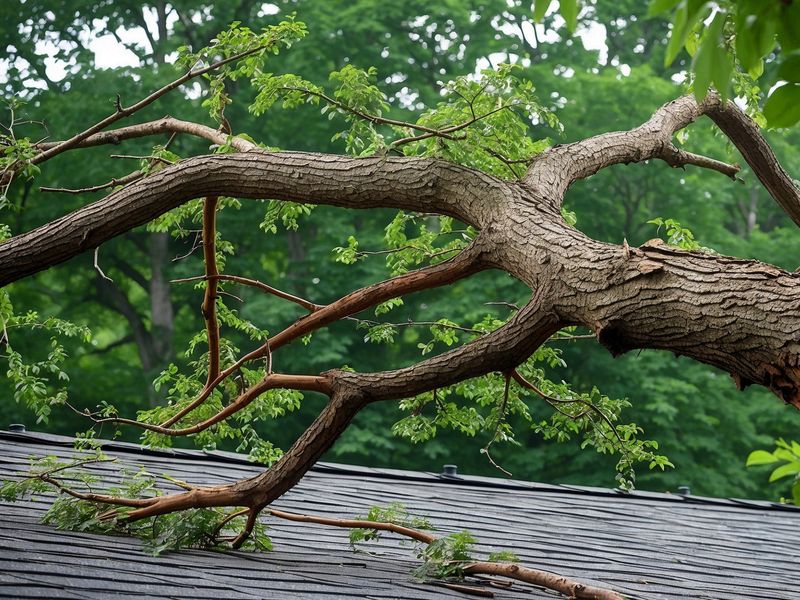
It is natural to think a neighbor must fix whatever drifts onto your land. The tree guidance does not go that far.
Healthy branches that simply hang over your yard do not, by themselves, give you a right to force removal.
As the State Law Library describes it, the adjoining owner may trim qualifying overhanging branches but may not compel the neighbor to do so just because they hang over. The sources reviewed do not establish a general forced-removal remedy for vines.
Damage is a different matter. The Real Estate Research Center says a tree owner may be liable if encroaching limbs or roots damage neighboring property.
So a few fallen leaves or an untidy look is an inconvenience. A limb that cracks your roof or roots that lift your patio is potential damage.
Even then, liability depends on the facts.
These points are tied to trees. Do not assume a vine gives you the same remedy, and do not assume every overhang creates liability.
Check local rules before choosing what to do

State-level guidance is only part of the picture. The State Law Library notes that cities and property owners’ associations may regulate tree maintenance.
That is a reason to look up your local rules before you act.
It does not show that every city has rules about vines. Some may have none, and others may have requirements you would not expect.
Check your city’s code and your HOA documents if you have an association.
Talking with your neighbor is often the simplest first step. A friendly conversation can lead to the neighbor trimming it, agreeing to a plan, or giving permission.
It also leaves a record of good faith if things get tense later.
Consider a local attorney if the boundary is unclear, if cutting could damage the plant, or if the neighbor objects. A lawyer can give advice for your exact facts, which general articles cannot.
Power lines and major pruning are reasons to stop
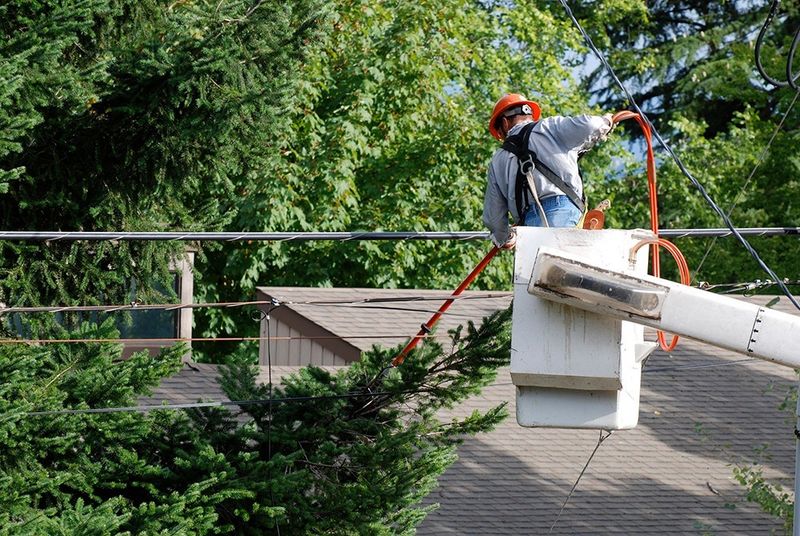
Some jobs are not worth doing yourself. The Texas Department of Insurance warns that trees can conduct electricity and that pruning tools can touch overhead lines.
Texas A&M’s After a Disaster guidebook says to leave extensive pruning around power lines to the power company. It also advises against working from a ladder or climbing into a tree, and it suggests leaving larger tree work to professionals.
If growth is tangled in or near wires, call the utility rather than reaching for a pole saw. If a job needs a ladder or a climb, hire a trained pro.
None of this means ordinary vine trimming is dangerous. Snipping a vine from the ground, well away from any lines, is a very different task.
The warning is for wires, heights, and heavy limbs.
Verify first, then decide whether to trim

Start by confirming your boundary with your deed and survey. Then work out whether the vine simply crosses the line or is rooted on it, since border vegetation may call for consent.
Check city and HOA rules, and talk with your neighbor. If the situation is disputed or trimming could harm the plant, get local legal advice.
The State Law Library and Real Estate Research Center are good places to start reading.
Texas law does not settle every vine dispute. A few minutes of checking can save you from a much bigger fight.
Share this story