If a neighbor’s tree reaches over your fence, Maryland law lets you cut those branches back yourself. The catch is that your saw stops exactly at the property line.
You also pay for the job, and some trees and tasks come with extra rules. Knowing where your rights begin and end can save you money, safety scares, and arguments over the fence.
Maryland recognizes a limited right to trim encroaching growth
Maryland’s highest court has spoken to this problem. In Melnick v.
C.S.X. Corp., decided in 1988, the court recognized a common-law self-help right.
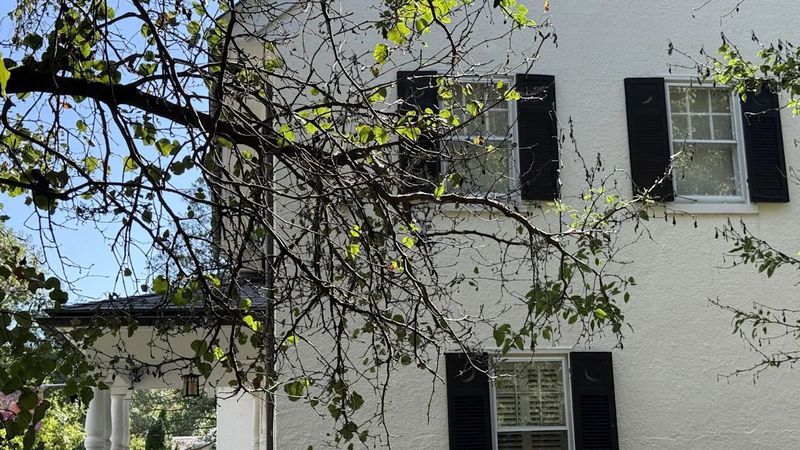
A landowner may cut encroaching branches, vines, and roots back to the property line, and does so at the landowner’s own expense.
That wording matters. The case recognizes a limited remedy for overhang.
It does not give anyone unrestricted permission to trim, shape, or otherwise alter a neighbor’s tree.
Think of it as permission to deal with the part of the tree that has crossed onto your land. The trunk, the crown on the other side of the line, and the tree’s overall health still belong to your neighbor.
Cutting a tree in a way that harms it beyond what the boundary requires invites a dispute you do not need.
Later Maryland courts have repeated the rule. In an unreported appellate opinion, Burtnick v.
Weinblatt, the court quoted Melnick on this point. That shows the idea is still referenced, but Melnick remains the source to understand.
The right is also a choice, not an obligation. You can trim, you can talk with your neighbor, or you can leave the branches alone.
The rest of this article covers where the cutting must stop, who pays, and what safety and permit rules can change the plan.
The property line limits the cut and access
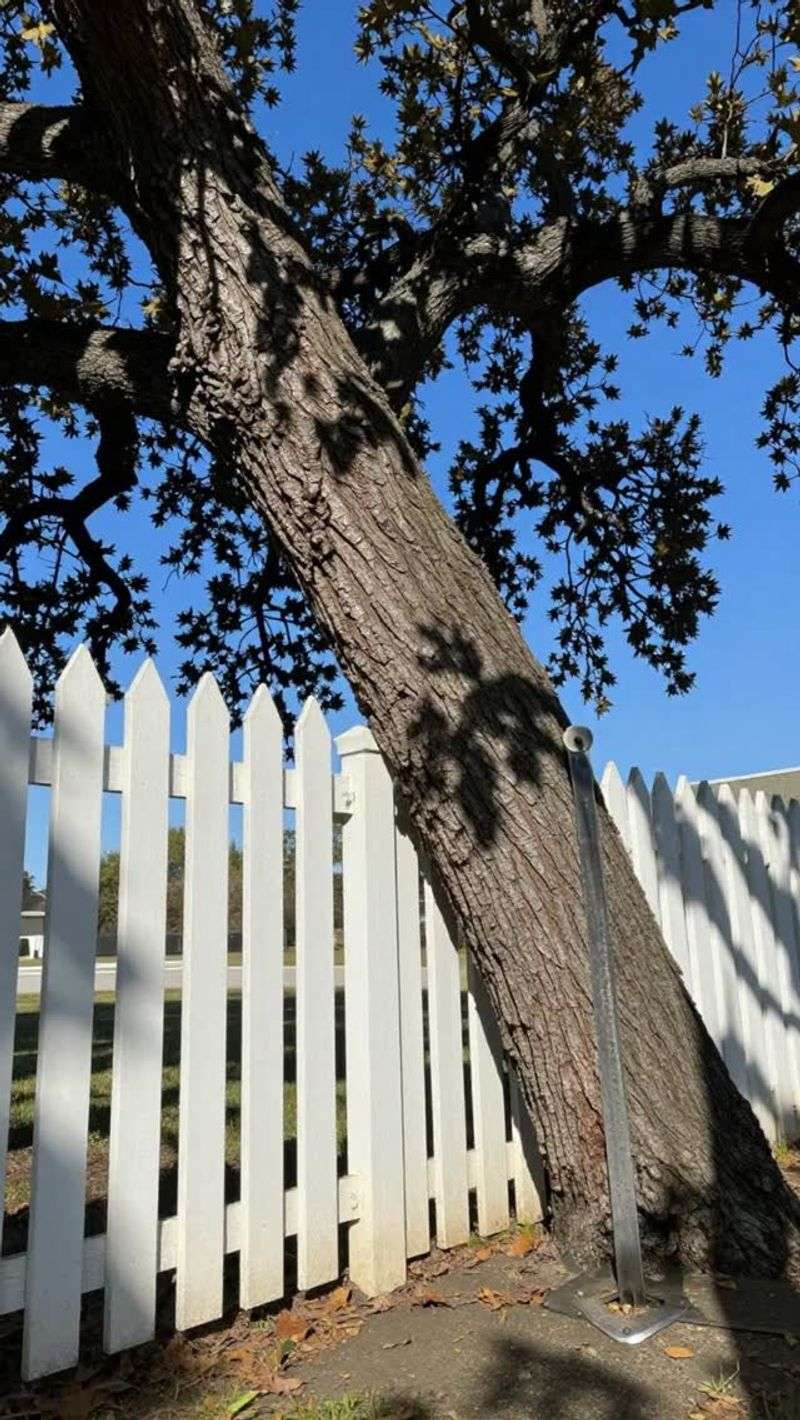
The self-help right ends at the actual property line. Under Melnick, a landowner generally may not walk onto the neighbor’s land to do the cutting.
The remedy covers what crosses over into your space, nothing more.
Do not assume your fence shows where the line is. Fences are often placed a few feet off the boundary, and some were built by earlier owners without a survey.
To confirm the line, look at your deed and plat, find any survey markers, or hire a licensed surveyor.
A cautionary example comes from Wagoner v. Lewis.
The Maryland appellate court said a homeowner could use self-help on encroaching vegetation but could not enter the neighbors’ property or tell a contractor to do so. That opinion is unreported and nonprecedential, and the court remanded the case, so it did not finally settle every liability question.
Treat it as a warning, not as controlling law. If you hire a crew, tell them in writing to stay on your side and to cut only at the line.
If a branch can only be reached from the neighbor’s yard, ask for consent first.
The homeowner who trims generally pays for the work
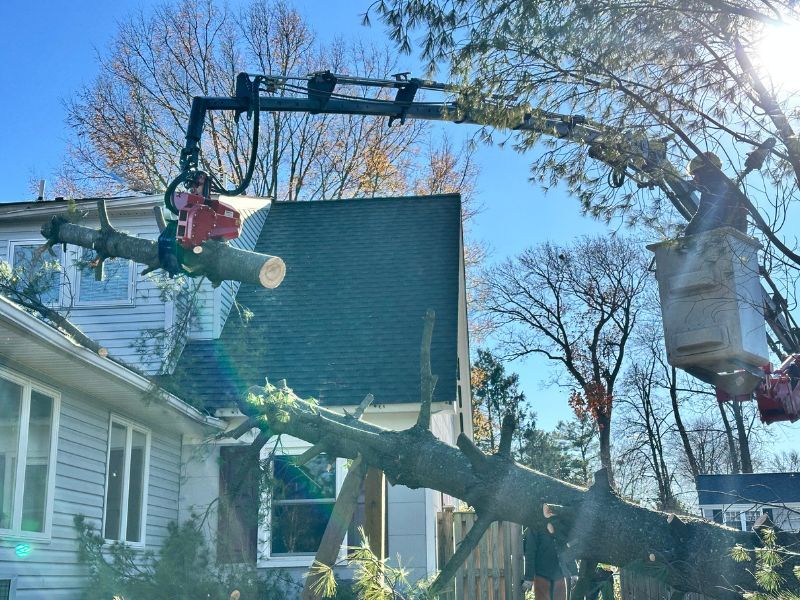
Money is where many neighbors get surprised. The homeowner who chooses to trim generally bears the cost.
Melnick describes the remedy as self-help at the trimming owner’s own expense.
That means the rule does not, by itself, require the tree owner to perform or pay for routine pruning of ordinary encroaching growth. A neighbor may agree to help or split the bill, and a friendly conversation often gets that result.
The law just does not demand it for everyday overhang.
Before you call anyone, get a couple of written estimates. Ask each company to describe exactly which branches will be cut and to state that all cuts will stay on your side of the line.
Price can climb fast when a tree is tall, near a house, or close to wires.
Keep this issue separate from hazard or damage disputes. A dead limb that is clearly dangerous, or a tree that has already caused harm, can raise different questions than ordinary growth creeping over a fence.
If that is your situation, gather photos and notes and consider talking with a Maryland attorney.
Ordinary overhang is not automatically a nuisance
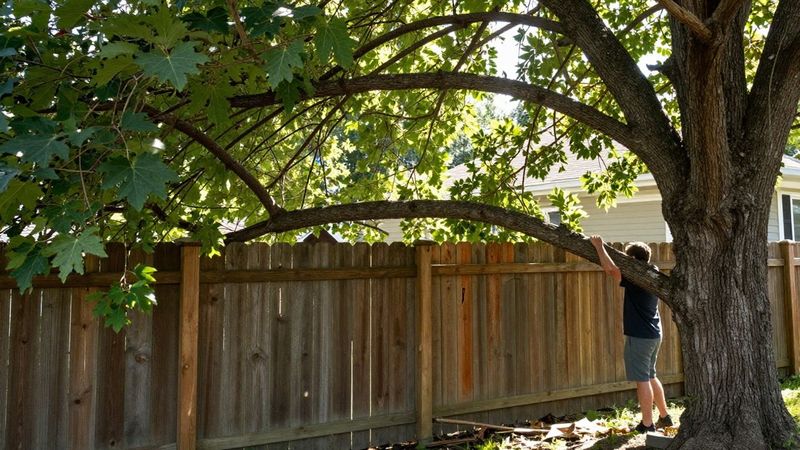
Shade, leaf piles, and a few dropped blossoms can be annoying. Still, under Melnick, ordinary shade and falling leaves, flowers, or fruit do not, by themselves, make overhanging branches a nuisance.
Not every branch that crosses a line gives you a lawsuit.
The court separated the normal effects of natural growth from other concerns. Trees grow, drop things, and cast shade.
The law expects neighbors to put up with that, while leaving you the self-help option to cut back to the line.
A practical example: a maple that drops helicopter seeds every spring is ordinary. A cracked, leaning limb hanging over your driveway is a different kind of question.
That second situation involves a possible hazard, and Melnick does not settle every claim about a known hazard or resulting damage.
So do not read the case as saying a tree owner can never be liable. Read it as dealing with ordinary encroachment and natural processes.
If a branch looks dead, split, or unstable, document it with dated photos and send a written note to your neighbor.
Plan pruning around safety and the right credentials
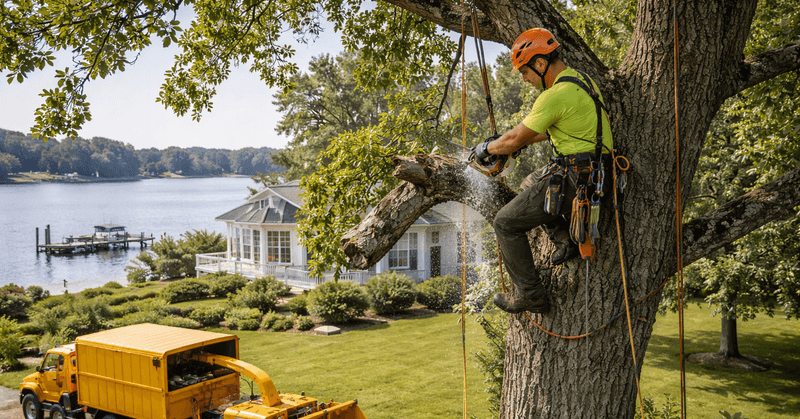
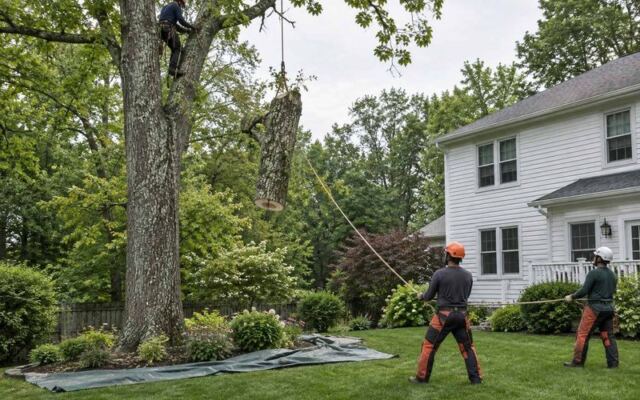
Having the legal right to cut does not make every cut safe. University of Maryland Extension warns that pruning large trees, climbing, and working near power lines is dangerous.
Those jobs should go to a licensed tree expert or certified arborist.
The same guidance says not to remove more than one-fourth of a tree’s branches at once. It also explains that cuts should preserve the branch collar, the slightly swollen ring where a branch meets the trunk, so the tree can seal the wound.
A flush or ragged cut can harm the tree.
Small, low branches you can reach from the ground may be manageable. Anything requiring a ladder, a chainsaw overhead, or a branch near a utility line is a job for a professional.
There is also a legal side. The safety advice to hire a certified arborist is not the same as Maryland’s paid-work rule.
The Maryland Department of Natural Resources says a person may not engage in the tree-expert business without a state license, and that includes compensated pruning and trimming.
So if you pay someone, verify that the contractor holds the required Maryland tree-expert license. A certified-arborist credential alone is not a substitute for that license.
Ask for the license number and check it before work begins.
Roadside trees may need a permit
Some trees are not ordinary private-lot trees at all. Section 5-406 of the Maryland Natural Resources Article generally requires a permit from the Department of Natural Resources to trim a roadside tree.
That is a statute, and it is separate from the common-law self-help rule.
The law lists exceptions for certain hazards. These include branches that endanger people or property and branches that contact live wires.
Even then, work near wires is a job for qualified professionals, not a weekend project.
How can you tell whether a tree is a roadside tree? Look at where it grows.
A tree sitting in the public road right-of-way, often in the strip between sidewalk and street, is different from a tree rooted in your neighbor’s backyard whose limbs reach over your fence.
If you are not sure where the right-of-way ends, check your plat or ask your county or municipality. Local rules may also limit work, even when branches appear to cross your yard.
Settle the tree’s location and the applicable rules before you assume the self-help right applies.
Check the boundary, risks, and rules before cutting
Start by confirming the actual property line, then keep every cut on your side. Budget for the cost, since Melnick frames this as limited self-help, not unrestricted trimming.
Next, size up the job against Extension safety guidance, and bring in a licensed professional for anything big or high. Finally, rule out a roadside tree under Section 5-406.
A saw is quick, but a boundary mistake can last for years.
Share this story