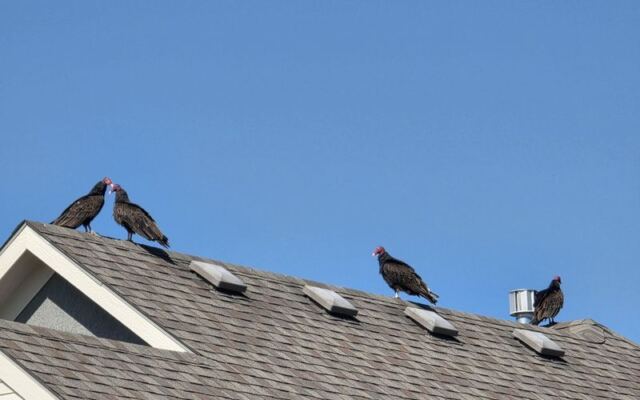
Black vultures that settle on South Carolina homes can damage far more than shingles. Torn roofing, chewed seals, and scratched cars are all on the list of documented problems.
Not every roost does this, and the cause of a winter gathering is more complicated than cold weather. Here is what the damage looks like, what you can do about it, and where federal law draws the line.
Why vultures gather at homes in winter
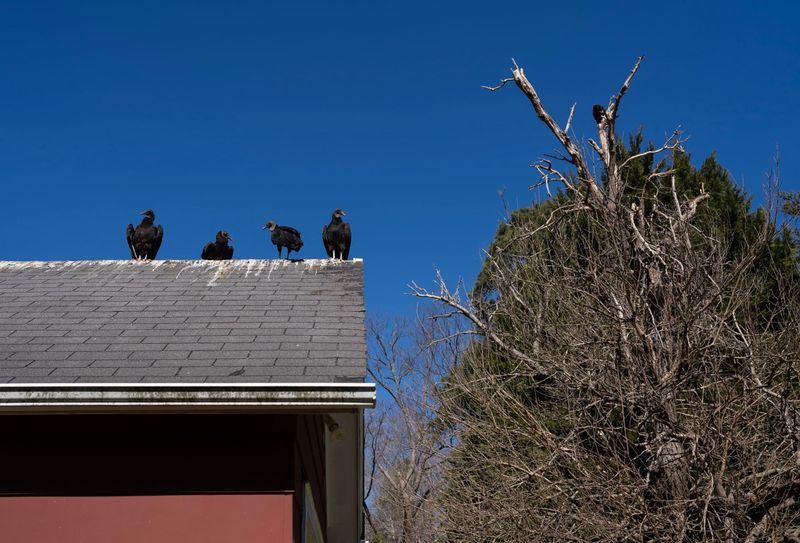
Black vultures spend the night together in communal roosts, and they do it all year. South Carolina nuisance wildlife guidance says roosts are used year-round and can hold their largest numbers from late autumn through early spring.
That is why so many homeowners notice them in the colder months.
Still, cold alone is not a proven reason for birds to pick your roof. A study of vulture roosts near Beaufort found that counts peaked in the fall, while winter counts looked much like those in spring and summer.
The study counted vultures at roosts in general, not only black vultures on houses, so it is a useful backdrop rather than a final answer for any one property.
So what draws them to a particular spot? USDA technical guidance says roosts can act as places where birds share information about food, and they can offer some shelter from weather.
A nearby food supply may also keep a site in use.
Think of a winter gathering as a seasonal roosting pattern. The building, the trees nearby, the food sources around it, and the habits of local birds all play a part.
Your neighbor’s roof may stay empty while yours fills up, and the reasons are often local rather than weather-driven. Learn more about the species on the Cornell Lab life history page.
What vultures can damage besides shingles
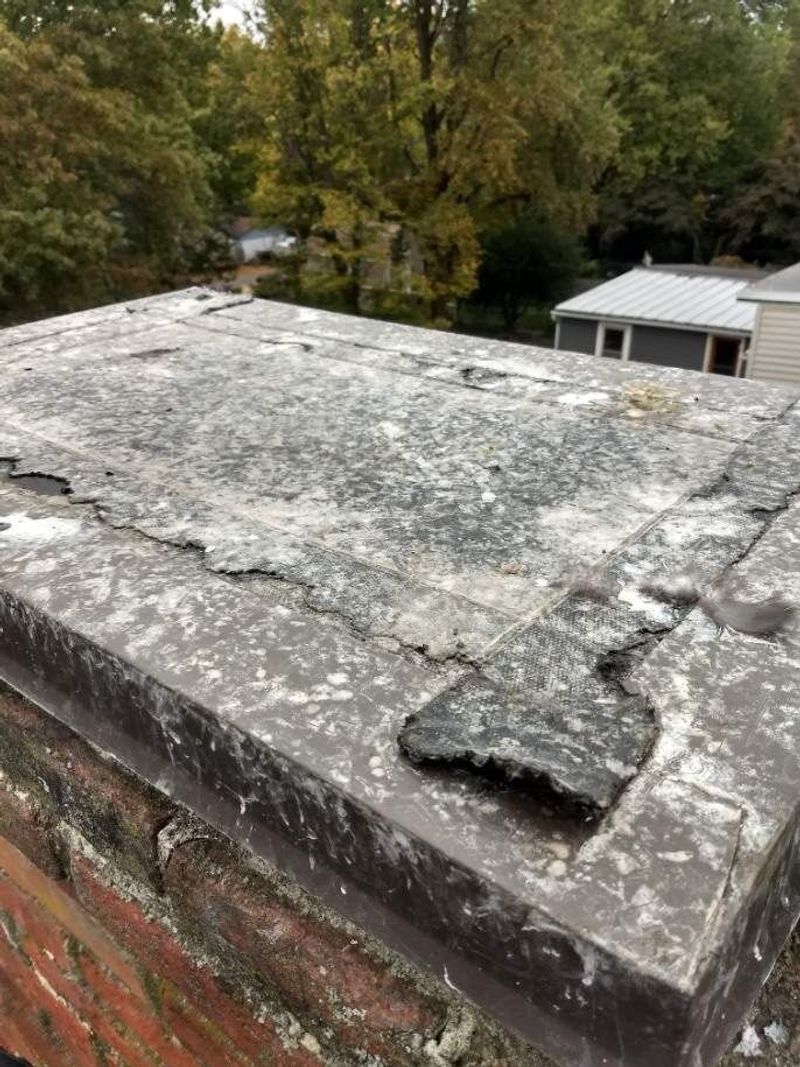
Roof shingles are only part of the story. USDA Wildlife Services documents vultures tearing roofing material, as well as window caulking and rubber seals.
The damage comes from pulling, pecking, and scratching.
Vehicles can suffer too. Reported problems include scratched paint, torn wipers and rubber seals, damaged trim, and ripped vinyl or other upholstery.
Indiana DNR describes this kind of vehicle damage and notes that most perching birds there do little or none, though harm can sometimes be extensive.
Roosts also leave droppings and regurgitated material. Over a long time, droppings can deteriorate some stone and metal, but the roof and car damage above comes mainly from tearing and scratching, not from acid in the droppings.
What about window screens? The reviewed authoritative sources, including South Carolina species guidance, name caulking, seals, shingles, roofing, and vehicle parts.
They do not establish damage to screen mesh, so treat that claim with caution.
Damage also varies by site. Some roosts cause real repair bills, and others leave little more than a mess.
Look for torn edges, loose caulk, and fresh scratches before deciding what you are dealing with.
Identify the birds before blaming a black vulture
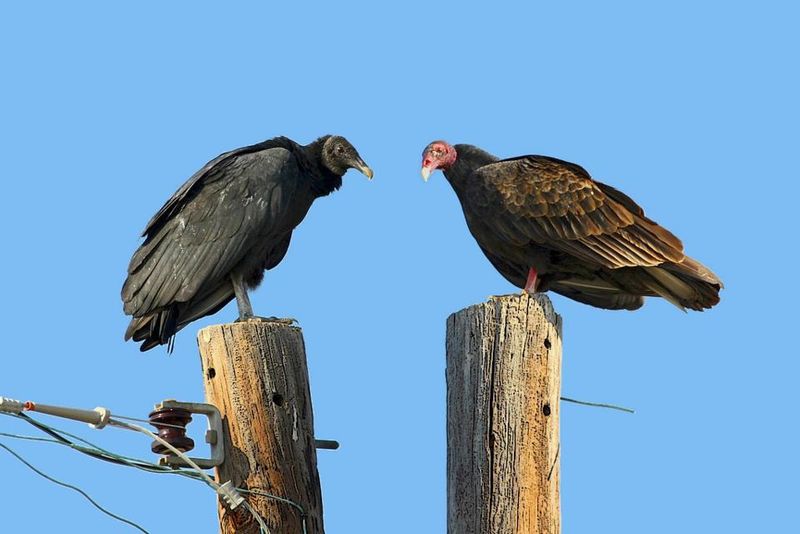
Two vulture species live in South Carolina, and they often share the same roost. Black vultures and turkey vultures can both be involved in property conflicts, so a pile of droppings or a scratched car does not point to one species by itself.
Head color is the easiest clue on adults. An adult black vulture has a dark gray to black head, while an adult turkey vulture has a red one.
Both guides, from South Carolina DNR and USDA, treat the two species together.
Binoculars or a phone camera with zoom make the check easy from a safe distance. Take a few photos in daylight, and note when the birds arrive and leave.
That record helps if you later ask a professional for advice. It also keeps you from blaming black vultures for something another bird, or another animal, actually did.
Protect cars and address possible food sources
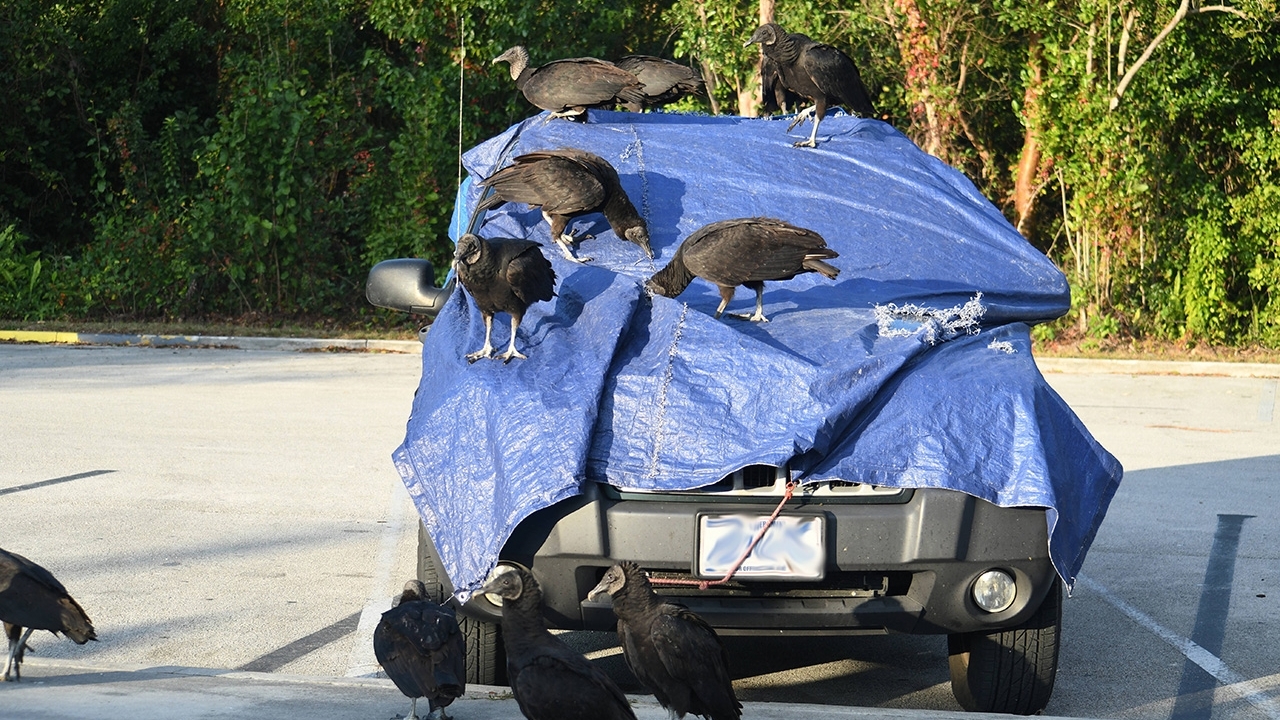
Start with the easy steps. Covering a parked vehicle keeps wipers, trim, paint, and seals out of reach.
Exposed rubber or vinyl, such as a boat cover or a convertible top, can be covered or moved as well. Indiana DNR lists vehicle protection among its practical suggestions.
Next, look at what might be feeding the birds. Keep garbage in secure containers, and clean up pet food, spilled feed, and other human-made food sources.
USDA technical guidance says a nearby food supply may keep a site in use.
If another animal’s carcass is lying on your property, such as a dead raccoon or deer, remove it only where that is lawful and appropriate. Local rules and the type of animal can matter, so call your local animal control if you are unsure.
Never handle or possess a vulture carcass without authorization. Federal protection under the Migratory Bird Treaty Act applies to vultures, and that includes dead birds.
These steps cut down exposure and remove possible attractants, but they may not move an established roost on their own. USDA recommends an integrated approach rather than one fix.
Get help when a roost persists
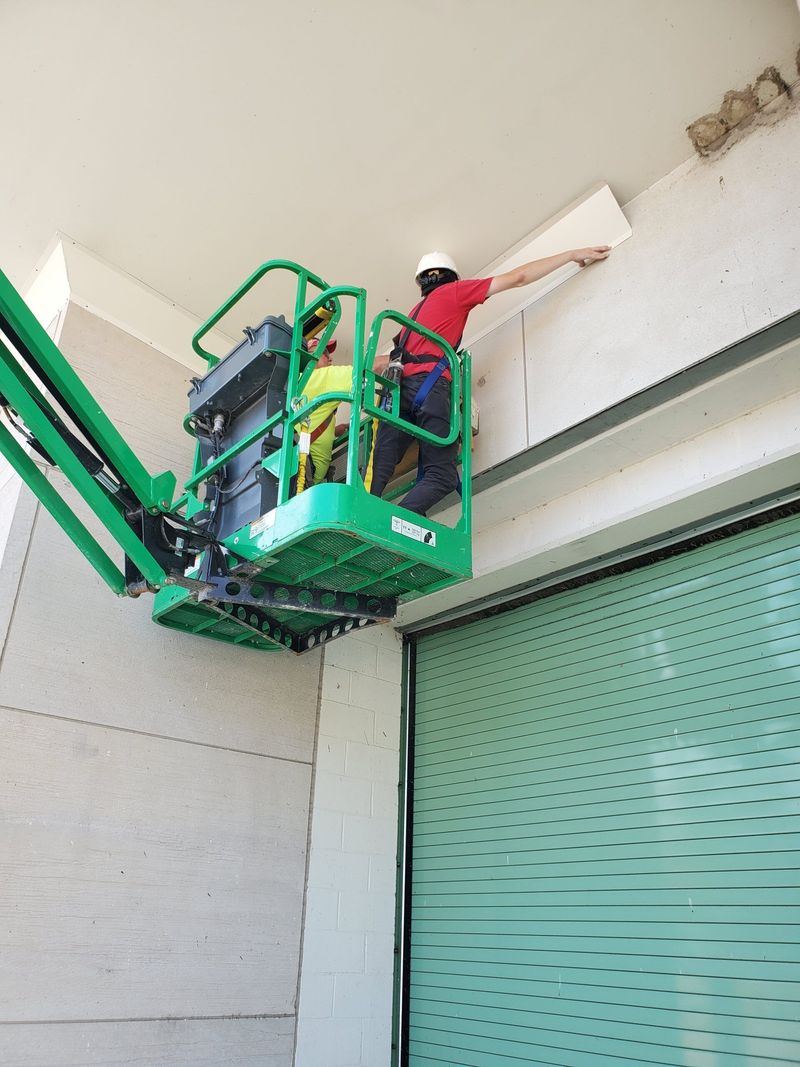
When birds keep coming back, it is time to bring in someone with experience. Exclusion can protect particular perches, like a ridge, a ledge, or a chimney cap.
A qualified professional can assess your roof and tell you which spots are worth treating.
Skip the idea that any bird product will do the job. USDA guidance says many commercial spikes can be bent or stepped around by vultures.
A product that works on pigeons may do little against birds this large.
Some methods are not casual do-it-yourself fixes. Lasers pose safety risks and must never be aimed at birds, people, vehicles, reflective surfaces, or aircraft.
Pyrotechnics and noisemakers may be restricted in residential areas and by local ordinances, so check those rules first.
Firearms and carcass effigies raise legal questions as well. Vultures are covered by the Migratory Bird Treaty Act, and possessing a vulture carcass for an effigy requires authorization.
A professional can also advise on roost dispersal and what is allowed where you live. That saves you from costly mistakes and from legal trouble.
Federal protection limits capture and killing, not nonlethal deterrence
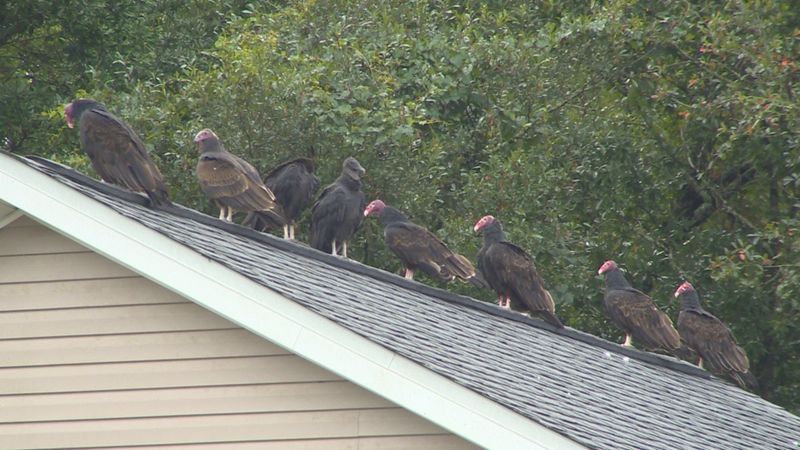
Federal protection does not mean you must sit back and watch. The Migratory Bird Treaty Act prohibits taking protected birds without authorization, and vultures are on that list.
Covering a car, securing trash, or scaring birds away without touching them is different from trapping or killing them.
Capturing or killing is where the law steps in. The U.S.
Fish and Wildlife Service says a depredation permit is needed to capture or kill birds that are causing property damage. Damage alone does not give anyone the right to harm the birds.
A permit is also not automatic. According to the FWS depredation permit page, the application process calls for documentation of the damage and of the nonlethal efforts already tried.
It also includes a USDA Wildlife Services review.
If a permit is issued, you must follow its conditions. It is not permission to remove any number of birds you like.
Good records help. Keep dated photos of the damage, repair receipts, and notes on what you tried, since they show both the problem and your effort to solve it without harming the birds.
Large accumulations of droppings need careful cleanup
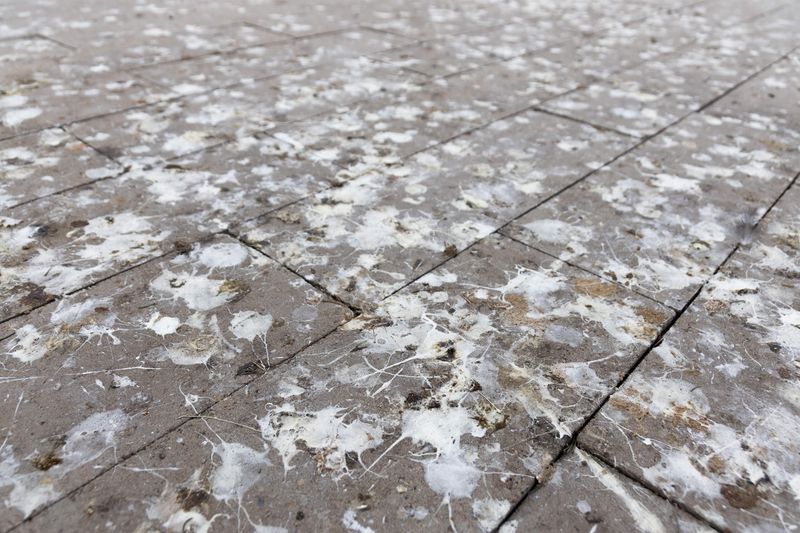
A single fresh dropping on a sidewalk is a chore, not an emergency. CDC and NIOSH say fresh droppings on surfaces like sidewalks and windowsills likely do not pose a histoplasmosis risk.
Large accumulations are another matter. CDC prevention guidance says that disturbing areas with bird or bat droppings can increase the risk of exposure to histoplasmosis.
It recommends that large accumulations be cleaned by professionals who specialize in hazardous-material cleanup.
In practice, that means thick buildup on a ledge, in an attic, or under a long-used perch is worth a call before you pick up a broom. Sweeping or blasting it dry can stir up dust.
Wash fresh, small spots as you would any other mess, and wash your hands afterward. If you are unsure which category your situation falls into, ask a cleanup professional to take a look.
Choose a response that fits the problem
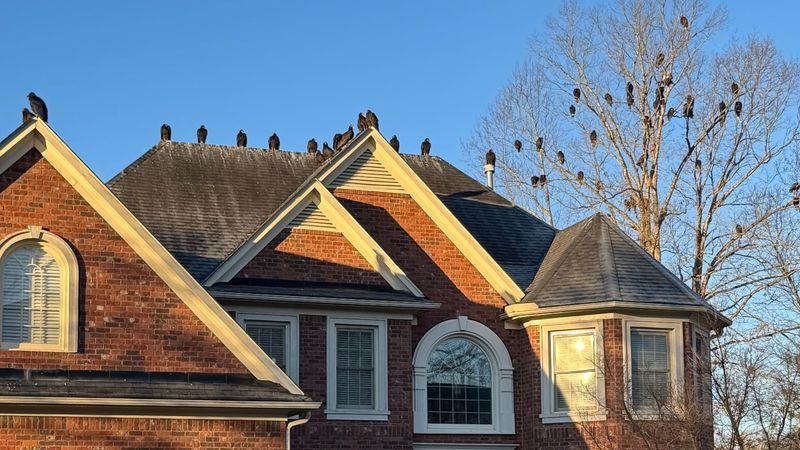
Match the effort to the trouble you actually have. Begin by covering vehicles and exposed rubber or vinyl, then tighten up food sources, as Indiana DNR suggests.
If birds keep returning, ask a qualified professional about your roof and any dispersal plan. Nonlethal deterrence is open to you, while capture or killing requires a federal depredation permit.
Roosts come and go, and a calm, steady approach usually beats a dramatic one.
Share this story