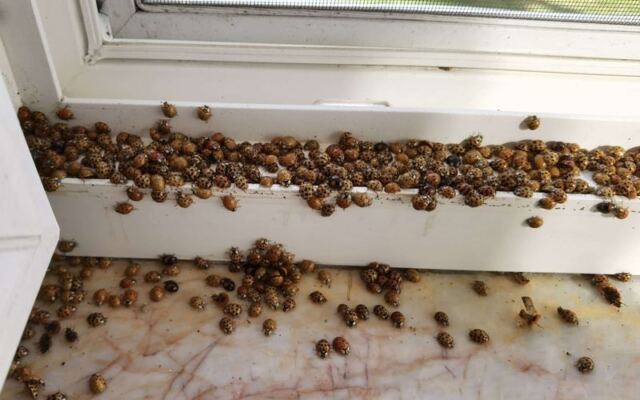
If a crowd of orange-red beetles is gathering on your sunny window, you are most likely looking at Asian lady beetles looking for a warm place to spend the winter. They are not the same as the native ladybugs many of us grew up with, and they have a talent for finding their way indoors.
They will not harm your home, but they can be annoying, a little smelly, and surprisingly stubborn. Here is how to spot them, clear them out, and keep fewer from coming back.
A fall cluster can point to Asian lady beetles
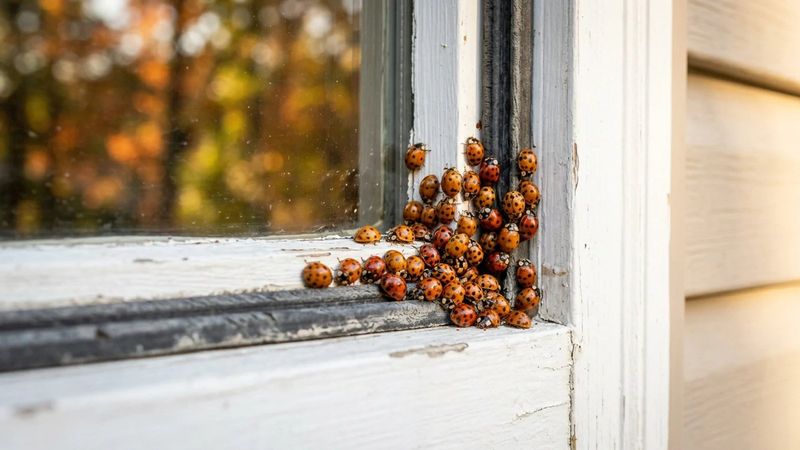
Big groups of ladybug-like beetles on a Wisconsin house in October are a strong hint that multicolored Asian lady beetles are the visitors. University of Wisconsin Extension notes that the species has been recorded in large numbers in the state since 1994.
It is native to eastern Asia, and experts are not sure exactly how it became established in the United States.
A cluster is a clue, though, not a final answer. A quick glance at a window will not identify every beetle, because this species comes in many looks.
Colors range from pale tan and yellow to bright orange and deep red, and the spots can be many, few, or none at all.
Many of them have a black M-shaped or W-shaped mark on the plate just behind the head. Minnesota Extension points out that this mark can be faint, broken, or even missing, so it helps but does not settle things.
A better approach is to weigh several clues together: the season, the size of the group, the sunny spot where they gather, and the markings you can see up close. Virginia Cooperative Extension also advises against relying on color or spots alone.
If you are unsure, take a clear close-up photo and share it with your county Extension office.
Why sunny walls draw beetles in fall
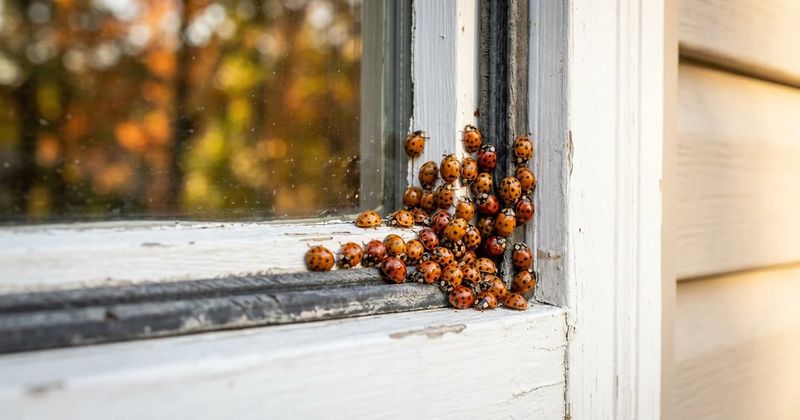
Cooler air and shorter days tell adult beetles it is time to find shelter. In response, they gather at sunny, prominent places, and the side of a house often fits that description.
Minnesota Extension describes this gathering as the first step before they look for protected overwintering spots.
South- and west-facing walls are often the ones affected, since they soak up the afternoon warmth. Light-colored siding and walls that stand out against their surroundings can also draw a crowd.
Virginia Cooperative Extension describes a similar pattern for ladybird beetles on buildings.
Sun exposure does not guarantee a swarm, however. Two neighboring houses can have very different experiences, and plenty of sunny walls never collect more than a few stragglers.
Local beetle numbers vary from year to year.
On a warm afternoon in October, take a walk around your home and look at the sunny sides. Notice where beetles are landing, since those spots often sit near cracks or gaps they might use.
That simple survey gives you a map for the maintenance work later.
Some winter sightings began with a fall entry
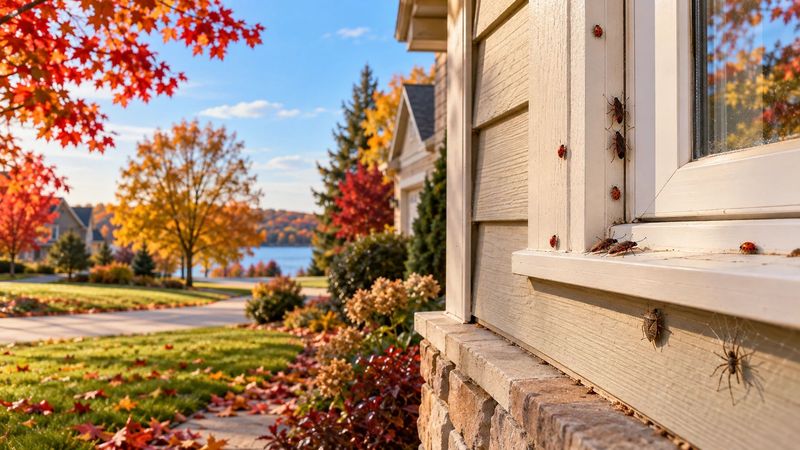
Finding a beetle on your wall in January can feel like a mystery. Often it started months earlier.
Beetles that cluster outside in fall can slip through small openings around windows, doors, siding, and other gaps, then settle into sheltered spaces for the cold months, as University of Wisconsin Extension explains.
Once inside, they stay mostly still. A warm spell, or heat from the sun or a furnace, can wake them up.
They then wander toward light, which is why you see them on windows and lamps in the middle of winter or in early spring.
Minnesota Extension notes that beetles seen indoors in winter or spring may have entered the previous fall. So a sighting does not prove that new ones are getting in at that moment.
Not every indoor beetle is coming from a wall void, either. Some may have found a sheltered corner of an attic, a closet, or a window frame.
If you only see a few now and then, there is usually no need to worry. Simply remove them and keep going about your day.
What bites and yellow stains mean
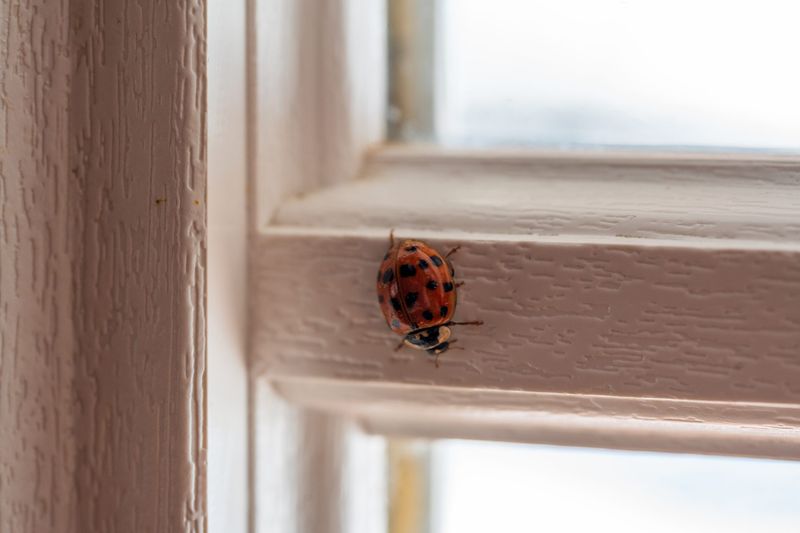
Start with the reassuring part: Asian lady beetles cannot sting. Extension sources report that they do not carry disease.
They are not aggressive or venomous, although a few may nip.
Some beetles can bite hard enough to break the skin, according to Minnesota Extension. Bites are generally minor and feel like a small pinch.
Virginia Cooperative Extension says a beetle may be searching for moisture or food when it does this.
The yellow stains and smell are a different matter. When a beetle is disturbed or handled roughly, it can release a yellowish defensive fluid from its leg joints.
That fluid can smell unpleasant and may leave marks on light-colored walls, curtains, and fabric, as University of Wisconsin Extension notes. Brushing them off gently, rather than squashing them, keeps this to a minimum.
A small number of people have reported allergic reactions. A medical case series described allergy symptoms in eight patients.
That makes it a rare possibility, not something most households should expect. If someone in your home develops itchy eyes, a runny nose, or breathing trouble around the beetles, check in with a health care provider.
Vacuum or sweep beetles indoors
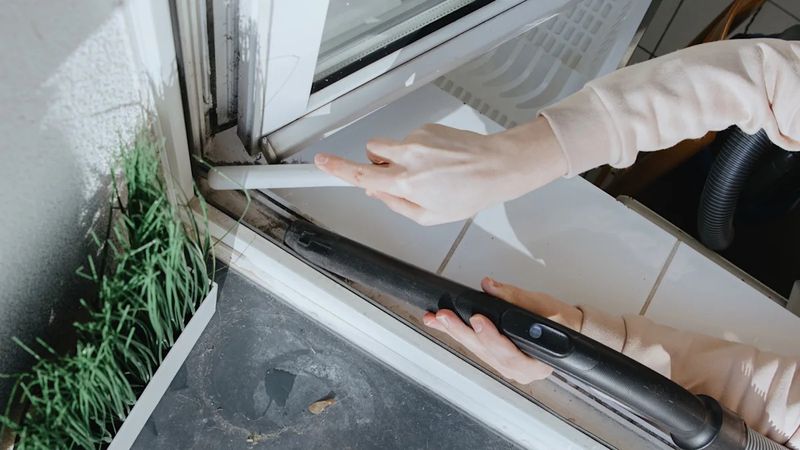
When beetles show up inside, the plainest fix is also a good one. Vacuum them up or sweep them into a dustpan, as University of Wisconsin Extension suggests.
It is quick, and it avoids crushing them, which keeps stains and odor down.
A vacuum does not necessarily kill the beetles it picks up. So empty the bag or canister promptly, and dispose of the contents outdoors or in a sealed bag.
Otherwise, live beetles can crawl back out, and the vacuum may start to smell.
For heavier numbers, Minnesota Extension describes one optional trick: secure a knee-high nylon stocking inside the vacuum hose so the beetles collect in the stocking. You can then take it outside and release or dispose of them.
You do not need this method, and it is not a guaranteed solution.
Check the usual gathering places each time, such as window sills, curtain folds, and light fixtures. Do not count on spraying indoors as a shortcut.
Minnesota Extension says indoor spraying is not effective for beetles in wall voids, so a vacuum and a steady routine usually serve you better.
Seal gaps before fall to reduce entry
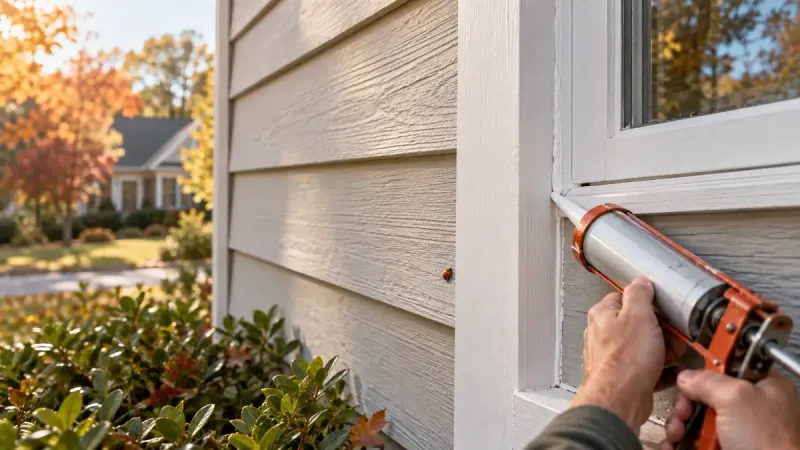
The best time to keep beetles out is before they arrive. Late summer or early fall is the right moment for a home walk-through.
Check around windows, doors, fascia, foundations, and places where pipes, cables, and vents pass through the walls, which University of Wisconsin Extension lists among the likely entry points.
Use a good exterior caulk on small cracks and gaps. Repair torn window and door screens, and make sure they fit tightly in their frames.
Where a door leaves a visible gap at the bottom, add a door sweep or a threshold.
Minnesota Extension says these steps reduce entry but may not eliminate it. A very small gap may still let a few beetles through, so keep your expectations realistic.
Timing matters too. Virginia Cooperative Extension also stresses doing exclusion work before beetles move in.
Once they are inside walls, sealing the outside will not remove them. It still helps with future years, so a spring repair day is worthwhile, even if this winter’s beetles are already settled.
Make a short checklist for each sunny wall and cross items off as you go. A tidy record means next year’s inspection takes far less time.
They can be a nuisance indoors and useful outdoors
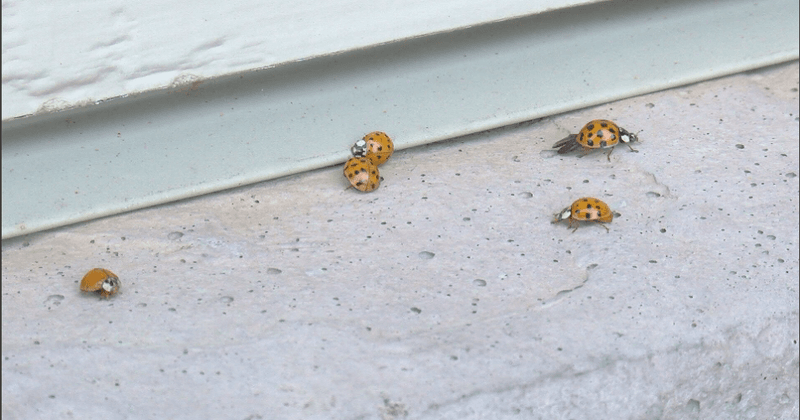
Keep the plan simple: clear indoor beetles as you see them, and prepare your home before next fall to cut down future entry. Neither step is a promise of a beetle-free house, but together they make a noticeable difference.
It also helps to remember what these beetles do outdoors. As University of Wisconsin Extension notes, they feed on aphids and other soft-bodied plant pests, and Minnesota Extension agrees.
A pest on your window can be a helper on your tomatoes.
The same insect can be an annoying guest in January and a quiet garden ally in July.
Share this story