Press a fresh strip of tape gently onto the spot, then lift it away. That simple move can pull out some of the tiny spines a saddleback caterpillar leaves in your skin.
Acting fast matters because the burning pain can show up right away. Here is what to do next, plus the warning signs that mean it is time to get help.
Start with tape, then wash and cool the skin
If a saddleback caterpillar is still on your skin, do not flick it off with bare fingers. Brush it away with a stick, a folded leaf, or a tool, as Poison Control advises, and keep your hands out of it.
Next, press the sticky side of a fresh piece of tape lightly against the exposed skin and lift it straight off. Use a new piece each time and repeat a few times.
Tape may lift some of the embedded spines, but it cannot promise to get every one, and it does not cure the injury.
After the tape, wash the area gently with soap and water. Skip hard scrubbing, since rubbing can push loose spines deeper or spread irritation around.
Then wrap a cold pack in a thin cloth and hold it on the spot. MedlinePlus suggests 10 minutes on and 10 minutes off.
The cold is there for comfort, not as a fix.
Home care has limits. University of Kentucky entomologists note that no home first-aid step is reliably effective for these stings, so tape, washing, and cold are measures that may help.
Keep an eye on how the skin and your body respond over the next few hours.
Why saddleback contact can hurt
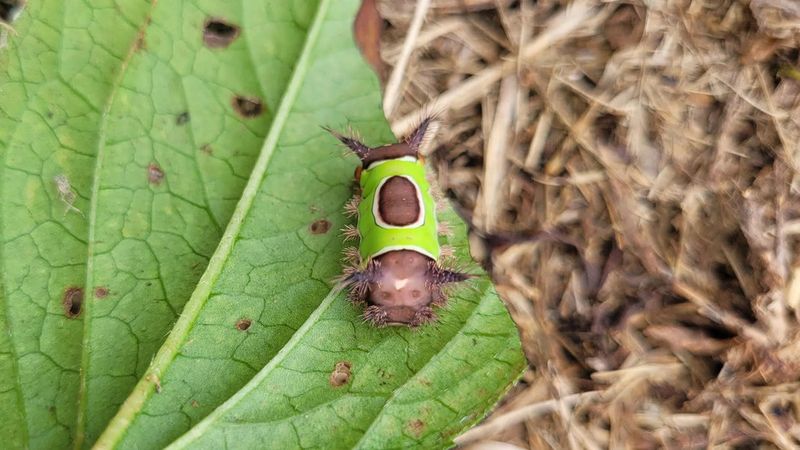
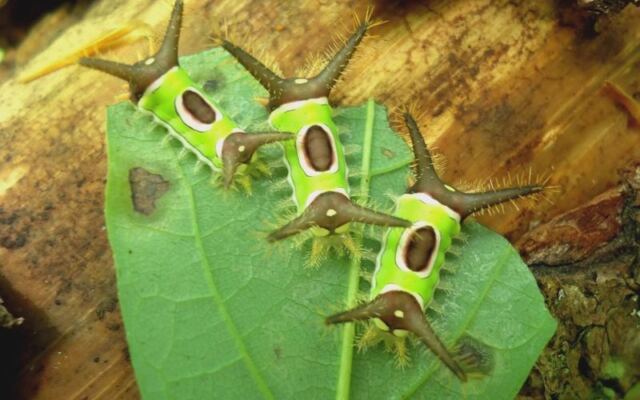
Saddlebacks do not sting the way a bee does. They carry spines that hold venom, and those spines can break off and stay in your skin when you brush against the caterpillar.
The injury comes from that contact, though many people use the word sting as a quick way to describe it.
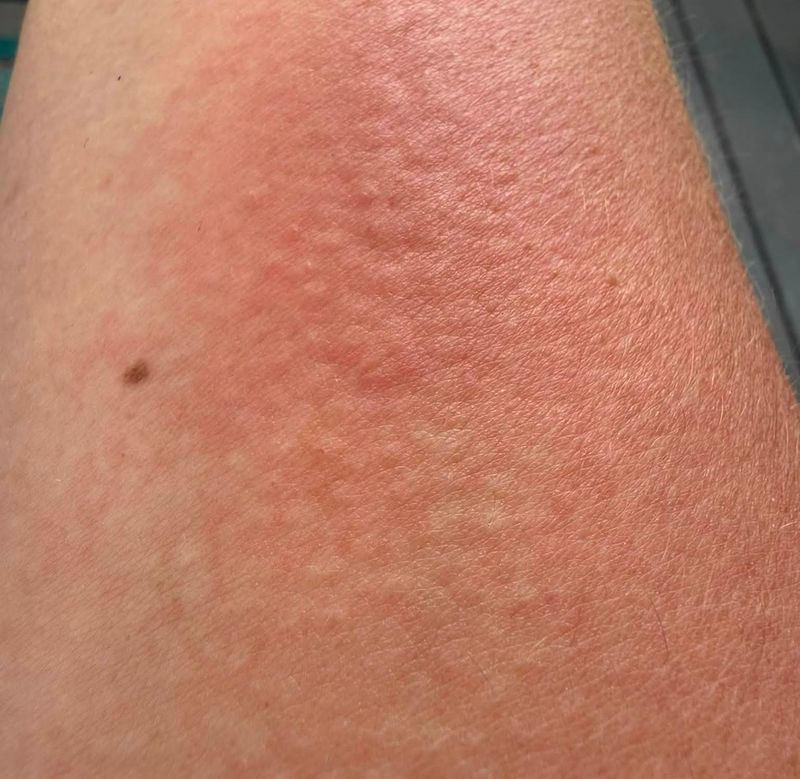
According to UGA Cooperative Extension, contact can cause immediate burning pain, redness, swelling, itching, welts, or blisters. Some people also get a headache or nausea.
Reactions vary from person to person. One gardener might have a sharp sting that fades, while another has welts that linger.
Taking the pain seriously does not mean every encounter turns dangerous.
You may never see what touched you. Leaves and stems hide plenty of caterpillars, and a quick brush with your arm or neck is easy to miss.
Not every caterpillar is harmful, and many are harmless to touch.
That uncertainty is fine. If you feel sudden burning after brushing a plant, treat it as suspected contact and start first aid.
Do not hunt for the culprit or pick one up to confirm its identity, because that risks a second sting. As Poison Control explains, use a tool, not bare hands, if one is still on you.
Use a cold pack in short intervals

Once the tape and washing are done, a cold pack can take the edge off. Wrap it in a thin towel or cloth so the cold does not touch your skin directly.
Hold it on the sore spot for 10 minutes, then take it off for 10 minutes.
MedlinePlus lists this schedule for caterpillar contact, and you can repeat it while the area still hurts. A bag of frozen peas works if you have no cold pack.
People with circulation problems should use shorter stretches. Reduced blood flow makes skin more vulnerable to cold injury, so check the skin often and stop if it turns numb, very pale, or more painful.
A person with diabetes or a similar condition may want to ask a clinician about the safest way to use cold.
Think of cold as comfort care. It may ease pain and swelling, but it will not remove spines or guarantee the symptoms go away.
Poison Control also mentions cold packs as part of care for the sting.
If the pain grows stronger or new symptoms appear while you are icing, treat that as a reason to call for advice rather than keep waiting.
Get advice before relying on itch medicines
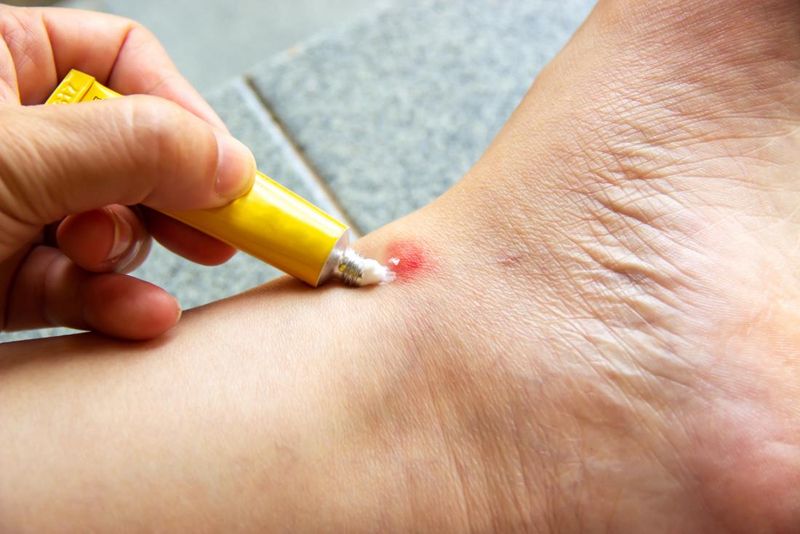
Itching can be one of the most annoying parts of caterpillar contact, and it is tempting to reach for whatever is in the medicine cabinet. Advice here is not uniform, so a little caution helps.
Poison Control suggests hydrocortisone cream for itching, and an antihistamine if that does not help. In contrast, Kentucky Extension reports that antihistamines are reportedly ineffective for caterpillar stings.
Those two views do not line up, and neither one is a promise that a medicine will work for you. Your age, health history, other medicines, and the severity of your reaction all matter.
A safer move is to ask before you treat. You can call Poison Help at 1-800-222-1222 for free, or check with your doctor or pharmacist.
They can tell you whether a cream or tablet makes sense in your case and how much to use.
Keep doing the basics in the meantime: tape, washing, and cloth-wrapped cold. If itching or swelling keeps growing, that is a signal to get individual advice instead of stacking up more products on your own.
Know when to get medical help

Most caterpillar contacts stay local to the skin, but a few signs mean you should not wait. Call 911 right away for difficulty breathing, fainting, or swelling of the lips, face, or tongue.
Those can signal a severe allergic reaction that needs emergency care.
Other problems call for a different step. If you think spines or irritation reached your eye, rinse it with water.
Poison Control guidance says to seek medical help if the irritation persists. Do not rub the eye.
Contact a health professional if blisters form. Blisters can be painful and can break open, so having someone look at them is wise.
The same goes for a suspected localized allergic reaction. Clues include swelling or redness that spreads well beyond the contact spot, hives, or itching that keeps building instead of fading.
When you are unsure, call Poison Help at 1-800-222-1222 in the United States. It is free and open all day and night, and the specialists can help you decide whether home care is enough or whether you need to be seen.
Tape and ice are first steps, not the whole plan. If your symptoms seem out of proportion to a small patch of skin, trust that feeling and ask for help.
Saddlebacks appear in Georgia landscapes in late summer and fall
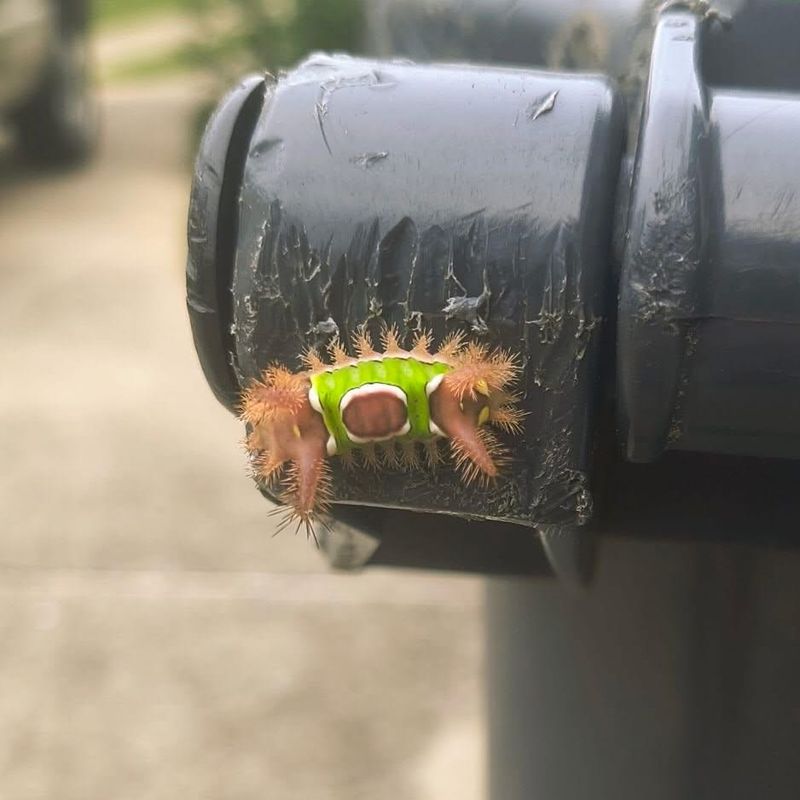
University of Georgia sources report saddlebacks and other stinging caterpillars in Georgia landscapes, including in late summer and fall. A UGA Field Report article describes these urticating caterpillars and the many plants they use.
Saddlebacks feed on a wide range of hosts. A Cherokee County Master Gardeners newsletter lists plants such as roses, trees, and vegetables.
Oaks show up as one reported host, but that does not mean oak work causes most contacts.
The takeaway is awareness, not alarm. These caterpillars are one more thing to watch for while you work around shrubs, trees, and ornamentals when the season turns.
Prevention is simple. Poison Control recommends wearing gloves and a hat, and never handling caterpillars bare-handed.
Long sleeves help too, and a quick look at leaf undersides before you reach in can save a bad afternoon.
Not every caterpillar is a threat, so there is no need to panic at every fuzzy visitor. Just keep your hands to yourself when you do not know what you are looking at.
A bright green saddle on a leaf is a good reason to look, not touch.
Share this story