A branch or vine creeping over the fence can feel like an invitation to grab the shears. California court cases do give homeowners a limited right to cut tree branches that cross onto their land.
But that rule has edges, and vines are a murkier story. Knowing where the line sits can save you from a costly argument.
California’s clearest cases address overhanging tree branches
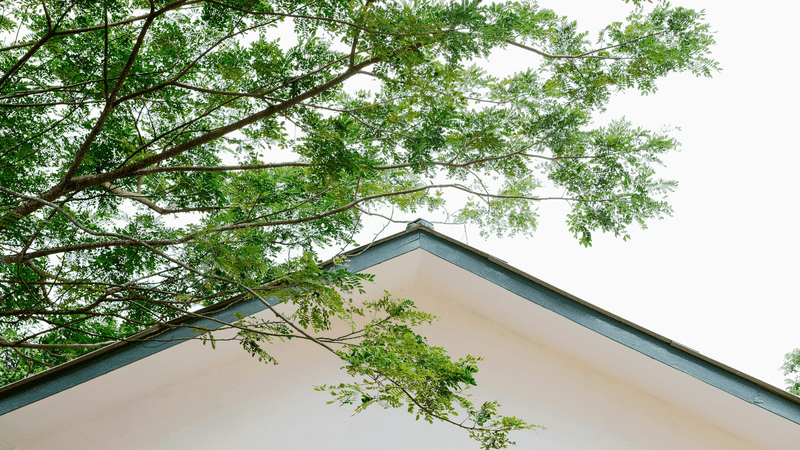
The rule that California courts have stated most clearly is a narrow one. A neighbor may cut off a tree’s overhanging branches, but only to the extent they cross onto the neighbor’s own land.
The California Supreme Court described this limit in Grandona v. Lovdal, an 1886 decision that is still the starting point for these disputes.
A California appellate court repeated the same limit in Crance v. Hems.
Notice what both cases are about: trees and their branches. Neither one creates a statewide, vine-specific right to trim whatever a neighbor has growing near the boundary.
That gap matters because plenty of online advice stretches the tree rule into a blanket permission slip. It is not one.
The cases support cutting the part of a tree’s branches that hangs over your side, and they do not say that a neighbor’s plant is yours to reshape.
Think of the rule as having three parts. First, the plant is a tree.
Second, the branch actually crosses onto your land. Third, you cut only the portion that crosses.
If any of those parts is missing, you are on shakier ground.
The rest of this article builds on that foundation. It separates the settled tree-branch rule from the less certain question of vines, and it walks through the practical limits that apply before anyone picks up a saw: boundary lines, trespass, damage, local ordinances, and power lines.
Treat this as general information rather than legal advice. If a dispute is already tense or the plant is valuable, a short consult with a local attorney or a certified arborist can be money well spent.
The property line—not the fence—sets the limit
Fences wander. Many sit a foot or two inside the true boundary, and some sit outside it.
The legal limit follows the property line, so a branch that clears the fence may still be hanging over your neighbor’s land, or the reverse.
The Supreme Court’s wording in Grandona v. Lovdal ties the right to cut to the part of the tree that overhangs your own land.
A visible fence is not mentioned as the test. Do not assume that anything past the fence is yours to cut.
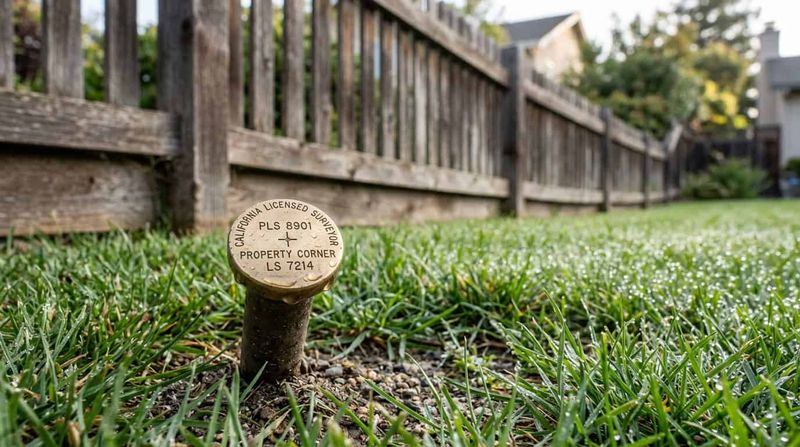
If you are unsure where the boundary runs, verify it before pruning. A recorded survey, your deed and plat map, or stakes left by a licensed surveyor are better evidence than a fence line.
The California Association of Realtors tree guide is a useful plain-language reference on how neighbors and trees interact.
A practical clue is a fence that bends, a newer fence next to an older one, or a driveway that seems to angle across the lot. Any of these can signal that the fence and the boundary do not match.
In that case, pause and get the line confirmed.
If the survey shows a branch crossing onto your land, you have something concrete to point to. If it shows the branch stays on your neighbor’s side, leave it alone and talk with them instead.
A limited right to prune does not excuse trespass or damage
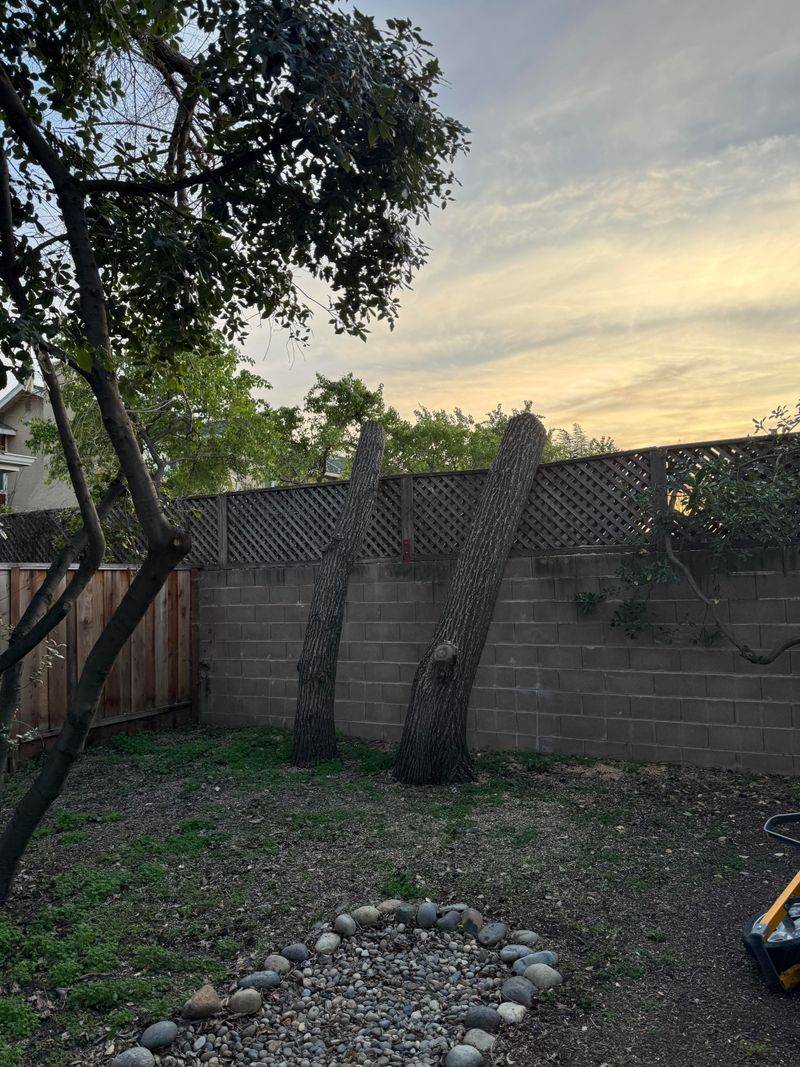
Cutting what crosses your line does not give you a ticket to walk onto the other side. Any permitted work should be done from your own property.
The UC Agriculture and Natural Resources guide to tree disputes describes self-help as limited to the encroaching portion and says it does not allow trespass. If you need access to the neighbor’s yard, ask first.
The same limit appears in Crance v. Hems, which keeps the right tied to what actually extends onto your land.
Reaching over and cutting beyond your boundary is a different act.
Self-help is also not a license to be careless. In Booska v.
Patel, the Court of Appeal rejected the idea of an unlimited right to cut encroaching roots no matter the consequences. That case involved roots, not vines, so it is not a vine ruling.
It is a caution against treating pruning rights as permission to harm a neighbor’s plant.
In practice, that means thinking about what the cut will do. Removing a large share of a tree’s structure, or cutting in a way that could kill or destabilize it, invites a dispute even if every cut stays on your side.
No single outcome follows from damage in every case. Whether anyone owes money depends on the facts, the plant, and the harm.
The safer path is modest cuts, clean technique, and a conversation with the neighbor before you start.
Vines and shared plants raise a less settled question
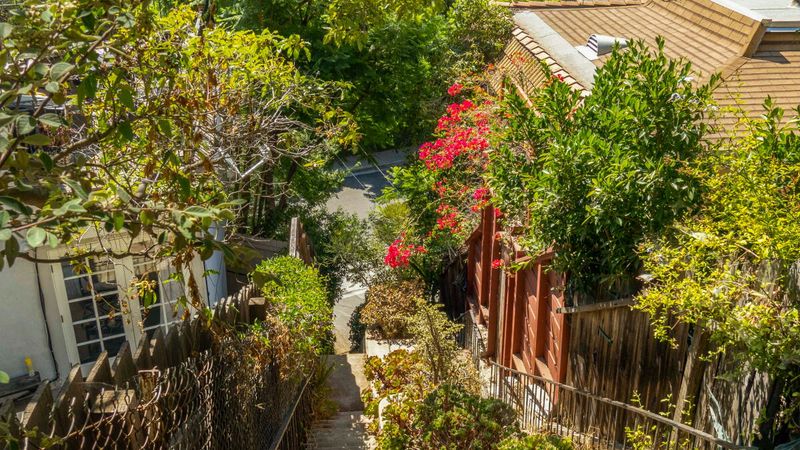
Vines are where the tidy tree rule gets fuzzy. The cited cases speak about tree branches.
They do not clearly say the same rule applies to every vine, shrub, or plant that is rooted near or attached to a shared fence. Until vine-specific authority says otherwise, treat that application as uncertain.
Where a plant is rooted matters. A vine rooted on your neighbor’s side and growing through the fence is not the same as one rooted on your land.
The UC Agriculture and Natural Resources guide is useful, but its discussion centers on trees, so it is not a final word on vines.
Another distinction is a tree that straddles the boundary. That is different from a tree standing wholly on one side with branches reaching over.
In Kallis v. Sones, the court dealt with a jointly owned line tree.
Do not treat a shared tree as if either neighbor could freely cut it.
By contrast, the overhanging-branch rule from Grandona v. Lovdal concerns the part of a tree crossing onto the cutter’s land.
Trimming a vine that is hooked onto your fence might feel similar, but that does not make it settled law.
Also note that being allowed to trim does not mean the plant’s owner must pay for it or remove the whole plant. The cases separate cutting encroaching portions from cutting down the tree itself.
When a vine is involved, ask the neighbor first, and consider legal advice if they refuse.
Check local rules before pruning
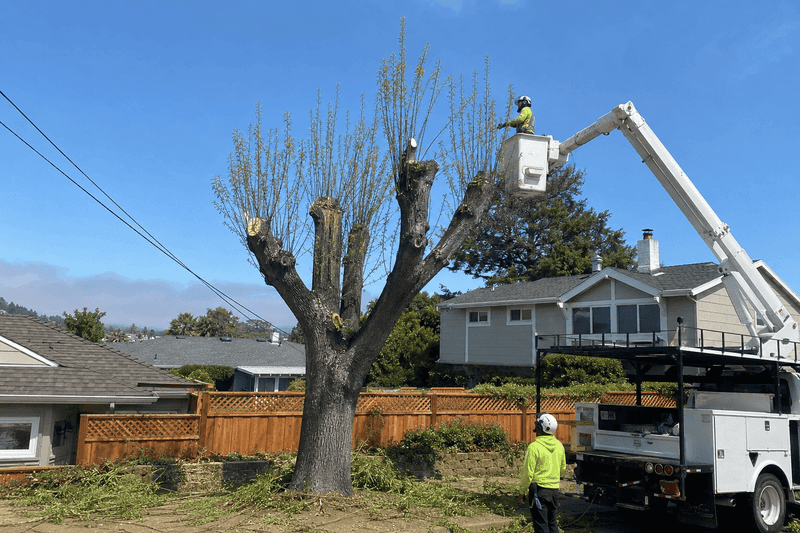
Cities and counties can add their own rules on top of general court decisions. Some regulate pruning of certain trees, especially larger or protected ones, and requirements differ from place to place.
A cut that is fine in one town may need a permit in the next.
Redwood City offers a good example. Its tree FAQs page explains that its tree-preservation ordinance can require a permit for certain pruning.
That is one city’s approach.
It does not mean California has a statewide permit rule for pruning. It also does not show that every vine is covered.
Many ordinances focus on trees of a certain size or type, so the definition in your local code matters.
Start by searching your city or county website for words like tree ordinance, protected tree, or heritage tree. Call the public works or planning office if the language is unclear.
A short call before pruning is far cheaper than a fine afterward.
Also check homeowners association rules and any rental agreement if they apply. Renters in particular may need the landlord’s approval before cutting anything.
Stay away from vegetation near power lines
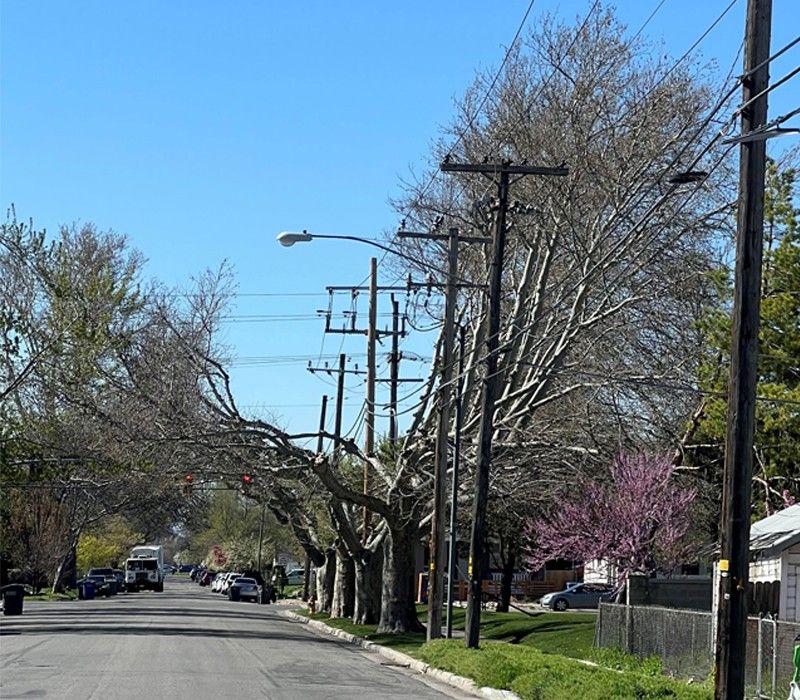
If a branch or vine is touching or close to a power line, stop. Do not try to trim it yourself.
Contact your local electric utility before attempting work near high-voltage lines.
The California Public Utilities Commission gives this same direction for trees near high-voltage lines. Utilities have trained crews for this work.
California’s Tree Work Safety Guide warns against tree work where any part of a tree is within 10 feet of energized high-voltage lines. That figure is a warning point for tree work, not a promise that a homeowner is safe at any other distance.
Wet branches, ladders, metal pruning poles, and wind can all make a bad situation worse. If you cannot tell whether a line is energized, assume it is.
Where lines are involved, use the utility or a qualified professional. No fence dispute is worth the risk.
Confirm the situation before you prune
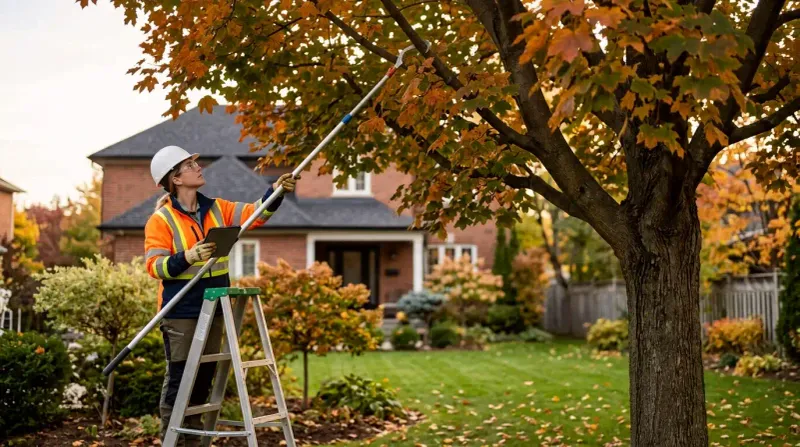
Run through a quick checklist before the first cut. Confirm what actually crosses the verified boundary, not just the fence.
Identify whether you are dealing with a tree or a vine that may be shared.
Then pause if the work could involve trespass, damage to the plant, local permit rules, or power lines. Any one of those is a reason to stop and ask first.
A friendly conversation with the neighbor often solves what a pair of shears can’t.
Share this story