Florida has a talent for making people jump. Many of the animals that cause screams in backyards, garages, and gardens are actually harmless to humans.
Knowing which ones are safe can save you a panic attack and save a helpful animal from getting hurt. Here are seven Florida critters that look scary but really just want to be left alone.
1. Scarlet Kingsnake
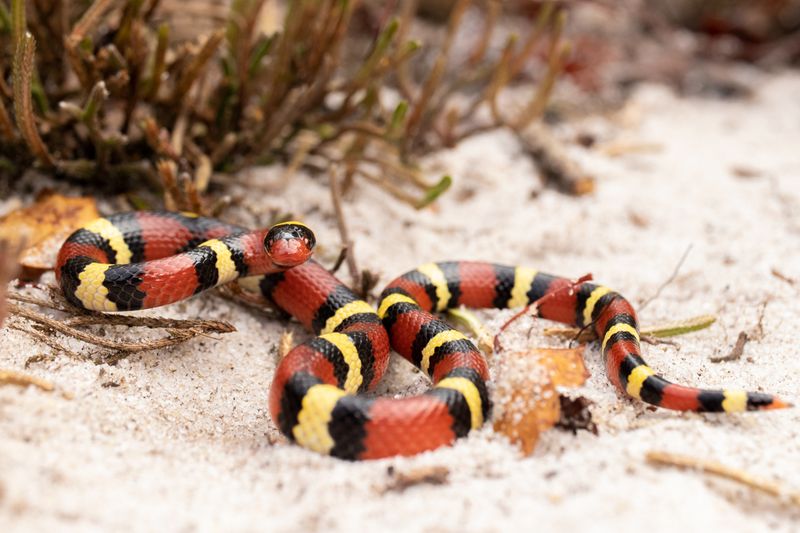
Red touches black, friend of Jack. Floridians have repeated that rhyme for generations, and the scarlet kingsnake is the reason it exists.
Its bright red, black, and yellow bands look almost exactly like the deadly coral snake.
The big difference is in the order of the colors. On a scarlet kingsnake, the red bands touch the black ones, while on a coral snake, red touches yellow.
The rhyme works in Florida, but experts warn it does not hold up everywhere, so the safest move is still to look and not touch.
These shy snakes spend most of their lives hiding under loose bark and rotting logs. They eat small lizards and other snakes, and they rarely bite even when picked up.
2. Banana Spider (Golden Silk Orb-Weaver)
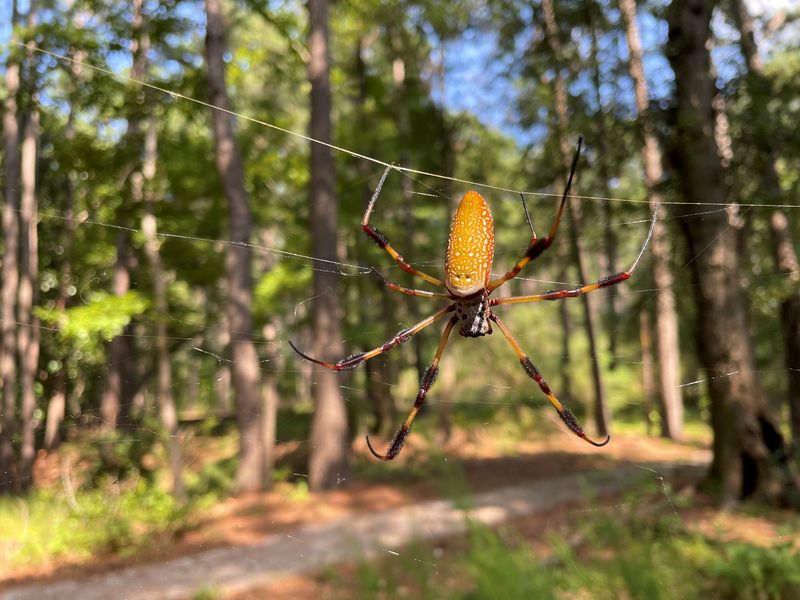
Picture walking down a hiking trail and catching a web across your face, then spotting a spider as big as your palm. That moment has ended many a nature walk in Florida.
The golden silk orb-weaver is huge, colorful, and builds webs that can stretch several feet wide.
Here is the good news. Its bite is about as bad as a bee sting, and it almost never bites people at all.
It would much rather sit in its web and wait for mosquitoes and flies.
Fun fact: the silk really does shine gold in sunlight. Scientists have even studied it for making strong, lightweight materials.
3. Southern Black Racer
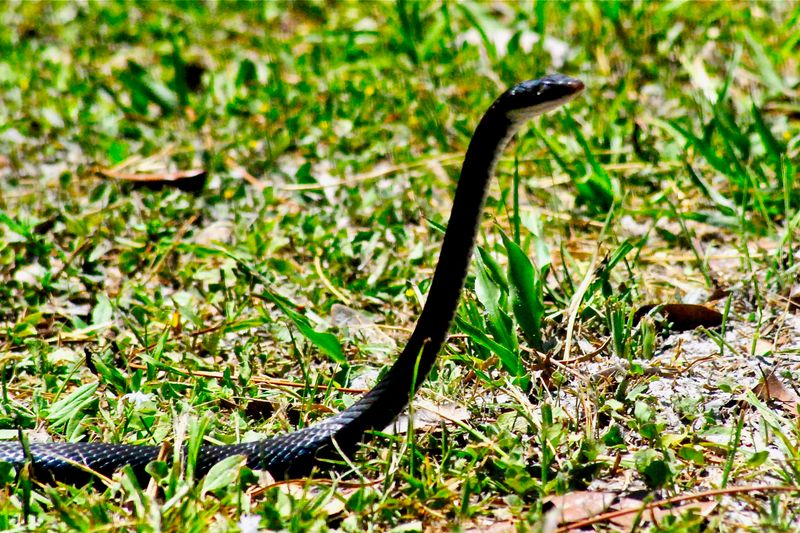
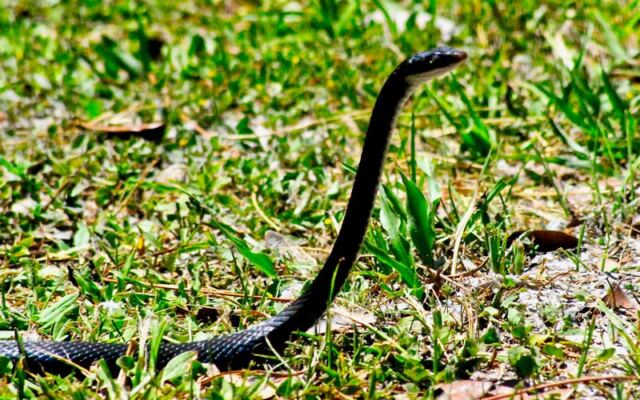
Few things move faster across a Florida lawn than a black racer in a hurry. Homeowners often spot a long, shiny black snake zooming past and assume the worst.
Some even mistake it for a cottonmouth.
Racers are completely non-venomous. They are slim, quick, and have a white or gray chin that gives them away.
When cornered, they may shake their tails in dry leaves to sound like a rattlesnake, which is a clever bluff.
They can be a little feisty if grabbed. Still, they are excellent neighbors, eating rodents, frogs, and insects around your yard.
4. Florida Water Snake
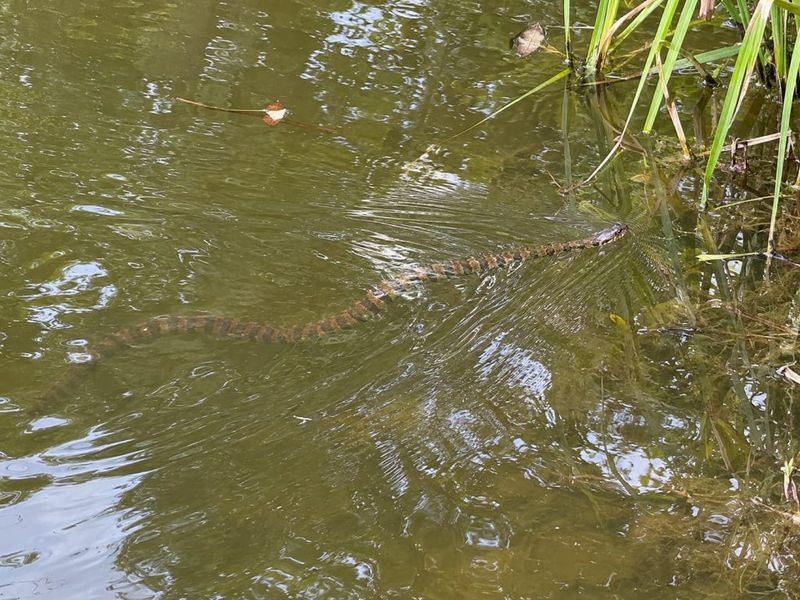
Ask a fisherman about cottonmouths, and odds are the snake they actually saw was a Florida water snake. These chunky, dark-banded snakes hang around ponds, canals, and lakes all over the state.
Their heavy bodies and swampy homes make them easy to confuse with their venomous cousin.
A few clues help. Water snakes usually have round pupils and swim with most of their body underwater.
Cottonmouths tend to float high on the surface like a cork.
Water snakes can bite and might release a smelly musk if handled. However, they carry no venom and simply want to get back to hunting fish and frogs.
5. Eastern Lubber Grasshopper
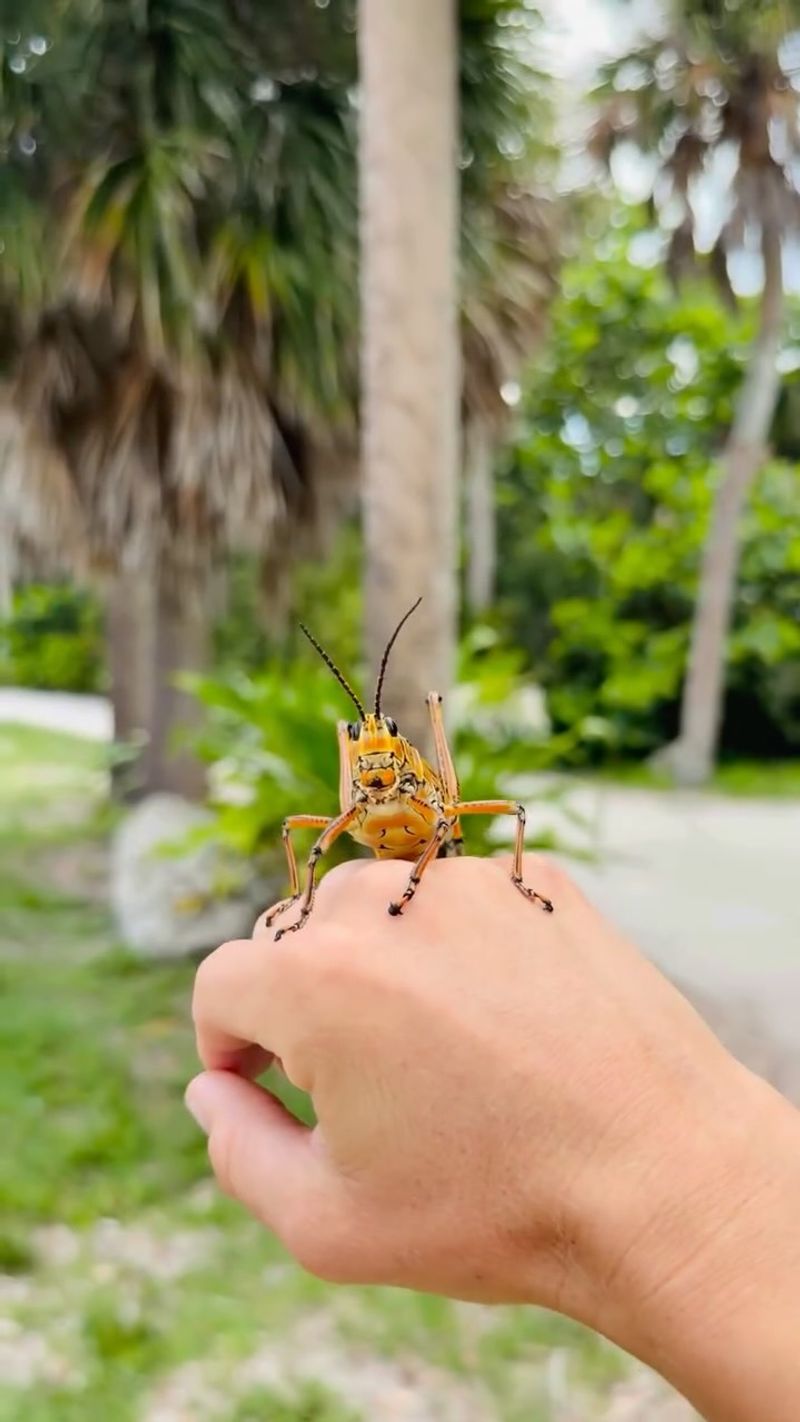
Bright yellow, black, and red, the eastern lubber grasshopper looks like it was painted as a warning sign. In nature, those colors often mean danger, and gardeners tend to back away fast.
These chunky bugs can grow over three inches long.
Lubbers do not sting or bite people in any serious way. They are slow and clumsy and cannot even fly well.
If bothered, they hiss and release a foamy, stinky spray.
The only real victims are plants. Lubbers love munching on lilies and citrus, so gardeners have some reason to grumble.
6. Eastern Hognose Snake
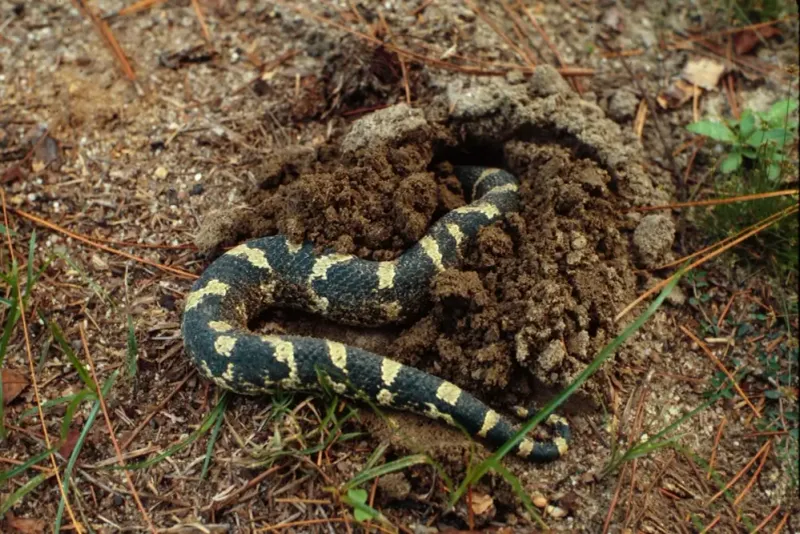
Is it a cobra? Is it dying?
Nope, it is just a hognose snake putting on a show. When scared, this snake flattens its neck, hisses loudly, and strikes with its mouth closed.
If that does not work, it rolls over, sticks out its tongue, and plays dead. Some even give off a nasty smell to sell the act.
Flip it right side up, and it will flop right back over as if to say, I am definitely dead.
The upturned snout helps it dig through sandy soil for toads, its favorite food. People almost never get bitten, making it one of Florida’s most entertaining harmless reptiles.
7. Spiny Orb-Weaver
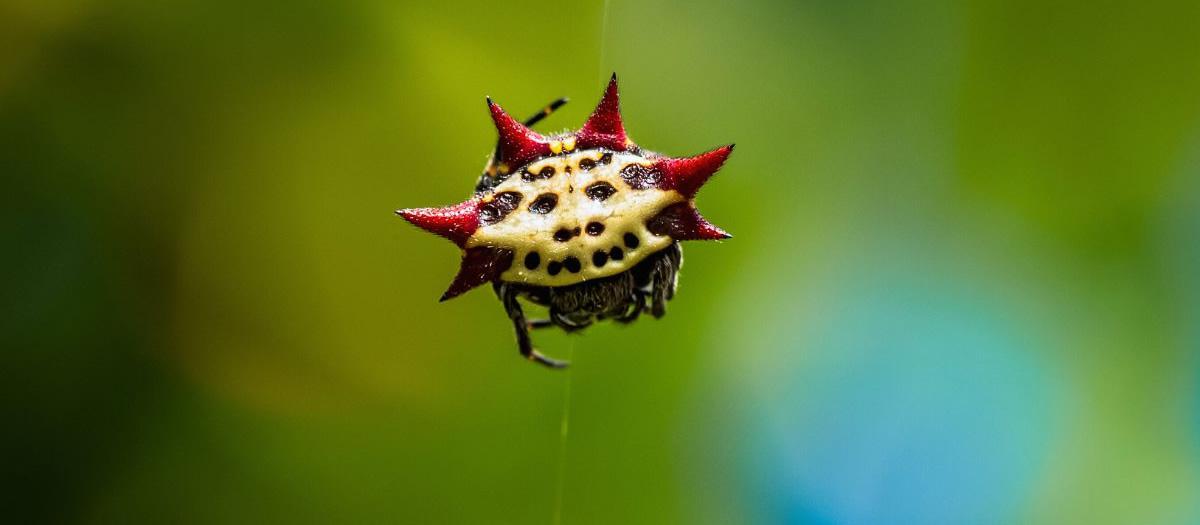
With a hard white shell and six red spikes, the spiny orb-weaver looks more like a tiny alien than a spider. Many people find one hanging near a porch and wonder if it is poisonous.
Its odd shape earned it the nickname crab spider.
The truth is far less scary. This spider is smaller than a dime and has no bite worth worrying about.
It rarely leaves its web.
Look for them in citrus groves and shrubs in fall. They are easy to spot and fun to show kids once everyone knows they are safe.
Share this story