Get the latest garden guides in your inbox →
Gardening Latest
  • General Gardening
  • Lawn Care
  • Plant Care
  • Composting
  • Soil Health
  • Backyard
  • Garden Muse Magazine
  • General Gardening
  • Lawn Care
  • Plant Care
  • Composting
  • Soil Health
  • Backyard
  • Garden Muse Magazine
  • News
  • Gardening Calendar
  • Garden Structures
  • Vegetable Garden
  • Vertical Garden
  • Raised Beds
  • Hydroponics
  • General Equipment
  • Community Gardens
Garden Themes
  • Spiritual Garden
  • Hydroseeding
  • Seeding and Laying Sod
  • Artificial Grass
  • Lawn Care Equipment
  • Plants
  • Trees
  • Planting Tools
  • Composting Basics
  • Fertilizer
  • Alternative Growing Mediums
  • Front Yard
  • Backyard Activities
  • Landscaping
Gardening Latest

Explore by state

Which state is your garden in?

Currently viewing Maryland

All states

Northeast

  • Connecticut —
  • Delaware 36
  • Maine —
  • Maryland 22
  • Massachusetts 39
  • New Hampshire —
  • New Jersey 22
  • New York 32
  • Pennsylvania 32
  • Rhode Island —
  • Vermont —

Southeast

  • Alabama 22
  • Arkansas —
  • Florida 22
  • Georgia 23
  • Kentucky 36
  • Louisiana 21
  • Mississippi —
  • North Carolina 21
  • South Carolina 35
  • Tennessee 19
  • Virginia 21
  • West Virginia —

Midwest

  • Illinois 21
  • Indiana 24
  • Iowa 35
  • Kansas —
  • Michigan 23
  • Minnesota 21
  • Missouri 21
  • Nebraska —
  • North Dakota —
  • Ohio 23
  • South Dakota —
  • Wisconsin 37

Southwest

  • Arizona 22
  • Colorado —
  • Nevada —
  • New Mexico —
  • Oklahoma —
  • Texas 21
  • Utah —

West

  • Alaska —
  • California 22
  • Hawaii —
  • Idaho —
  • Montana —
  • Oregon —
  • Washington —
  • Wyoming —

No state matches that search.

Site menu

Gardening Latest
  • General Gardening
    • News
    • Gardening Calendar
    • Garden Structures
    • Vegetable Garden
    • Vertical Garden
    • Raised Beds
    • Hydroponics
    • General Equipment
    • Community Gardens
    Garden Themes
    • Spiritual Garden
  • Lawn Care
    • Hydroseeding
    • Seeding and Laying Sod
    • Artificial Grass
    • Lawn Care Equipment
  • Plant Care
    • Plants
    • Trees
    • Planting Tools
  • Composting
    • Composting Basics
  • Soil Health
    • Fertilizer
    • Alternative Growing Mediums
  • Backyard
    • Front Yard
    • Backyard Activities
    • Landscaping
  • Garden Muse Magazine

Explore

  • About GardeningLatest.com
  • Contact Us

Get the latest from the garden

New guides on lawn care, plants and backyard projects, sent when they go up.

Subscribe →

Follow

  • Facebook
  • X
  • Pinterest
  • YouTube
Maryland Gardening

Your Maryland Rhubarb Is Sending Up a Giant Flower Stalk, and Here’s Why You Should Cut It Off

If a thick stalk topped with a puffy cluster of flowers has shot up from your rhubarb, cut it off…

GC

By Grace Calvert

November 26, 2026 · 6 min read

Your Maryland Rhubarb Is Sending Up a Giant Flower Stalk, and Here’s Why You Should Cut It Off
Your Maryland Rhubarb Is Sending Up a Giant Flower Stalk, and Here's Why You Should Cut It Off

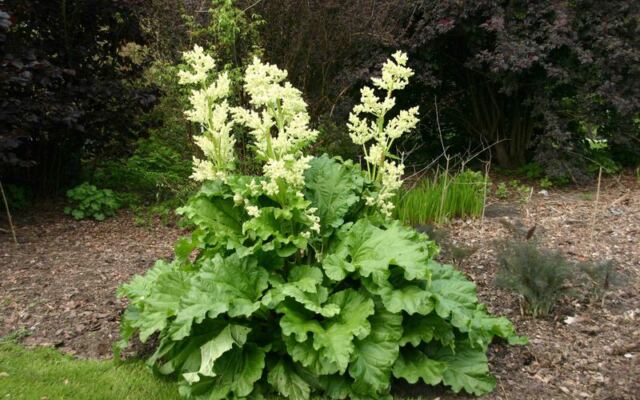
If a thick stalk topped with a puffy cluster of flowers has shot up from your rhubarb, cut it off near the base when you want a crop of edible leaf stalks. The plant is doing something perfectly normal, and the stalk takes energy that could go toward the part you eat.

Removing it is a simple gardening choice, not an emergency. Here is how to handle it and what to expect afterward.

At a glance

Where
Maryland Gardening
Hardiness zone
7 0 to 10°F
Read
6 minutes
Published
November 26, 2026

That flower stalk is normal reproductive growth
That flower stalk is normal reproductive growth
© Gardener’s Path

A tall, thick stalk rising from the middle of your rhubarb, topped with a frothy cluster of creamy flowers, is the plant’s normal reproductive growth. Gardeners often call it bolting.

The plant is simply trying to make seed, which is what many plants do when they get the chance.

Flowering alone is not evidence that the plant is dying. A plant with a flower stalk is not doomed, and it does not need rescuing.

What you are looking at is a plant making a choice about where to put its energy.

So why would anyone cut it off? If you grow rhubarb for its edible leaf stalks, the flower stalk is a competitor.

Purdue Extension explains that flowering and seed production use resources the plant could otherwise spend on leaf stalks, and Oregon State Extension likewise treats removing the flower stalk as part of growing rhubarb for harvest.

Notice the wording here. The documented concern is reduced stalk production or resources being pulled away from the harvest, not a plant that is about to die.

Think of the flower stalk as a nudge to make a gardening decision, and the next sections walk through that decision step by step.

Picture a gardener heading out for a morning walk and spotting that odd, football-shaped bud pushing out of the crown. There is no need to panic.

A few minutes with a sharp knife or pruners, and the question is settled.

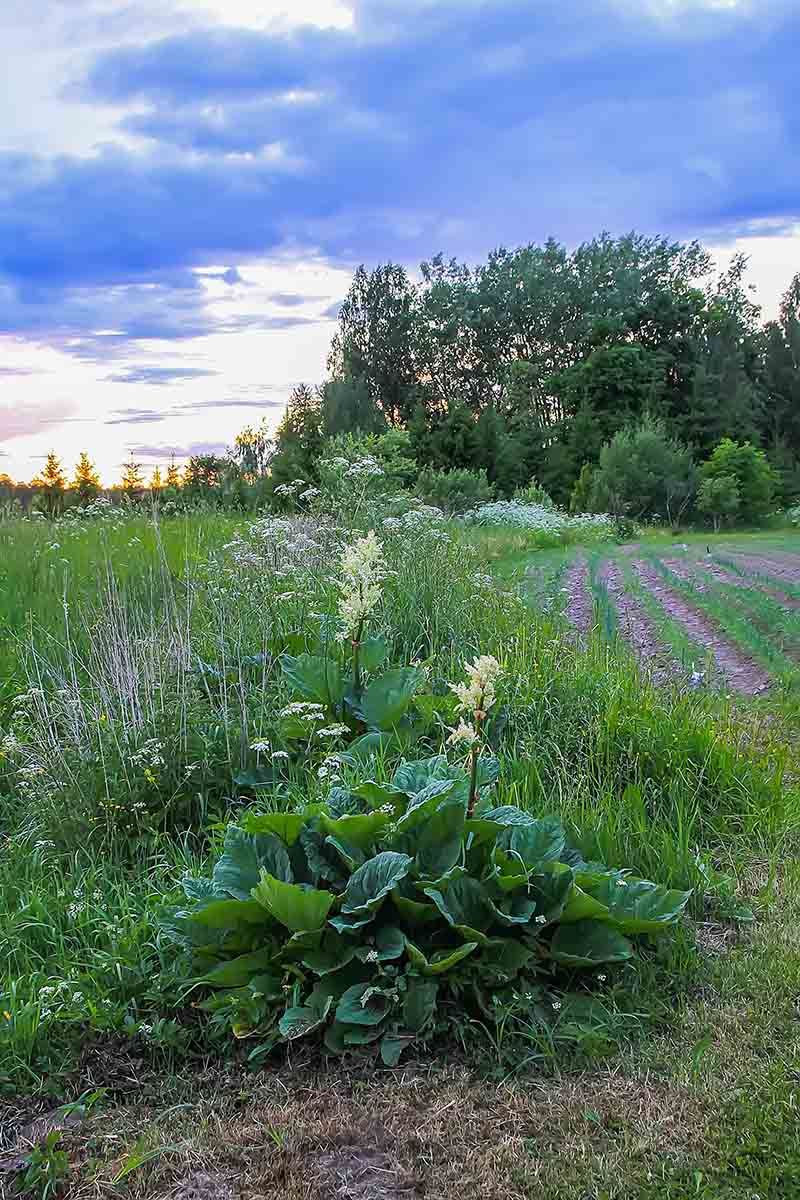
Why is rhubarb flowering?
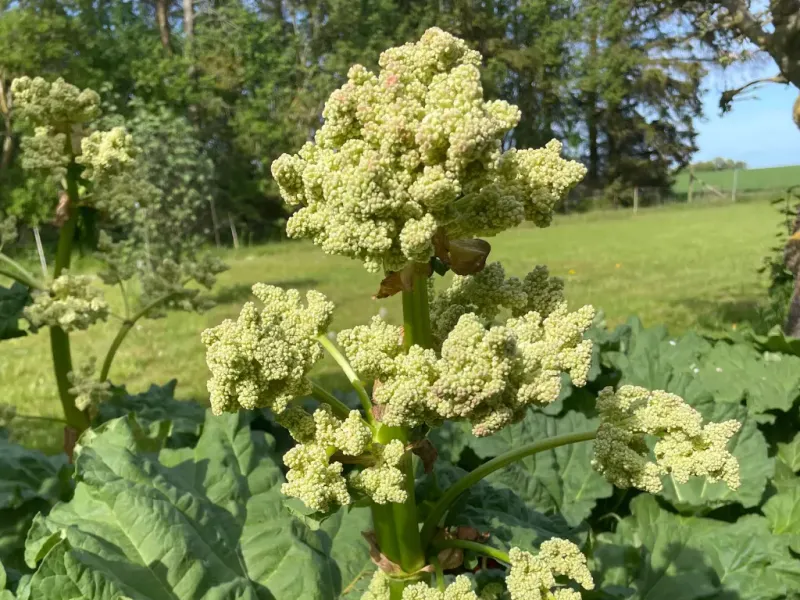
Why is rhubarb flowering?
© Garden Nursery

Gardeners love a simple answer, but rhubarb does not give one. Age, cultivar, and growing conditions can all affect whether a plant sends up flower stalks.

Some varieties flower more readily than others, and older crowns may do it more often.

Some gardeners worry that a flowering plant has gone bad and that the stalks are now unsafe.

Conditions matter too. Extension sources name heat, drought, and low soil fertility among the possible contributors, and Iowa State Extension covers several of these in answering this very question.

Oregon State Extension also notes that environmental stress can play a part.

None of this lets you diagnose your own plant from the flower stalk alone. A stalk could point to a hot spell, a thirsty bed, tired soil, or just the way that variety behaves.

Often it is a mix, and you cannot tell which from the stalk itself.

Maryland gardeners can find a local example in a University of Maryland Extension response on growing rhubarb in Maryland. A Frederick County gardener reported that plants bolted during summer and that the flower heads were cut back.

That is one gardener’s report, and it is useful as local context. It does not prove that Maryland weather caused any particular plant to flower, including yours.

Remove the flower stalk near its base
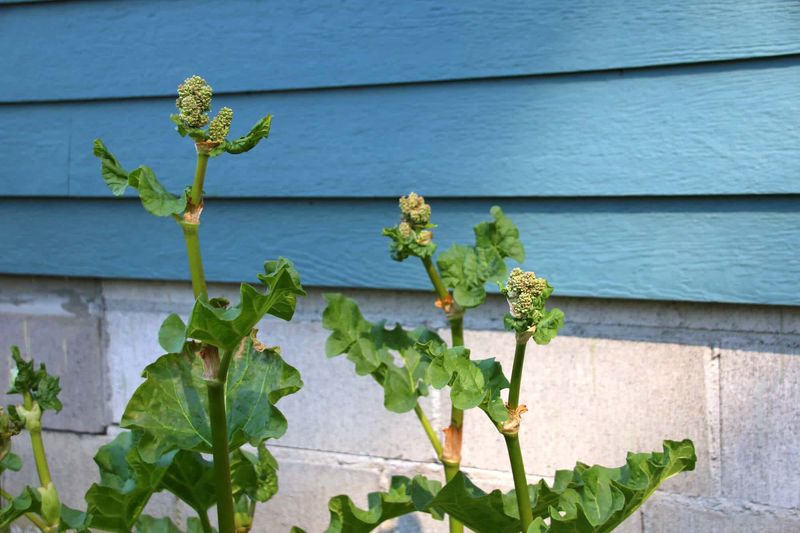
Remove the flower stalk near its base
© The Daring Gourmet

Here is the plan. Once you see the flower stalk, cut it off near its base if you want edible leaf stalks.

Use clean, sharp pruners or a knife, and keep the cut low so no thick stub is left behind.

Then keep an eye on things, because the plant may send up another flower stalk. Illinois Extension and Purdue Extension both recommend removing flower stalks when they appear.

A quick check every week or so during the growing season is plenty.

Be realistic about what this does. Removal favors stalk production and keeps the plant’s resources from going into flowers and seed.

It does not guarantee larger stalks or a bigger harvest, and it will not bring a weak plant back to strength.

Not everyone needs to cut. If you grow rhubarb as an ornamental, or you simply like the look of the flower plume, you can leave it in place.

Purdue notes that this is an option, and that if you want to keep seed from maturing, you can cut the stalk after it flowers.

Either way, the choice is yours. Cutting is for harvest-minded gardeners, and leaving it is fine for those who want flowers.

Flowering does not make the leaf stalks poisonous
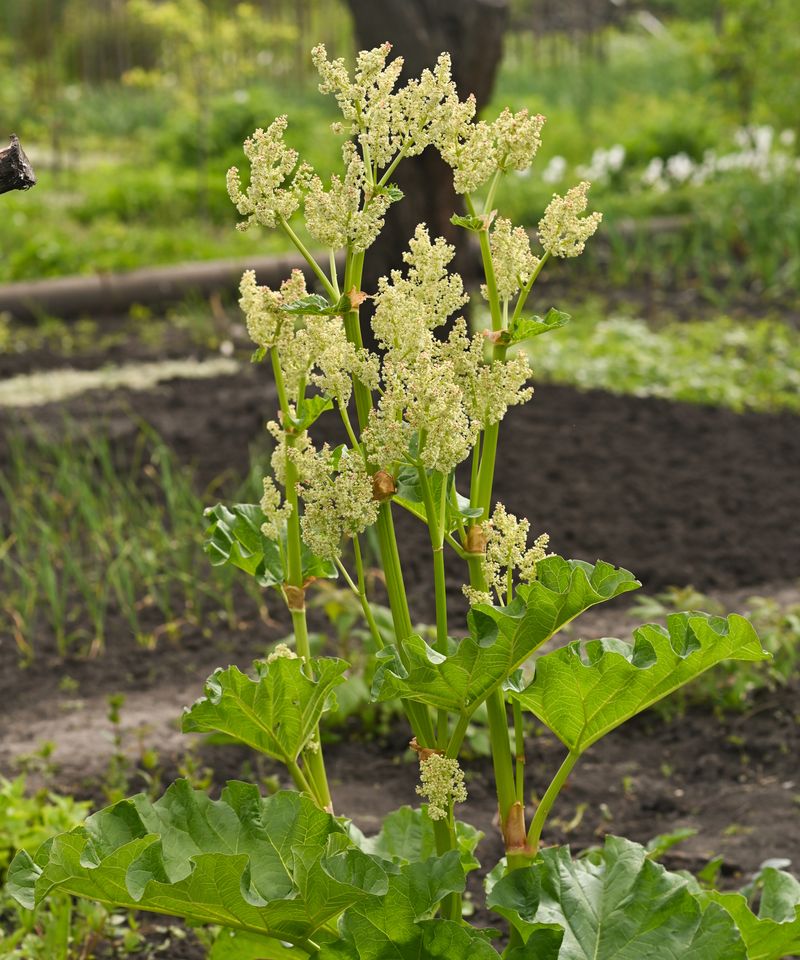
Flowering does not make the leaf stalks poisonous
© Gardening Know How

Some gardeners worry that a flowering plant has gone bad and that the stalks are now unsafe. That is a mix-up of two separate things.

According to Purdue Extension, the ordinary leaf stalks remain edible when flower stalks are present.

The real food-safety rule has nothing to do with flowering. Rhubarb leaf blades are always inedible, whether or not the plant is blooming.

The Purdue Plant and Pest Diagnostic Laboratory advises using only the leaf stalks as food and discarding the blades.

That means your kitchen routine stays the same. Trim off the big leaf, compost it, and cook the stalks as usual.

A bolting plant does not change that routine.

One more caution: the flower stalk itself is not a rhubarb stalk to cook. South Dakota State Extension says flower stalks are not edible, so do not substitute it for the leaf stalks in a pie or sauce.

Keep the two ideas apart. Flowering is a growth habit, and the leaf blades are a separate hazard.

Mixing them up leads to either needless worry or a risky shortcut.

Keep the plant healthy after removing the flower stalk
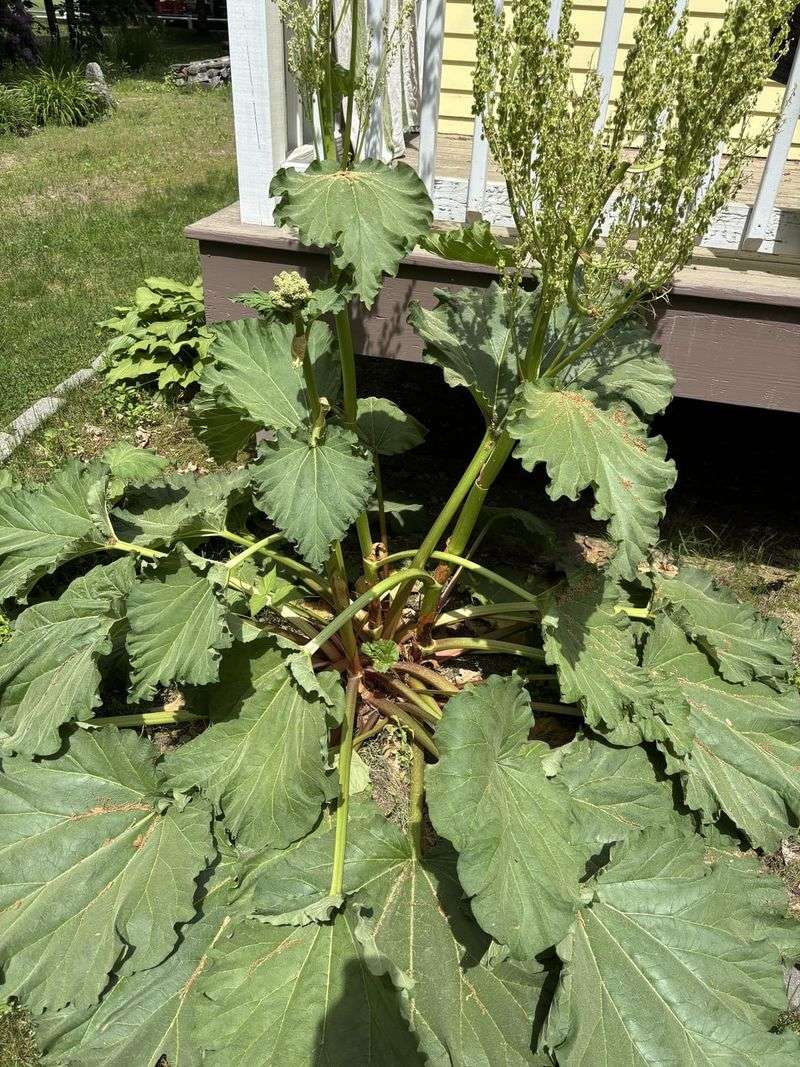
Keep the plant healthy after removing the flower stalk
© Reddit

After the flower stalk is gone, aftercare is mostly about not asking too much of the plant. Leave healthy leaves in place after you harvest, because they help replenish the plant’s reserves for next year.

Illinois Extension also advises against harvesting a newly planted rhubarb in its first year, so it can settle in.

Harvesting is a different job from removing the flower stalk. Cutting off the flower stalk is the right move for that part, but advice on picking edible stalks differs from one extension source to another.

University of Minnesota Extension recommends pulling and twisting edible stalks rather than cutting them.

South Dakota State Extension gives the same pull-and-twist advice. Because sources vary, treat no single method as the universal rule, and check what your local extension office suggests.

Keep it simple. Let new plants establish, leave a good share of leaves behind, and keep watching for another flower stalk.

Treat bolting as a cue, not a crisis
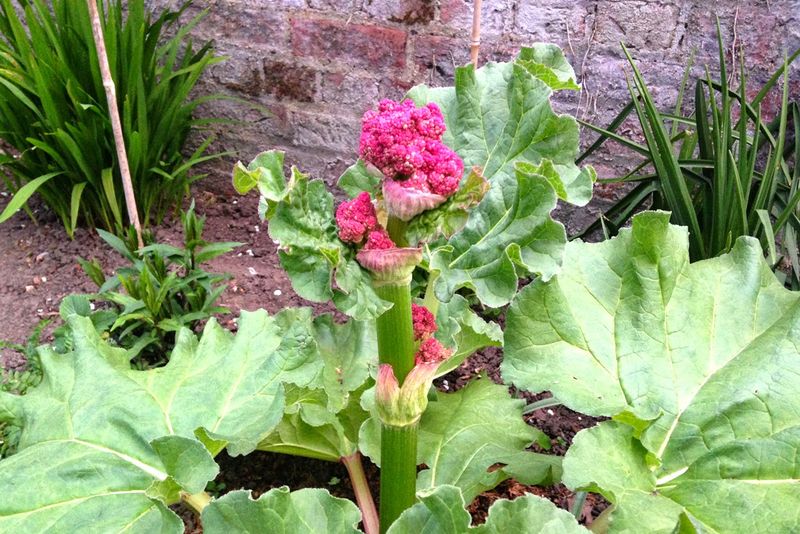
Treat bolting as a cue, not a crisis
© The Urban Veg Patch

If your goal is edible leaf stalks, cut the flower stalk near its base, check for another one, and keep healthy leaves on the plant. Purdue and Illinois Extension back this approach.

Flowering alone does not mean your plant is dying, and it does not make the ordinary leaf stalks unsafe. A flower stalk is simply rhubarb asking for a decision, and you have already made it.

Share this story
GC

Written by

Grace Calvert

More from Grace Calvert →

About Gardening Latest

Gardening Latest provides in-depth guides to maintaining and enhancing your garden and backyard. Learn how to make the most of the space you have and create a beautiful garden.

More about us →

Latest stories

  • North Carolina GardeningNorth Carolina Yuccas Pour Everything Into That Giant Flower Stalk, So Here’s When Cutting It Off Makes Sense

    North Carolina Yuccas Pour Everything Into That Giant Flower Stalk, So Here’s When Cutting It Off Makes Sense

    4 min ago
  • Michigan GardeningWhy Pavement Ants Pile Up Fresh Hills in Michigan Lawns Right After It Rains

    Why Pavement Ants Pile Up Fresh Hills in Michigan Lawns Right After It Rains

    9 min ago
  • Massachusetts GardeningRaking Leaves in Massachusetts? Here’s What We Know About the Northern Short-Tailed Shrew’s Venom

    Raking Leaves in Massachusetts? Here’s What We Know About the Northern Short-Tailed Shrew’s Venom

    14 min ago
  • California GardeningPull One Seedling and More Pop Up: This Invasive Tree Is Spreading Through California Neighborhoods

    Pull One Seedling and More Pop Up: This Invasive Tree Is Spreading Through California Neighborhoods

    19 min ago
  • New York GardeningThe Glossy Nuts New York Children Gather Every Fall Are Actually Poisonous

    The Glossy Nuts New York Children Gather Every Fall Are Actually Poisonous

    24 min ago

Gardening by state

Stories for your state, and the hardiness zone most of it gardens in.

Keep exploring

Read next

All Maryland Gardening →
Maryland GardeningThere’s an Invasive Tree Moving Through Maryland Neighborhoods, and Hand-Pulling Can’t Keep Pace
Maryland Gardening

There’s an Invasive Tree Moving Through Maryland Neighborhoods, and Hand-Pulling Can’t Keep Pace

5 hr ago
Maryland GardeningMaryland Homeowners Get to Trim a Neighbor’s Branches Hanging Over Their Yard, and the Property Line Is Where the Cutting Ends
Maryland Gardening

Maryland Homeowners Get to Trim a Neighbor’s Branches Hanging Over Their Yard, and the Property Line Is Where the Cutting Ends

8 hr ago
Maryland GardeningYour Neighbor’s Tree Fell on Your Maryland Property, and Who Pays Isn’t Who You’d Expect
Maryland Gardening

Your Neighbor’s Tree Fell on Your Maryland Property, and Who Pays Isn’t Who You’d Expect

23 hr ago

More from Maryland Gardening

  • Before You Reach Into A Maryland Flower Bed, Learn To Recognize These Venomous Creatures

    Nov 24
  • Why Coyotes Sound So Close to Your Maryland Home at Night Right Now, and What the Howling Means

    Nov 24
Back to top

Leave a response Cancel

Your email address stays private. Required fields are marked with an asterisk.

Gardening Latest

In-depth guides to maintaining and enhancing your garden and backyard: how to make the most of the space you have, and how to make it beautiful.

  • Facebook
  • X
  • Pinterest
  • YouTube

We may earn a portion of sales from products or services that are purchased through our site as part of our affiliate partnerships with retailers.

Explore

  • About GardeningLatest.com
  • Contact Us
  • Terms and Conditions
  • Privacy
  • Editorial Note:
  • FTC Disclosure

Newsletter

New garden guides and seasonal tips, straight to your inbox.

We’ll email you a link to confirm. Unsubscribe any time.

Almost there! Check your inbox and tap the link to confirm.

© 2026 Gardening Latest. All rights reserved.

Back to top