If a thick stalk topped with a puffy cluster of flowers has shot up from your rhubarb, cut it off near the base when you want a crop of edible leaf stalks. The plant is doing something perfectly normal, and the stalk takes energy that could go toward the part you eat.
Removing it is a simple gardening choice, not an emergency. Here is how to handle it and what to expect afterward.
That flower stalk is normal reproductive growth
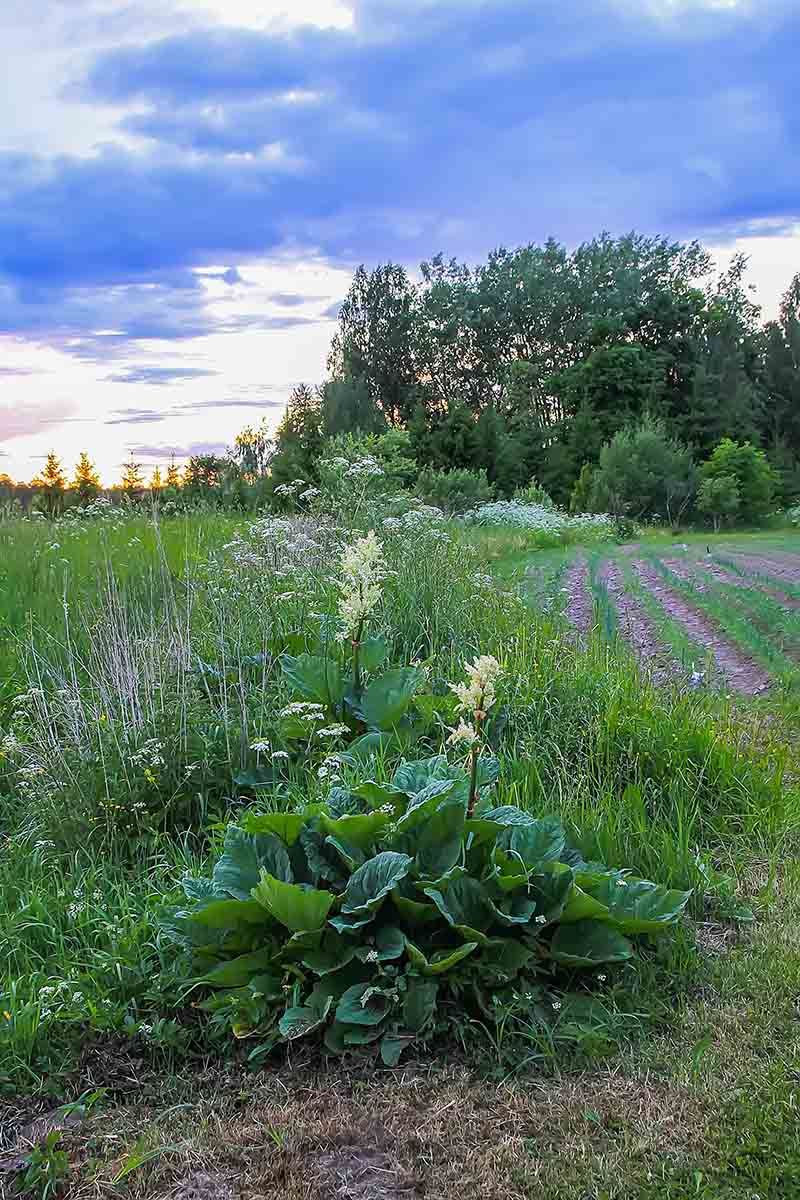
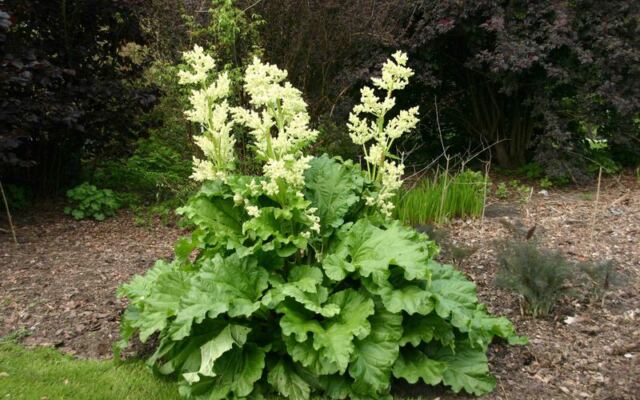
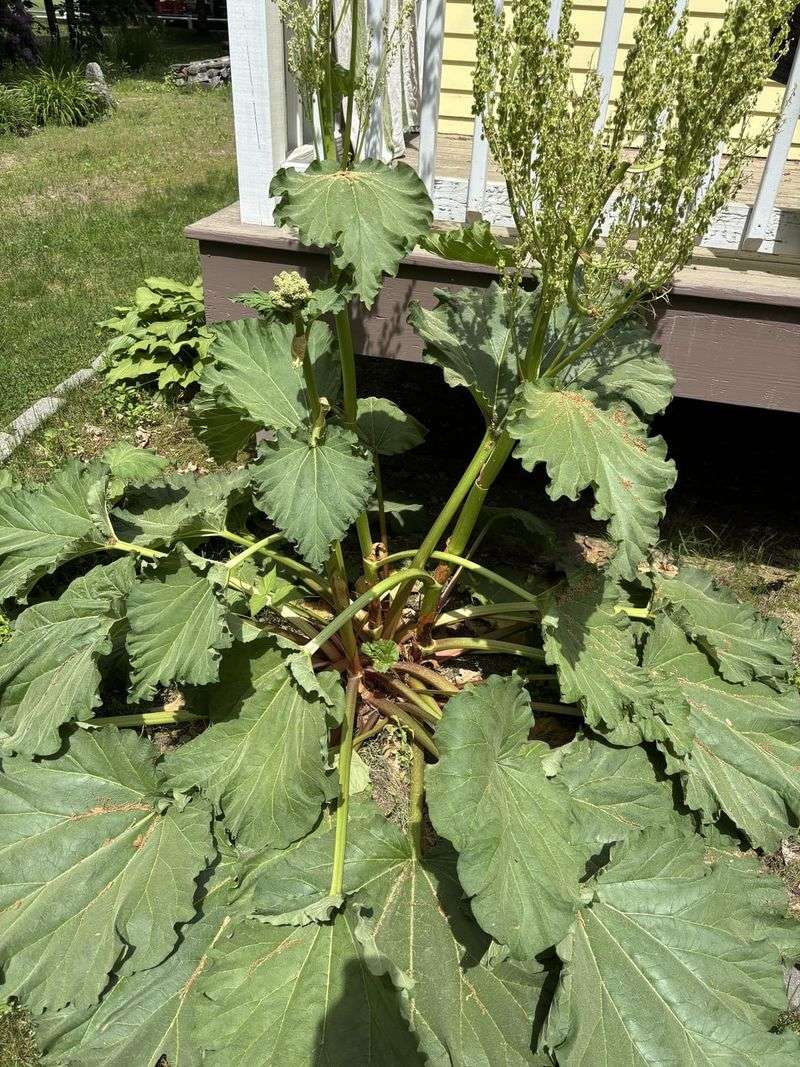
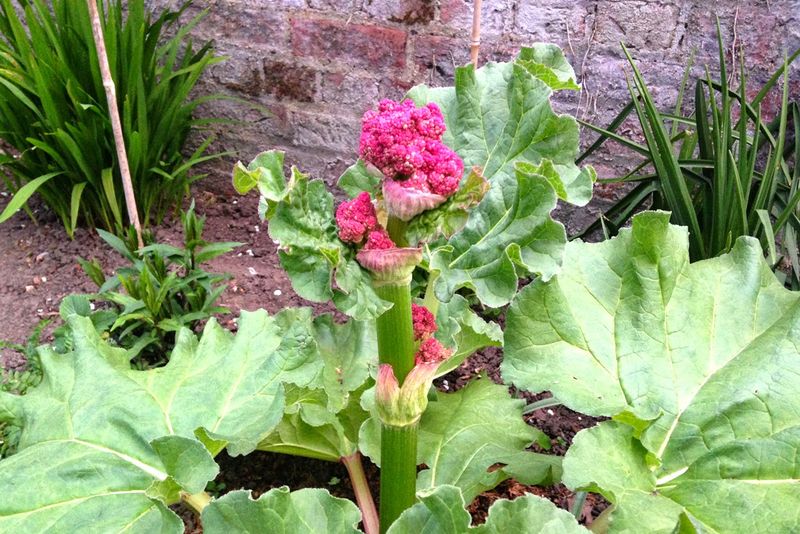
A tall, thick stalk rising from the middle of your rhubarb, topped with a frothy cluster of creamy flowers, is the plant’s normal reproductive growth. Gardeners often call it bolting.
The plant is simply trying to make seed, which is what many plants do when they get the chance.
Flowering alone is not evidence that the plant is dying. A plant with a flower stalk is not doomed, and it does not need rescuing.
What you are looking at is a plant making a choice about where to put its energy.
So why would anyone cut it off? If you grow rhubarb for its edible leaf stalks, the flower stalk is a competitor.
Purdue Extension explains that flowering and seed production use resources the plant could otherwise spend on leaf stalks, and Oregon State Extension likewise treats removing the flower stalk as part of growing rhubarb for harvest.
Notice the wording here. The documented concern is reduced stalk production or resources being pulled away from the harvest, not a plant that is about to die.
Think of the flower stalk as a nudge to make a gardening decision, and the next sections walk through that decision step by step.
Picture a gardener heading out for a morning walk and spotting that odd, football-shaped bud pushing out of the crown. There is no need to panic.
A few minutes with a sharp knife or pruners, and the question is settled.
Why is rhubarb flowering?
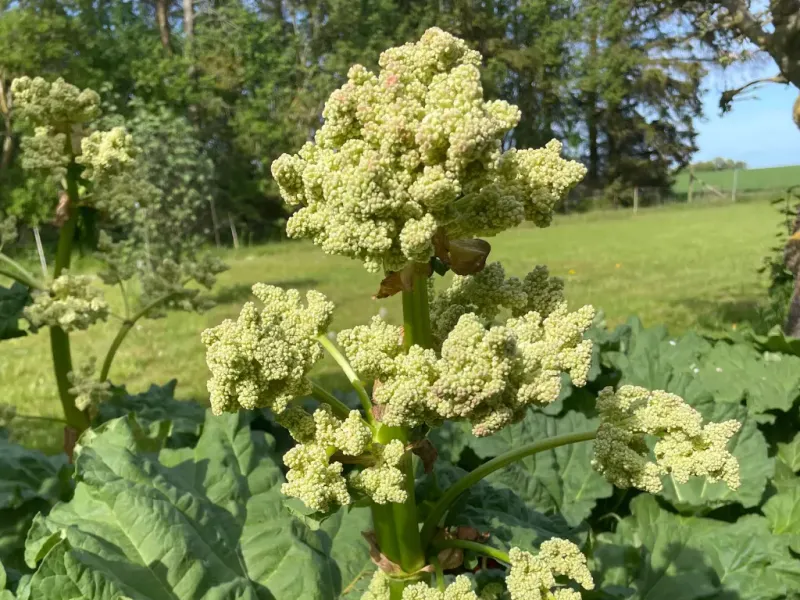
Gardeners love a simple answer, but rhubarb does not give one. Age, cultivar, and growing conditions can all affect whether a plant sends up flower stalks.
Some varieties flower more readily than others, and older crowns may do it more often.
Conditions matter too. Extension sources name heat, drought, and low soil fertility among the possible contributors, and Iowa State Extension covers several of these in answering this very question.
Oregon State Extension also notes that environmental stress can play a part.
None of this lets you diagnose your own plant from the flower stalk alone. A stalk could point to a hot spell, a thirsty bed, tired soil, or just the way that variety behaves.
Often it is a mix, and you cannot tell which from the stalk itself.
Maryland gardeners can find a local example in a University of Maryland Extension response on growing rhubarb in Maryland. A Frederick County gardener reported that plants bolted during summer and that the flower heads were cut back.
That is one gardener’s report, and it is useful as local context. It does not prove that Maryland weather caused any particular plant to flower, including yours.
Remove the flower stalk near its base
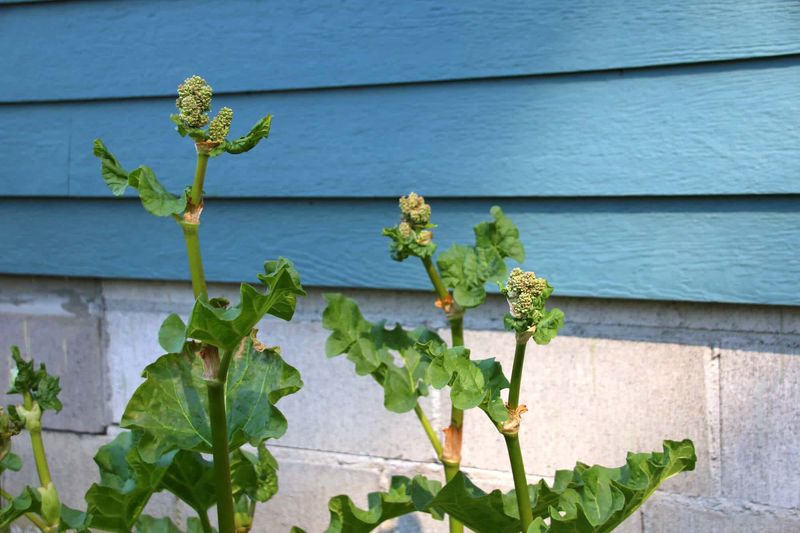
Here is the plan. Once you see the flower stalk, cut it off near its base if you want edible leaf stalks.
Use clean, sharp pruners or a knife, and keep the cut low so no thick stub is left behind.
Then keep an eye on things, because the plant may send up another flower stalk. Illinois Extension and Purdue Extension both recommend removing flower stalks when they appear.
A quick check every week or so during the growing season is plenty.
Be realistic about what this does. Removal favors stalk production and keeps the plant’s resources from going into flowers and seed.
It does not guarantee larger stalks or a bigger harvest, and it will not bring a weak plant back to strength.
Not everyone needs to cut. If you grow rhubarb as an ornamental, or you simply like the look of the flower plume, you can leave it in place.
Purdue notes that this is an option, and that if you want to keep seed from maturing, you can cut the stalk after it flowers.
Either way, the choice is yours. Cutting is for harvest-minded gardeners, and leaving it is fine for those who want flowers.
Flowering does not make the leaf stalks poisonous
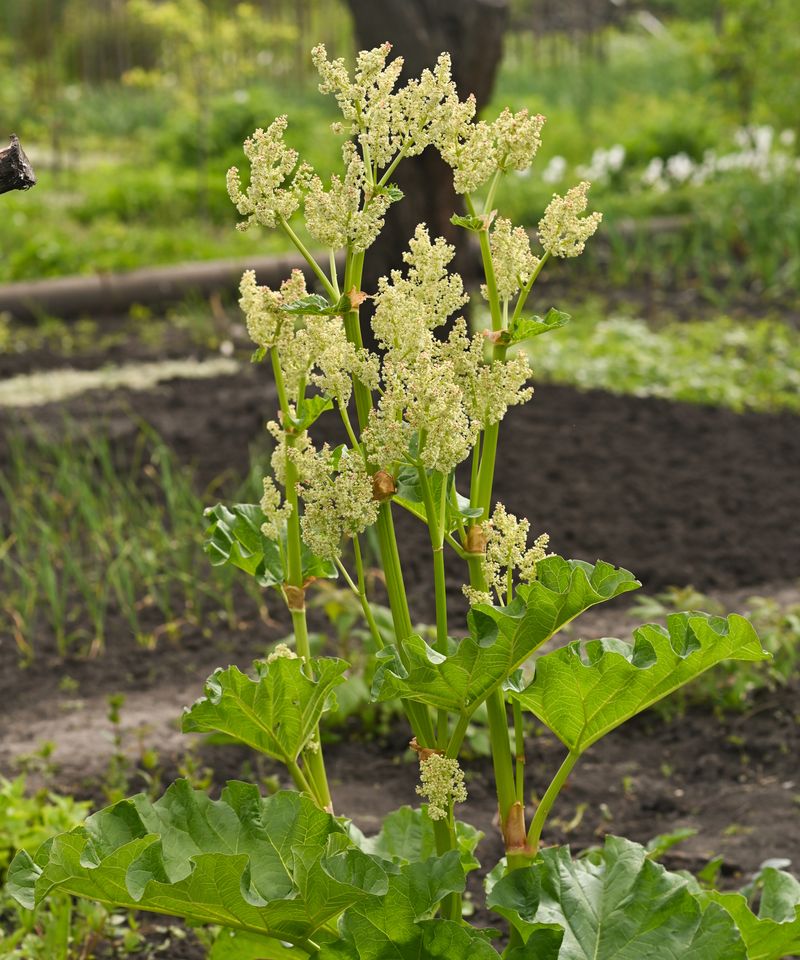
Some gardeners worry that a flowering plant has gone bad and that the stalks are now unsafe. That is a mix-up of two separate things.
According to Purdue Extension, the ordinary leaf stalks remain edible when flower stalks are present.
The real food-safety rule has nothing to do with flowering. Rhubarb leaf blades are always inedible, whether or not the plant is blooming.
The Purdue Plant and Pest Diagnostic Laboratory advises using only the leaf stalks as food and discarding the blades.
That means your kitchen routine stays the same. Trim off the big leaf, compost it, and cook the stalks as usual.
A bolting plant does not change that routine.
One more caution: the flower stalk itself is not a rhubarb stalk to cook. South Dakota State Extension says flower stalks are not edible, so do not substitute it for the leaf stalks in a pie or sauce.
Keep the two ideas apart. Flowering is a growth habit, and the leaf blades are a separate hazard.
Mixing them up leads to either needless worry or a risky shortcut.
Keep the plant healthy after removing the flower stalk
After the flower stalk is gone, aftercare is mostly about not asking too much of the plant. Leave healthy leaves in place after you harvest, because they help replenish the plant’s reserves for next year.
Illinois Extension also advises against harvesting a newly planted rhubarb in its first year, so it can settle in.
Harvesting is a different job from removing the flower stalk. Cutting off the flower stalk is the right move for that part, but advice on picking edible stalks differs from one extension source to another.
University of Minnesota Extension recommends pulling and twisting edible stalks rather than cutting them.
South Dakota State Extension gives the same pull-and-twist advice. Because sources vary, treat no single method as the universal rule, and check what your local extension office suggests.
Keep it simple. Let new plants establish, leave a good share of leaves behind, and keep watching for another flower stalk.
Treat bolting as a cue, not a crisis
If your goal is edible leaf stalks, cut the flower stalk near its base, check for another one, and keep healthy leaves on the plant. Purdue and Illinois Extension back this approach.
Flowering alone does not mean your plant is dying, and it does not make the ordinary leaf stalks unsafe. A flower stalk is simply rhubarb asking for a decision, and you have already made it.
Share this story