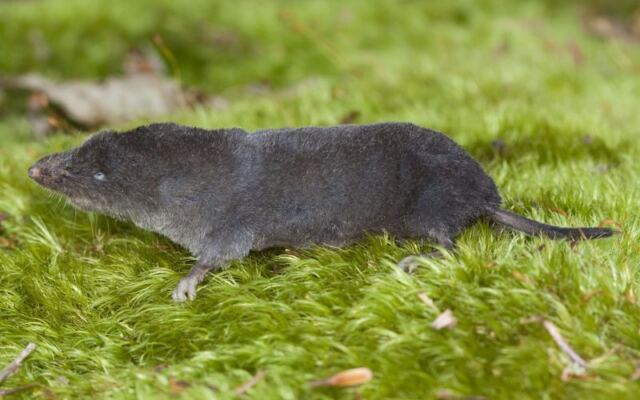
Yes, the northern short-tailed shrew lives in Massachusetts, and its saliva contains venom. That sounds alarming if you are about to spend a Saturday raking leaves.
The science, though, is narrower than the headlines it can inspire. Here is what is actually known, what is not, and how to tidy your yard with sensible care.
Where northern short-tailed shrews live in Massachusetts
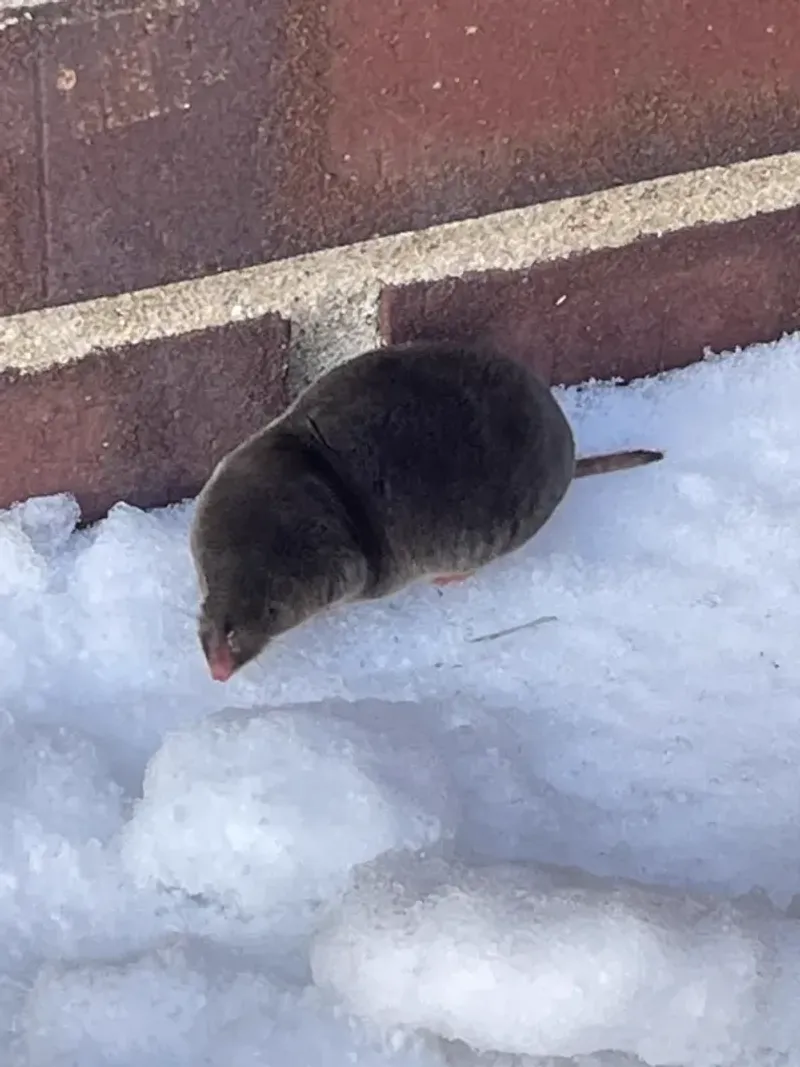
Start with the map. MassWildlife’s list of mammals in Massachusetts includes the northern short-tailed shrew (Blarina brevicauda) and marks it as occurring statewide.
From the Berkshires to Cape Cod, the species is part of the state’s wildlife.
That listing answers one question: is the animal here? Yes.
It does not tell you how many shrews live in your neighborhood, and it does not say that your yard has one. A statewide label describes the range of a species, not the odds of meeting one on a given afternoon.
These shrews are small, mouse-sized mammals with velvety gray fur, short tails, and pointed snouts. They spend most of their time out of sight, moving along the ground and through tunnels, so most people never notice them at all.
Many homeowners could rake for decades without a single encounter.
So the first takeaway is simple. The shrew is a real Massachusetts resident, but nothing in the state’s distribution information suggests it is likely to turn up while you rake.
Knowing the animal belongs here is the starting point, not a reason to skip yard work.
What researchers know about the shrew’s venom
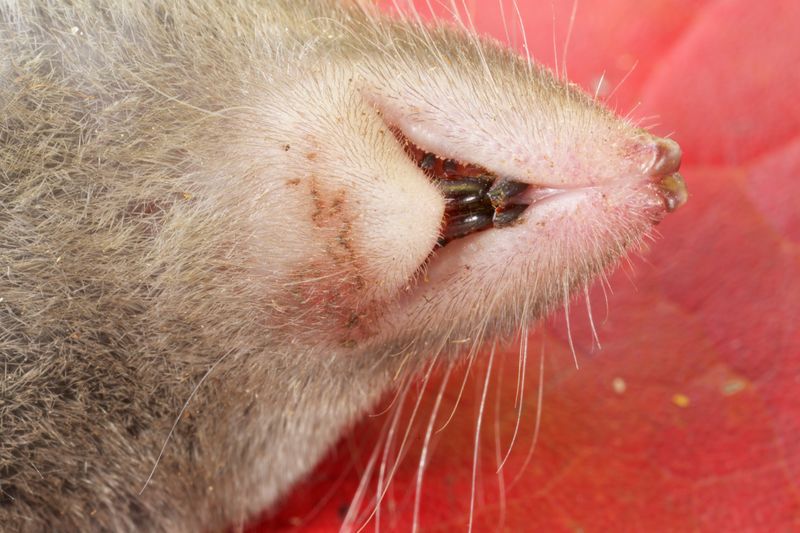
The venom is not a rumor. In a peer-reviewed study in the Proceedings of the National Academy of Sciences, researchers isolated a protein called blarina toxin from the salivary glands of the short-tailed shrew.
They then characterized it in the lab.
The shrew uses this saliva on its prey, which includes insects, worms, snails, and sometimes small animals. The toxin helps the shrew subdue food that might otherwise get away.
The experiments included giving the purified toxin to mice. Those tests showed the toxin is potent in laboratory animals under experimental conditions, where researchers control the dose and the way it enters the body.
That is the key limit. Results from mice given the toxin on purpose do not tell us what happens when a shrew bites a person.
A bite in the wild involves a tiny amount of saliva and a very different body size, so animal results cannot be used to predict human outcomes.
You may see claims that shrew venom can kill or paralyze people. The study does not show that.
It shows what the toxin does in experimental animals and describes how the venom works. For human experience, we need to look at a separate and much thinner kind of evidence, covered next.
What the reported human bite account describes
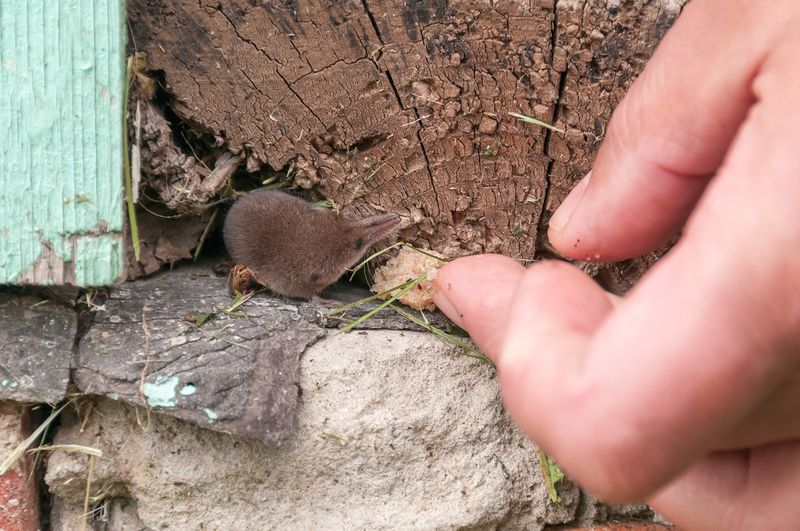
Evidence about people comes from an old source. The same study cites an 1889 account of human bites.
According to that account, the area around the tooth punctures burned, and swelling followed.
Notice what kind of evidence this is. It is a historical description, not a modern clinical series with many patients, careful records, and follow-up.
The sources reviewed do not offer an estimate of how often people are bitten, and they do not provide a detailed clinical risk assessment.
So what should a reader make of it? Local discomfort is the symptom on record.
That is worth knowing, and it means a bite should not be brushed off as certainly harmless.
At the same time, a bite is not inevitably serious either. There is simply too little information to say more in either direction, and it would be wrong to promise that a bite never causes trouble or to claim it always does.
The practical reading is a calm one. Symptoms such as burning and swelling are possible, the record is thin, and a sensible response to any wildlife bite is to take it seriously and get the wound cleaned and checked.
Leaf litter can shelter wildlife, but it does not predict a bite
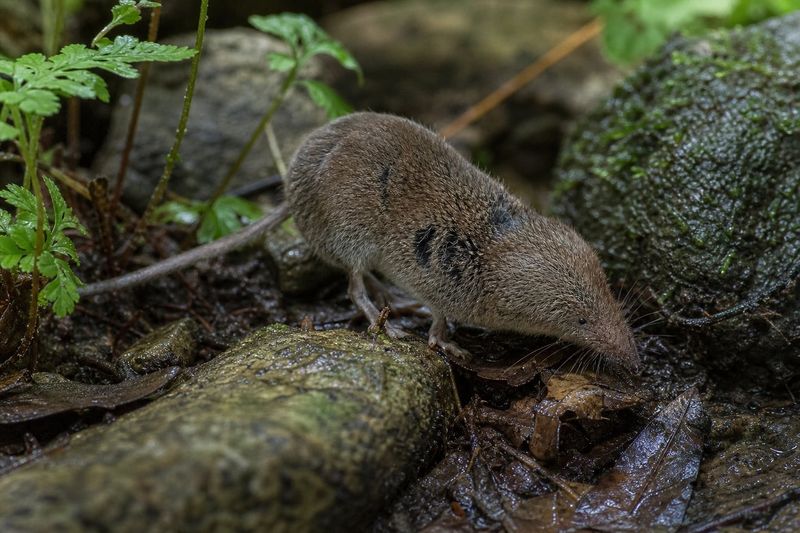
Shrews like cover. The Tennessee Wildlife Resources Agency describes the northern short-tailed shrew using ground cover and nesting in sheltered spots, and Iowa State University Extension also lists short-tailed shrew habitat that includes leaf litter.
They may shelter under logs or travel in underground runs.
From that, it is fair to say leaf-covered ground can be possible shrew habitat. Leaf litter also shelters insects, spiders, toads, and many other small creatures, which is part of why it matters for a healthy yard.
What those habitat notes do not say is just as important. They do not show that a particular pile holds a shrew, and they do not show that a pile is a hazard.
A thick drift of oak leaves under a hedge is more likely to hold beetles than anything with teeth.
Nor do the sources show that raking changes bite risk. No bite data tied to yard work was found, so a claim that raking makes bites likely has nothing behind it.
Think of leaf litter as a living layer, not a trap. A shrew that does live nearby usually stays hidden and moves away from noise and activity.
Choose a wildlife-conscious cleanup and use tools carefully
Two kinds of advice apply here, and they answer different questions. The first is about wildlife.
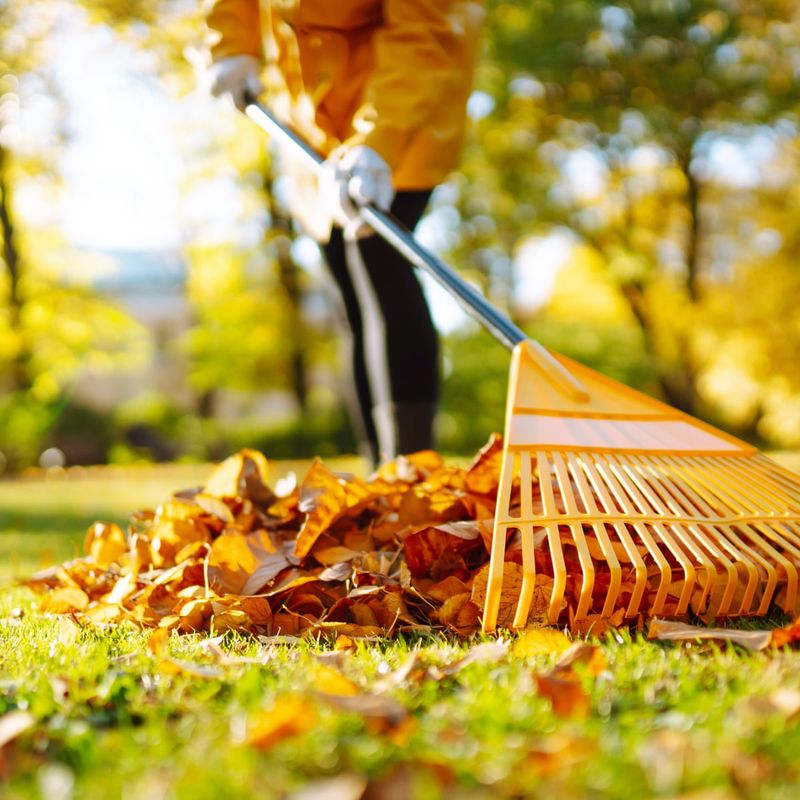
The U.S. Fish and Wildlife Service says a rake is less harmful to wildlife living in leaves than large machinery such as a leaf blower.
It also suggests leaving some leaves in place or moving them to an out-of-the-way corner.
That is habitat guidance. It helps insects, amphibians, and small mammals, and it is not a claim that leaf piles create a shrew problem.
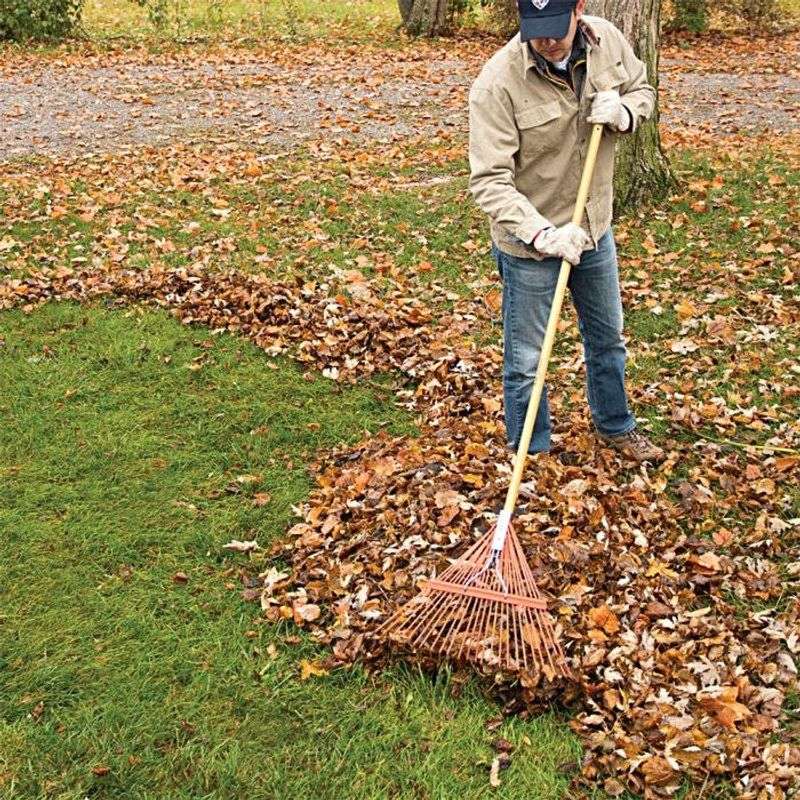
The second kind is plain tool safety. Virginia Tech Extension’s hand-tool guide recommends suitable protective equipment, including gloves, and using shorter strokes with an upright posture to protect your back and shoulders.
Gloves are good for blisters and splinters. They are general raking gear, not shrew-proof protection, so do not treat them as permission to take chances.
A few habits fit both kinds of advice. Use the rake to move leaves instead of your hands.
Do not reach blindly into a pile or a gap under a log. If you spot an animal, step back and let it leave on its own, and never try to pick it up or catch it.
If a shrew bites you, follow Massachusetts wound guidance
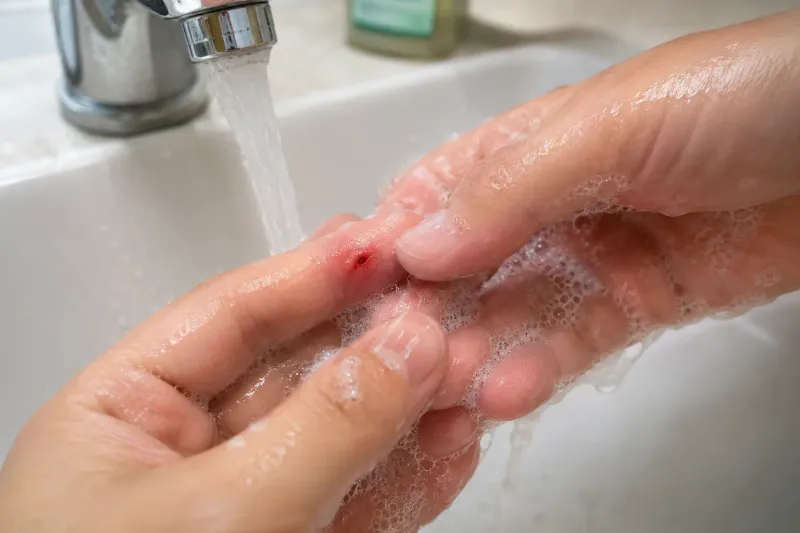
Bites from wild animals are uncommon, but it helps to know the steps in advance. The Massachusetts Department of Public Health’s bite guidance says to wash the wound with soap and water for 10 minutes.
After washing, contact a health-care provider or your local board of health. They can assess whether any follow-up is needed for the bite, based on the situation and the animal involved.
This is general wildlife-bite guidance. It is not a sign that every shrew bite leads to severe harm.
It is simply the careful, low-cost response that applies to many animal bites, and it takes little effort.
Do not try to catch or handle the animal, even to show it to a doctor or identify it. A description of what happened and where is enough to start the conversation.
Burning or swelling around the punctures, the symptoms in the old account, are good things to mention when you call. Keep the call simple: say what bit you, when it happened, and what the wound looks like.
What to keep in mind while raking
Shrews and their venom are real. MassWildlife lists the species statewide, and the toxin study confirms the venom in the saliva.
Still, no source reviewed shows a special danger from ordinary raking or puts a number on bite risk.
So rake as you normally would, with good tools and a little respect for whatever lives in the leaves.
The yard is a shared space, and a shrew in it is usually just a quiet neighbor passing through.
Share this story